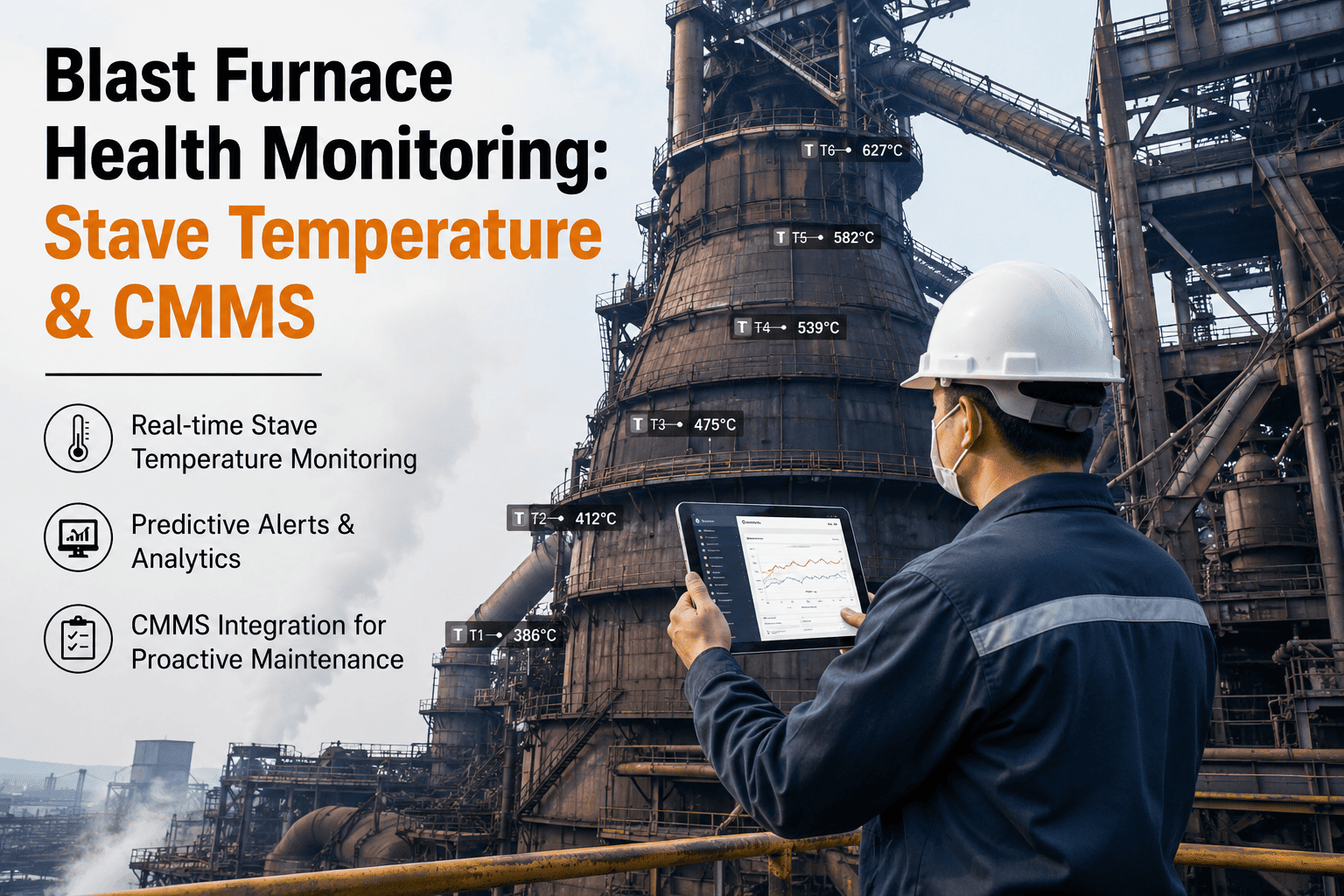
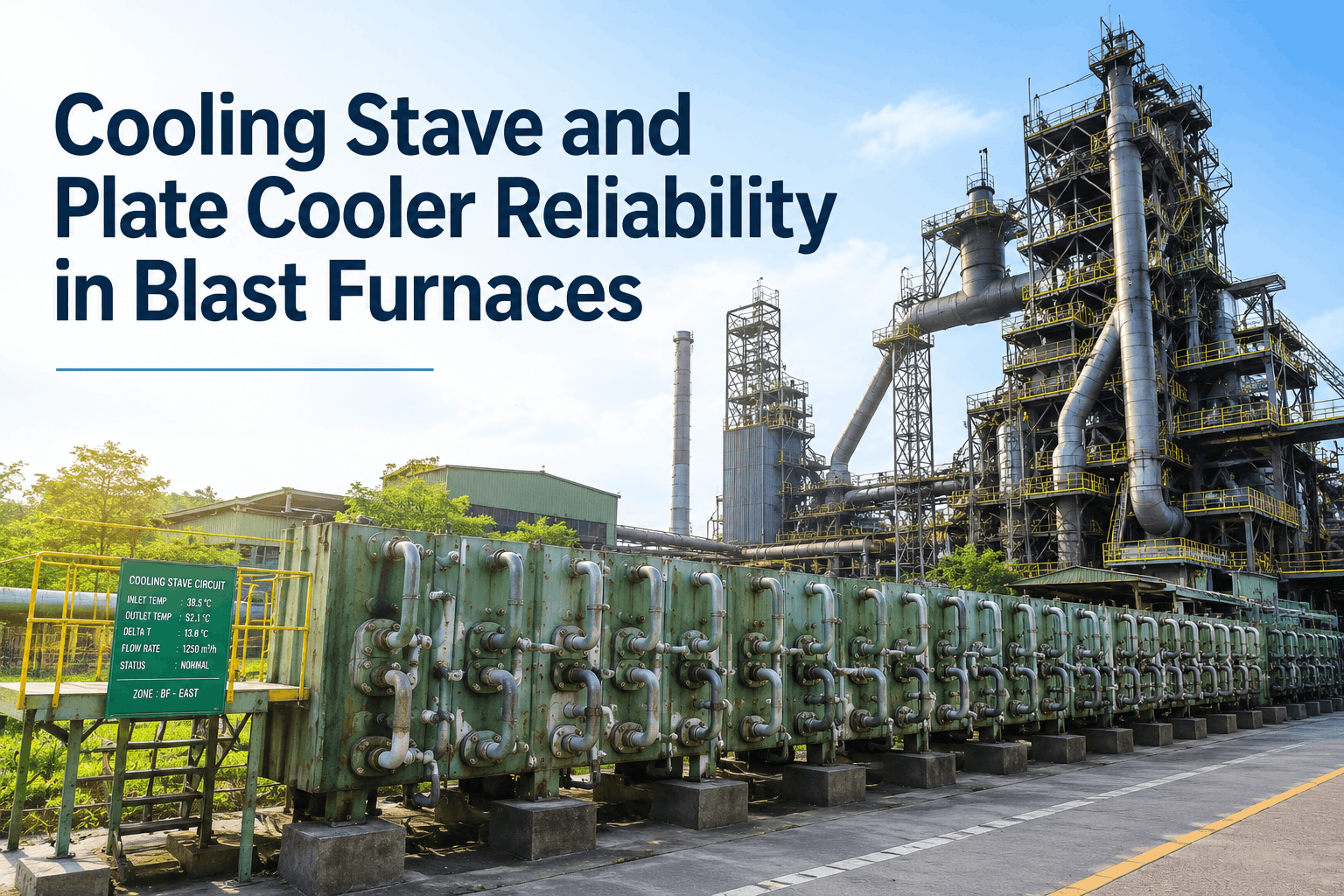
Blast furnace cooling staves are the refractory protection system that prevents the furnace shell from overheating and allows the furnace to maintain internal temperatures above 2,000°C without metal failure. Each stave is a complex assembly of copper or iron body, water-cooling jacket, and ceramic facing — designed to run continuously for 3-5 years. Daily temperature and water flow monitoring is the single most effective early warning system for stave degradation, blockage, or incipient failure. When a stave fails without warning, molten metal breaches the shell, flooding surrounding areas with liquid iron, causing catastrophic damage to the furnace structure and equipment. Yet 62% of North American blast furnaces operate without systematic daily stave temperature monitoring — relying instead on annual thermography inspections that cannot predict imminent failures. This cooling stave daily temperature and water flow log provides a structured CMMS-integrated protocol that captures per-stave readings before furnace startup, establishes temperature baselines, and automatically alerts to abnormal patterns that signal cooling system blockage or heat damage.
Why Stave Failures Occur Without Warning
Cooling staves experience three concurrent degradation mechanisms: (1) Thermal fatigue from 2,000°C internal temperature cycling, (2) Erosion from molten slag flow and chemical attack, and (3) Water-side scaling and blockage from cooling water minerals. Each mechanism contributes to eventual failure, but temperature trending is the most sensitive detection method. A stave with internal ceramic erosion will show elevated surface temperatures 2-4 weeks before total brick loss. A stave with water-side blockage will show temperature rise within days of partial flow restriction. Daily temperature monitoring at a single location per stave (typically 8-12 staves monitored) can detect both conditions before they cascade to failure.
Cooling Stave Daily Temperature and Water Flow Log
Per-stave temperature readings, water flow monitoring, leak detection, and CMMS-tracked baseline trending to predict cooling system failures.
Daily Cooling Stave Monitoring Checklist
Surface temperature measurement requires an infrared thermometer with adjustable emissivity (staves have copper or iron bodies with oxidized surfaces — emissivity ~0.85-0.95). Temperature should be measured at the same location on each stave daily, before furnace ramps to full blast. Baseline temperature establishment: During the first 2 weeks of stave operation (either new staves or newly rlined furnace), record daily temperature readings for each stave. These readings create the baseline — normal operating range is the average of the first 14 days ±5°C. Store baseline in CMMS asset record for each stave. Daily monitoring: After baseline is established, measure each stave temperature daily and log in CMMS. CMMS automatically compares to baseline and alerts if reading exceeds baseline +10°C or shows trend of rising 2-3°C per week. The alert triggers either cooling system inspection (if water flow has decreased) or stave condition assessment (if flow is normal but temperature rising).
Cooling water flow is typically monitored via flow meters installed on the inlet and outlet headers of the stave cooling circuit. If your furnace does not have permanent flow measurement instrumentation, use a bucket and stopwatch method: (1) Isolate the stave outlet line (have cooling system operator do this safely); (2) Hold a 5-gallon bucket under the outlet and measure time to fill (in seconds); (3) Calculate flow: 5 gallons ÷ (time in seconds ÷ 60) = gallons per minute (GPM). (4) Compare to baseline (measured during commissioning or recent clean cycle). Expected flow reduction indicators: Baseline 50 GPM now reads 45 GPM (10% loss) = schedule descaling within 2 weeks. Baseline 50 GPM now reads 40 GPM (20% loss) = perform descaling immediately, stave temperature likely rising. Any GPM loss >20% requires prompt corrective action — continue furnace operation only if stave temperature remains within acceptable range. Log flow readings and trend in CMMS per stave circuit.
Stave cooling water leaks can develop in three places: (1) The water inlet and outlet piping connections to the furnace, (2) The stave body itself (water-side cracks), and (3) The connections between staves. Daily leak inspection: (1) Walk around the furnace perimeter and look for visible water dripping or spray. Mark any leak location with chalk and take a photo (store in CMMS). (2) Measure the temperature of the cooling water outlet line with your hand (with appropriate safety gloves) or an IR thermometer. Outlet temperature should be 10-15°C above inlet temperature (roughly 40-45°C if inlet is 30°C). If outlet temperature is lower than expected, cooling water is being lost before it heats up — stave internal leak likely. (3) Check the furnace floor beneath staves for water accumulation or wet spots that might indicate a slow leak. Small leaks (<0.5 GPM) may not be visible but will reduce flow measurement — already detected in the flow measurement step. Large leaks (>2-3 GPM) create visible wetness and must be repaired immediately because they reduce stave cooling effectiveness.
Once per month (or when temperature alert is triggered), conduct a visual inspection of the stave interior using the furnace camera system or during a planned inspection shutdown. Look for: (1) Slag lining thickness at the stave location — slack lining should be 200-400mm thick depending on position in furnace. Thinner slag (<150mm) indicates accelerated erosion. (2) Ceramic facing cracks — small cracks (<5mm wide) are expected and normal. Large cracks (>10mm) or cracks that are propagating (widening from previous inspection) indicate stave fatigue. (3) Copper face erosion pattern — the copper face should show even erosion across its surface. Localized deep pitting or channeling indicates aggressive slag chemistry or flow patterns. (4) Hotspots visible inside furnace looking outward from staves — these indicate internal ceramic loss or cracks. Document stave interior photos in CMMS with date — compare photos week-to-week to assess erosion rate. If physical stave condition is degrading faster than historical rate, stave replacement timeline should be advanced.
After 4-6 months of daily temperature data collection, CMMS should produce trend reports showing each stave's temperature trajectory. Staves follow three patterns: (1) Stable — temperature within ±3°C of baseline: Normal. Continue operation. (2) Gradual rise — temperature rises 1-2°C per month but remains
Cooling water quality (hardness, pH, suspended solids) determines scaling rates in the stave circuits. Daily temperature and flow monitoring should be accompanied by quarterly cooling water analysis. If flow is declining but temperatures are stable, water-side scaling is occurring — schedule chemical descaling or back-flushing. Descaling frequency depends on water quality: Hard water area (>300 ppm CaCO3 equivalent) = descale every 3-4 months. Moderate hardness = descale every 6 months. Soft water area = descale annually or as needed if flow measurements trigger it. After descaling, re-establish baseline temperature readings over 3-7 days — temperature should drop 5-15°C due to improved cooling. Store post-descaling baseline in CMMS. Document all descaling work, cooling water analysis results, and baseline changes in CMMS stave maintenance records.
CMMS Daily Stave Monitoring Automation
Cooling stave monitoring is uniquely suited to CMMS automation because the data volume is high (8-12 staves × daily readings = 80-120+ data points per week) and trend detection is the most valuable output. Manual spreadsheet tracking fails because trend identification requires weeks of data and automatic alerting. Oxmaint's stave monitoring module stores baseline temperatures, automatically compares daily readings, generates trend reports, and escalates alerts to furnace engineering when abnormal patterns emerge.
Stave Failure Prevention Outcome Comparison
Cooling Stave Daily Monitoring FAQs
What is a normal temperature range for blast furnace cooling staves?
How often should cooling water flow be measured and what flow loss triggers descaling?
What temperature rise rate signals imminent stave failure?
How do I visually detect internal stave ceramic damage using furnace camera?
What is the difference between water-side blockage (scaling) and thermal failure in staves?
Can I continue furnace operation if one stave shows elevated temperature?
What is the typical stave campaign life and how does temperature trending predict reline timing?
Predict Stave Failures 4-6 Weeks in Advance
Catastrophic stave failures are almost always preventable. The refractory ceramic inside the stave shows temperature rise 4-8 weeks before complete brick loss and shell breach. Daily temperature monitoring is the most cost-effective early warning system available. Oxmaint's stave monitoring module automates baseline establishment, temperature trending, flow monitoring, and reline scheduling — converting stave failures from emergencies to planned maintenance. Start a free trial with your furnace stave configuration, or contact our blast furnace expert to review your current stave monitoring approach and identify optimization opportunities.