The steel girder had been in service for 32 years—well within its designed lifespan. Annual inspections documented minor surface corrosion, dutifully treated and repainted. What no inspector saw was the 47mm fatigue crack propagating from a weld toe, hidden beneath a layer of paint and growing 2mm with every seasonal temperature cycle. When the crack reached critical length during a cold snap, the girder failed catastrophically, dropping a 180-ton crane onto the factory floor. Three workers were hospitalized. The forensic investigation revealed classic fatigue striations visible only under magnification—patterns that AI crack detection systems identify in routine scans. The technology that would have flagged this crack 18 months earlier costs less than one day of production downtime.
Steel is the backbone of modern infrastructure—bridges, buildings, cranes, pipelines, pressure vessels, and industrial equipment all depend on steel's remarkable combination of strength, ductility, and durability. But steel's greatest vulnerability is invisible: microscopic cracks that nucleate at stress concentrations, grow imperceptibly with each load cycle, and eventually reach the critical size where catastrophic fracture becomes inevitable. Schedule a free consultation to learn how AI-powered steel inspection can detect these cracks months or years before failure—transforming reactive crisis management into proactive asset protection.
Why Steel Crack Detection Demands AI
Steel cracks present unique detection challenges that push human inspection beyond its reliable limits. Cracks hide in complex geometries, beneath coatings, inside welds, and at stress concentrations that are difficult to access. They're often too small to see yet large enough to propagate toward failure.
How AI Vision Detects Steel Cracks
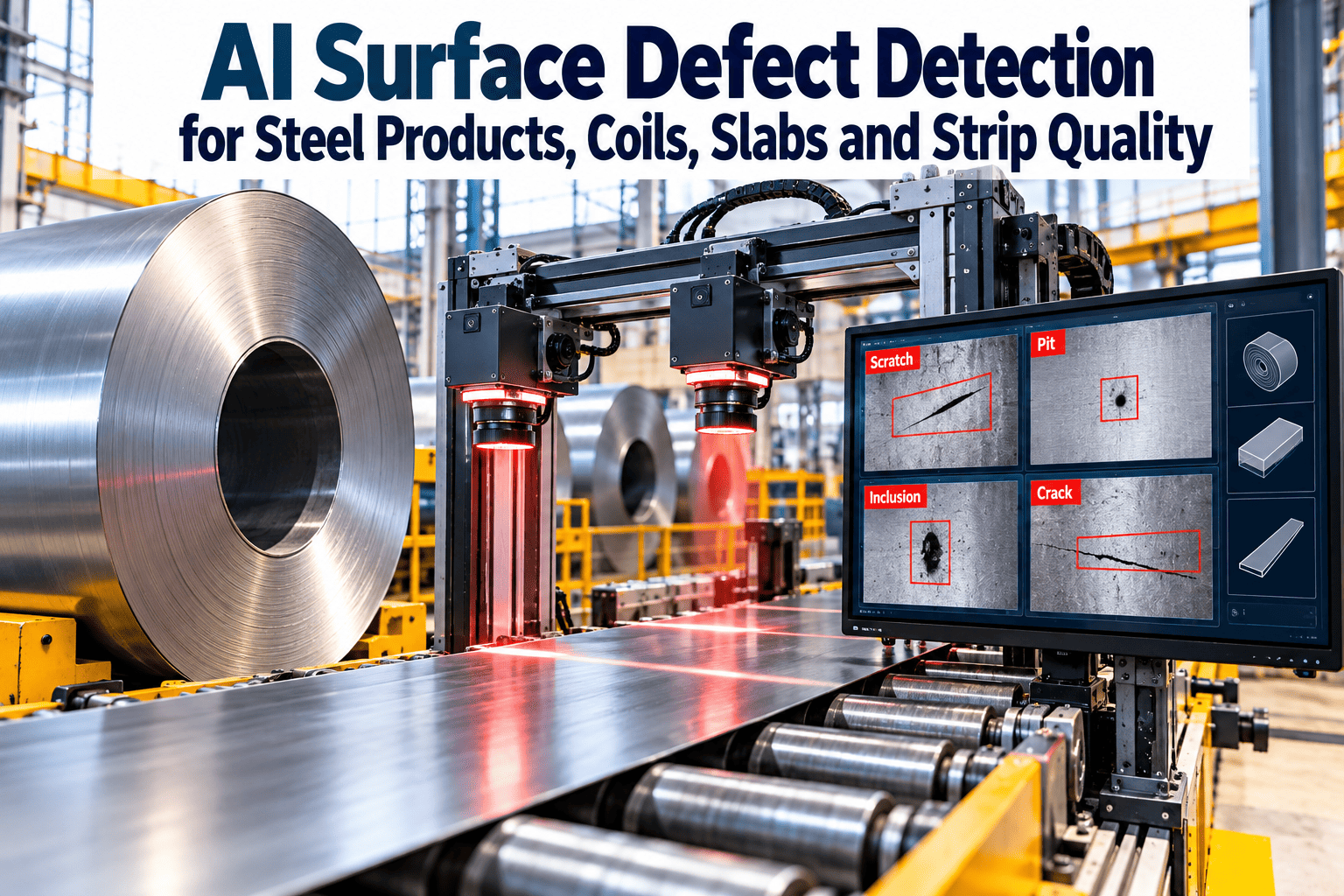
AI crack detection in steel combines high-resolution imaging with deep learning models trained specifically on steel defect patterns. Unlike generic image recognition, these systems understand the metallurgical signatures of different crack types and their structural implications.
Types of Steel Cracks Detected by AI
Different cracking mechanisms produce distinctive patterns that AI systems learn to recognize. Understanding crack type is essential for determining root cause and appropriate remediation strategy.
Steel Structure Applications
AI crack detection applies across the full spectrum of steel infrastructure. Each application presents unique access challenges, crack types, and criticality levels that AI systems address through specialized detection models.
| Application | Primary Crack Types | AI Detection Approach | Detection Accuracy |
|---|---|---|---|
| Bridges & Overpasses | Fatigue at connections, corrosion cracking, weld defects | Drone-based imaging, thermal analysis of paint condition, focused weld inspection | 93-97% |
| Pressure Vessels | Stress corrosion, hydrogen cracking, thermal fatigue | Internal crawlers, enhanced imaging through coatings, API 510/570 compliance | 94-98% |
| Pipelines | Corrosion fatigue, SCC, girth weld defects, dents with cracks | In-line inspection tools, above-ground visual surveys, anomaly correlation | 91-96% |
| Cranes & Lifting Equipment | Fatigue at boom connections, hook cracks, wire rope inspection | Real-time monitoring during operation, load-correlated crack growth tracking | 95-98% |
| Storage Tanks | Floor plate cracking, shell corrosion, weld seam defects | Floor scanning robots, shell climbing drones, API 653 defect classification | 92-96% |
| Structural Steel Buildings | Connection fatigue, moment frame cracks, column base plate defects | Systematic connection inspection, post-earthquake assessment protocols | 90-95% |
Weld Inspection Excellence
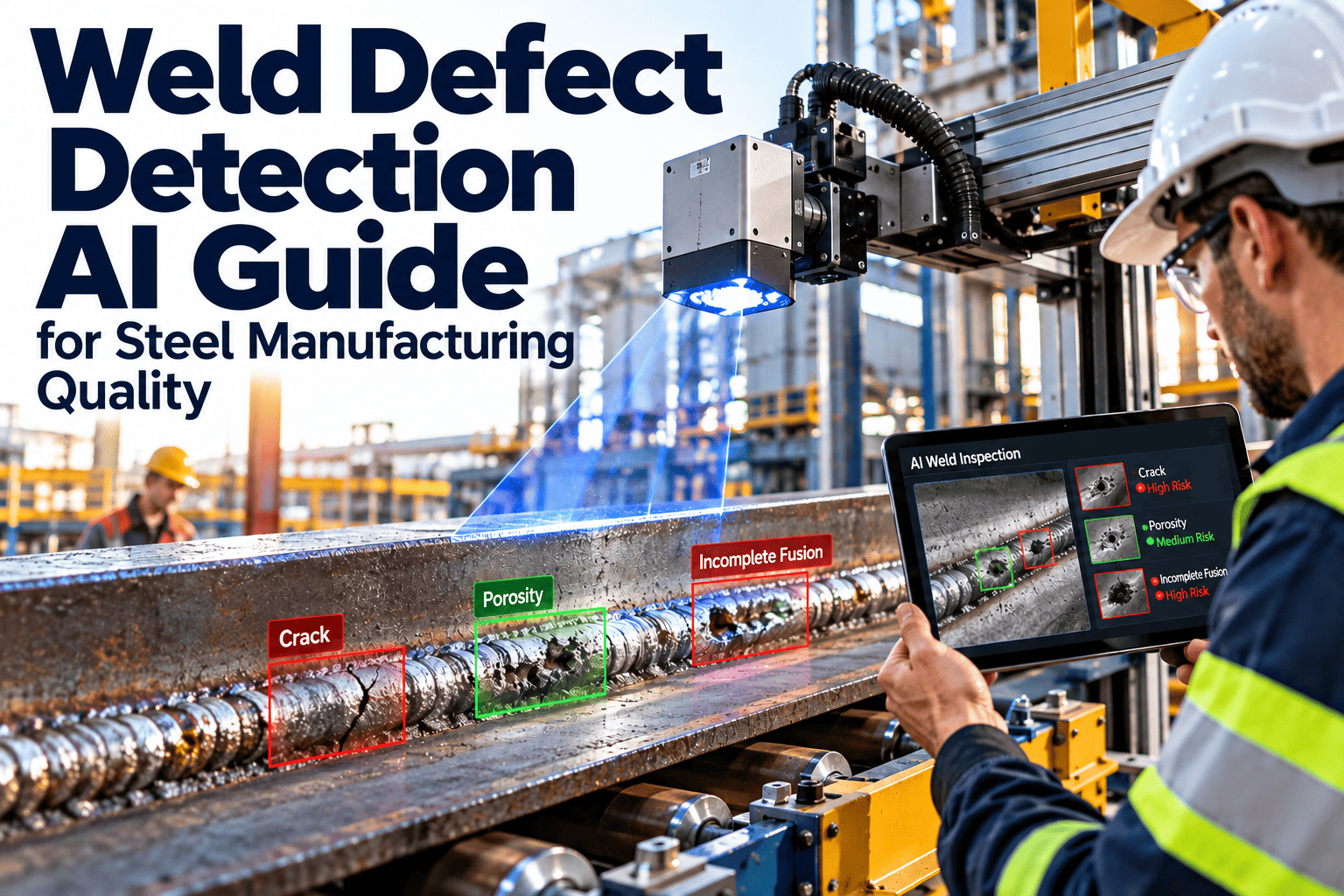
Welds represent the most common crack initiation sites in steel structures. AI systems trained specifically on weld defects dramatically improve detection rates while reducing false positives that waste inspection resources.
Severity Assessment Framework
Not every crack demands immediate action. AI systems assess severity based on crack characteristics, location, loading conditions, and material properties to prioritize responses appropriately.
- Crack in primary load-carrying member
- Crack length exceeds critical size
- Active propagation detected
- Through-thickness penetration
- Located at high-stress concentration
- Crack in secondary member
- Length well below critical size
- No growth between inspections
- Surface crack, limited depth
- Low-stress location
Fracture Mechanics Integration
AI crack detection becomes most powerful when integrated with fracture mechanics analysis. By combining detected crack dimensions with material properties and loading data, systems predict remaining life and optimal intervention timing. Create your free Oxmaint account to access these advanced predictive capabilities.
ROI of AI Steel Crack Detection
Investments in AI crack detection deliver returns through avoided failures, optimized maintenance timing, extended asset life, and reduced inspection costs compared to traditional NDE methods.
Complementary NDE Integration
AI visual crack detection works best as part of a comprehensive inspection strategy. Integration with traditional NDE methods creates a tiered approach that maximizes detection while optimizing costs.
| NDE Method | Detects | AI Integration Role | Combined Benefit |
|---|---|---|---|
| Magnetic Particle (MT) | Surface and near-surface cracks in ferromagnetic steel | AI pre-screens large areas, directing MT to highest-probability locations | 80% reduction in MT coverage needed; no cracks missed |
| Ultrasonic Testing (UT) | Subsurface defects, crack depth measurement, volumetric flaws | AI-detected surface indications trigger UT for depth assessment | Precise sizing of AI-detected cracks for fitness-for-service |
| Radiographic Testing (RT) | Internal weld defects, porosity, inclusions, lack of fusion | AI visual assessment identifies suspect welds for RT verification | Targeted RT reduces film costs and radiation exposure |
| Eddy Current (ET) | Surface cracks in non-ferromagnetic materials, through coatings | AI maps coating condition, guiding ET probe placement | Faster scanning with AI-guided coverage optimization |
| Acoustic Emission (AE) | Active crack growth during loading | AI visual baseline identifies existing cracks; AE monitors growth | Real-time growth detection of known crack population |
Implementation Best Practices
Successful AI crack detection programs require attention to image quality, environmental conditions, and systematic coverage protocols that ensure no critical areas escape inspection.
Implementation Timeline
Organizations typically progress from pilot programs on critical assets to enterprise-wide deployment as detection value proves out and teams develop expertise with AI-assisted inspection workflows.
Code Compliance Considerations
AI crack detection supports compliance with structural inspection codes but must be properly documented and integrated with required NDE methods.
| Standard | Application | AI Detection Role |
|---|---|---|
| AWS D1.1 | Structural steel welding | AI assists visual inspection per Clause 6; supplements required NDE methods; documents acceptance/rejection per Table 6.1 |
| ASME BPVC | Pressure vessels and boilers | AI enhances in-service inspection per NBIC; supports API 510/570 assessments; tracks corrosion and cracking progression |
| API 653 | Aboveground storage tanks | AI floor and shell inspection supplements required thickness measurements; identifies crack-like indications for NDE verification |
| AASHTO | Bridge inspection | AI enhances element-level condition assessment; provides quantitative crack data for load rating; supports fracture-critical member inspection |
| OSHA 1910.179 | Overhead cranes | AI supports periodic inspection requirements; documents crack-like indications in structural members; tracks defect history |
Common Challenges and Solutions
Understanding typical implementation challenges helps organizations prepare appropriate mitigation strategies for successful AI crack detection deployment.
| Challenge | Impact | Solution |
|---|---|---|
| Coating interference | Paint and corrosion products obscure crack signatures | Schedule detection during coating maintenance windows; use thermal imaging through coatings; develop coating-compensated detection models |
| Complex geometries | Shadowing and access limitations reduce coverage | Multi-angle imaging protocols; specialized camera positioning; accept coverage limitations and document uninspected areas |
| False positives | Grinding marks, weld spatter mistaken for cracks | Train models on site-specific artifact libraries; implement confidence thresholds; require NDE verification above threshold |
| Environmental conditions | Weather, lighting, vibration affect image quality | Standardize capture conditions; use controlled lighting; implement image quality gates before analysis |
| Integration complexity | Detection data isolated from maintenance systems | Select AI platforms with robust APIs; use Oxmaint for native integration; establish data governance protocols |