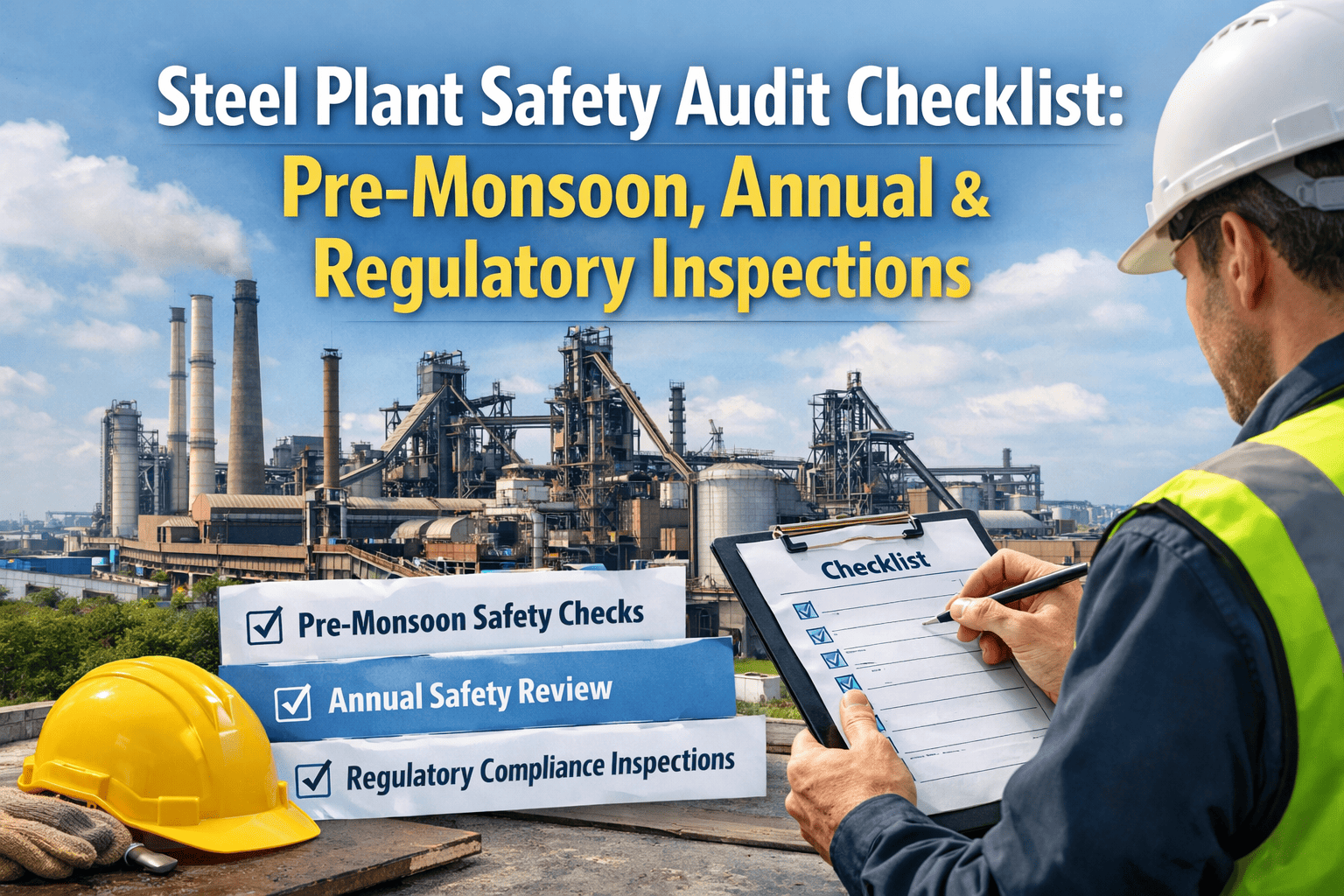
Steel Plant Personal Protective Equipment (PPE) Inspection Checklist
By Alex Jordan on June 5, 2026
Steel mill workers face burns, eye damage, and respiratory injury every shift. OSHA statistics show that inadequate or degraded Personal Protective Equipment (PPE) causes 90+ fatal workplace injuries annually in USA steel manufacturing. Arc flash from welding operations reaches 3,600°C (hotter than the sun's surface); a helmet with expired or damaged lens shade allows retinal burn in milliseconds. Heat-resistant gloves lose flame resistance after 50–100 hours of use near molten metal — worn gloves offer zero protection but may feel acceptable to the wearer. Daily PPE inspection checklists catch defects before they cause injuries, but only if inspections are actually performed and documented. Steel mills using Oxmaint mobile checklists see 40–60% reduction in PPE-related lost-time injuries because technicians photograph damage, get instant alerts, and remove compromised PPE from service within minutes instead of days. OSHA expects to see daily PPE inspection logs during facility audits — absence of records is treated as evidence of non-compliance.
Zero PPE Injuries with Daily Mobile Inspections in OxmaintDaily helmet, glove, face shield, and respiratory protection audits with photo evidence and out-of-service tracking — OSHA-audit-ready documentation.
Welding helmets with auto-darkening (electronic) lenses are essential for modern steel mills — fixed-shade helmets (like traditional #10 or #12 shades) are slow, dangerous, and prevent proper vision. Electronic lenses darken in milliseconds when they detect arc light, protecting the welder's eyes. A failed lens (stuck light or stuck dark) creates immediate safety hazard. UV/IR lens coating also degrades with age and heat exposure, allowing dangerous radiation through. OSHA 1910.252 mandates that welding helmets and face shields be inspected before use and replaced if damaged. Steel mills face $15,000–$50,000 OSHA citations per incident if a worker suffers an eye injury with documentation showing the helmet was not inspected or was known to be defective but remained in use.
2. Glove & Hand Protection Assessment
Welding gloves absorb heat continuously during hot-work operations. Leather gloves degrade rapidly near molten metal — the protective layer thin in as little as 50–100 hours of use. Gloves with holes or thin spots offer zero protection and may stick to hot metal, trapping the welder's hand. Steel mills see hand burn injuries 15–20× more frequently than eye injuries, yet hand inspection is often overlooked. ANSI Z49.1 (AWS standard) requires that gloves be inspected before use and replaced immediately if damaged. Daily glove inspection in Oxmaint takes 30 seconds per worker but reduces serious hand burns by 40–50%.
3. Respiratory Protection & Breathing Zone Assessment
Welding fumes contain manganese, chromium, nickel, and other toxic metals. OSHA PEL for welding fumes is 5 mg/m³ (8-hour time-weighted average). Steel mills producing high-nickel or stainless steel welds often exceed this limit in the breathing zone, requiring respiratory protection (N95 masks, half-face respirators, or supplied-air systems). Respiratory protection is only effective if: (1) the mask/respirator fits the welder's face properly, (2) the welder shaves (beards prevent seal), and (3) the filters are not clogged. An N95 mask with a clogged filter or a loose-fitting respirator offers zero protection while creating a false sense of security. OSHA requires annual fit testing for respiratory protection users and fit-test records must be on file. Steel mills face $20,000–$80,000 penalties plus workers' compensation liability for respiratory illness if fit-testing records are not maintained.
4. Body Protection & Flame-Resistant Clothing Assessment
Molten spatter and arc flash pose burn risk to the entire body, not just hands and face. Flame-resistant (FR) clothing is designed to char rather than ignite, giving workers time to move away from heat. OSHA 1910.252 requires that FR clothing be worn for all hot-work operations. Some facilities allow 100% cotton (which chars rather than melts), but many steel mills have upgraded to modern FR fabrics (Nomex, Kevlar) that provide superior protection. FR clothing loses protection when washed — synthetic fibers degrade with each wash. OSHA has no specific washable cycle limit, but manufacturers typically recommend FR properties persist for 50–100 wash cycles depending on fabric. A faded or thin FR jacket that has been washed 200 times offers marginal protection. Daily inspection catches worn-out FR clothing before it causes severe burns.
5. PPE Training, Documentation & OSHA Compliance Records
OSHA requires that employers provide PPE training addressing: (1) when PPE is necessary, (2) which PPE is necessary, (3) how to don/doff PPE, (4) how to maintain PPE, (5) limitations of PPE, and (6) proper disposal of damaged PPE. Training must be documented and records kept for the duration of employment plus 30 days. Steel mills also require fit-testing records, written PPE policies, and inspection logs. These records are the first documents EPA auditors review — if they are missing or incomplete, the facility is presumed non-compliant and subject to maximum penalties. Oxmaint centralizes all PPE training, inspection, and compliance records, making audit preparation a matter of minutes rather than days of file searching.
Prevent PPE-Related Injuries & OSHA ViolationsDaily mobile inspections, training documentation, fit-test tracking, and audit-ready records — all in Oxmaint. Zero injuries. Zero citations.
1. How often do welding helmets need lens replacement?
Auto-darkening lenses last 3–5 years depending on UV exposure and welding intensity. If a lens is not responding properly (not darkening or darkening too slowly), replace it immediately. Oxmaint tracks lens installation dates and generates automatic replacement alerts on a 4-year schedule to ensure lenses never exceed their service life.
2. What is the difference between N95 masks and respirators?
N95 masks filter particles (dust, spatter) but not toxic gases. Respirators (half-mask or full-face) use cartridges that absorb both particles and gases (fumes). For welding fumes containing manganese and chromium, cartridge respirators are required. N95 alone is insufficient. Fit-testing is required for respirators; N95 fit-testing is optional but recommended.
3. Why is facial hair not allowed with respirators?
A beard or stubble breaks the seal between the respirator and the skin, allowing unfiltered air to bypass the mask. Even 1–2 mm of stubble can reduce the fit factor by 50%, eliminating protection. Clean-shaven requirement is non-negotiable for respiratory protection. Oxmaint tracks facial hair compliance at shift start.
4. How long does FR clothing last and when should it be replaced?
FR fabrics degrade with washing and heat exposure. Typical service life is 2–3 years of continuous use. Color fading is a sign that FR properties are degrading. Replace FR clothing approaching 3 years old even if no visible damage is present. Oxmaint tracks purchase dates and triggers replacement reminders.
5. What qualifies a helmet for immediate removal from service?
Remove helmets immediately if: (1) shell shows cracks or warping, (2) auto-darkening lens does not respond to light or is stuck dark, (3) lens color has turned brown (coating degradation), (4) straps are loose or torn, (5) protective cover plates are missing. Any helmet with damage that affects its ability to shield the arc or hold securely is unsafe. In Oxmaint, photograph damage as evidence for the out-of-service record.
6. What is the annual requirement for respiratory protection fit-testing?
OSHA requires annual fit-testing for every worker using a respirator. A qualified professional performs quantitative fit-testing (using test aerosol) and certifies the mask achieves a fit factor of at least 100. Results show which mask size and model works for each person. Oxmaint maintains fit-test records and alerts 60 days before expiration to schedule next year's test.
7. How should welding gloves be disposed of when damaged?
Damaged welding gloves cannot be safely repaired and must be discarded. Do not try to patch or sew gloves — patches are unreliable and create weak points. In Oxmaint, log glove removal as "discarded due to [damage type]" to document proper disposal. Budget for frequent glove replacement — it is a cheap insurance against hand burn injuries.
8. What documentation is OSHA expecting to see during a PPE inspection?
OSHA expects: (1) written PPE policy, (2) annual training records for all workers, (3) daily or shift-start PPE inspection logs, (4) respirator fit-test certificates, (5) records of damaged PPE removed from service, (6) training sign-in sheets. Oxmaint generates all these documents within 30 minutes of notification of an OSHA inspection, demonstrating systematic compliance and minimizing audit penalties.
Build a Safety-First Culture with Oxmaint PPE AuditsEvery helmet checked, every glove inspected, every training documented — mobile-first compliance that prevents injuries and exceeds OSHA expectations.
-checklist.png)