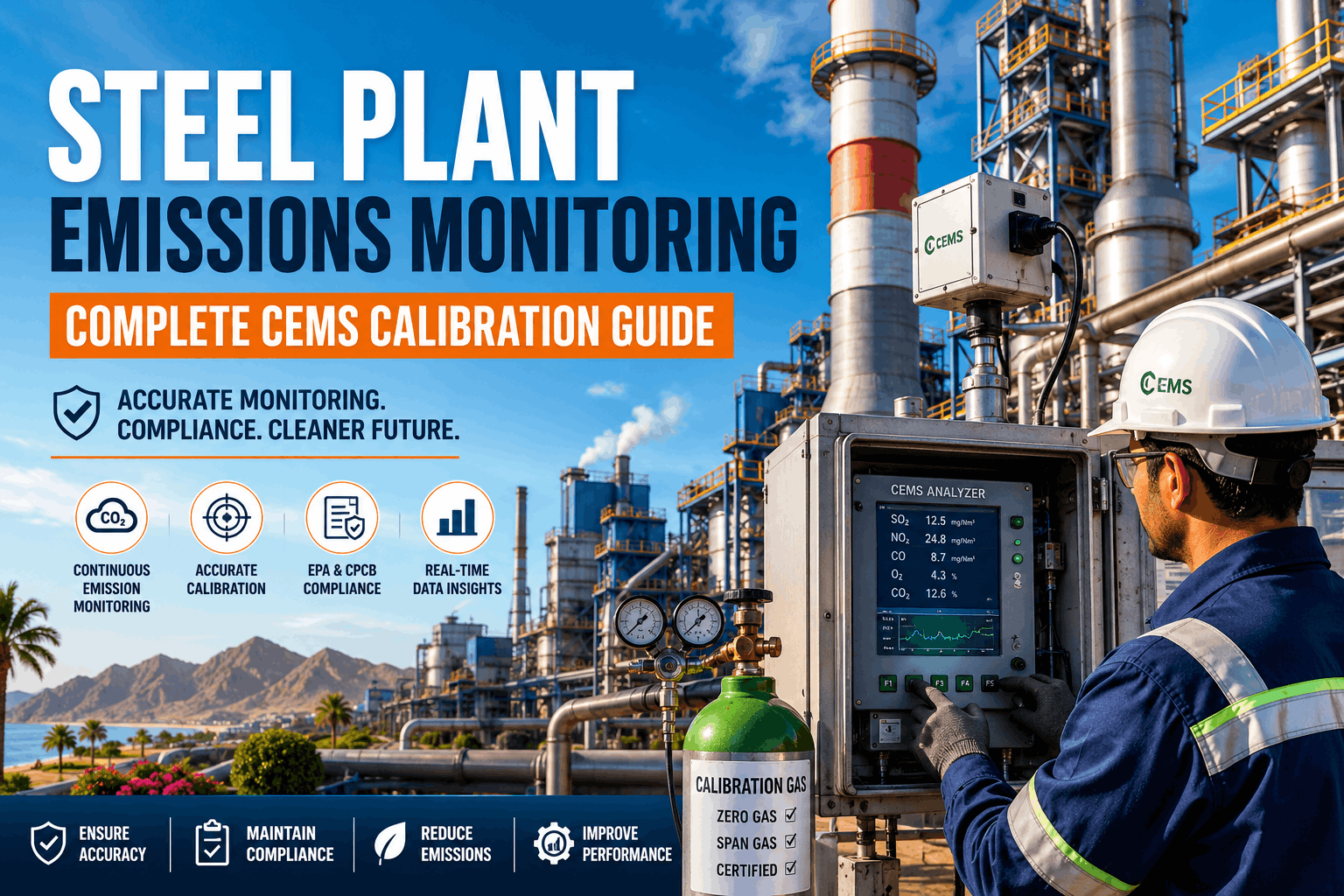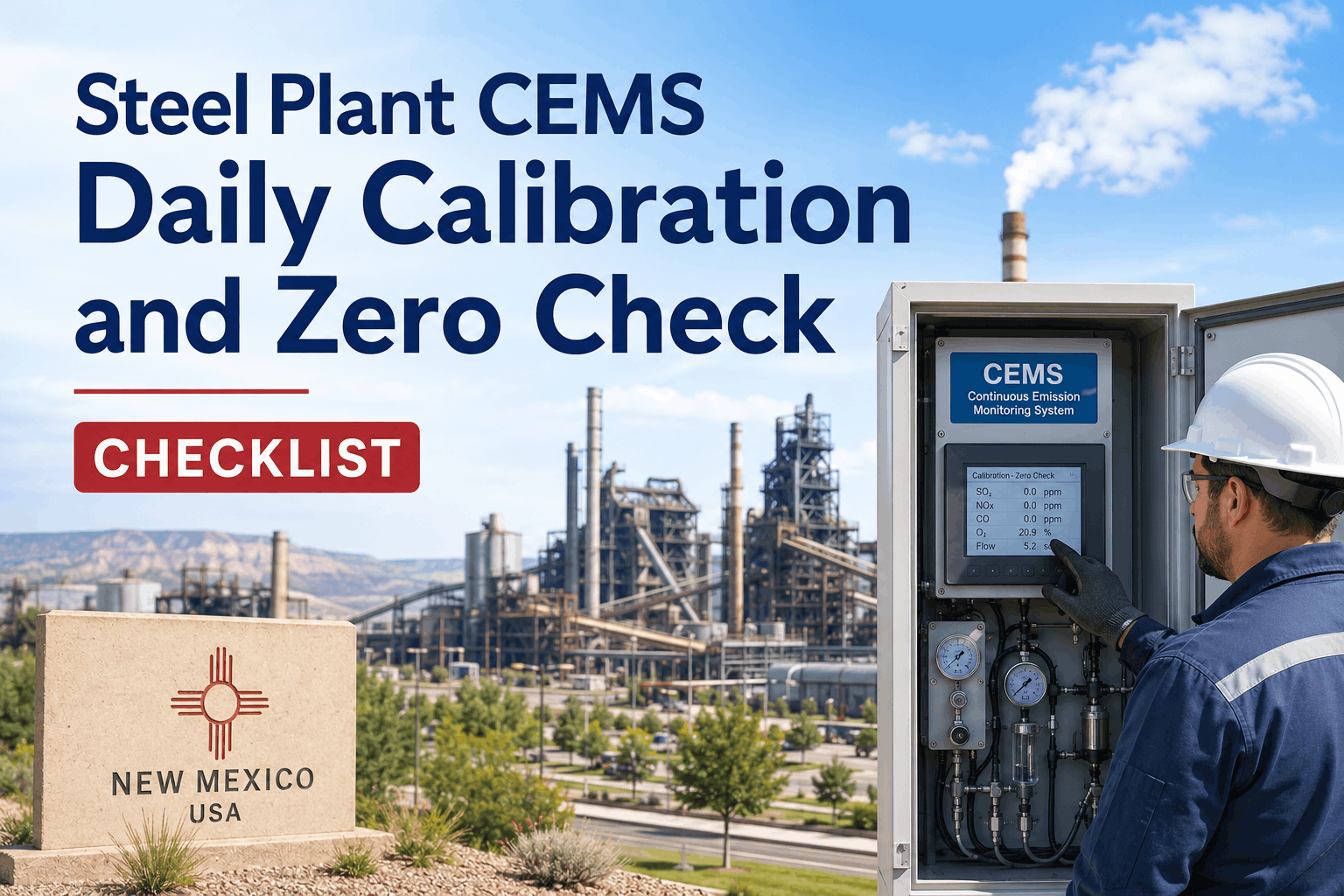
Continuous Emissions Monitoring Systems (CEMS) are the regulatory gateway between your steel mill and environmental compliance. EPA regulations mandate daily zero and span calibration checks, weekly linearity verification, and quarterly RATA (Relative Accuracy Test Audit) certification. A single failed calibration event or missed daily check triggers automatic data substitution under federal recordkeeping rules, which EPA auditors treat as an operational violation. Steel mills face $25,000–$150,000 per violation penalties plus potential operating permit suspension if CEMS data fails audit review. Daily CEMS calibration checklist with mobile time-stamped documentation in Oxmaint ensures every check is recorded, calibration drift is caught before exceedances occur, and audit defense is ready within hours when EPA arrives at your facility.
1. Daily Calibration Gas & System Preparation
CEMS calibration depends absolutely on calibration gas purity and concentration accuracy. EPA regulations (40 CFR Part 60) require that calibration gas bottles be certified traceable to NIST standards with documented concentration, expiration date, and pressure. Expired gases, leaking regulators, or contaminated sample lines produce false calibration readings that invalidate days or weeks of emission data. Daily gas verification ensures calibration integrity before any analyzer check is performed.
2. Daily Zero & Span Calibration Checks
EPA requires daily zero and span calibration checks (40 CFR Part 60). Zero checks verify the analyzer reads zero when exposed to zero-grade air (0–20% of analyzer range). Span checks verify the analyzer reads within 10% of the known span gas concentration. Failing either check requires immediate corrective action — analyzers cannot be used for compliance monitoring until the calibration passes. Daily logs create a 365-day history that EPA uses to assess CEMS reliability and identify trending calibration drift that predicts analyzer failure.
3. Weekly Linearity & Drift Verification
While zero and span are checked daily, EPA also requires weekly linearity verification (40 CFR Part 60, Appendix B). Linearity checks use three or more reference gas concentrations (e.g., 0%, 50%, and 100% of range) to confirm the analyzer response is linear across its operating range. Nonlinear analyzers may pass zero and span but fail to measure intermediate concentrations accurately, producing invalid emission data. Weekly linearity checks catch analyzer response drift that zero/span misses, protecting data integrity and ensuring compliance audit readiness.
4. Sample Probe & Analyzer System Health
CEMS performance depends on the entire measurement chain: the sample probe drawing gas from the stack, heated sample lines preventing condensation, the sample conditioning system removing particulates and moisture, and finally the analyzer measuring the clean sample. Degradation at any point invalidates data. Daily health checks of each component catch defects before they compromise measurement accuracy. Steel mill dust, corrosive gases, and thermal shock stress all CEMS components, requiring frequent inspection and component replacement on predictable schedules.
5. Data Acquisition System & Compliance Record-Keeping
The Data Acquisition and Handling System (DAHS) is the regulatory interface between CEMS measurements and EPA reporting. DAHS must record all raw analyzer data at least once per minute, automatically flag out-of-range and invalid readings, apply calibration drift corrections, and maintain redundant backup storage. Daily DAHS health checks ensure data is being captured continuously without gaps, dropouts, or electronic corruption. EPA auditors review DAHS logs to verify data integrity — a single missing data file or unexplained gap can invalidate hours of compliance measurements.