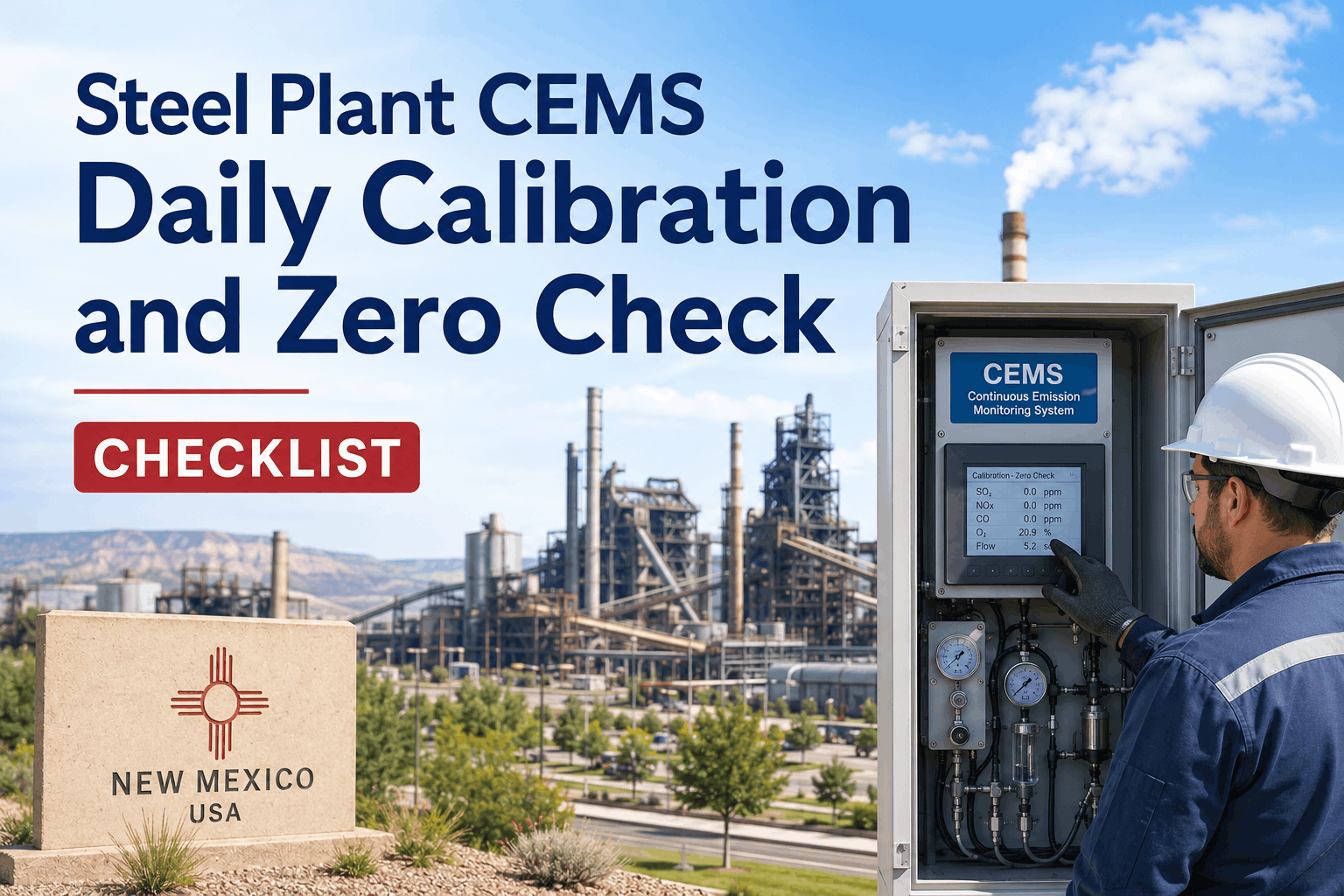
Steel Plant Gas Detector Bump Test and Calibration Log
By Alex Jordan on June 5, 2026
Steel mills encounter hazardous atmospheric conditions: hydrogen sulfide (H₂S) from coke ovens and blast furnace gas, carbon monoxide (CO) from furnaces, oxygen depletion in confined spaces, and combustible gases (LEL) during hot work operations. OSHA mandates that all portable and fixed gas detectors undergo weekly bump tests (function checks) before each day's use, and full calibration at least every 6 months. A detector that fails its bump test yet is deployed into a confined space creates $150,000+ legal liability if workers are injured or exposed. Steel mills reporting zero H₂S or CO exposures in annual OSHA logs are audited specifically on gas detector maintenance — compliance documentation is expected to show every detector tested, every test result logged, and every failed detector removed from service immediately. Oxmaint mobile bump test and calibration tracking creates audit-ready records with timestamped proof of detector functionality, preventing regulatory violations and protecting worker safety.
OSHA-Compliant Gas Detector Testing with OxmaintWeekly bump test logs, calibration scheduling, detector assignment tracking, and alert-ready incident response — all mobile-documented for OSHA audits.
1. Pre-Bump Test Preparation & Detector Inventory Check
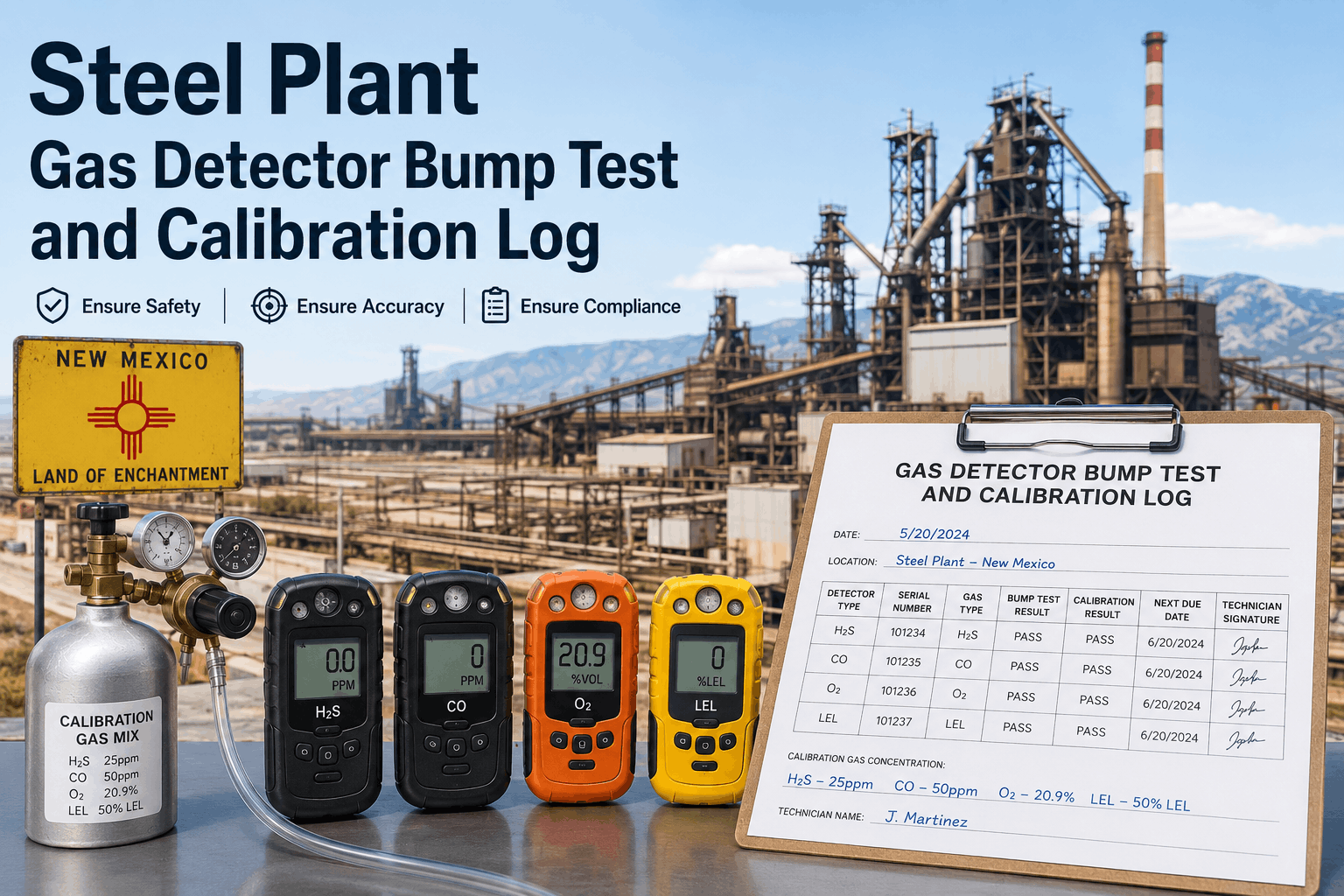
Before any detector is deployed into the field, its status must be known: Is it assigned? Has it been bump tested this week? Is the battery charged? Is the calibration current? A single detector without a bump test record creates compliance liability and worker safety risk. OSHA requires that a written record of calibration and testing be kept for the life of each instrument, showing the date of each test, the gas concentration used, and the results. Oxmaint asset management tracks every detector's location, assignment, test history, and current status, preventing untested detectors from entering confined spaces or hazardous operations.
2. Bump Test Execution & Sensor Response Verification
A bump test (also called a function test) is a qualitative check, not a quantitative calibration. OSHA defines bump test as exposing the detector to a known concentration of test gas at a level sufficient to activate all alarm settings. The test verifies that sensors can detect gas and that audible/visual alarms function. Bump tests should be performed in well-ventilated areas to prevent excessive exposure to test gas. Steel mills should perform bump tests at the start of each work shift for all detectors used that day, and maintain records showing date, time, result, and technician who performed the test.
3. Full Calibration & Scheduled Maintenance Intervals
While bump tests verify functionality, full calibration checks quantitative accuracy — ensuring sensor readings match known gas concentrations within acceptable tolerance. OSHA and manufacturer guidelines recommend full calibration at least every 6 months for detectors in regular use. Steel mills with heavy use (daily field deployment) should calibrate every 3 months. Full calibration requires certified calibration gas at multiple concentrations (zero, mid-range, and span) and specialized calibration equipment. Most facilities send detectors to qualified service centers for annual or semi-annual calibration to ensure accuracy and maintain manufacturer warranty.
4. Sensor-Specific Checks & Hazard-Based Testing
Different sensor types detect different gases and have different accuracy and response requirements. H₂S detectors require PPE-grade sensitivity (detecting as low as 1 ppm). Oxygen sensors detect depletion below 19.5%. CO sensors must respond to 35 ppm (OSHA PEL). LEL sensors detect combustible gas at 10% of the lower explosive limit (LEL). Each sensor type has specific calibration gases, alarm setpoints, and acceptable error ranges. Steel mills must ensure the correct detector type is deployed for each hazard — an H₂S detector alone is insufficient in a confined space where oxygen deficiency or CO are also possible. Multi-gas detectors (O₂/LEL/CO/H₂S) are mandated for OSHA permit-required confined space entry in steel mills.
Gas detector bump test and calibration logs are front-line OSHA compliance evidence. If a worker reports H₂S exposure or CO exposure but the OSHA investigator finds no gas detector bump test records, the investigation will focus on inadequate safety procedures. Conversely, if Oxmaint records show daily bump tests, periodic calibration, and immediate replacement of failed detectors, the employer demonstrates due diligence and care. OSHA expects to see: (1) detector inventory list, (2) assignment and location records, (3) bump test logs with dates/results, (4) calibration certificates, and (5) out-of-service records for failed units.
OSHA-Proof Gas Detector Compliance with OxmaintBump test logs, calibration scheduling, sensor health tracking, and audit-ready documentation — all timestamped and searchable on mobile devices in the field.
Gas Detector Bump Test & Calibration — Frequently Asked Questions
1. What is the difference between a bump test and full calibration?
Bump test (function check) verifies the detector can detect gas and activate alarms — it's qualitative and required weekly or before each use. Full calibration is quantitative, testing accuracy at multiple gas concentrations and certifying the detector meets ±10% tolerance. Calibration is required every 6 months per OSHA and manufacturer guidance.
2. What do I do if a gas detector fails its bump test?
Immediately remove it from service and tag "Out of Service." Do not allow field use. Send to a qualified service center for full calibration and sensor inspection. Once repaired and recalibrated with a passing certificate, the detector may return to service. Oxmaint tracks failed detectors and triggers automatic work orders for repair.
3. How often must bump tests be performed on steel mill detectors?
OSHA recommends bump testing before each day's use or weekly minimum. Steel mills with daily confined space entry should bump test every morning. Oxmaint assigns bump test reminders daily and generates compliance reports showing which detectors have been tested and which are overdue.
4. What are the alarm setpoints for H₂S, CO, and oxygen sensors?
Typical setpoints: H₂S low alarm 10 ppm; CO low alarm 35 ppm; oxygen low alarm 19.5%, high alarm 23.5%. Some detectors allow custom setpoints per facility policy. Verify setpoints annually and ensure they match OSHA PEL and IDLH values for your operation. Oxmaint records and tracks detector setpoint settings.
5. Why do oxygen and H₂S sensors age faster than CO or LEL sensors?
Oxygen sensors degrade naturally due to air exposure and oxidation of the sensor element — typical life 3–5 years. H₂S electrochemical sensors are poisoned by sulfur and lead compounds in harsh industrial air. Schedule oxygen sensor replacement every 3–5 years even if bump tests pass. Oxmaint tracks sensor age and schedules preventive replacement.
6. What qualifies as a "high-level exposure" that requires urgent recalibration?
Exposure above 500 ppm H₂S or 1,000 ppm CO may degrade sensors. Additionally, exposure to catalytic bead LEL sensor poisons (silicones, hydrogen, sulfur) requires immediate recalibration. After any overexposure incident, remove the detector from service and send for urgent full calibration before redeployment. Oxmaint logs exposure incidents and auto-triggers urgent calibration work orders.
7. What records must be maintained for OSHA audit compliance?
Maintain for 5 years: (1) detector inventory list, (2) weekly or daily bump test logs showing dates/times/results/technician, (3) calibration certificates, (4) out-of-service records with reasons, (5) maintenance and repair documentation. Oxmaint stores all digitally and generates audit-ready reports within 30 minutes of inspection notification.
8. Can I perform full calibration of detectors in-house or must it be sent out?
Full calibration requires certified gases, calibration equipment, and traceability to NIST standards. Most steel mills lack in-house calibration capability and send detectors to qualified service centers (MSA, Dräger, Interscan). In-house bump testing is acceptable and encouraged daily. Oxmaint tracks bump tests performed in-house and schedules external calibration every 6 months.
Zero OSHA Violations with Mobile-First Detector ComplianceBump test before each use, calibrate every 6 months, maintain 5-year records, and generate audit defense in minutes using Oxmaint — purpose-built for steel mill safety protocols.