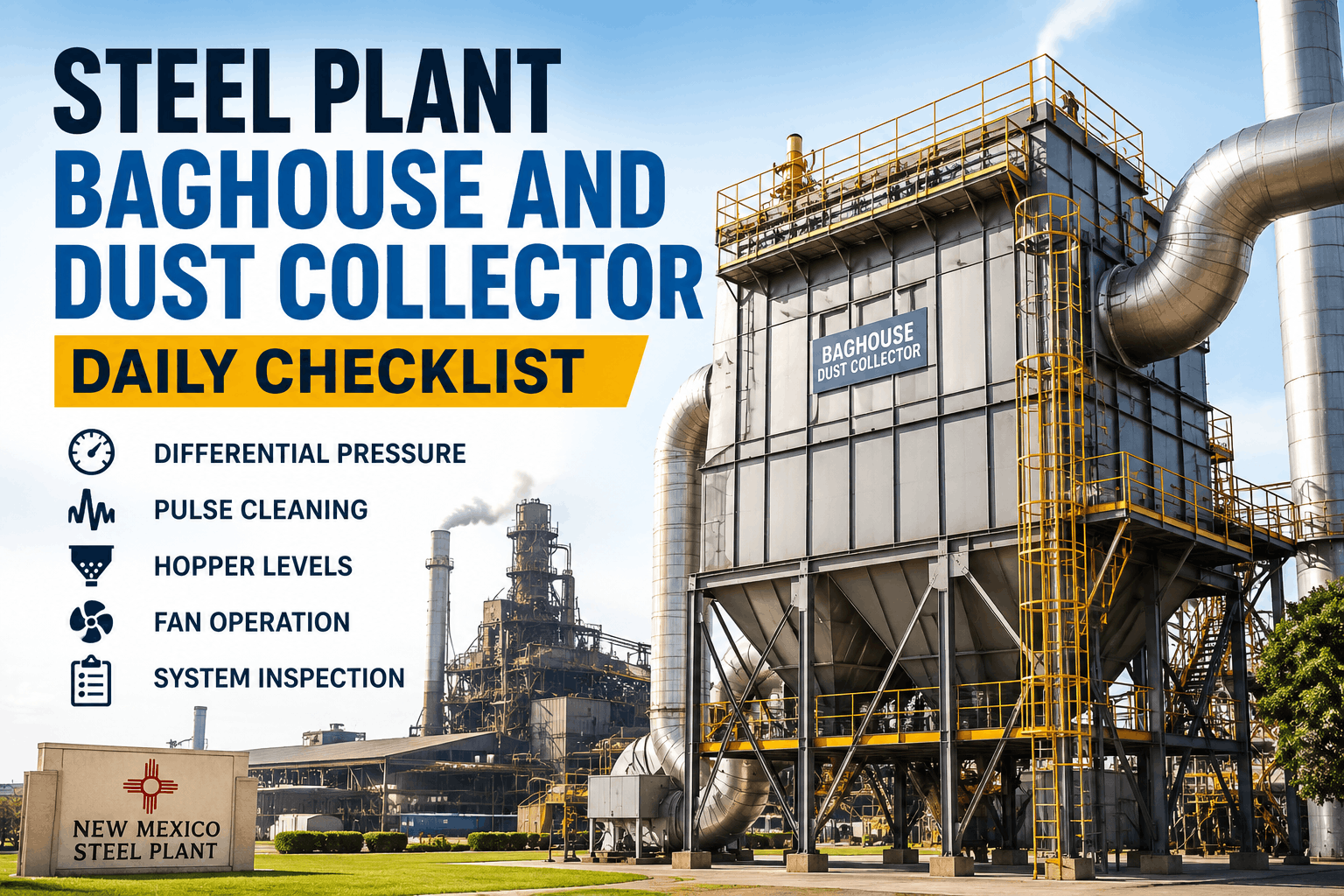
Steel Plant Baghouse and Dust Collector Daily Checklist
By Alex Jordan on June 5, 2026
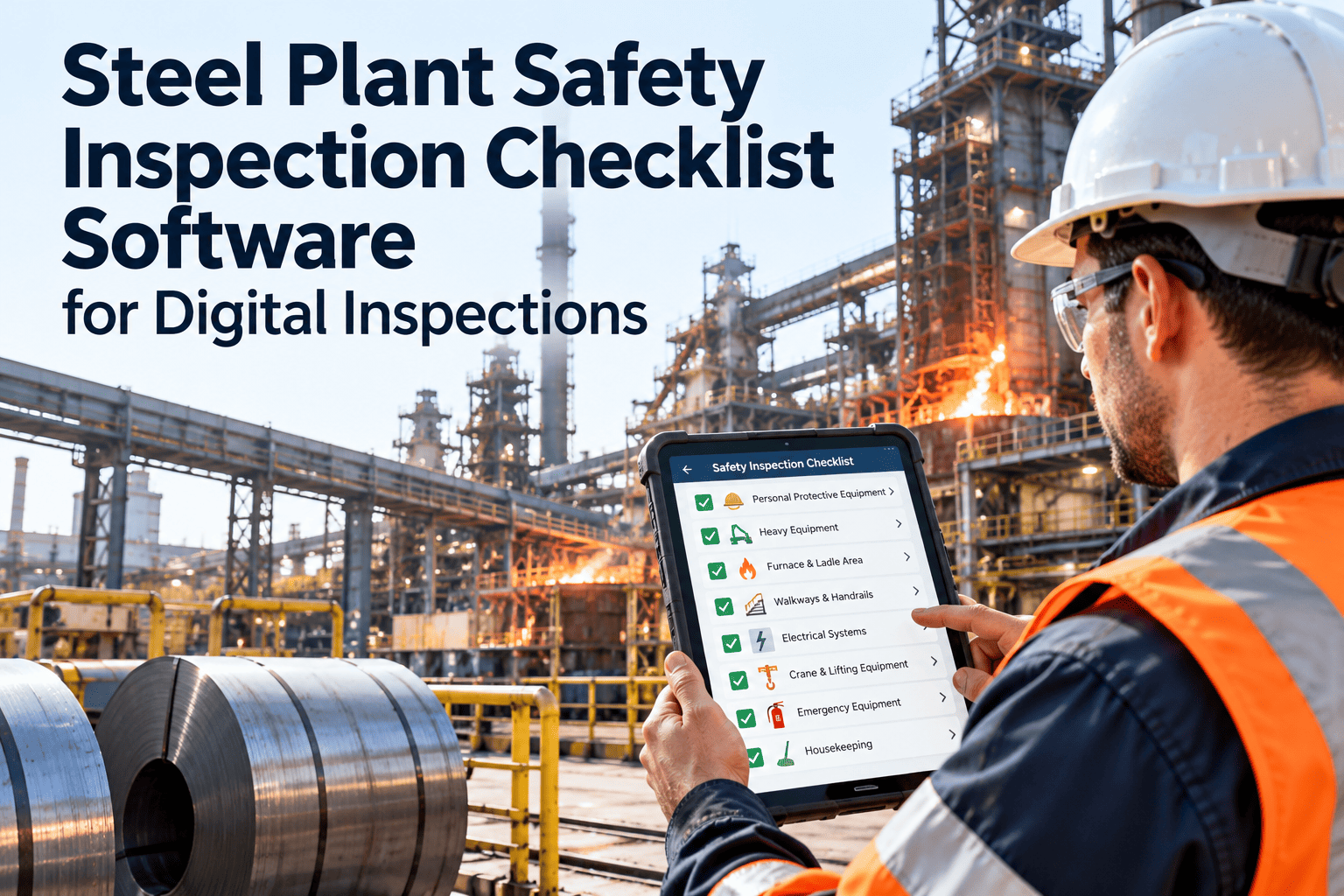
Dust collection system downtime costs steel plants between $5,000 and $15,000 per hour in lost production capacity. Baghouse failures stem from unmonitored differential pressure buildup, fouled filter bags, improper pulse cleaning sequences, and neglected hopper discharge mechanisms. A structured daily baghouse inspection checklist prevents catastrophic equipment failures, extends filter media life by 40%, reduces compressed air consumption, and maintains consistent emission control compliance. Oxmaint's mobile-first CMMS platform enables technicians to log differential pressure trends, capture real-time filter condition photographs, and flag emerging defects before they escalate into full-system shutdowns affecting your entire steel production line.
Reduce Baghouse Downtime with OxmaintDaily pressure drop monitoring, filter bag tracking, and predictive maintenance alerts integrated into one mobile platform. Start free, scale enterprise.
Differential pressure (DP) is the single most important baghouse performance indicator. Abnormal DP readings signal filter blinding, dust cake hardening, or air bypass leakage. Daily DP logs, when trended over weeks, reveal maintenance patterns that extend filter life and reduce unplanned replacements by up to 35% in steel mills.
2. Filter Bag Visual Inspection & Damage Detection
Filter bags are the heart of baghouse performance. Tears, holes, and improper seating allow uncollected dust to escape, violating emission limits. In steel plants, 60–70% of baghouse failures originate from bag damage discovered too late. Mobile photography linked to work orders in Oxmaint enables technicians to document defects and schedule replacements before they trigger regulatory notices.
3. Pulse Cleaning System & Compressed Air Verification
Pulse-jet cleaning mechanisms rely on solenoid valve performance, compressed air pressure stability, and timer synchronization. A single failed pulse valve causes 10–15% loss of cleaning force, allowing dust cake to harden and blind remaining bags within 48 hours. Daily pulse system checks prevent this cascade failure and reduce unplanned shutdowns by 40–50% in steel mill baghouse operations.
Hopper bridging and plugging cause rapid DP rise by blocking air exit, and can compress harmless dust into hazardous agglomerates. Stalled rotary valves and screw conveyors allow dust accumulation that eventually falls back into the baghouse, recirculating uncollected material. Daily hopper checks prevent both equipment damage and air quality violations that trigger environmental agency citations.
5. Baghouse Fan & Inlet Air Quality Monitoring
Baghouse exhaust fans are sized for specific air volume (ACFM) and static pressure. Undersized exhaust or degraded inlet conditions reduce airflow, causing dust recirculation and filtration failure. Daily fan operation audits and inlet assessment ensure consistent collection efficiency and prevent fugitive dust emissions that violate environmental permits in steel mill operations.
Manage Baghouse Operations with Oxmaint MobileReal-time DP trending, automated filter tracking, solenoid monitoring, and emission compliance — all on your technician's phone with full offline capability.
1. What is the most critical daily measurement for baghouse health in steel mills?
Differential pressure (DP) is the single most important indicator. Rising DP signals filter blinding, cleaning failure, or inlet blockage. Trending daily DP helps identify problems 24–48 hours before they cause shutdown, giving maintenance time to act. Oxmaint auto-alerts when DP exceeds thresholds, enabling predictive intervention.
2. How often should filter bags be replaced in a steel plant baghouse?
Typical baghouse filter bags last 3–5 years in steel mills under normal dust loading. High-temperature or corrosive dust environments may shorten life to 18–24 months. Oxmaint asset records track each bag installation date and enable automatic replacement scheduling based on actual condition or fixed intervals, preventing emergency unplanned outages.
3. Why does compressed air pressure matter for pulse cleaning?
Pulse intensity depends directly on air pressure. Pressure below 75 psi delivers insufficient cleaning force, causing dust cake to harden and blind bags within 48 hours. Maintaining 80–100 psi ensures consistent, effective cleaning and extends filter life by 30–40%. Oxmaint logs pressure hourly and alerts if supply drops below set point.
4. What causes hopper bridging in steel mills and how is it prevented?
High moisture content and sticky dust composition cause bridging (dust arches that stop flow). Prevention includes hopper heating in humid climates, vibration assistance, and regular unloading to keep hopper below 75% full. Oxmaint monitors hopper discharge valve runtime and can alert if discharge stops unexpectedly, signaling bridging risk.
5. How do I know if a solenoid valve has failed without equipment shutdown?
Listen near the solenoid during pulse cycle — a silent or delayed click indicates coil failure. Rising DP despite audible pulse clicks suggests a valve is leaking internally (not fully closing). Mark failed solenoids for same-day replacement. Oxmaint tracks solenoid replacement history to identify chronic failure patterns supporting predictive maintenance.
6. What inlet temperature is safe for polyester vs. aramid filter bags?
Polyester bags safely handle sustained temperatures up to 150–160°C; aramid bags tolerate up to 250°C but cost 5–6× more. Steel mill inlets often spike above 150°C during operations. Oxmaint inlet temperature logging triggers automated alerts above set points so operators can activate cooling dampers before media damage occurs.
7. How is baghouse compliance documented for environmental audits?
Environmental agencies require daily DP logs, filter condition records, cleaning system operational logs, and emissions monitoring data. Oxmaint centralizes all inspection photos, readings, and work order records with timestamped audit trails, ensuring documentation is ready for regulatory inspection within hours instead of days.
8. Why is outlet duct sealing important for baghouse efficiency?
Leaking outlet flanges allow uncollected dust to escape into the environment, violating permit limits and creating fugitive dust liability. Regular gasket and seal inspection prevents air bypass that reduces collection efficiency by 10–20%. Oxmaint work order tracking ensures seals are replaced proactively during scheduled maintenance rather than after failures.
Make Baghouse Maintenance Predictable with OxmaintStop reactive repairs. Start trending daily data. Mobile-first platform built for steel plant dust collection operations — free deployment, no implementation fees, results in weeks.