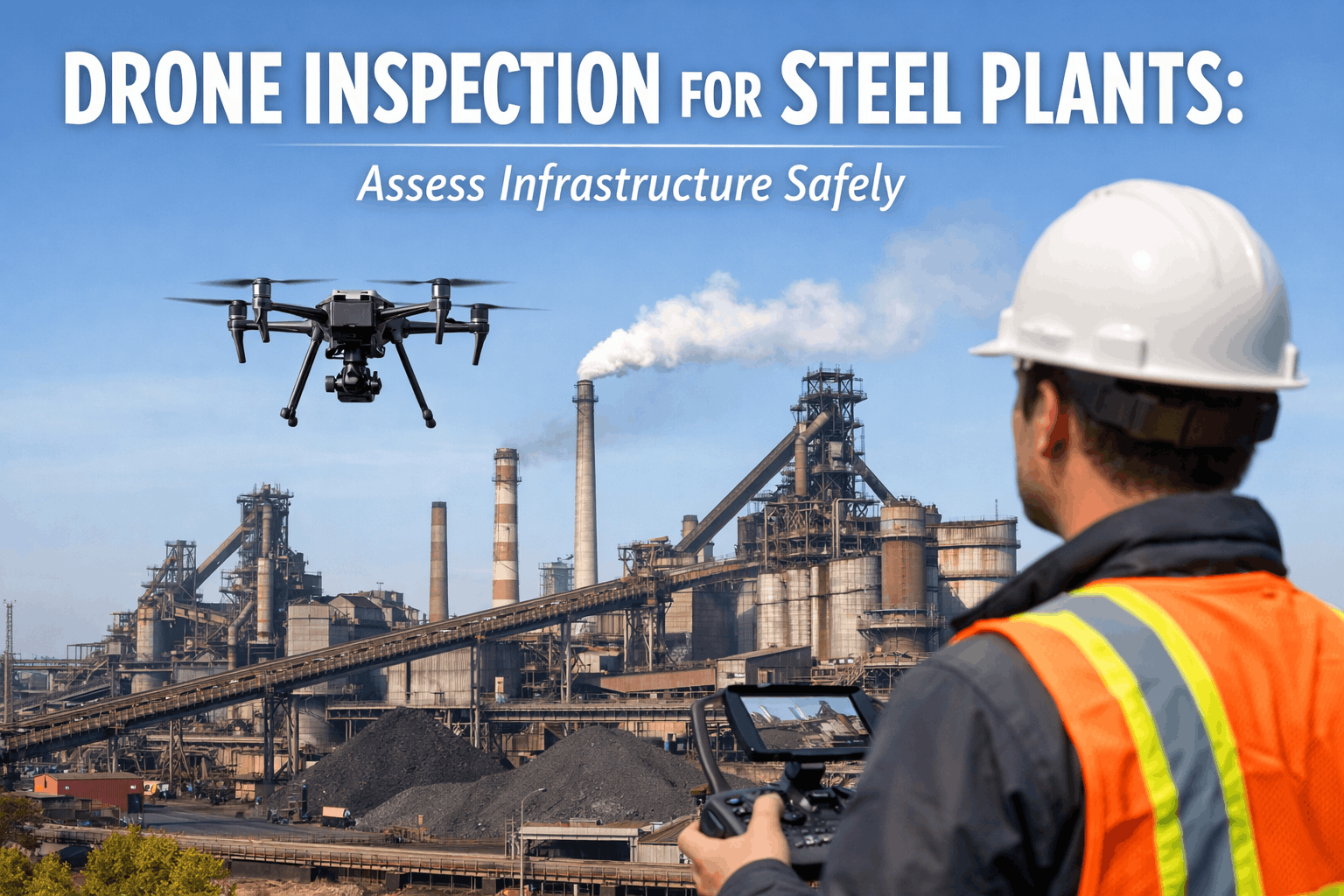
A blast furnace stack stands 120 feet above the casting floor. The refractory lining inside it degrades under 2,300°F operating temperatures, and when it fails, the consequences range from unplanned outages costing $500,000 per day to catastrophic safety events. Inspecting that stack manually means erecting scaffolding for two to three weeks, shutting down the furnace for an extended cooling period, and sending technicians into a confined space where residual heat, structural instability, and toxic gas exposure create life-threatening conditions. Now consider that a steel plant has dozens of structures requiring regular inspection—blast furnaces, coke ovens, BOF vessels, continuous casters, cooling towers, stacks, ductwork, and miles of overhead crane rails. The traditional inspection model isn't just expensive at $150,000–$400,000 per major structural assessment. It's fundamentally incompatible with the operational demands of modern steel production, where every hour of downtime translates directly into lost tonnage and revenue. Drone inspection technology is eliminating these constraints entirely. Industrial-grade UAVs equipped with thermal imaging, LiDAR, high-resolution cameras, and gas detection sensors now inspect the most hazardous structures in steel plants—while the facility continues operating. No scaffolding. No confined space entry. No extended shutdowns. And inspection data that's orders of magnitude more detailed than anything a human inspector with a clipboard could capture.
$500K
Average daily cost of unplanned downtime in integrated steel operations
72%
Of steel plant injuries occur during inspection, maintenance, and confined space activities
3–5x
Cost premium for traditional scaffolded inspections vs. drone-based assessments
85%
Reduction in inspection-related downtime when drones replace manual methods
Why Steel Plants Need a Different Inspection Approach
Steel production environments are among the most hostile operating conditions on earth for both equipment and personnel. Temperatures exceeding 2,500°F, corrosive off-gases, molten metal splash zones, electromagnetic interference from arc furnaces, and structural vibration from heavy rolling operations create an environment where traditional inspection methods are slow, dangerous, and incomplete. The structures that need the most frequent monitoring—furnace shells, refractory linings, ductwork, stacks, and overhead cranes—are precisely the ones that are hardest to access safely. Facilities that sign up to digitize their inspection and maintenance workflows are discovering that drone technology doesn't just reduce risk—it reveals defects that manual inspection consistently misses.
Safety Risk
Confined Space & Fall Hazards
Manual inspection of furnace interiors, stacks, and elevated structures requires confined space permits, fall protection systems, atmospheric monitoring, and rescue teams on standby—creating $20,000–$50,000 in safety overhead per inspection event.
Production Impact
Extended Downtime Requirements
Scaffolding erection takes 1–3 weeks. Furnace cool-down periods require 5–10 days. Combined with the inspection itself, a single major structural assessment can idle production capacity for 3–6 weeks—costing millions in lost output.
Data Limitation
Incomplete Visual Coverage
Human inspectors in hazardous environments work under time pressure and physical constraints. They capture 15–30% of the total inspection surface compared to drone-based systematic surveys that achieve 95%+ coverage with repeatable flight paths.
Cost Escalation
Scaffolding & Access Costs
Scaffolding for a single blast furnace inspection runs $80,000–$200,000. Rope access teams bill $15,000–$40,000 per structure. Annual inspection budgets for a mid-size integrated mill exceed $1.5M—with 60% going to access infrastructure, not actual inspection.
Drone Inspection Capabilities for Steel Plant Infrastructure
Industrial drone platforms designed for steel environments carry sensor payloads that far exceed what a human inspector can observe, measure, and document. Each flight captures thousands of data points that feed directly into maintenance planning, structural engineering assessments, and regulatory compliance documentation—transforming inspection from a periodic event into a continuous asset intelligence system.
01
High-Resolution Visual Inspection
48MP+ cameras with optical zoom capture sub-millimeter crack detection on furnace shells, refractory surfaces, structural steel connections, and weld joints. GPS-tagged imagery creates a complete visual record of every inspected surface with exact location mapping for defect tracking over time.
Result: 95%+ surface coverage vs. 15–30% with manual methods
02
Thermal Imaging & Hotspot Detection
Radiometric thermal cameras detect temperature anomalies across furnace shells, stacks, ductwork, and refractory walls while the facility operates. Hotspot mapping identifies refractory erosion, insulation breakdown, and structural weak points—often months before they become visible to the naked eye.
Result: Detect refractory failures 3–6 months before they cause unplanned outages
03
LiDAR 3D Structural Mapping
Drone-mounted LiDAR generates millimeter-accurate 3D point clouds of complex structures—blast furnace shells, cooling towers, crane runways, and building steel. Comparing successive scans reveals structural deformation, settlement, and corrosion-driven material loss that visual inspection cannot quantify.
Result: Detect 2mm structural deformation across 100m+ spans
04
Gas Detection & Emissions Monitoring
Onboard gas sensors detect CO, SO₂, H₂S, and particulate emissions from stacks, coke ovens, and BF casthouse areas—mapping concentration gradients across the facility without exposing personnel. Supports EPA compliance monitoring and fugitive emissions tracking.
Result: Real-time emissions mapping across entire facility in under 4 hours
05
Confined Space & Interior Inspection
Collision-tolerant indoor drones navigate furnace interiors, ductwork, vessels, and enclosed structures that would require confined space entry for human inspectors. Cage-protected rotors and onboard lighting enable operation in zero-visibility environments with real-time video feed to operators outside the hazard zone.
Result: Eliminate 100% of confined space entries for routine inspection activities
Traditional vs. Drone Inspection: The Complete Comparison
The economic and operational case for drone inspection in steel plants isn't marginal—it's transformational. Every metric that matters to operations, safety, and finance improves dramatically when drones replace manual inspection methods for structural assessments, refractory monitoring, and infrastructure surveys.
Scroll horizontally on mobile
See How Drone Inspection Data Integrates with Your Maintenance System
Watch how inspection findings flow directly into work orders, maintenance schedules, and compliance documentation—closing the loop between what the drone finds and what your maintenance team fixes.
Steel Plant Structures: What Drones Inspect
Every major structure in a steel plant benefits from drone inspection, but the ROI varies significantly based on access difficulty, inspection frequency requirements, and the consequences of missed defects. The highest-value applications are structures where traditional inspection requires extended shutdowns, scaffolding, or confined space entry—and where undetected deterioration leads to catastrophic failure.
Blast Furnace Shell & Staves
Inspection: Thermal mapping of shell temperature, stave cooling circuit verification, refractory wear profiling
Frequency: Monthly thermal scans; annual detailed structural assessment
Traditional cost: $200K–$400K per assessment with 4–6 week shutdown
Drone cost: $30K–$60K with zero to minimal downtime
Coke Oven Battery
Inspection: Door seal integrity, buckstay alignment, top-side ductwork, pushing/quenching system
Frequency: Quarterly thermal; semi-annual structural
Traditional cost: $150K–$300K with significant access challenges
Drone cost: $25K–$50K with operations continuing
BOF Vessel & Off-Gas System
Inspection: Vessel shell condition, trunnion ring integrity, hood and ductwork, suppressed combustion system
Frequency: During scheduled reline; quarterly external thermal
Traditional cost: $100K–$250K integrated with reline activities
Drone cost: $20K–$40K for vessel interior; thermal scans during operation
Cooling Towers & Water Systems
Inspection: Fill media condition, structural timber/concrete, drift eliminators, basin, distribution system
Frequency: Semi-annual interior; quarterly exterior thermal
Traditional cost: $80K–$180K with basin drain and scaffold
Drone cost: $15K–$35K with interior drone flight
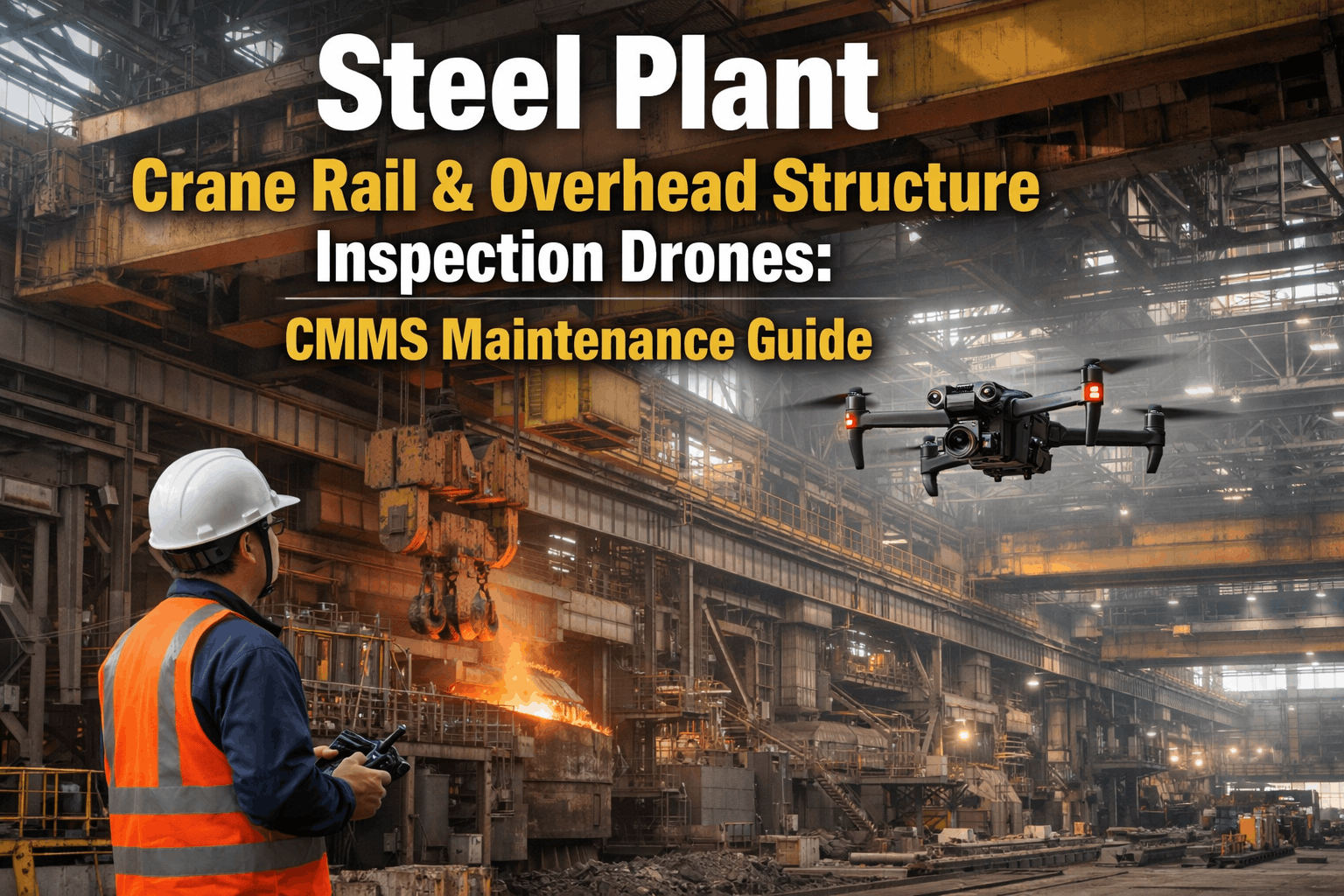
Overhead Crane Runways
Inspection: Rail alignment, girder condition, connection integrity, runway beam deflection
Frequency: Annual structural; quarterly visual
Traditional cost: $40K–$100K with crane lockout and man-lift access
Drone cost: $8K–$20K during non-production windows
Stacks, Flues & Ductwork
Inspection: Refractory lining, shell corrosion, expansion joints, damper condition, structural steel supports
Frequency: Semi-annual interior; annual detailed structural
Traditional cost: $60K–$150K with rope access or scaffold
Drone cost: $10K–$30K with interior-rated drone
Across all these structures, the pattern is the same: drone inspection delivers 3–5x cost reduction, 85%+ downtime elimination, dramatically better data quality, and zero personnel exposure to hazardous conditions. Facilities that sign up to connect drone inspection data with their CMMS ensure that every finding generates a tracked, prioritized work order—not a PDF that sits in someone's inbox until the next failure event.
The Inspection-to-Action Workflow
Drone inspection data is only valuable if it triggers the right maintenance actions at the right time. The most advanced steel plant operations connect drone findings directly to their maintenance management system, creating a closed-loop workflow that moves from detection to repair without manual handoffs, lost reports, or forgotten findings.
1
Drone Flight Execution
Pilot executes pre-programmed flight path capturing visual, thermal, and LiDAR data. GPS-tagged imagery is automatically uploaded to cloud processing platform.
2
AI-Assisted Analysis
Machine learning algorithms flag anomalies—cracks, hotspots, corrosion, deformation—and classify severity. Structural engineers review AI findings and confirm defect assessments within 48 hours.
3
Defect Prioritization
Each confirmed defect is assigned a severity rating (critical/high/medium/low) with recommended repair timeline and method. Findings are mapped to specific asset locations in the facility's asset registry.
4
CMMS Work Order Generation
Prioritized findings automatically generate maintenance work orders in the plant's CMMS—complete with defect photos, location data, severity classification, and recommended repair procedures.
5
Repair Execution & Verification
Maintenance teams complete repairs against the work order. Follow-up drone flights verify repair quality and establish new baseline measurements for ongoing condition monitoring.
ROI Analysis: Drone Inspection Investment vs. Return
The financial case for drone inspection in steel plants is built on hard-dollar savings that show up in four budget categories. Facilities consistently report 18–24 month payback on drone program investment, with cumulative savings accelerating as inspection frequency increases and the baseline data library enables predictive maintenance decisions.
$1.8M
Inspection Cost Reduction
Eliminates scaffolding, rope access, and confined space entry costs across all structures
$3.2M
Avoided Unplanned Downtime
Early defect detection prevents 6–10 days of unplanned outage per year at $500K/day
$420K
Safety & Insurance Savings
Zero confined space entries, reduced workers' comp claims, and lower insurance premiums
$650K
Extended Asset Life
Condition-based maintenance extends refractory, structural, and mechanical component life by 15–25%
The avoided downtime category alone typically justifies the entire drone program investment. A single unplanned blast furnace outage prevented by early thermal detection of refractory failure delivers 4–8x the annual cost of a comprehensive drone inspection program. Facilities that book a free demo to see how drone data feeds into predictive maintenance workflows can model this ROI against their own production and downtime cost parameters.
Connect Drone Inspections to Your Maintenance Workflow
OxMaint turns drone inspection data into prioritized, trackable work orders—every defect photographed, every repair scheduled, every follow-up verified. Stop losing findings in PDF reports and start closing the loop between detection and repair.
Regulatory & Compliance Benefits
Drone inspection doesn't just improve maintenance outcomes—it generates the documentation that regulatory agencies, insurance underwriters, and corporate safety programs require. Every flight produces timestamped, GPS-tagged, auditable records that satisfy the most demanding compliance frameworks in heavy industry.
OSHA Confined Space (29 CFR 1910.146)
Drone inspections eliminate the need for permit-required confined space entries for routine assessments—reducing OSHA recordable exposure by 90%+ and eliminating the $15,000–$30,000 cost of confined space rescue standby teams per entry event.
EPA Emissions Monitoring (Clean Air Act)
Gas-sensing drones map fugitive emissions from coke ovens, blast furnaces, and BOF operations—providing the spatial resolution and frequency that ground-based monitoring cannot match. Supports LDAR programs and consent decree compliance.
NFPA & Fire Code Compliance
Thermal imaging during drone flights identifies overheating electrical connections, damaged insulation, and fire-risk conditions in overhead cable trays, transformer rooms, and dust collection systems—before they trigger fire events.
Insurance Underwriting & Risk Engineering
Insurers increasingly accept drone inspection reports as evidence of proactive asset management. Facilities with documented drone inspection programs report 10–20% reductions in property insurance premiums for heavy industrial coverage.
Expert Perspective: Implementing Drone Inspection in Steel Environments
"
The steel plants that get the most value from drone inspection programs treat them as data platforms, not just inspection tools. The flight is 20% of the value. The other 80% is what you do with the data—building thermal trend baselines, comparing structural measurements over time, and feeding defect findings directly into your maintenance system so nothing falls through the cracks. I've watched plants file beautiful drone inspection reports in a SharePoint folder where nobody reads them. The ones that generate automatic work orders from drone findings—those plants are catching failures six months before they happen and scheduling repairs during planned outages instead of scrambling during emergencies.
Build thermal baselines from the first flight—trending data is more valuable than any single scan
Connect findings to your CMMS—reports without work orders are wasted intelligence
Schedule follow-up verification flights after every major repair to confirm quality
Use AI defect detection to reduce analysis time from weeks to days
The transition from traditional inspection to drone-based assessment isn't a one-time equipment purchase—it's a shift in how your plant manages asset intelligence. If you're evaluating drone inspection for your steel operation, book a free demo to see how inspection data integrates with maintenance planning and work order management.
Inspect Smarter. Maintain Proactively. Operate Safely.
OxMaint connects drone inspection findings to a complete maintenance management platform—every defect tracked, every work order automated, every repair verified. Transform inspection data from shelf-ware into actionable maintenance intelligence.
Frequently Asked Questions
Can drones operate safely inside steel plant environments with extreme heat and electromagnetic interference?
Yes—industrial-grade drones designed for steel environments are hardened against the specific hazards of heavy metal production. Heat-shielded drones can operate in ambient temperatures up to 200°F (93°C) for external inspections near active furnaces, while maintaining safe standoff distances from extreme heat sources. For electromagnetic interference from arc furnaces and induction equipment, industrial drones use redundant IMU systems, GPS-denied navigation capabilities (visual-inertial odometry), and shielded electronics that maintain stable flight in high-EMI environments. Collision-tolerant indoor drones with protective cages handle confined space inspections inside cooled-down vessels, ductwork, and structures where walls and obstacles are close. Flight planning accounts for thermal updrafts, particulate conditions, and restricted airspace zones around active operations.
How much does a drone inspection program cost compared to traditional methods?
Drone inspections typically cost 60–80% less than equivalent traditional inspections. A blast furnace assessment that costs $200K–$400K with scaffolding and confined space entry runs $30K–$60K with drones. Annual drone inspection programs covering 10–15 major structures in an integrated steel mill cost $400K–$800K—compared to $2M–$4M for traditional methods covering the same scope. The cost advantage comes from eliminating scaffolding rental and erection ($80K–$200K per structure), confined space entry safety infrastructure ($15K–$50K per entry), and production downtime that can exceed $500K per day. Most programs achieve payback within 18–24 months when including avoided downtime savings from early defect detection.
What FAA regulations apply to drone operations at steel plants?
Steel plant drone operations fall under FAA Part 107 for commercial UAS operations. Key requirements include: the pilot must hold a Remote Pilot Certificate, flights must stay below 400 feet AGL (unless within 400 feet of a structure, which allows flight up to the structure's height plus 400 feet), visual line of sight must be maintained (or a waiver obtained for BVLOS operations), and the drone must weigh under 55 pounds. Interior drone flights inside enclosed structures are generally outside FAA jurisdiction since they're not operating in navigable airspace. Many steel plants establish facility-specific drone operating procedures that exceed FAA minimums, including coordination with facility emergency response, no-fly zones around active molten metal operations, and communication protocols with overhead crane operators.
How does drone inspection data integrate with existing plant maintenance systems?
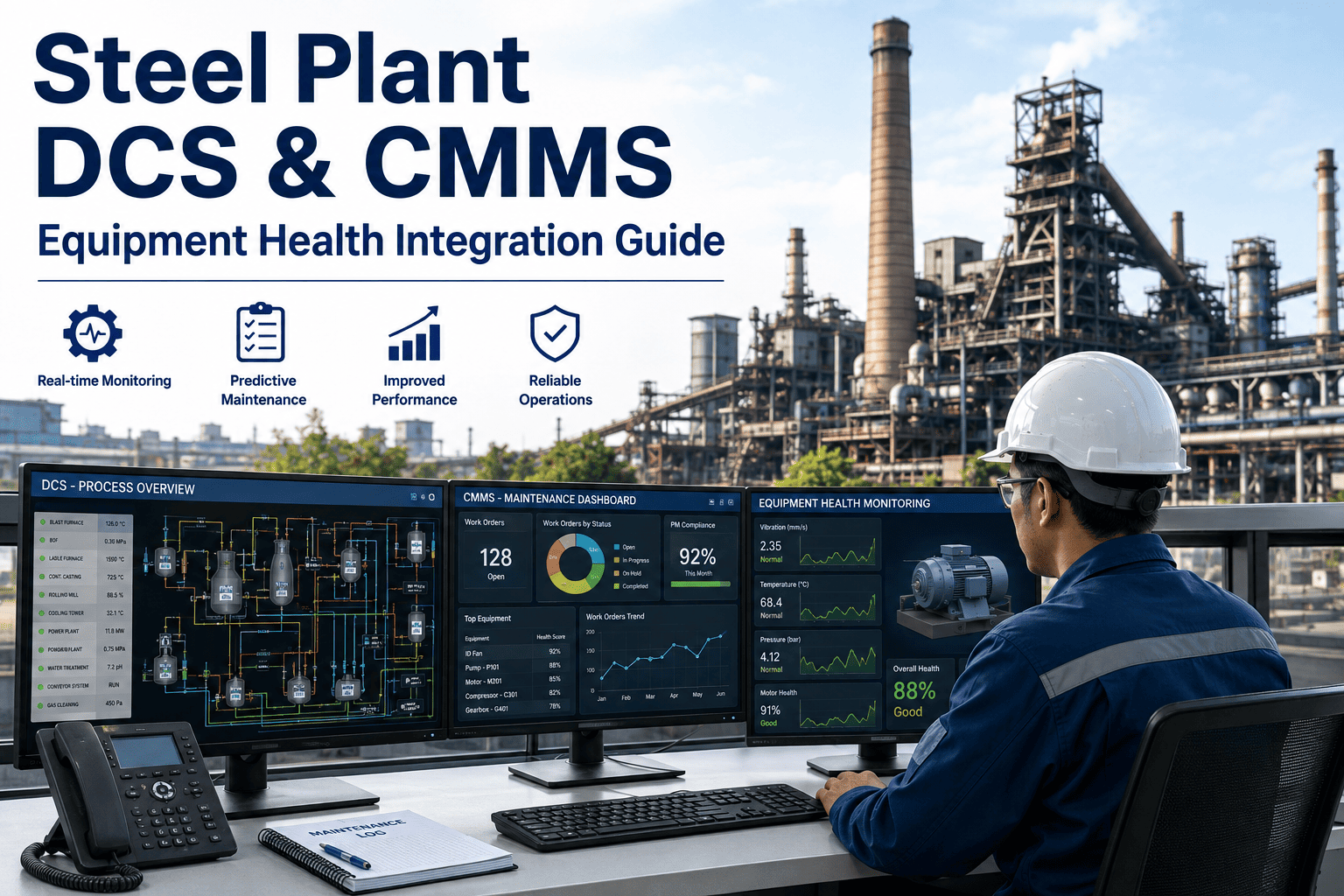
Drone inspection data integrates with plant CMMS, EAM, and ERP systems through standard APIs and data exchange protocols. The integration workflow: drone captures imagery and sensor data, cloud processing platform performs AI-assisted analysis and defect classification, confirmed findings are exported as structured data packages (defect type, severity, location, photos, recommended action) that map directly to asset records in the plant's maintenance system. Work orders are generated automatically with all supporting data attached. Integration with SAP PM, IBM Maximo, and other industrial CMMS platforms is standard. The key is connecting findings to specific equipment IDs in your asset registry so defect history accumulates over time and supports condition-based maintenance decisions.
Can drone thermal imaging really detect refractory failures before they cause outages?
Yes—thermal imaging is one of the highest-value applications of drone inspection in steel plants. Refractory degradation causes measurable temperature changes on the outer shell of furnaces, ladles, and vessels well before the failure becomes critical. A healthy blast furnace shell shows uniform temperature distribution within predictable ranges. When refractory erodes or spalls, the shell temperature at that location rises—sometimes by 50–200°F above baseline—creating a clear thermal signature that drone-mounted radiometric cameras detect from safe standoff distances. By establishing thermal baselines and comparing successive scans, plants can track refractory wear rates, predict remaining useful life, and schedule reline activities during planned outages rather than responding to emergency breakouts. Facilities report detecting refractory issues 3–6 months before they would have caused unplanned shutdowns.