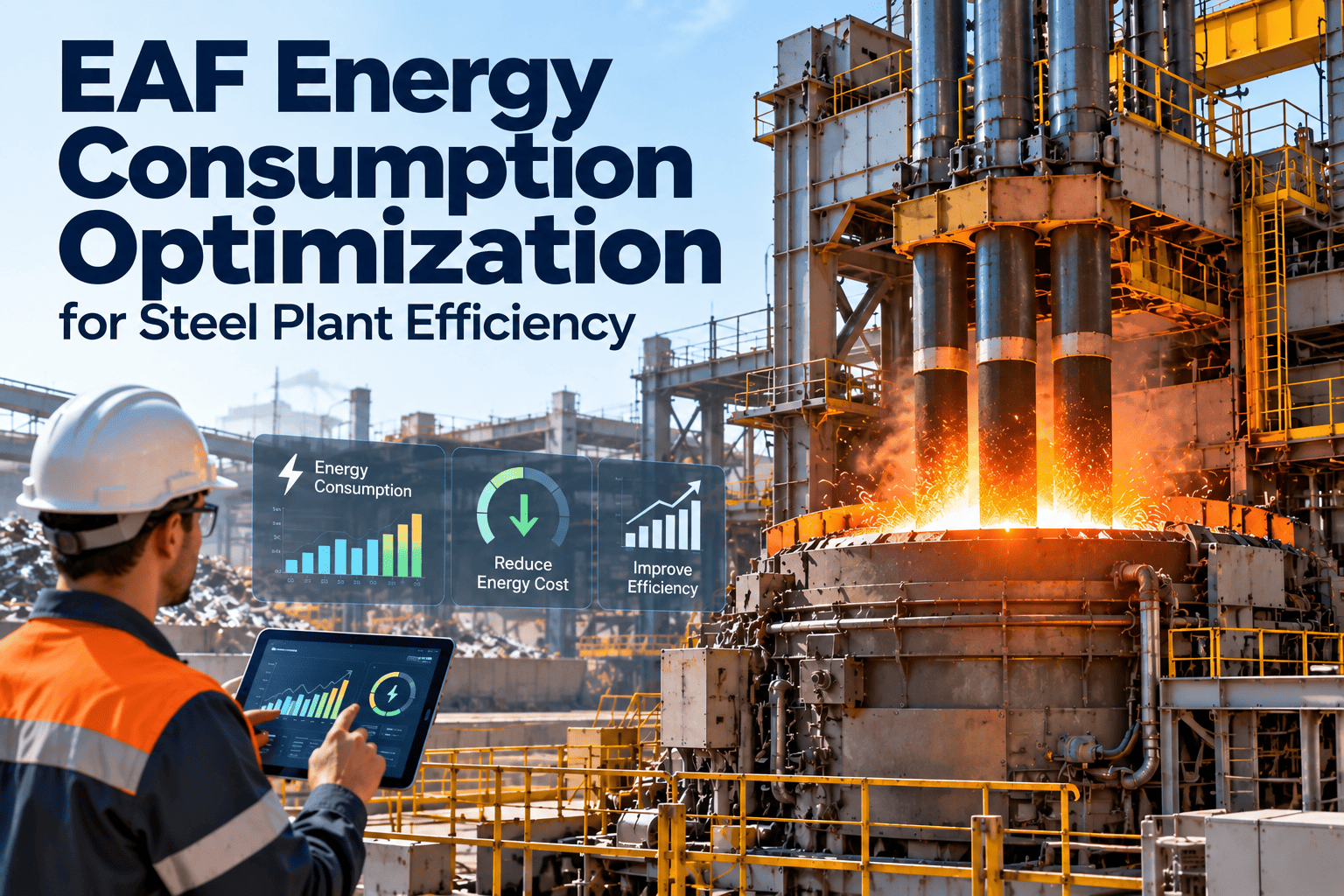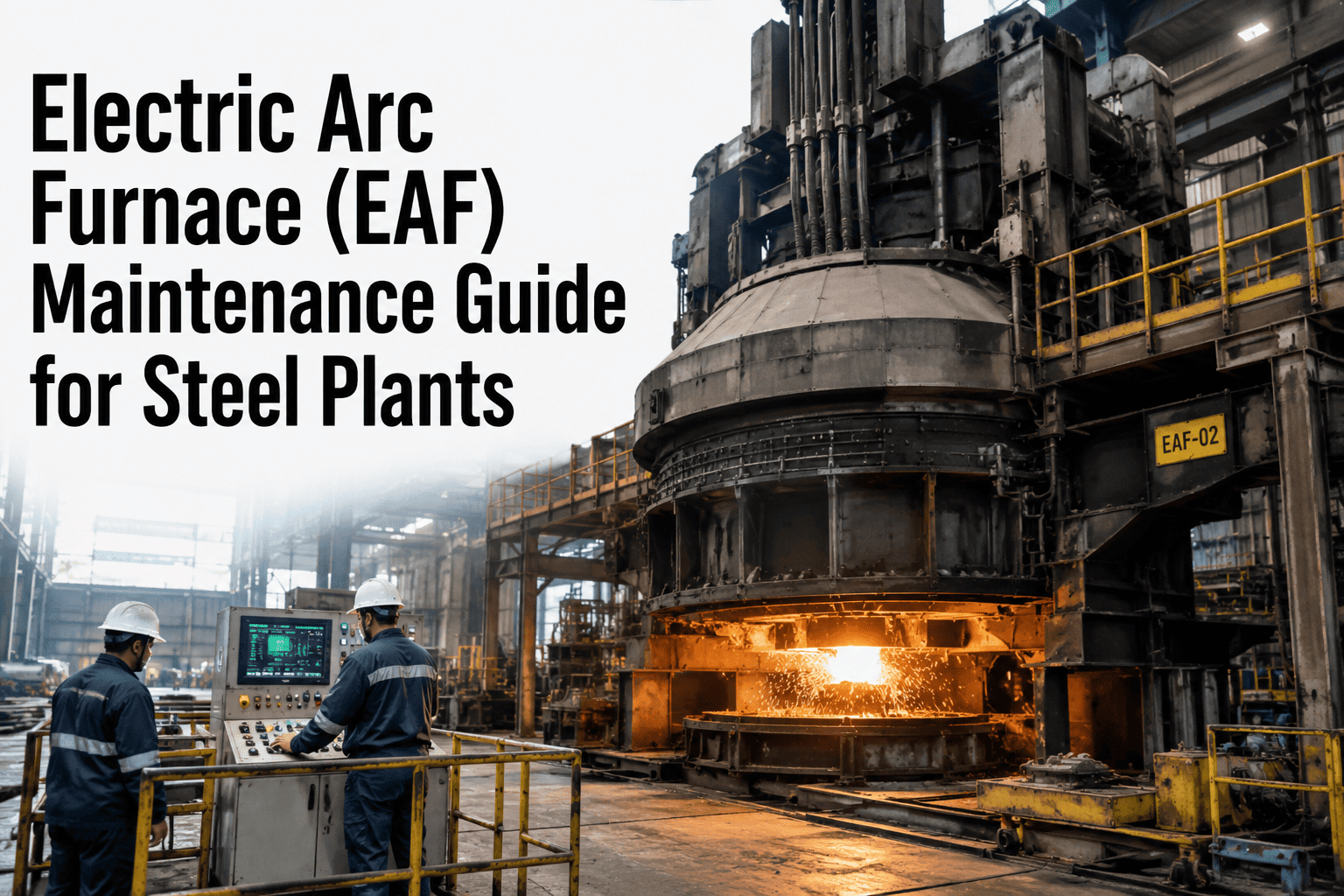
Electric arc furnace energy consumption accounts for 60–70% of a mini-mill's total operating cost, making EAF energy efficiency the single biggest lever for steel plant profitability — and disciplined maintenance is what keeps that lever pulled. EAF energy consumption maintenance covers transformer health, electrode column integrity, power factor correction, cooling-water system tuning, and offgas reliability, all of which directly move kWh-per-tonne. When these systems drift out of spec, electricity waste accumulates silently by the megawatt-hour. This guide breaks down how steel plants reduce arc furnace energy losses through targeted, CMMS-driven maintenance interventions across the electrical and mechanical stack. Ready to stop bleeding kilowatts? Start Free Trial with OxMaint and digitize your EAF maintenance program today.
Is your electric arc furnace quietly burning 10–15% more energy than it should?
Across the global steel industry, poor EAF maintenance discipline adds 40–80 kWh to every tonne of steel produced. Electrode wear, transformer degradation, and power factor drift compound daily — inflating utility bills and melting margin. OxMaint's AI-powered CMMS tracks every asset, triggers preventive interventions, and closes the gap between designed and actual energy performance.
What drives EAF energy consumption — and where maintenance intervenes
A typical EAF melts steel using 350–450 kWh per tonne, but well-maintained furnaces consistently hit the low end while neglected ones exceed 500 kWh/t. Here is where maintenance teams can claw back energy.
Electrode Column Integrity
Worn electrode arms, dirty clamps, and regulated pressure drift increase electrode breakage and arc instability. Every broken electrode wastes 50–150 kWh and halts production for 20–45 minutes.
Transformer Efficiency
Tap-changer wear, oil degradation, and loose busbar connections create resistive losses. A 1% increase in transformer losses on an 80 MVA furnace adds roughly $45K/year in wasted electricity.
Power Factor Maintenance
Degraded capacitor banks and harmonic filters drop power factor below 0.85, triggering utility penalties and reducing effective melting power. Proper maintenance keeps PF above 0.95.
Cooling & Offgas Systems
Scaled heat-exchangers and worn offgas fans reduce thermal efficiency and force longer heat cycles. A 5°C rise in cooling-water inlet temperature can add 8–12 kWh per tonne.
EAF energy reduction: the maintenance ROI formula
Quantifying energy waste from maintenance gaps turns "we should fix that" into a budgeted, scheduled priority. Use this formula to model savings for your mini-mill.
1.0 Mt/yr mini-mill reducing kWh/t from 430 to 395
A 35 kWh/t reduction is achievable with disciplined preventive maintenance on the four energy drivers above. Most mini-mills see 5–15% energy reduction within 6 months of implementing CMMS-driven EAF maintenance schedules.
EAF transformer efficiency and power factor maintenance checklist
The electrical stack — furnace transformer, harmonic filters, capacitor banks, and busbar system — degrades continuously under thermal cycling and harmonic loads. Here is a maintenance task matrix mapped to energy impact.
| Asset | Maintenance Task | Frequency | Energy Impact | Cost of Deferral |
|---|---|---|---|---|
| EAF Transformer | Oil sampling — DGA, moisture, dielectric strength | Quarterly | 0.5–1.5% efficiency loss prevented | $20K–60K/yr in resistive losses |
| Tap Changer | Contact inspection, cleaning, torque verification | Monthly | Stable voltage regulation maintained | Arc damage, $80K+ rebuild |
| Busbar System | Thermographic scan of all connections | Bi-weekly | Hot spots waste 0.3–0.8% of input power | Catastrophic failure, 12–48 hr downtime |
| Capacitor Banks | Capacitance measurement, visual inspection | Monthly | PF below 0.90 triggers penalties | $50K–150K/yr in utility PF penalties |
| Harmonic Filters | Detuning reactor and capacitor health check | Semi-annual | Reduces harmonic losses 1–2% | Equipment damage, IEEE 519 violations |
| Cable & Water-Cooled Conductors | Insulation resistance, cooling flow verification | Weekly | Prevents resistive overheating | Forced derating, production slowdown |
How to reduce EAF electrode consumption through maintenance
Graphite electrodes cost $3,000–$8,000 per tonne and a 150-tonne EAF can consume 1.5–2.5 kg of electrode per tonne of steel. Maintenance-driven electrode management cuts consumption by 15–30%.
Electrode Arm & Clamp Maintenance
Clean and torque electrode clamps weekly. Dirty or loose clamps increase contact resistance by 200–400%, accelerating electrode oxidation and tip wear. A well-maintained contact shoe saves 0.2–0.4 kg/t of electrode.
Regulated Pressure System Calibration
Electrode regulation hydraulic pressure must be calibrated monthly. Over-regulation causes mechanical stress and electrode breakage; under-regulation causes unstable arcs and longer melt times. Each broken electrode wastes 50–150 kWh.
Spray Ring & Water-Cooling Nozzle Cleaning
Clogged spray-ring nozzles reduce electrode cooling by 30–50%, increasing side-wall oxidation. Clean nozzles weekly and verify flow rates. Proper electrode cooling alone can save 0.3–0.6 kg/t.
Column Alignment & Slide Shoe Inspection
Misaligned electrode columns cause erratic arc patterns, uneven wear, and tip breakage. Check column verticality and slide-shoe clearance monthly. Misalignment of just 5 mm can increase electrode consumption by 10%.
How OxMaint CMMS drives EAF energy efficiency
OxMaint is an AI-powered CMMS and EAM platform built for heavy-industry maintenance teams. For steel plants, it transforms EAF energy maintenance from reactive firefighting into a data-driven, preventive discipline that moves kWh-per-tonne down and keeps it there.
Automated Preventive Schedules for Critical Energy Assets
Configure PM triggers by runtime, cycles, or calendar for transformers, tap changers, electrode systems, and cooling loops. OxMaint auto-generates work orders so no inspection slips — eliminating the 15% energy drift caused by missed tasks.
Predictive Analytics on Vibration & Thermal Data
Connect IoT sensors on offgas fans, hydraulic pumps, and transformer cooling units. OxMaint's AI models detect bearing degradation, thermal anomalies, and flow restrictions weeks before failure — preventing the efficiency losses that precede breakdowns.
Spare-Parts Inventory for Electrodes & Critical Components
Track electrode stock, transformer oil, contact tips, and capacitor modules with real-time min/max alerts. OxMaint prevents both stockouts (which force production delays) and overstocking (which ties up $200K+ in capital).
Maintenance Analytics & kWh/t Correlation
OxMaint dashboards link work-order completion rates to specific energy KPIs — kWh/tonne, power factor trends, electrode kg/t, and tap-to-tap time. See exactly which maintenance interventions moved the needle and quantify ROI to leadership.
Mobile Work Orders for Furnace-Floor Technicians
Technicians receive and complete work orders on rugged tablets at the furnace. Photo attachments, digital checklists, and real-time status updates eliminate paper logs and ensure every thermal scan, oil sample, and clamp torque is recorded.
Compliance & Audit Readiness (ISO 50001)
Every maintenance action is timestamped, geo-tagged, and attributable. OxMaint generates ISO 50001 and ISO 55000 audit reports in one click, proving that energy-management maintenance tasks were completed on schedule by qualified personnel.
See how OxMaint cuts your EAF energy consumption — book a 30-minute demo
We'll map your furnace transformer, electrode, and cooling maintenance gaps to dollar-value energy savings on your production numbers. No slides — just your assets in our system.
EAF energy consumption maintenance: frequently asked questions
How much can EAF energy consumption be reduced through maintenance?
Steel plants typically achieve a 5–15% reduction in EAF energy consumption (20–60 kWh per tonne) within 6 months of implementing disciplined maintenance on transformers, electrode systems, power factor equipment, and cooling loops. For a 1Mt/yr mini-mill, that translates to $1.5M–$4.5M in annual electricity savings. You can Start Free Trial to benchmark your baseline and track improvement.
What is the role of a CMMS in EAF energy efficiency?
A CMMS like OxMaint ensures that energy-critical preventive maintenance tasks — transformer oil sampling, tap-changer inspection, capacitor-bank testing, electrode-clamp torquing — are scheduled, assigned, and completed on time. It prevents the silent energy drift that occurs when maintenance is deferred, and provides analytics that correlate maintenance activity to kWh-per-tonne performance.
How does electrode consumption affect EAF energy efficiency?
Electrode consumption and energy efficiency are directly linked. Worn or broken electrodes create unstable arcs, longer melt times, and higher specific energy consumption. Each electrode breakage wastes 50–150 kWh and halts production for 20–45 minutes. Maintaining electrode clamps, regulation pressure, spray-ring cooling, and column alignment reduces electrode consumption by 15–30% and prevents associated energy waste.
How often should EAF transformer maintenance be performed?
EAF transformer maintenance should include quarterly dissolved gas analysis (DGA) and oil quality testing, monthly tap-changer contact inspection, and bi-weekly thermographic scans of busbar connections. A well-maintained 80 MVA EAF transformer prevents 0.5–1.5% efficiency loss that would otherwise cost $20K–$60K per year in wasted electricity. Book a demo at calendly.com/oxmaintapp/30min to set up your transformer PM schedule.
What power factor should an EAF steel plant maintain to avoid penalties?
An EAF steel plant should maintain a power factor of at least 0.95 to avoid utility penalties and maximize effective melting power. Power factor below 0.90 typically triggers demand charges and reactive-energy penalties of $50K–$150K per year for a mid-size mini-mill. Monthly inspection of capacitor banks and harmonic filter components is essential to sustain PF above 0.95.
Stop losing megawatts to deferred maintenance
Every heat you run without a CMMS tracking your energy-critical assets costs you kWh you'll never recover. Join the steel plants using OxMaint to cut EAF energy consumption, reduce electrode waste, and keep transformers running at peak efficiency.
Free 14-day trial · No credit card