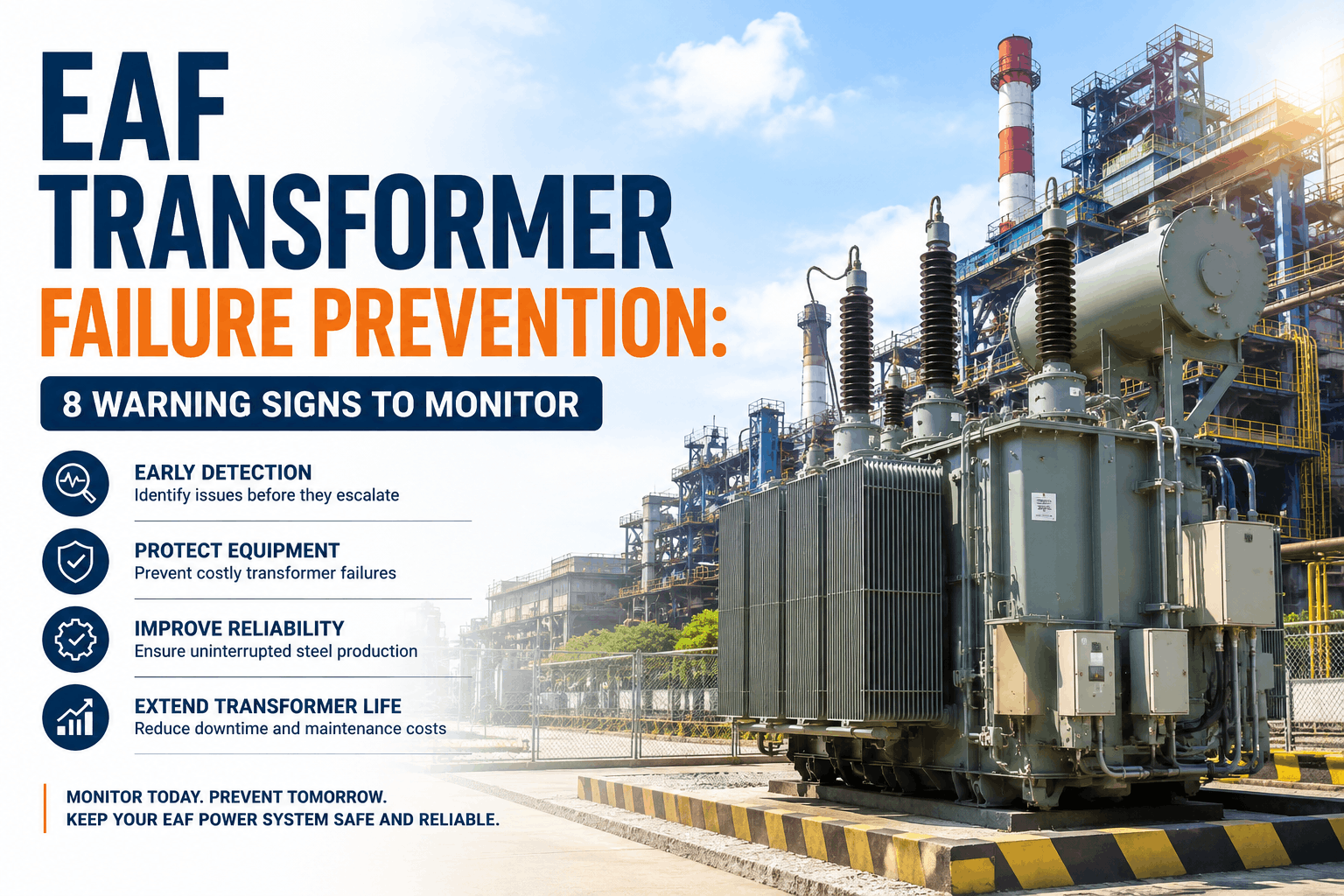
EAF Transformer Failure Prevention: 8 Warning Signs to Monitor
By Alex Jordan on June 16, 2026
An Electric Arc Furnace (EAF) transformer is the single most critical electrical asset in a steel mill — and one of the most expensive to replace. A catastrophic failure can cost $500,000–2,000,000 in replacement, plus 4–8 weeks of production downtime valued at $1–5 million in lost steel output. Yet most EAF transformer failures are not sudden — they are the culmination of weeks or months of detectable warning signs that a structured monitoring program would have caught. Oil temperature creep, dissolved gas trends, bushing deterioration, and tap changer anomalies all signal developing faults before they become catastrophic. Start a free trial with Oxmaint to monitor these 8 warning signs automatically, or book a demo to see how steel plants use Oxmaint's transformer monitoring module to prevent failures.
EAF Transformer Failure Prevention: 8 Warning Signs to Monitor Before Catastrophic Failure
EAF transformer oil testing, dissolved gas analysis (DGA), bushing inspection, cooling system monitoring, tap changer condition, overloading detection, and predictive maintenance — the complete guide to preventing EAF transformer failures in steel mills.
$500K–2M
Typical cost of catastrophic EAF transformer replacement
4–8 wks
Production downtime from transformer failure — $1–5M lost output
87%
Of EAF transformer failures detectable 30–90 days in advance
6:1
ROI on transformer monitoring — cost of monitoring vs. avoided failure
EAF Transformer Health
Your EAF Transformer Is Sending Warning Signals — Are You Reading Them?
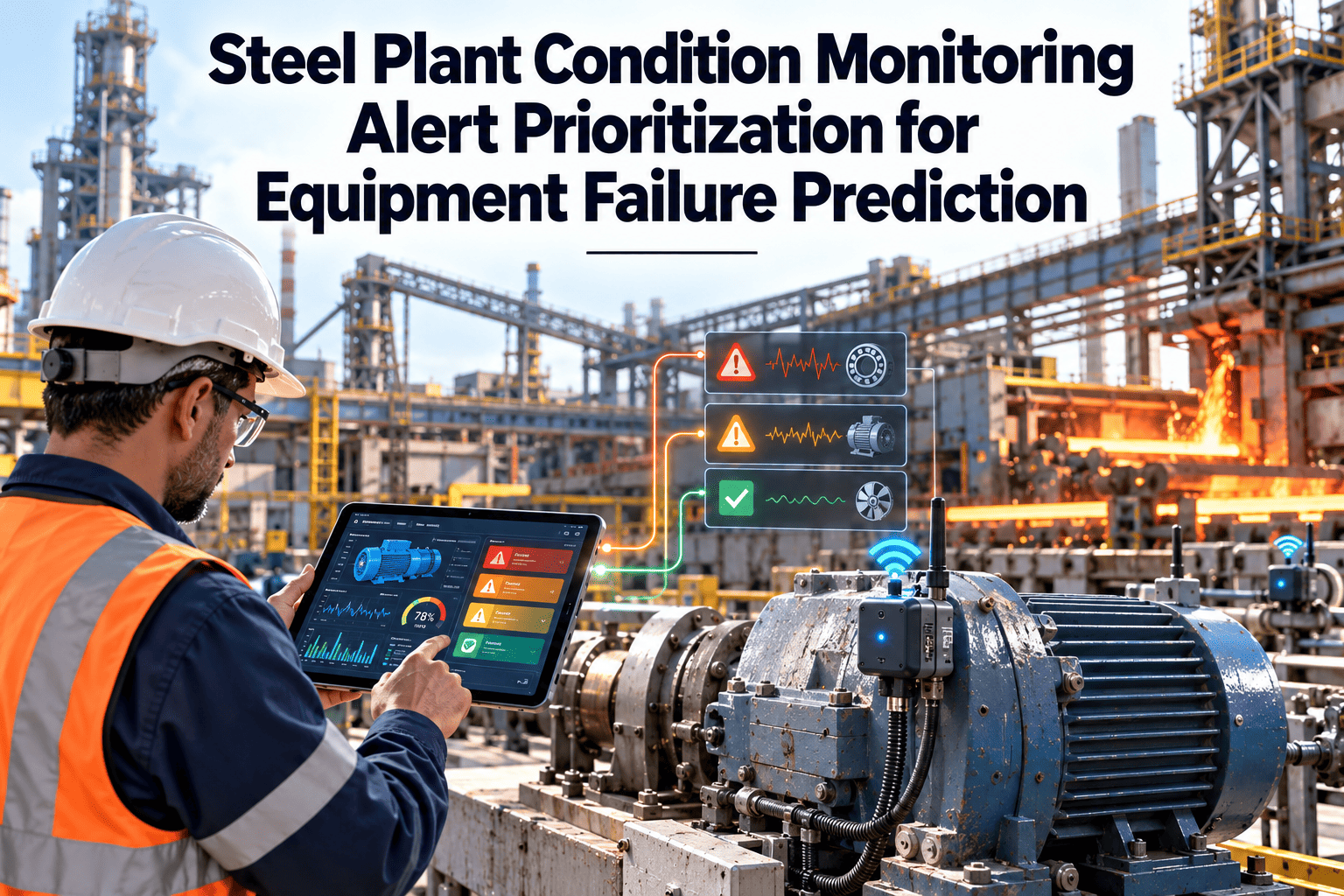
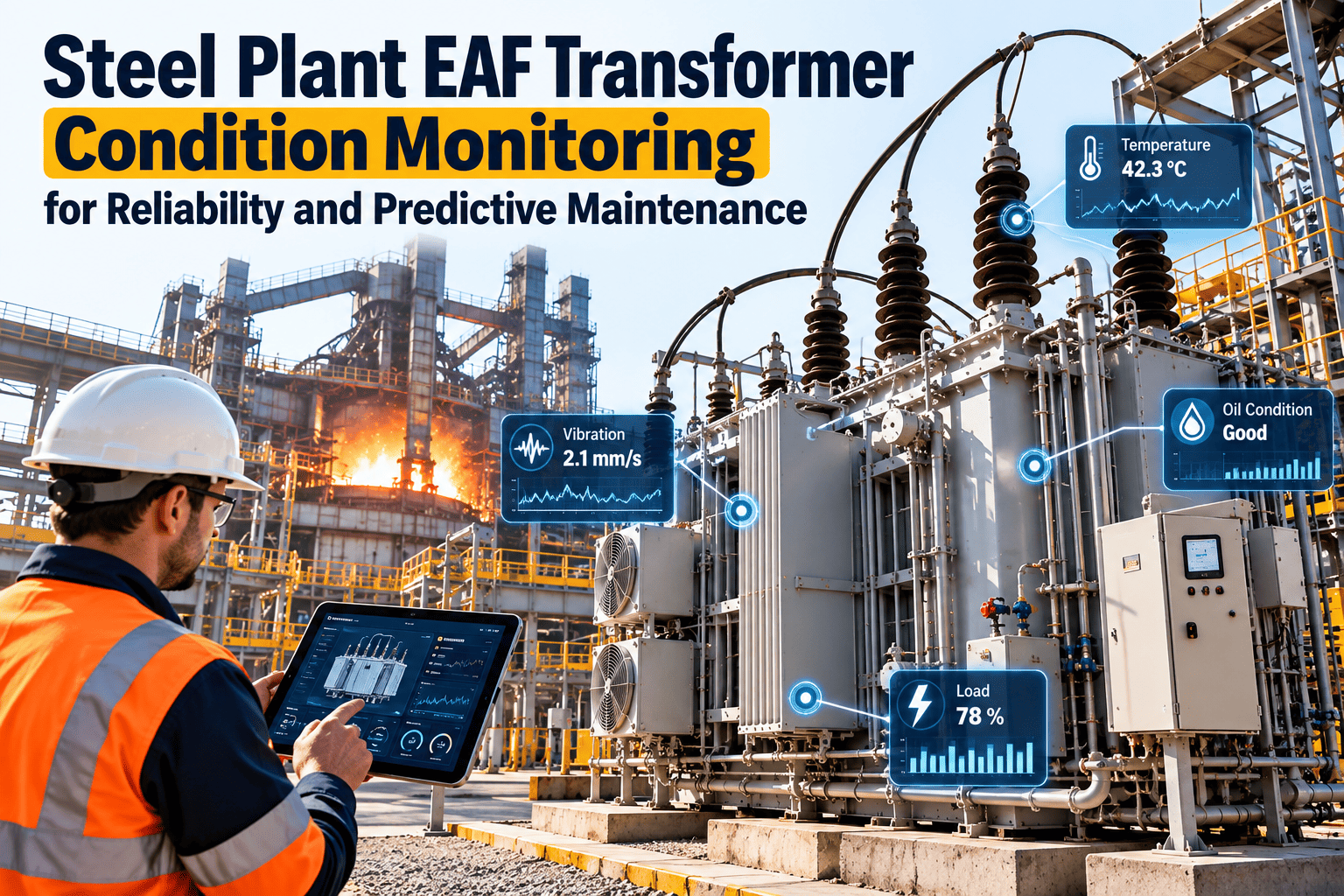
Oxmaint's transformer monitoring module tracks oil temperature, DGA trends, bushing condition, cooling performance, and tap changer operation — generating alerts when any of the 8 warning signs appear. Steel plants using Oxmaint report 80–90% fewer transformer failures.
Why EAF Transformers Are Different — And More Vulnerable
EAF transformers experience operating conditions that standard power transformers never encounter. Daily load swings from near zero to full power in minutes, massive harmonic currents from arc furnace operation, high short-circuit currents during electrode contact, and severe thermal cycling that stresses every component. These conditions accelerate degradation of insulation, bushings, tap changers, and oil — making EAF transformers 3–5× more likely to fail than standard industrial transformers of the same age. Start a free trial or book a demo to see how Oxmaint's EAF-specific monitoring handles these unique conditions.
The 6 Factors That Make EAF Transformers More Vulnerable
Daily Load Cycling
EAF transformer sees 10–20 load cycles per day — from near zero to full power and back. Each cycle stresses windings, bushings, and tap changers. Standard transformers see load cycles measured in days, not hours.
Harmonic Loading
Arc furnaces generate significant harmonic currents — particularly 2nd, 3rd, and 5th harmonics. These cause additional heating in windings and core, accelerating insulation aging.
Short-Circuit Stress
Each electrode contact creates short-circuit currents that mechanically stress windings. Over time, this causes winding movement, insulation abrasion, and eventual failure.
Thermal Cycling
Oil temperature swings of 30–50°C per melt cycle stress bushings, gaskets, and tap changer contacts. Thermal expansion and contraction accelerate fatigue and leakage.
Contamination Exposure
EAF transformers are often exposed to conductive dust (carbon, metal particles) from furnace operations. Contamination can create tracking paths on bushings and insulators.
Overload Risk
Production pressure frequently pushes transformers beyond rated capacity. Even brief overloads accelerate thermal degradation and reduce remaining life.
8 Warning Signs to Monitor — Before Failure Occurs
These 8 warning signs represent the most common failure indicators in EAF transformers. Each sign is detectable with routine monitoring — and each provides 30–90 days of lead time when tracked systematically. Oxmaint's transformer monitoring module tracks all 8 signs automatically and generates alerts when thresholds are exceeded.
Warning Sign
What to Monitor
Critical Threshold
Lead Time Before Failure
1. Oil Temperature Rise
Top oil temperature (TOT) and rate of rise per load cycle
The gap between a steel plant that monitors EAF transformers and one that doesn't is visible across every failure metric — from DGA trends to unplanned downtime. The comparison below shows the reactive baseline versus the monitored result. Oxmaint delivers the monitored result with automated alerting and trend analysis.
Without Monitoring
Failure Detection Time
Failure detected when transformer trips or catastrophically fails — no warning. Production stopped unexpectedly. Weeks of downtime begin.
Detected at failure
With Oxmaint Monitoring
Failure Detection Time
DGA trends, oil temperature, and bushing condition monitored daily. Alerts generated 30–90 days before failure. Repairs scheduled proactively.
30–90 days warning
Without Monitoring
Repair Cost
Catastrophic failure requires transformer replacement — $500K–2M. Production downtime adds $1–5M in lost output. Total cost: $1.5–7M per event.
$1.5–7M per event
With Oxmaint Monitoring
Repair Cost
Early detection enables planned repair — winding reconditioning, bushing replacement, oil processing. Cost: $20–150K. Production downtime avoided.
$20–150K repair
Without Monitoring
Transformer Life
Average EAF transformer life: 8–12 years. Failures often occur at 10–15 years — well below the 25+ year design life.
8–12 years average
With Oxmaint Monitoring
Transformer Life
Proactive maintenance extends life to 18–25 years. Monitoring identifies degradation early — enabling corrective action before permanent damage occurs.
18–25 years achievable
EAF Transformer Monitoring Maturity Scoring
EAF transformer monitoring maturity follows a clear spectrum — from no monitoring (failures discovered at catastrophic failure) to fully integrated monitoring with automated alerts and predictive maintenance. The scoring framework below lets steel plant managers assess their current capability — identifying the gaps that create failure risk.
Real-time monitoring of all 8 warning signs. Automated alerts at configurable thresholds. DGA trending with AI-driven prediction. All issues addressed before failure.
0 catastrophic failures. 18–25 year transformer life.
4
Weekly Checks · Manual Data Entry
Temperature, oil level, and visual inspection recorded weekly. DGA sampled monthly. Data manually entered. Some trend visibility but no automated alerts.
Action: Automate data collection and alerting. Move to real-time monitoring.
3
Monthly Checks · Spot Monitoring
Temperature and oil level checked monthly. DGA sampled quarterly. No trending analysis. Warning signs can be missed for weeks.
Gap: Monthly checks miss rapid-onset failures. Increase to weekly or continuous.
2
Reactive Only — After Failure
No regular monitoring. Transformers run until failure. Issues discovered when transformers trip or catastrophically fail.
Risk: Catastrophic failure inevitable. Immediate monitoring program required.
1
No Monitoring
No monitoring program. Transformers operated until failure. No historical data on performance. Failures are surprises.
Risk: Maximum financial exposure. Immediate monitoring deployment required.
EAF Transformer Monitoring Technology — What You Need
All monitoring data flows into CMMS. Automated alerts, trend dashboards, and work order generation for any anomaly. Centralized record of all transformer health data.
"
We lost an EAF transformer in 2022 — $750,000 replacement, 6 weeks downtime, and millions in lost production. We had no monitoring program in place. After that failure, we implemented Oxmaint's transformer monitoring module with weekly DGA, continuous temperature monitoring, and bushing power factor checks. In 2024, the system flagged rising acetylene in one of our transformers — a clear sign of arcing. We took it offline for inspection and found a loose connection that would have failed within months. The $45,000 repair saved us a $750,000 replacement and weeks of downtime. The monitoring program paid for itself in the first detection.
Electrical Superintendent — Integrated Steel Mill, US Midwest
How often should DGA be performed on EAF transformers?+
Monthly DGA is recommended for EAF transformers due to high electrical and thermal stress. Weekly DGA may be justified for older transformers or those with known issues. Online DGA (continuous monitoring) provides the earliest warning and is recommended for critical transformers. Book a demo to see Oxmaint's DGA trend analysis and alerting.
What DGA gas levels indicate an imminent transformer failure?+
Critical levels vary by transformer age, type, and operating history. General thresholds: acetylene >5 ppm (arcing), hydrogen >100 ppm (corona/partial discharge), ethylene >50 ppm (thermal overheating), carbon monoxide >250 ppm (paper insulation degradation). Rate of change matters as much as absolute value — rapid gas generation is more concerning than stable high levels. Start a free trial to configure DGA thresholds for your transformer.
What temperature triggers an EAF transformer shutdown?+
Most EAF transformers have alarm at 85–95°C and trip at 95–105°C for top oil temperature. Winding temperature trip is typically 110–120°C. Follow manufacturer's specific limits — exceeding these accelerates insulation aging exponentially. Oxmaint tracks both TOT and winding temperature trends, generating alerts before critical thresholds are reached.
What is the cost of EAF transformer failure?+
Direct costs: replacement transformer $500K–2M, installation $50–150K, oil processing $50–100K. Indirect costs: production downtime 4–8 weeks at $200K–1M per week in lost output, expediting costs for replacement transformer, and damaged reputation with customers. Total cost typically ranges $1.5–7M per catastrophic failure. Monitoring prevents 80–90% of these events. Start free to calculate your transformer risk exposure.
How does a CMMS help with EAF transformer monitoring?+
A CMMS like Oxmaint provides four transformer monitoring advantages: (1) Data consolidation — all monitoring data (DGA, temperature, bushing, OLTC) in one platform, (2) Trend analysis — automated trend charts showing gas generation rates and temperature patterns, (3) Alerting — configurable thresholds trigger work orders when warning signs appear, (4) Documentation — complete maintenance history for each transformer, supporting insurance claims and reliability analysis.
Transformer Intelligence from Oxmaint
Your EAF Transformer Is Sending Warning Signals — Are You Reading Them?
DGA trend analysis, oil temperature monitoring, bushing condition tracking, and OLTC performance monitoring — unified in one CMMS that alerts your team 30–90 days before failure. Stop replacing transformers. Start monitoring them.
30–90 days
Warning time before failure with monitoring
6:1
ROI on transformer monitoring
80–90%
Failures prevented with monitoring
18–25 yrs
Achievable transformer life with proactive maintenance