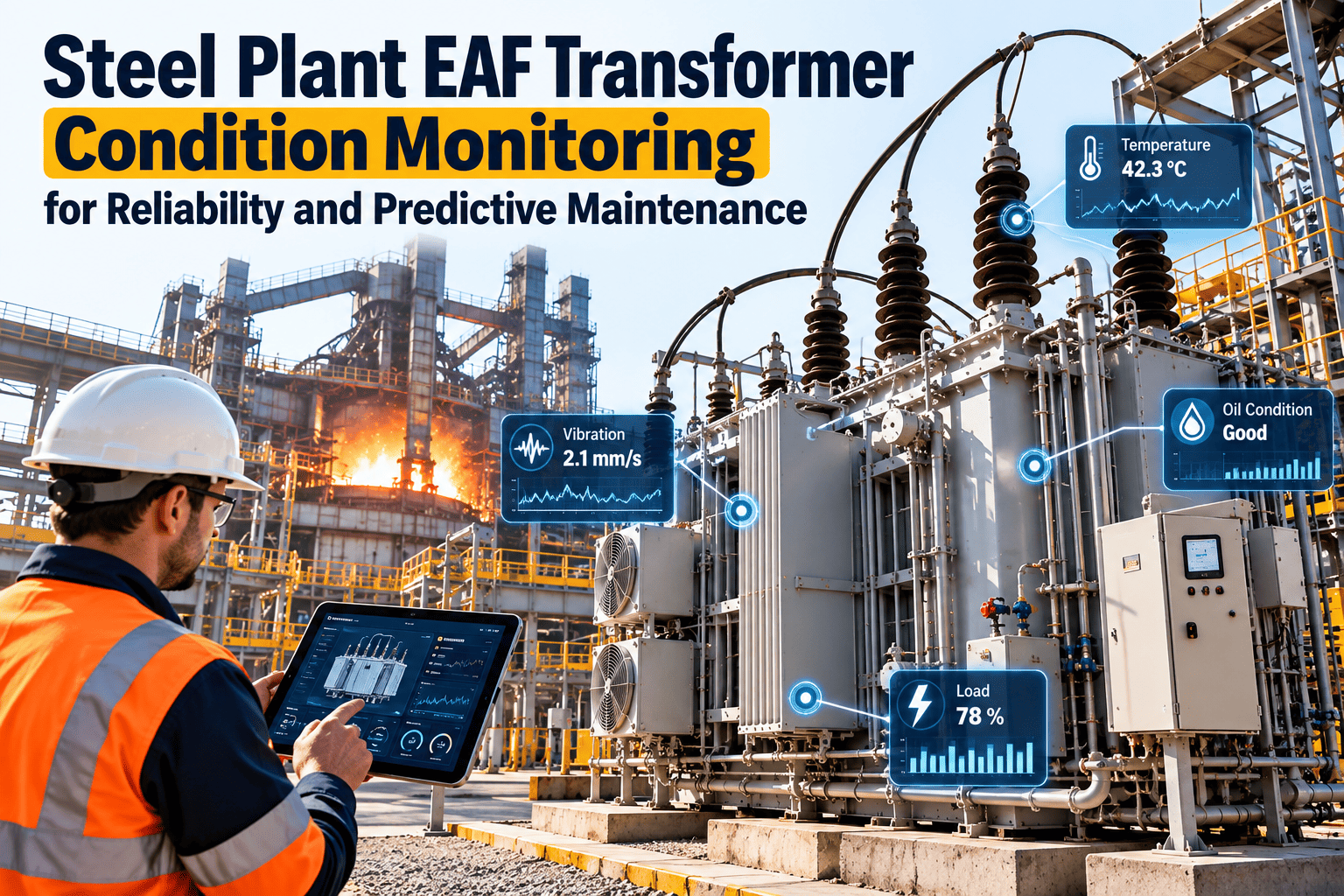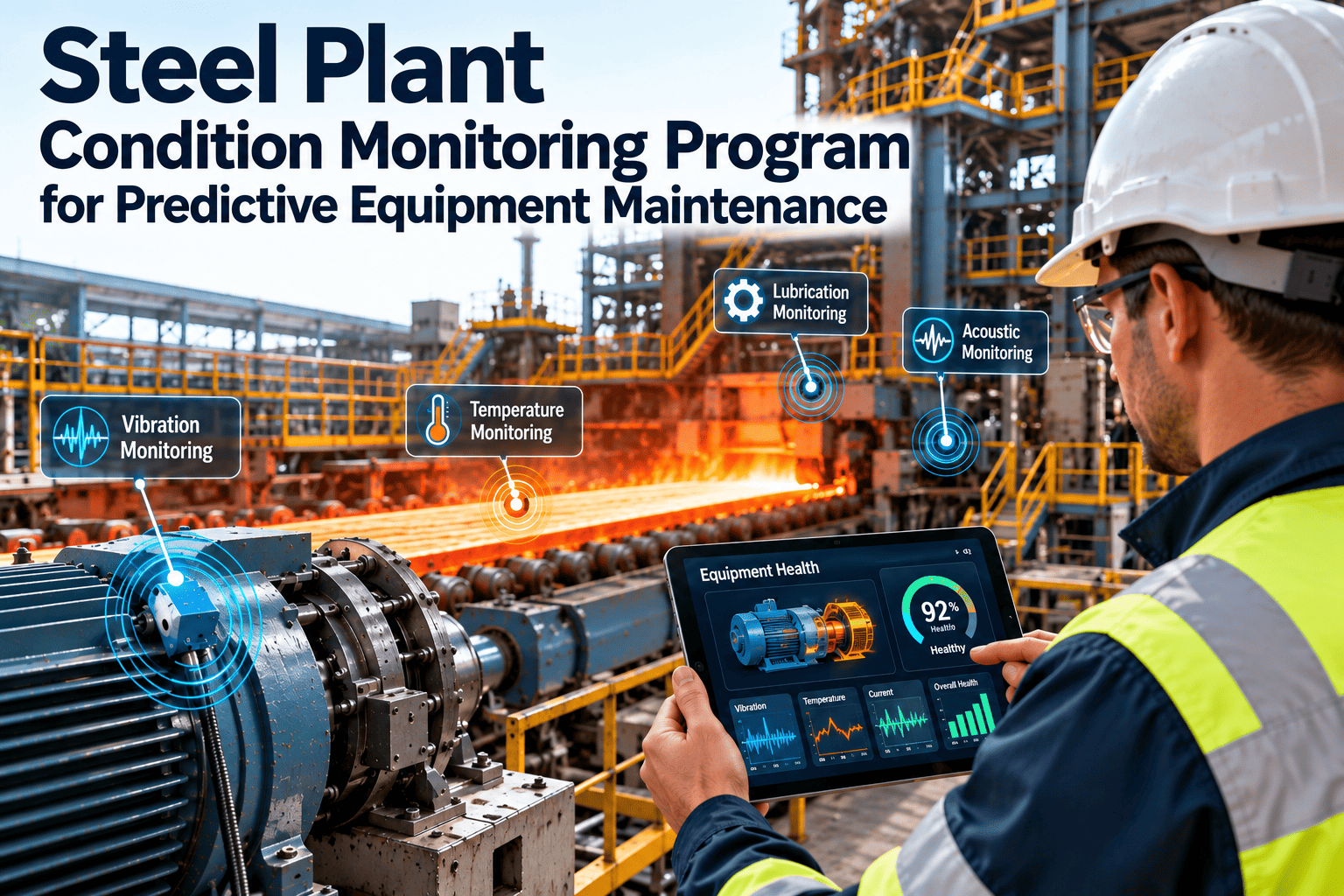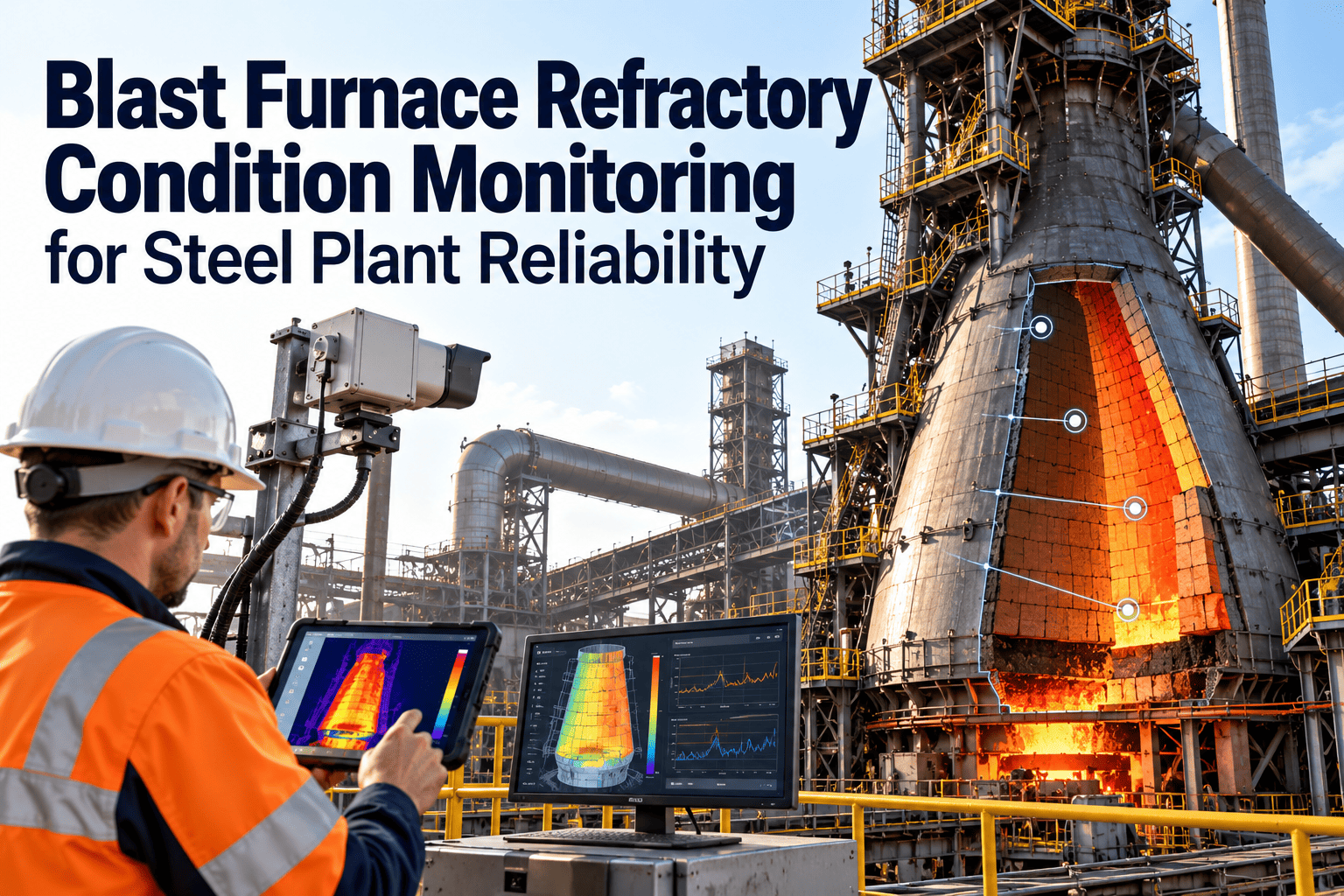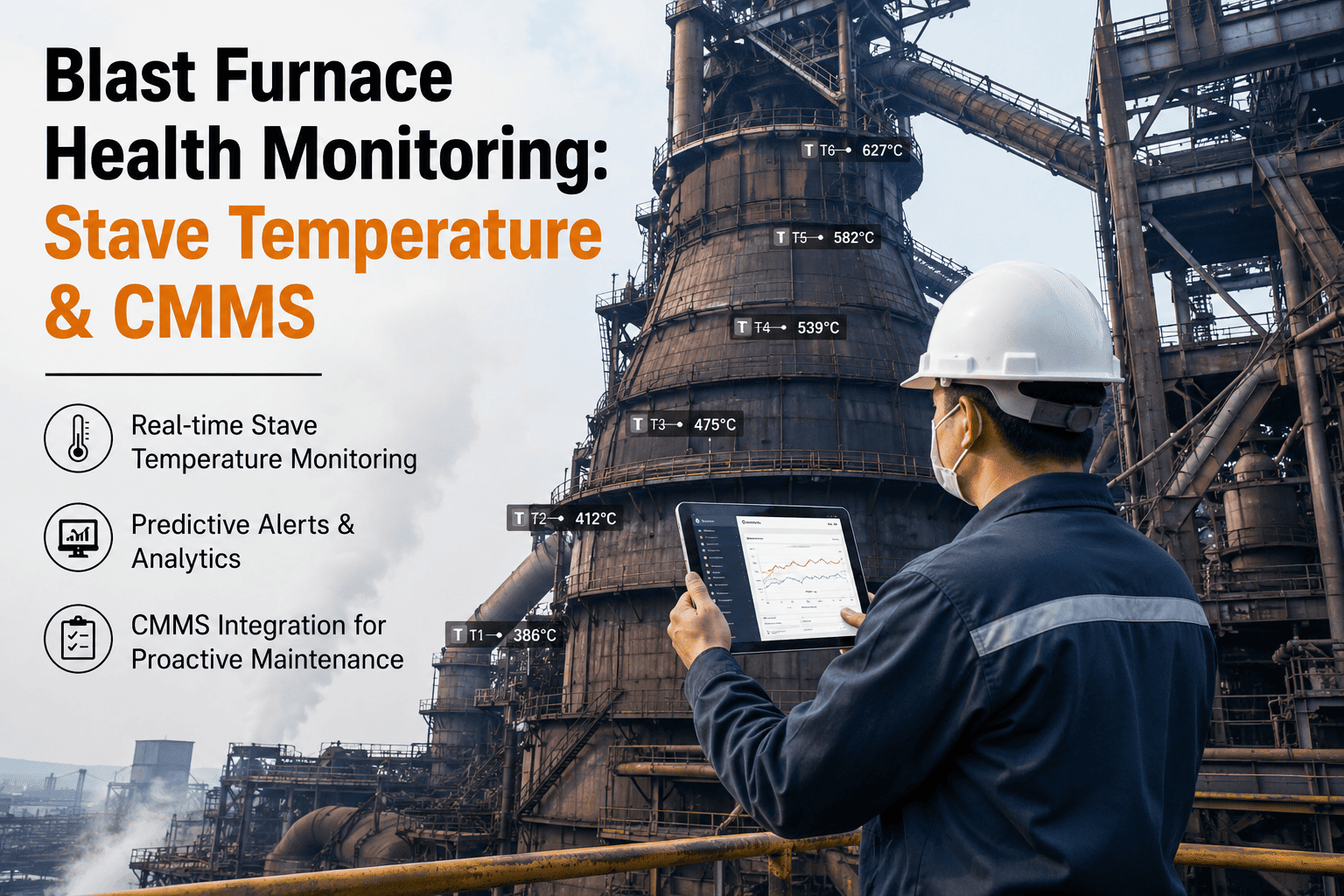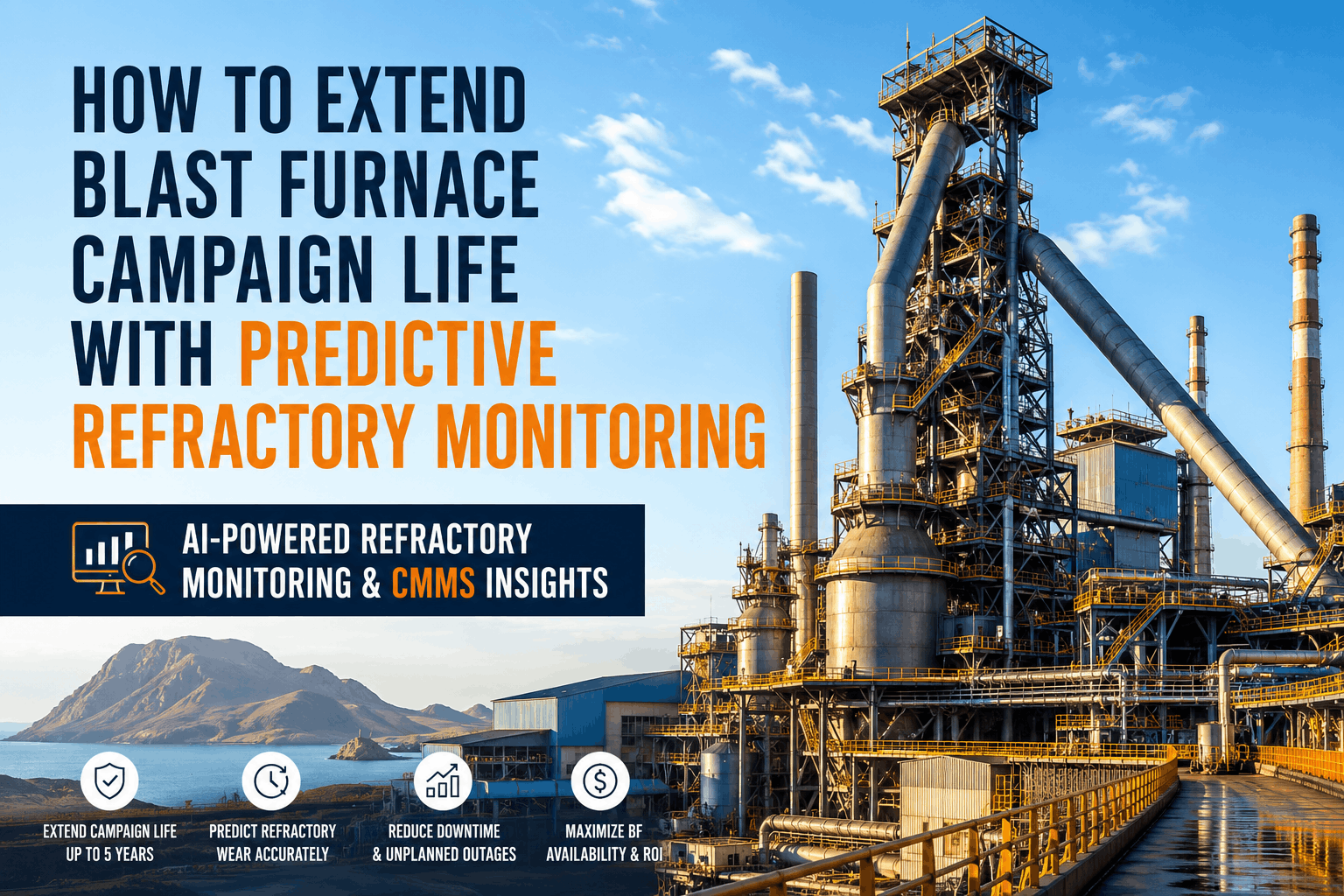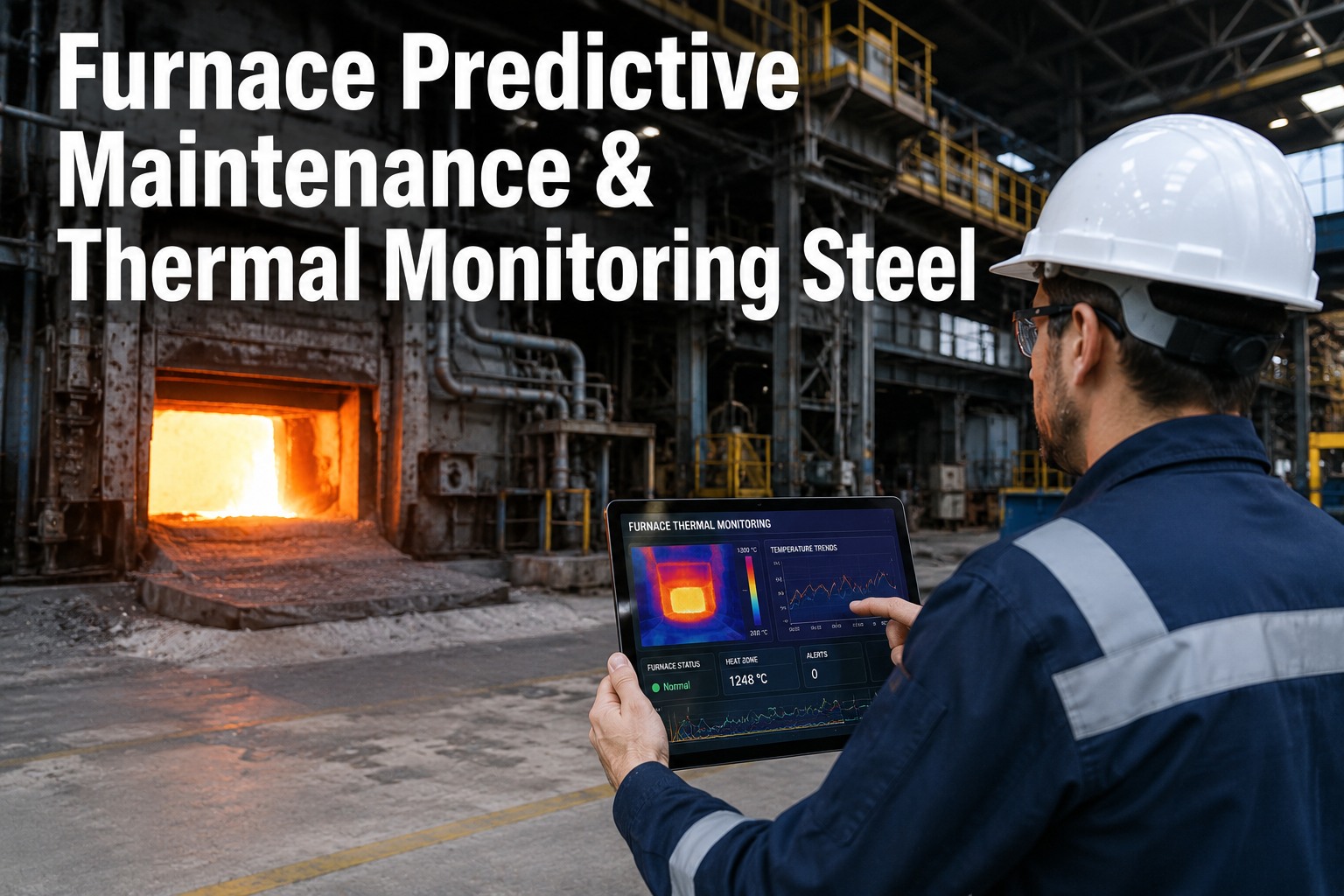
Predictive maintenance for steel plant furnaces is where thermal imaging, acoustic emission, and vibration signals converge into a single, actionable view of asset health — catching refractory thinning, burner imbalance, and cooling-circuit fouling weeks before they escalate into unplanned outages. A single mid-size blast furnace can lose $250,000–$480,000 for every day of unscheduled downtime, which is why leading mills now treat thermal monitoring as the spine of their furnace condition monitoring strategy rather than a periodic inspection task. By layering AI-based refractory wear modeling onto continuous temperature trend analysis, plants are extending campaign life by 12–18% and cutting emergency refractory repairs by a third. If your team is still relying on monthly thermography walks and operator logbooks, Start Free Trial of Oxmaint to see how a unified thermal-acoustic-vibration data stream changes the economics of furnace maintenance.
Stop furnace failures 21 days before they happen.
Thermal imaging, acoustic emission, and vibration signals converge into one AI-driven refractory and combustion health score — across blast furnaces, reheat furnaces, and EAFs. Detect shell hot-spots, cooling-circuit fouling, and burner drift in real time, not after the campaign ends.
Three data streams, one furnace health score
Modern furnace predictive maintenance fuses three independent physical signals — each one blind on its own — into a continuous health index calibrated to your specific asset, refractory design, and operating envelope.
Thermal imaging & thermocouple mesh
Fixed FLIR / FLuke IR arrays scan the shell and bustle pipe every 30–90 seconds, fusing with stave thermocouple data to build a 360° skin-temperature map. AI flags localized hot-spots exceeding the asset's ISO 18434 baseline by more than 8%.
Acoustic emission & ultrasonic
Waveguides mounted on the shell and tuyere region capture stress-wave bursts from crack propagation and refractory spalling. Pattern recognition separates genuine crack events from tuyere blast noise with 91%+ classification accuracy.
Vibration & cooling-circuit flow
Accelerometers on blowers, fans, and tuyere vibration sensors pair with stave-cooling flow and differential-pressure transmitters. Deviations from the ISO 10816 velocity envelope predict burner drift and cooling-channel fouling 6–14 days in advance.
From first signal to prevented failure — a worked scenario
Below is a real-pattern timeline reconstructed from a 2,800 t/day blast furnace operating in a North American integrated mill. Each milestone shows the signal that fired, the action taken, and the cost avoided by acting early instead of waiting for the next planned outage.
Thermal anomaly flagged on Stave 14 — south shell
AI detects a 6.2% temperature rise above the rolling 30-day baseline. Severity band: Watch. Automated work order opens in CMMS for visual + IR confirmation within 72 hours.
Acoustic emission bursts begin — crack propagation confirmed
Waveguide sensors log 14 kHz stress-wave events at 3× normal rate. Refractory wear model estimates residual lining thickness at 142mm (down from 210mm at campaign start). Severity band escalates to Plan.
Cooling-circuit ΔP drift detected — gunning scheduled
Differential pressure on Stave 14 cooling channel rises 11% over baseline, indicating partial blockage. Maintenance team schedules robotic gunning during the next cast-house turnaround — 9 days before the original plan.
Corrective gunning completed during planned turnaround
142mm lining restored to 196mm. No emergency shutdown required. Total intervention cost: $48K. Avoided cost of unplanned shell breach at this stage: estimated $1.9M in lost production + emergency refractory.
Campaign extended — planned reline deferred 4 months
Furnace reaches 18-year campaign milestone (vs. 14-year historical average for this asset class). Predictive monitoring credited with 17% life extension. ROI on monitoring platform: 4.2× in year one.
What furnace predictive maintenance actually pays back
For a typical integrated mill running two blast furnaces and three reheat furnaces, the math is straightforward. The platform cost is dwarfed by the avoided cost of a single mid-campaign shell breach.
Worked example — 2-furnace integrated mill
What changes when three signals converge
The shift from periodic inspection to continuous multi-signal monitoring is not incremental. It changes the failure-detection horizon from hours to weeks, and it changes the maintenance action from emergency response to scheduled intervention.
| Failure mode | Reactive / time-based | Predictive (thermal + acoustic + vibration) |
|---|---|---|
| Shell hot-spot / refractory breach | Detected on visual round — typically after damage is irreversible | Flagged 14–21 days ahead via IR + acoustic correlation |
| Burner imbalance / combustion drift | Caught at quarterly stack test or when product quality drifts | Vibration + temperature trend flags drift within 48 hours |
| Cooling-circuit fouling | Found when flow drops below critical — emergency gunning | ΔP trend predicts blockage 6–14 days before critical flow |
| Stave cooler failure | Detected on leak — forced furnace slowdown | Thermal + flow anomaly isolates failing stave 3–7 days early |
| Tuyere wear / blowpipe failure | Replaced on fixed interval or after failure event | Acoustic signature change predicts remaining useful life ±9% |
| Refractory campaign planning | Fixed 12–14 year schedule regardless of actual lining state | Wear model optimizes reline timing to actual residual thickness |
What maintenance leaders see after deployment
Plants that have unified thermal, acoustic, and vibration monitoring under a single AI health score report measurable shifts within the first 90 days of go-live.
"We caught a stave-cooler anomaly on Furnace 2 eleven days before it would have forced a slowdown. The thermal map and the acoustic burst lined up exactly. That single catch paid for two years of the platform."
"Reheat furnace combustion drift used to show up in our product quality reports a week late. Now the vibration + temperature trend flags burner imbalance within two days, and we correct it on the next rolling gap."
See your furnace health score in 14 days.
Connect your existing thermocouples, IR cameras, and vibration sensors. Oxmaint builds the convergence model and delivers the first AI-based refractory wear report inside two weeks — no rip-and-replace required.
Furnace predictive maintenance — what teams ask first
How long does it take to deploy thermal + acoustic + vibration monitoring on an existing furnace?
Most integrated mills are live in 10–21 days. Oxmaint ingests data from existing thermocouples, stave-cooling flow transmitters, and IR cameras via OPC-UA or Modbus. Acoustic waveguides and tuyere vibration sensors are typically installed during a routine cast-house turnaround. No process shutdown is required for the data-layer go-live. You can Book a Demo to review your specific sensor inventory.
Can the AI refractory-wear model work with our existing thermocouple layout?
Yes. The model is trained on your historical thermocouple, stave-flow, and production-rate data — typically 12–24 months of archives. It calibrates to your specific refractory design (carbon, ceramic cup, graphite), cooling-circuit geometry, and operating envelope. Plants with sparse thermocouple coverage add 4–8 acoustic waveguides to fill the blind zones.
What is the typical false-alarm rate on furnace shell hot-spot detection?
Properly tuned convergence models achieve a 92% true-positive rate with fewer than 0.3 false alarms per furnace per week. The key is cross-validation: a thermal anomaly alone is not enough to escalate. The AI requires corroboration from acoustic emission or cooling-circuit ΔP drift before raising a Plan-level work order. This three-signal consensus is what drives the precision.
Does this work on EAFs and reheat furnaces, or only blast furnaces?
The convergence approach applies across all three furnace classes. On EAFs, the emphasis shifts to electrode vibration, roof/delta thermal mapping, and cooling-water flow. On reheat furnaces, the focus is burner combustion vibration, skid-block temperature, and zone thermocouple drift. The platform ships with asset templates for each furnace type.
How does this integrate with our existing CMMS for work-order automation?
Oxmaint pushes structured work orders directly into IBM Maximo, SAP PM, Infor EAM, and most modern CMMS platforms via REST API. Each alarm generates a work order with the failure mode, confidence score, recommended action, affected stave/zone, and the supporting signal snapshots — so planners don't have to reverse-engineer the alert. Start Free Trial to test the CMMS bridge on your instance.
Turn thermal, acoustic, and vibration data into one furnace health score.
Join the steel plants extending campaign life by 17% and cutting emergency refractory repairs by a third. Deploy in under three weeks with your existing sensors.
Free 14-day trial · No credit card