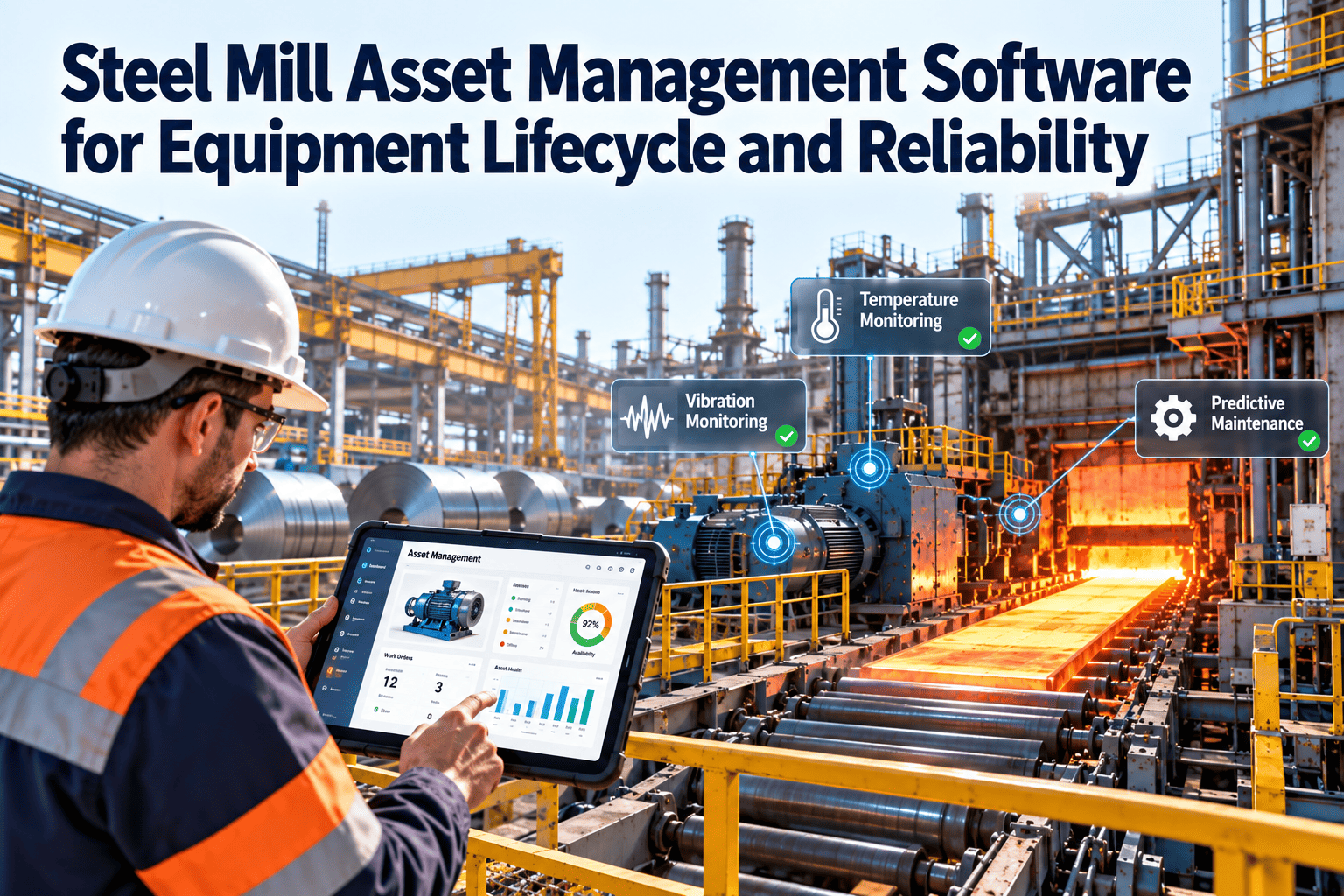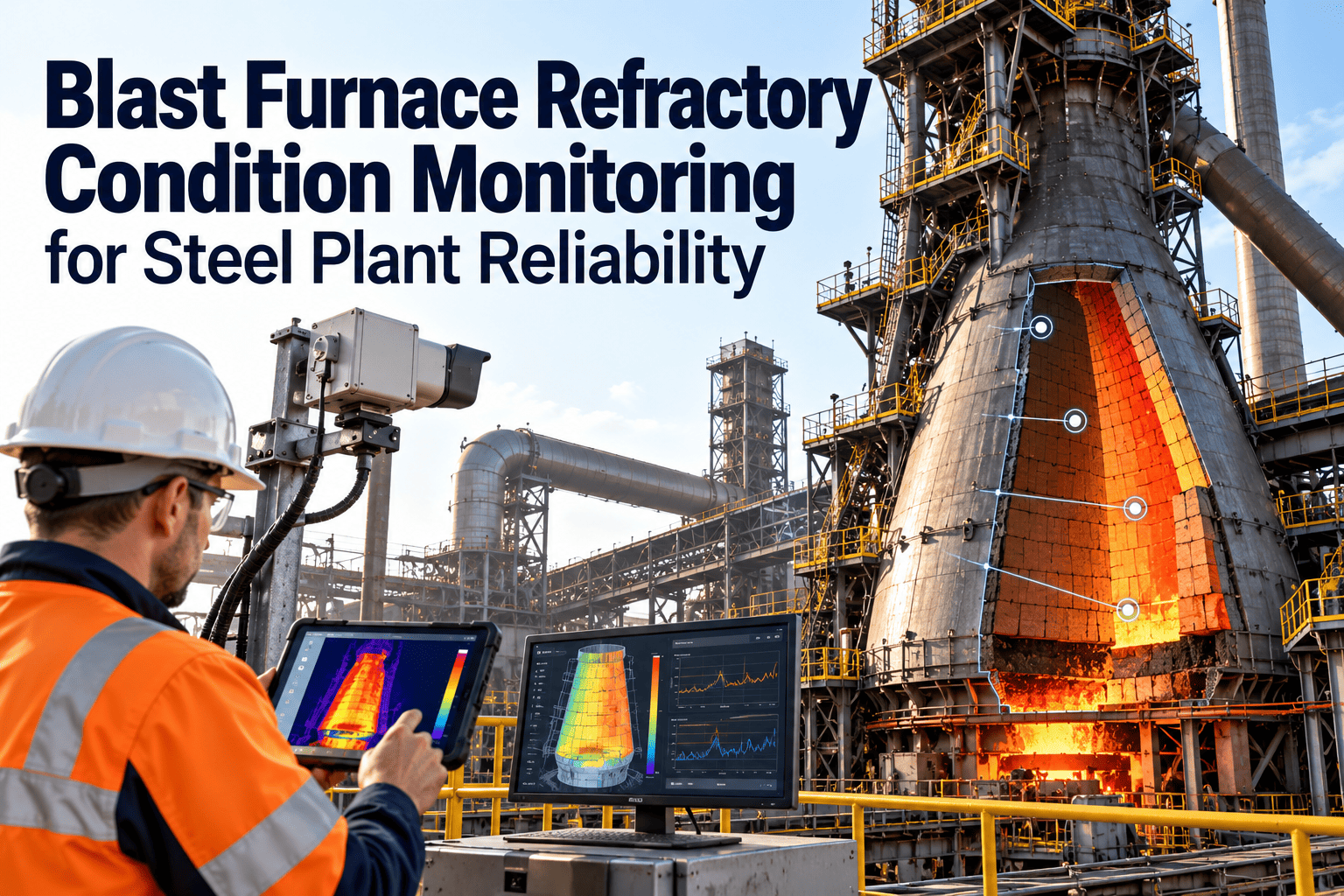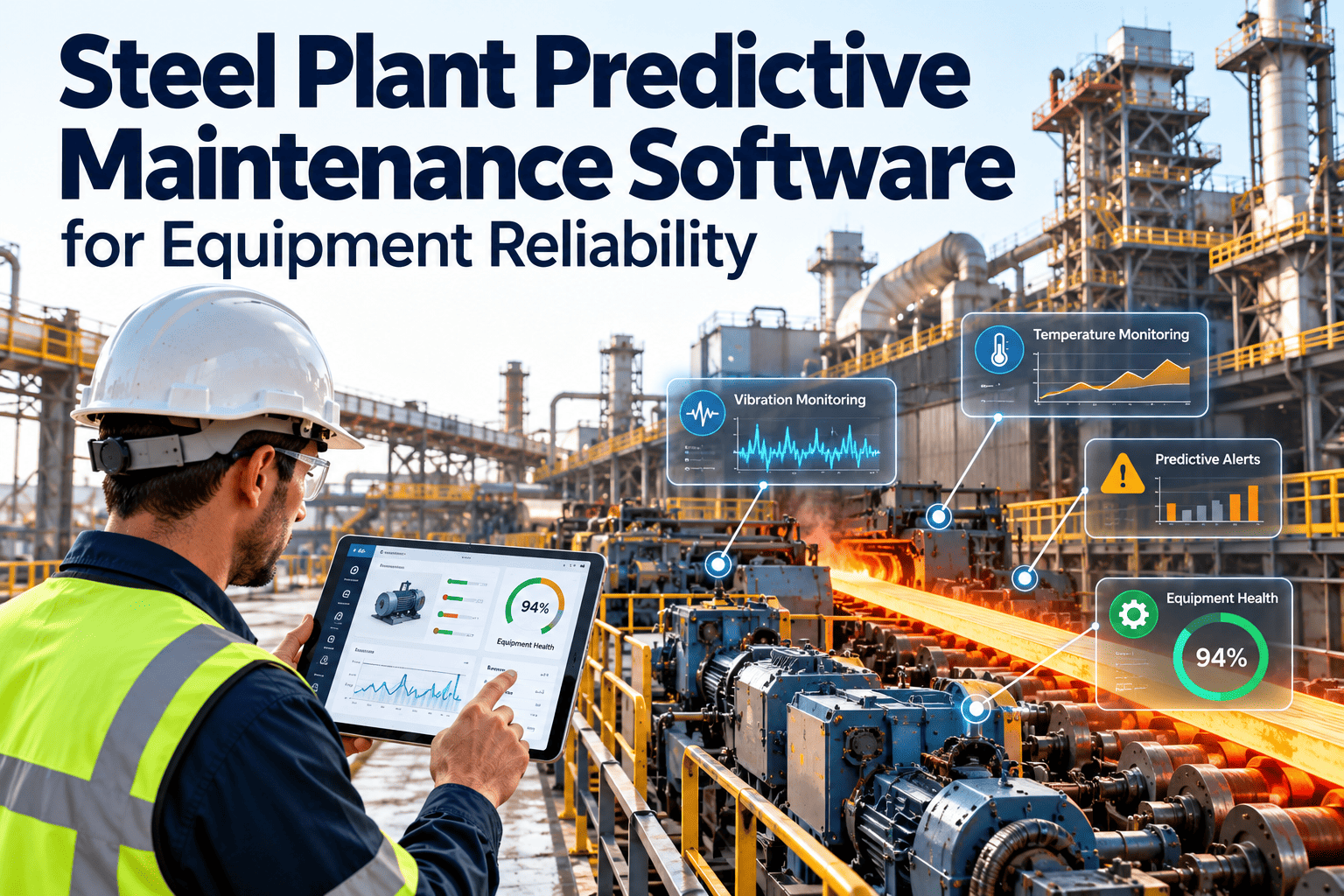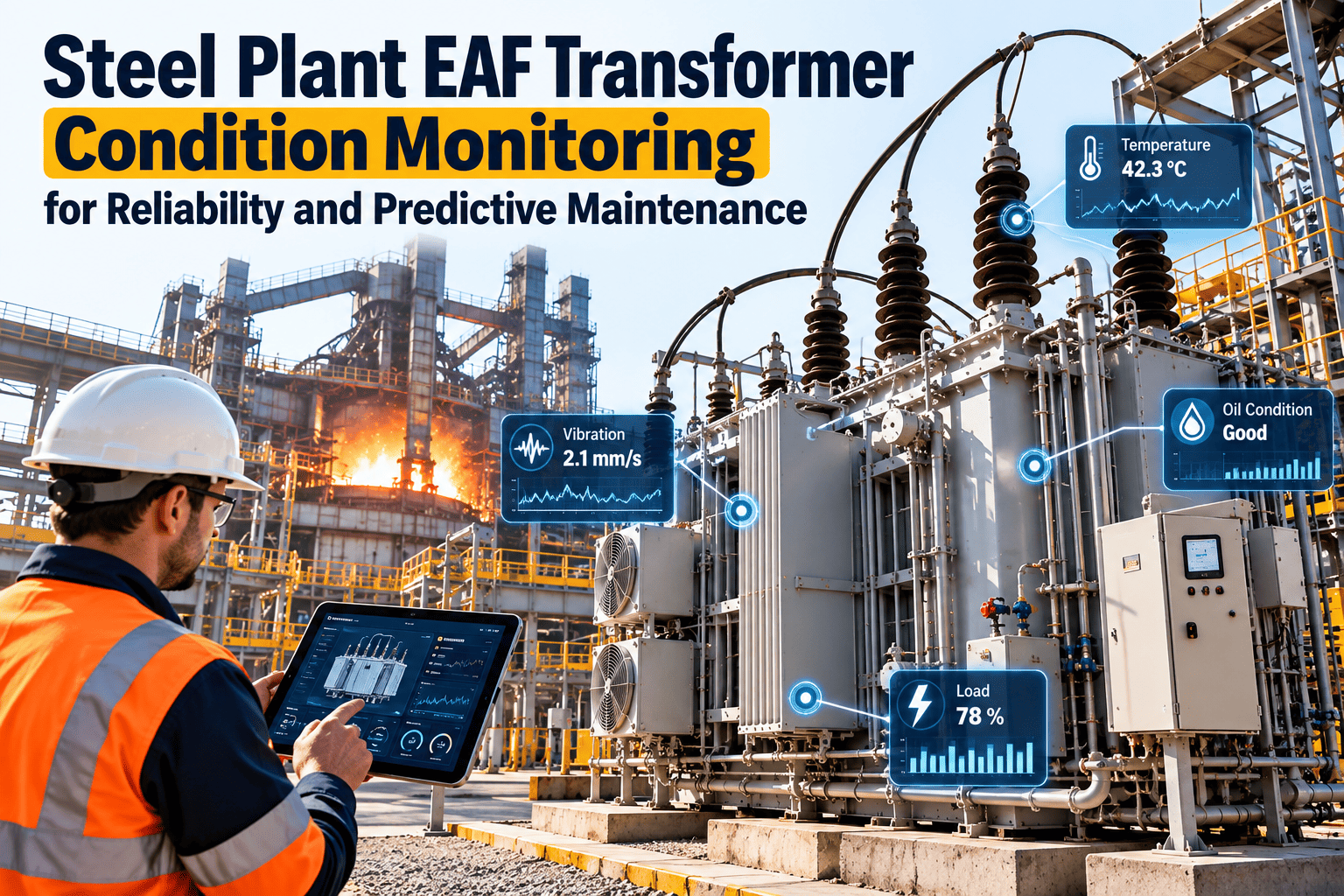
An electric arc furnace transformer works harder than almost any transformer in a power network. It is switched often, hit by repeated short circuits during meltdown, loaded close to its rating and cooled by water circuits that foul over time. When it fails, the furnace stops, and a replacement can take months. Condition monitoring turns temperature, cooling, oil and tap changer data into early warnings, and a steel plant maintenance management platform turns those warnings into planned work.
EAF and Steelmaking | Furnace Transformer Reliability
EAF Transformer Condition Monitoring: Catch Degradation Before the Furnace Goes Down
Track winding and oil temperature, cooling performance, dissolved gases, tap changer wear and maintenance history on one record, so predictive maintenance decisions rest on trends instead of alarms.
MeasureTemperature, flow, gases, tap counts
CompareAgainst limits and last year
TriggerWork order on threshold or trend
VerifyRe-test and update history
Why Furnace Transformers Age Faster Than Network Transformers
Duty Cycle
- Frequent energisation and de-energisation per heat
- Short circuits during bore-in and scrap collapse
- High secondary current at low voltage
- Harmonic content from the arc
Result Inside the Unit
- Mechanical stress on windings and clamping
- Thermal cycling of insulation
- Heavy tap changer operation counts
- Faster oil and paper ageing under load
A furnace transformer is often called a consumable asset with a long lead time. Monitoring is how you stretch its life and plan its replacement.
Where Furnace Transformer Failures Usually Start
| Subsystem | Typical Degradation | Early Signal | Risk |
|---|---|---|---|
| On-load tap changer | Contact wear, coking, diverter switch faults | Operation count, oil contamination, motor drive current | High |
| Windings | Looseness or deformation after through-faults | Frequency response change, gas trend | High |
| Cooling system | Fouled coolers, weak flow, pump faults | Rising oil temperature at same load | Medium |
| Bushings | Moisture ingress, insulation loss | Power factor, thermal scan hot spots | Medium |
| Insulating oil | Moisture, acidity, dissolved gases | Lab results trend, breakdown voltage | Medium |
| Protection devices | Stuck relays, drifted gauges | Failed functional test | Lower |
The Parameters Worth Monitoring
Temperature
Top oil temperature and winding temperature, read against load. A rise at the same load points to cooling or insulation trouble rather than a heavier melt.
Cooling Water and Oil Flow
Inlet and outlet water temperature, flow rate, pump status and cooler differential pressure. Scaling shows up as a slow drift long before a trip.
Dissolved Gas Analysis
Hydrogen, methane, ethane, ethylene, acetylene and carbon oxides, interpreted with guidance such as IEEE C57.104 and IEC 60599. The rate of change matters more than a single value.
Tap Changer Condition
Operation counter, motor drive current, compartment oil quality and inspection interval against manufacturer limits.
Electrical Tests
Winding resistance, turns ratio, insulation resistance, bushing power factor and frequency response analysis after significant fault events.
Visual and Thermal Checks
Oil level, leaks, silica gel colour, relay flags and infrared scans of bushings, connections and the secondary bus.
Reading the Trend: Alarm Maintenance Versus Condition Maintenance
Alarm-Driven
- Readings logged on paper rounds
- Gas results filed with the lab report
- Tap changer serviced at a fixed date only
- Cooling cleaned after a high temperature trip
- Failure history lives in people's memory
Condition-Driven
- Readings recorded against the asset
- Gas and oil results trended year on year
- Tap changer work tied to operation count and oil condition
- Cooler cleaning triggered by temperature drift
- Every event, test and repair on one history
A Practical Monitoring Cadence
Every Shift
Record oil and winding temperature, cooling water flow, oil level, alarms and unusual noise.
Weekly
Check pumps, fans, relay indicators, leaks, tap changer position and operation count.
Monthly
Review temperature against load, cooler performance and open defects.
Quarterly to Semi-Annual
Take oil samples for dissolved gas and quality tests; run infrared scans of bushings and connections.
Annual or Outage
Electrical tests, tap changer inspection, protection testing and cooler cleaning during planned downtime.
Intervals are a starting point. Adjust them to the manufacturer manual, your load history and what the trends show.
Cooling System Problems That Mimic Transformer Problems
Rule Out Before Raising a Winding Concern
- Water inlet temperature above normal
- Scaled or blocked cooler tubes
- Pump running with reduced flow
- Failed flow or temperature sensor
- Furnace running at a higher power setpoint
- Oil circulation valve partly closed
Separating a cooling fault from a genuine insulation problem saves unplanned outages and avoids unnecessary internal inspections.
Mid-Plan CTA
Put Transformer Readings, Tests and Repairs on One Asset Record
Set thresholds, schedule inspections and keep every oil result with the transformer it belongs to.
From Reading to Repair: The Workflow
1
Define the asset hierarchy
Furnace, transformer, tap changer, cooling circuit, bushings and protection as linked assets.
2
Set inspection templates
Mobile checklists with required readings and pass or fail limits.
3
Trigger work on condition
A reading outside limit or a rising trend raises a work order with the history attached.
4
Plan parts and downtime
Link spares such as gaskets, contacts, oil and pump components, and schedule against the melt shop plan.
5
Close with evidence
Record findings, test results and photos so the next decision starts with better data.
How Oxmaint Supports Furnace Transformer Maintenance
Asset managementHierarchy from furnace to bushing, with nameplate data, manuals and test reports attached.
Preventive maintenanceCalendar and meter-based schedules for rounds, oil sampling, cooler cleaning and tap changer service.
InspectionsMobile checklists capture readings and photos at the transformer bay.
Work ordersCorrective and condition-based jobs with assignments, priorities and completion notes.
InventoryCritical spares and consumables linked to the asset and its jobs.
ReportingDashboards for overdue tasks, repeat defects and compliance records.
KPIs That Show Whether Monitoring Is Working
Planned Share
Planned versus unplanned transformer work
Inspection Compliance
Rounds completed on time
Trend Response Time
Days from abnormal reading to action
Cooling Efficiency
Temperature rise at comparable load
Tap Changer Interval
Operations between services
Furnace Delay
Minutes lost to transformer causes
Getting Started Without Overbuilding
Start
Load the transformer and tap changer as assets with last known test results.
Standardise
Turn existing round sheets into one mobile inspection template.
Trend
Add oil lab results and set review triggers for gas and moisture.
Expand
Extend the same model to the ladle furnace transformer and other power equipment.
Frequently Asked Questions
What is EAF transformer condition monitoring?
It is the routine tracking of temperature, cooling, oil gases, tap changer wear and electrical tests to spot degradation early and plan repair.
Which part of an EAF transformer fails most often?
The on-load tap changer is a frequent concern because of heavy operation counts, followed by windings stressed by through-faults.
How often should oil be tested?
Many plants sample quarterly or semi-annually, then shorten the interval if gas levels climb. Follow your manufacturer and standards guidance.
Can maintenance software replace online monitors?
No. Sensors and labs generate data; Oxmaint organises readings, triggers work orders and keeps history.
Can I see how this works for my plant?
Yes, book a short demo and walk through a transformer asset setup.
Give Your Furnace Transformer the Maintenance Record It Deserves
Bring readings, oil results, inspections and repairs into one workflow, and act on the trend before it becomes a stoppage.