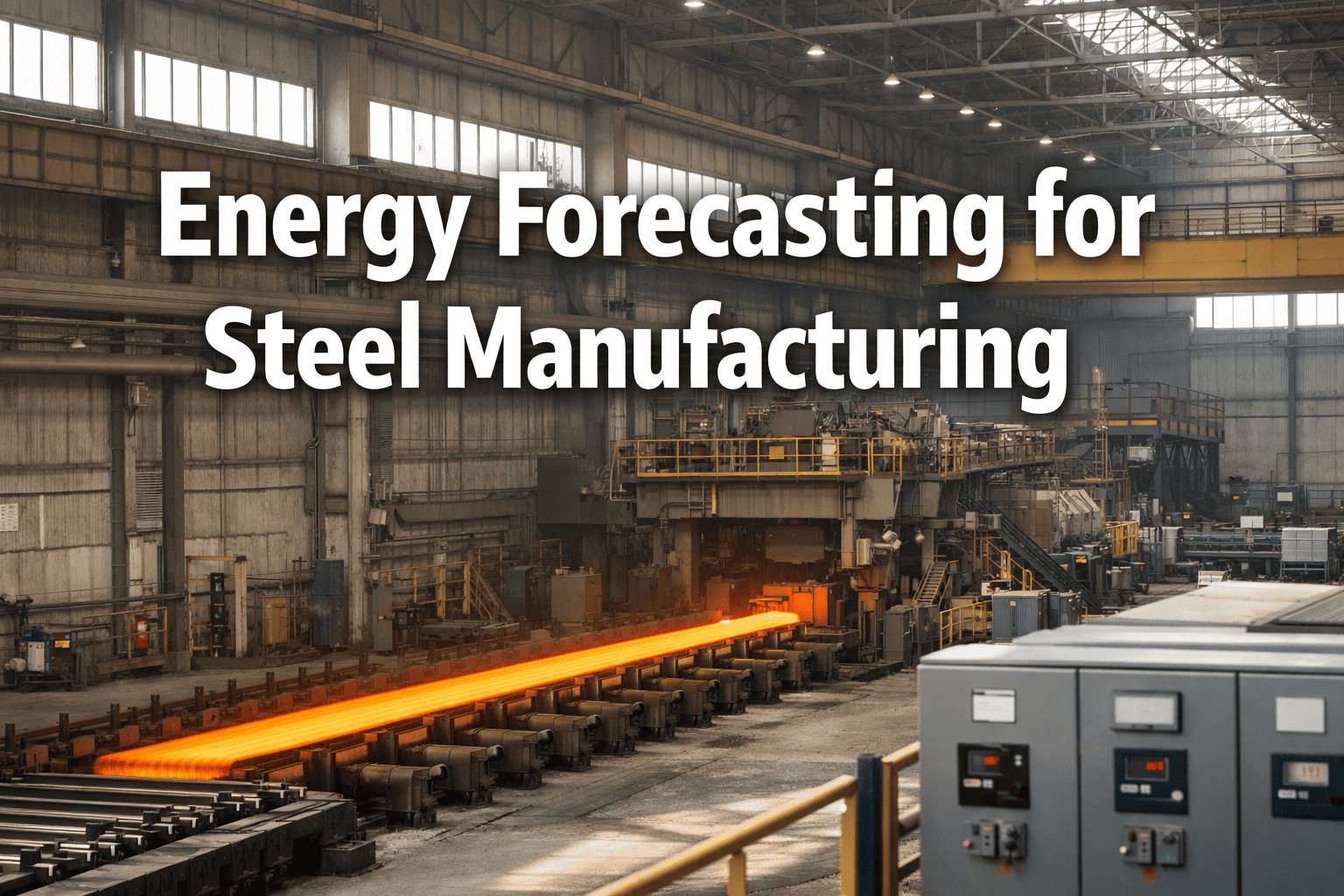
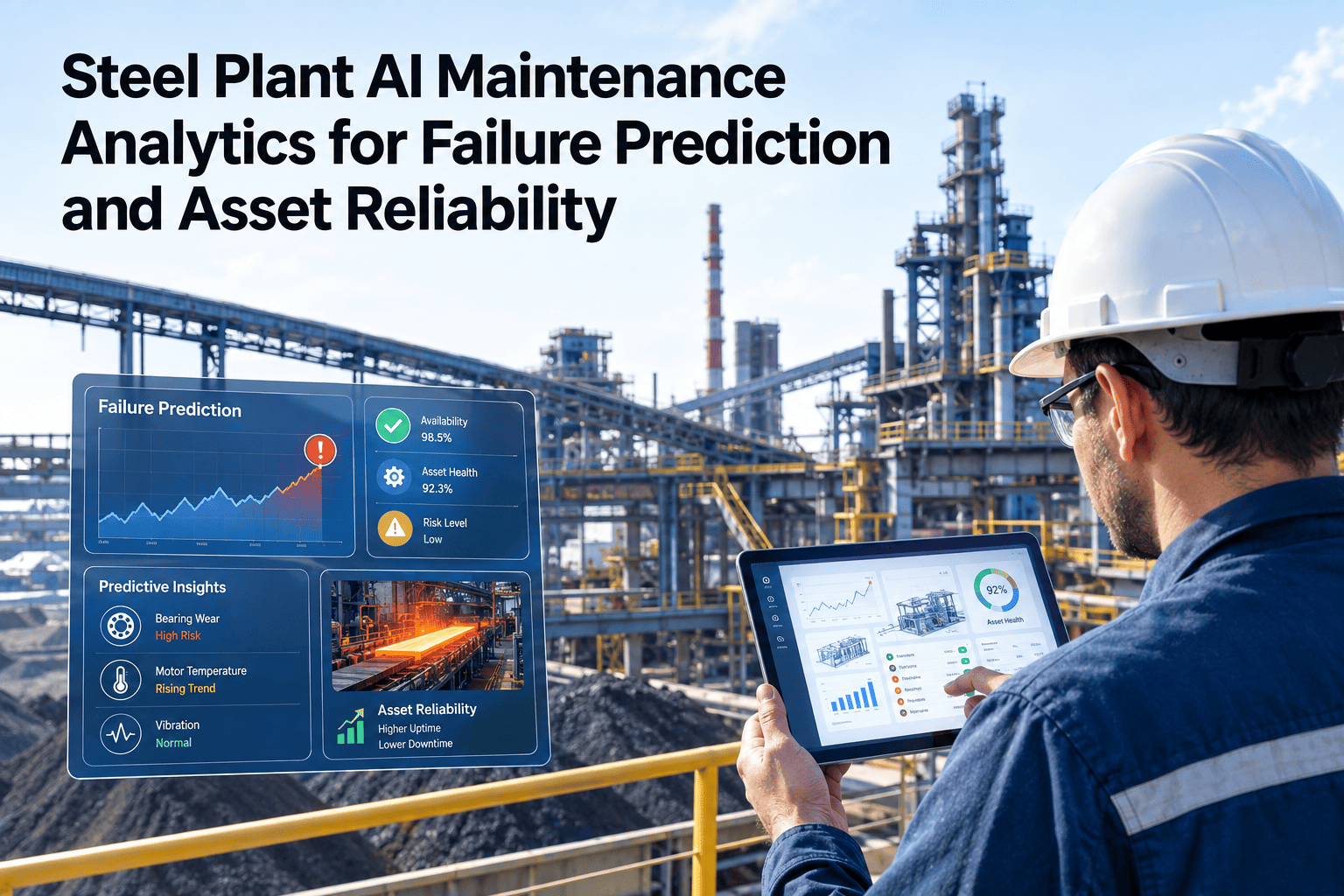
Steel manufacturing remains one of the most energy-intensive industries globally, with energy costs representing up to 20% of total production expenses. Traditional approaches to energy planning rely on historical averages and manual calculations that consistently miss the mark, exposing plants to demand charges, unexpected grid fees, and production disruptions. AI-powered energy forecasting transforms how steel facilities plan production by predicting energy demand with remarkable accuracy, enabling smarter scheduling decisions and significant cost reductions. Schedule a consultation to explore how AI energy forecasting can optimize your steel operations.
Why Energy Forecasting Matters for Steel Plants
Steel production involves extreme energy demands across blast furnaces, electric arc furnaces, reheating furnaces, and rolling mills. Without accurate forecasting, plants frequently purchase expensive external power at peak rates, face unexpected demand charges, or halt production entirely to avoid cost overruns. AI-based energy forecasting changes this dynamic by analyzing production schedules, equipment behavior, weather patterns, and historical consumption to predict energy needs hours or days in advance.
20%
Energy accounts for up to 20% of total steel manufacturing costs, making accurate forecasting critical for profitability
10-18%
Documented reduction in energy consumption through AI-driven forecasting and production optimization
$2.4M
Average annual savings for large industrial plants through AI-powered energy optimization and demand management
12 mo
Typical payback period for AI energy forecasting implementations, with 73% achieving positive ROI within 18 months
Ready to reduce unexpected energy costs? Join leading steel manufacturers using AI forecasting to optimize production scheduling and eliminate demand charge surprises.
Sign Up Free
How AI Energy Forecasting Works
Modern AI energy forecasting platforms combine multiple data streams and machine learning models to generate accurate predictions for steel manufacturing operations. The system continuously learns from your facility's unique patterns to improve accuracy over time.
01
Data Integration
IoT sensors capture real-time energy consumption from furnaces, mills, and auxiliary systems. Historical production data, equipment status, and planned schedules feed into the AI engine alongside external factors like weather forecasts and grid pricing signals.
02
Pattern Recognition
Deep learning models analyze millions of data points to identify energy consumption patterns specific to your operation. The AI learns how different product types, equipment configurations, and ambient conditions affect energy demand.
03
Demand Prediction
Based on planned production schedules, the system forecasts energy demand at hourly, daily, and weekly intervals. Predictions include facility-level and equipment-level consumption with confidence intervals for risk assessment.
04
Schedule Optimization
AI recommends optimal production schedules that shift energy-intensive operations to lower-cost periods while maintaining throughput targets. Digital twins simulate scenarios to find the lowest-energy approach for each production requirement.
Sign up for Oxmaint to access AI-powered scheduling optimization.
Key Forecasting Capabilities
AI energy forecasting platforms deliver comprehensive analytics across all energy-intensive processes in steel manufacturing, from raw material processing through finished product delivery.
Demand Prediction
Forecast hourly and daily energy requirements based on production schedules. AI models account for equipment startup times, heating curves, and process interdependencies.
Peak Load Management
Identify and avoid demand charge triggers by predicting when consumption will exceed thresholds. Receive alerts before costly peak events occur.
Production Scheduling
Optimize when to run energy-intensive processes based on time-of-use rates, grid conditions, and renewable energy availability to minimize costs.
Equipment Efficiency
Compare predicted versus actual consumption to detect efficiency degradation. AI identifies when furnaces or mills consume more energy than expected.
See AI forecasting in action. Book a demo and we'll show you real-time energy prediction and scheduling optimization for steel manufacturing.
Book a Demo
Steel Industry Applications
Different steelmaking processes have distinct energy profiles that require tailored forecasting approaches. AI models are trained on equipment-specific consumption patterns to deliver accurate predictions across all production methods.
AI models learn the unique energy signature of each equipment type to improve prediction accuracy over time.
Traditional vs. AI-Powered Forecasting
Understanding the difference between conventional energy planning and AI-driven forecasting reveals why leading steel manufacturers are adopting intelligent systems.
Traditional Planning
- Historical averages and manual calculations
- Static production schedules ignore energy costs
- Reactive response to demand charge bills
- No visibility into equipment-level consumption
- Weather and grid pricing not considered
15-25%
forecast error typical
AI-Powered Forecasting
- Machine learning on real-time sensor data
- Dynamic scheduling based on energy prices
- Proactive demand charge avoidance
- Equipment-level consumption predictions
- Weather and market integration
3-5%
forecast accuracy achieved
Transform Energy Planning with AI Forecasting
Oxmaint connects your production systems, energy meters, and scheduling tools into a unified AI platform that predicts energy demand, optimizes production timing, and eliminates unexpected energy costs.
ROI of AI Energy Forecasting
AI energy forecasting investments deliver returns through multiple value streams including direct consumption reduction, demand charge avoidance, optimized procurement, and improved production efficiency.
Average reduction in energy consumption
Reduction in demand charge exposure
Improvement in forecast accuracy
Reduction in production interruptions
Implementation Approach
Successful AI energy forecasting deployment follows a structured approach that delivers quick wins while building toward comprehensive optimization across all production processes.
Week 1-2
Data Assessment
Energy meter audit
Historical data import
Production system integration
Week 3-4
Model Training
Baseline consumption analysis
Equipment pattern learning
Weather correlation setup
Week 5-6
Pilot Deployment
Forecast validation
Dashboard configuration
Alert threshold tuning
Week 7+
Full Production
Schedule optimization live
Continuous model improvement
Facility-wide expansion
Integration Capabilities
AI energy forecasting platforms connect with existing plant systems to enable automated optimization and real-time decision support across operations.
In energy-intensive manufacturing, accurate demand forecasting is not optional. Steel plants that can predict consumption and optimize schedules avoid millions in demand charges while maintaining production targets. AI makes this precision possible at scale.
— Industrial Energy Management Director
Deploy AI Energy Forecasting for Steel Excellence
Your spreadsheets cannot predict when an EAF heat will trigger demand charges or optimize production sequences based on real-time grid pricing. Oxmaint helps you deploy AI forecasting that predicts energy demand, recommends optimal schedules, and eliminates unexpected costs—transforming energy planning from reactive firefighting to proactive optimization.
Frequently Asked Questions
How accurate are AI energy forecasts for steel operations?
Modern AI forecasting systems achieve 95-97% accuracy for day-ahead predictions after initial training. Accuracy improves over time as models learn your facility's unique patterns. Equipment-level forecasts are typically within 3-5% of actual consumption, compared to 15-25% error rates with traditional methods.
What data is required to start energy forecasting?
At minimum, you need historical energy meter data and production schedules. More granular data from equipment-level meters, process parameters, and weather integration improves forecast accuracy. Most implementations start with available data and add monitoring points based on identified optimization opportunities.
Schedule a consultation to assess your data readiness.
How does forecasting help with demand charge management?
AI systems predict when consumption will approach demand charge thresholds and alert operators before peaks occur. The platform can also recommend production schedule adjustments to spread loads across time periods, avoiding the highest-cost demand intervals while maintaining throughput targets.
Can AI forecasting work with our existing production systems?
Yes. AI forecasting platforms integrate with standard industrial protocols including Modbus, OPC-UA, and common MES/ERP systems. The implementation typically requires no changes to existing equipment or control systems.
Sign up for a free account to discuss your specific integration requirements.
What ROI can we expect from energy forecasting?
Steel plants typically see 10-18% reduction in energy costs within the first year of AI forecasting implementation. The largest savings come from demand charge avoidance and optimized scheduling of energy-intensive operations. Most implementations achieve positive ROI within 12-18 months.