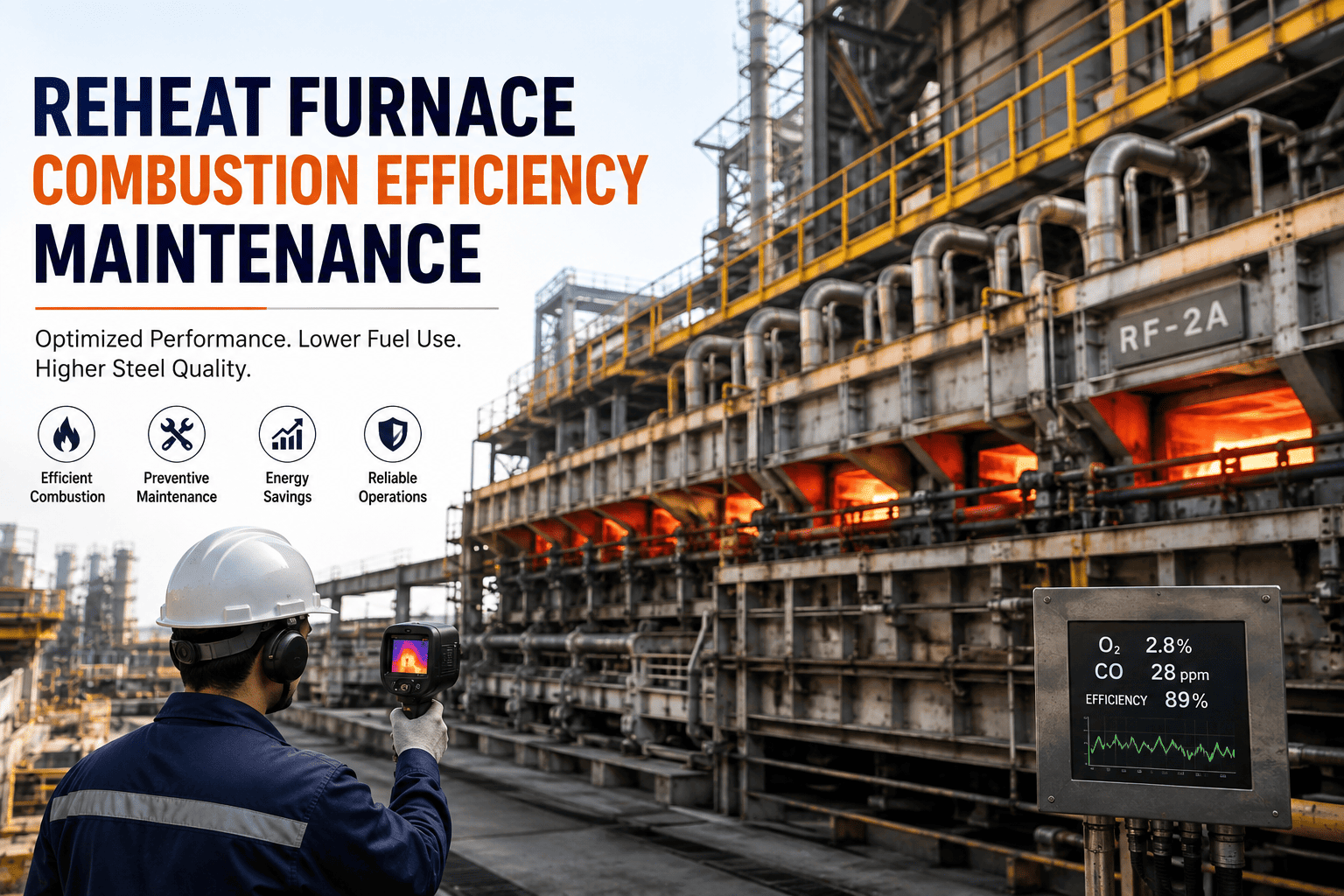
A 3,200-tonne-per-day reheat furnace running with higher-than-optimal excess air was quietly burning through 18% more natural gas than its design specification, adding nearly $1.1M a year to the mill's fuel bill without a single alarm firing. Reheat furnace combustion is one of the largest controllable energy costs on a steel plant's balance sheet, yet burner tuning, air-fuel ratio checks, and recuperator upkeep are often left to whoever has spare time between rolling campaigns. Oxygen trim drifted out of calibration for months, refractory door seals leaked heat at every charge, and nobody tracked fuel intensity per tonne rolled. After building a structured combustion maintenance program with automated PM scheduling and trend tracking, the mill cut fuel intensity 14% within two quarters and kept it there. Start free and put reheat furnace combustion maintenance on autopilot.
Reheat Furnace Combustion Efficiency Maintenance That Actually Cuts Fuel Spend
Burner PM, air-fuel ratio control, oxygen trim calibration, recuperator condition, door seal integrity, and zone temperature uniformity — coordinated in one maintenance program instead of scattered across shifts, contractors, and spreadsheets. Most mills already own the instrumentation needed to catch drift early; what's missing is a schedule that actually gets followed and a trend line that gets reviewed every week instead of once a year.
Why Combustion Efficiency Quietly Erodes Between Turnarounds
Reheat furnace burners rarely fail outright — they drift. A thermocouple reading a few degrees off, a slightly worn burner tip, or an oxygen probe that hasn't been recalibrated in a year all push excess air above the ideal 10–15% range. Each percentage point of extra excess air raises stack losses and pushes fuel consumption higher without any visible symptom on the mill floor. Refractory door seals that lose their fit leak radiant heat continuously, and recuperators fouled with scale lose preheat efficiency gradually rather than suddenly.
None of these issues trigger a shutdown, so without scheduled inspection and trending, they simply become the new normal until an energy audit — or a jarring utility invoice — exposes the gap. By the time that happens, the mill has typically been paying the inflated fuel bill for six to eighteen months, and nobody can point to when the drift actually started because there was no baseline to compare against.
| Metric | Before Program | After 6 Months | After 12 Months |
|---|---|---|---|
| Excess air (average) | 28% | 19% | 13% |
| Fuel intensity (MMBtu/tonne) | 2.85 | 2.61 | 2.45 |
| Burner PM compliance | 54% | 78% | 92% |
| Unplanned burner outages | 9 / year | 4 / year | 1 / year |
| Door seal replacement lag | Reactive | Scheduled | Trended |
| Recuperator preheat temp | 380°C | 410°C | 435°C |
| Zone temperature spread | ±45°C | ±28°C | ±15°C |
From Reactive Tuning to a Trended Combustion Program
Most mills start with combustion maintenance sitting on a paper checklist that nobody trends. The shift to a coordinated program happens in stages, and each stage compounds the fuel savings from the one before it rather than replacing it — which is why mills that skip straight to buying new burners without fixing the process around them often see savings fade within a year.
Our reheat furnace fuel bill used to be a mystery — it just crept up every year and nobody could say exactly why. Once we started trending excess air and oxygen trim by zone, we found two burners running 30% over spec and a recuperator that had been fouled for over a year. Fixing what the data pointed to, not guessing, is what got us the savings, and keeping the trend line visible every week is what's kept the bill from creeping back up since.
Bring Combustion Tuning Into Your Maintenance Program
Schedule burner PM, ratio checks, oxygen trim calibration, door seal replacement, and recuperator inspection alongside every other reheat furnace task, and trend fuel intensity by zone and shift automatically instead of waiting for the next energy audit.
Frequently Asked Questions — Reheat Furnace Combustion Maintenance
Stop Losing Fuel Spend to Burner Drift
Coordinate burner PM, air-fuel ratio checks, oxygen trim calibration, door seal replacement, and recuperator inspection in one program built for reheat furnace reliability — and see the fuel intensity trend line move within the first quarter.