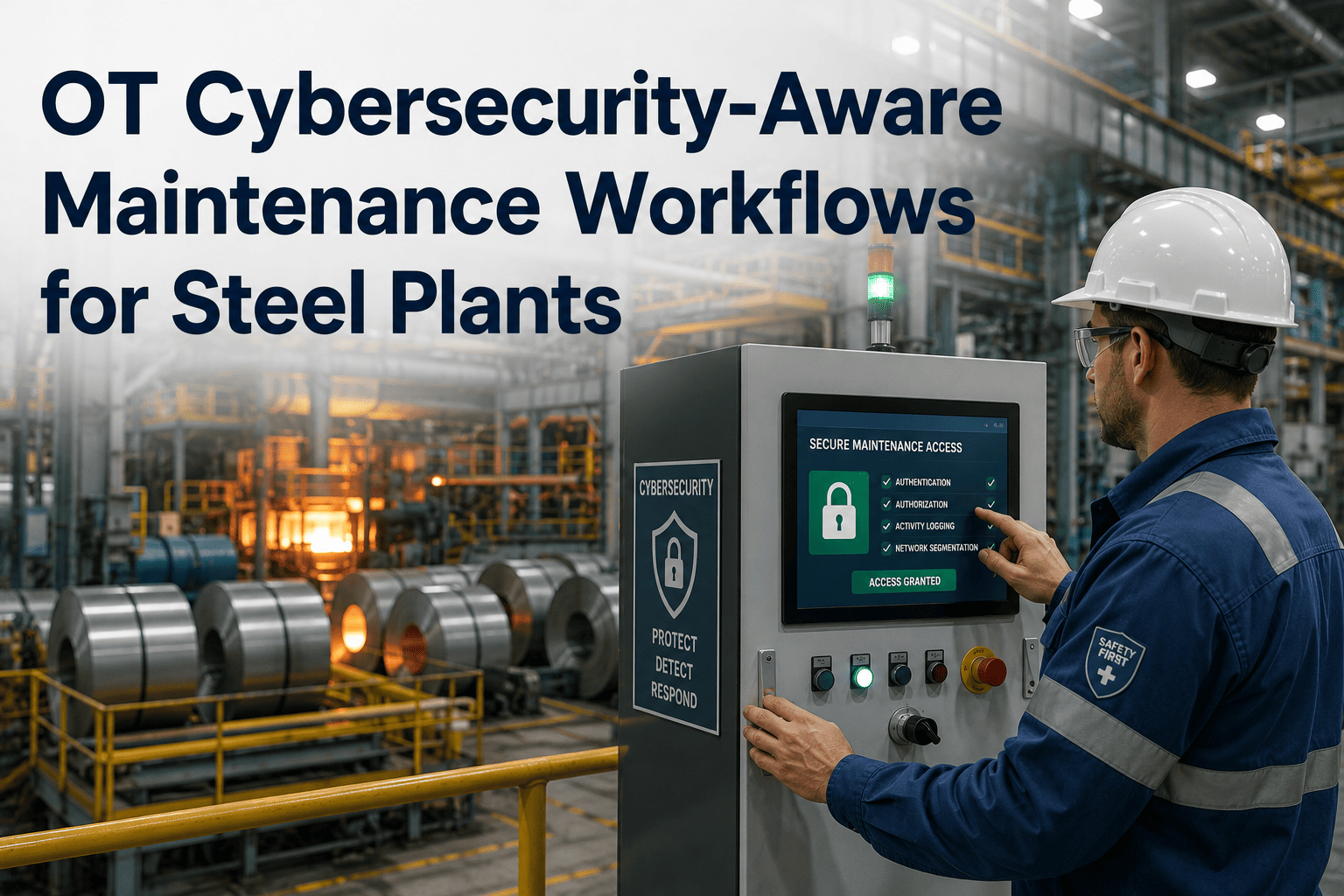
Steel mills in 2026 face unprecedented OT cybersecurity threats. Ransomware attacks on connected plants have surged 87% since 2024, targeting CMMS and SCADA integration as the weakest link. Fleet operators and plant managers with comprehensive OT cybersecurity documentation and IEC 62443-aligned CMMS records pay 18–30% lower cyber insurance premiums than mills without structured security records. Underwriters view documented network segmentation, asset inventories, and incident response plans as evidence of a well-managed, lower-risk industrial environment — and they price accordingly. Beyond premiums, the speed of regulatory reporting and incident resolution is directly tied to documentation quality: mills that can produce a complete pre-incident OT security record within hours close investigations faster, with lower breach liability. Start a free trial or book a demo to see how Oxmaint secures your maintenance data.
Your OT Security Records Are Your Legal & Insurance Defense
When a cyber incident triggers regulatory investigation (CISA, SEC, or GDPR), the quality of your CMMS security documentation determines whether you defend from strength or scramble to prove compliance. Oxmaint builds that record automatically — every access log, every patch, every network change, every security sign-off. Start a free trial or book a demo.
Top 6 OT Cyber Threats Targeting Steel Mills in 2026
From ransomware locking out CMMS databases to SCADA manipulation causing physical damage — steel plants face unique industrial cyber risks that demand IEC 62443 controls.
Ransomware on CMMS Servers
Encrypts maintenance records, work orders, and PM schedules — halting all planned and corrective maintenance for weeks.
SCADA Manipulation
Attackers alter setpoints on caster cooling, furnace temperatures, or rolling mill speeds causing product defects or equipment damage.
PLC/HMI Code Injection
Malicious ladder logic or HMI scripts disrupt production sequences, bypass safety interlocks, or damage actuators.
Insider Threat / Compromised Creds
Disgruntled employees or stolen OT credentials used to change recipes, disable alarms, or exfiltrate process data.
Supply Chain / Vendor Remote Access
Unsecured remote connections from OEMs or third-party maintenance vendors become backdoors into OT networks.
API Exploitation (CMMS ↔ SCADA)
Unsecured APIs between CMMS and SCADA systems allow attackers to push fake maintenance data or pull real-time production intelligence.
OT Security Controls for Steel Mills
IEC 62443-3-3 provides the foundation for securing steel plant OT. These seven foundational requirements (FRs) map directly to CMMS-documented controls that insurers and auditors verify.
Securing the CMMS–SCADA Bridge: Best Practices
The integration between maintenance management and process control is often the most vulnerable attack surface. Implement these six controls to protect both systems.
1. Unidirectional Gateways
Allow SCADA → CMMS data flow only, blocking any traffic from IT to OT. Prevents ransomware spreading from CMMS servers to PLCs.
2. OPC UA with Security
Configure OPC UA with X.509 certificates, encryption, and message signing — never use unauthenticated OPC DA.
3. API Gateway with Rate Limiting
Expose REST APIs through a DMZ gateway with authentication, rate limiting, and payload validation to prevent injection.
4. Network Segmentation (Purdue Model)
Separate Level 3 (Site Operations) from Level 2 (Area Control) with firewalls. CMMS lives at Level 3 or 4; never direct Level 0/1 access.
5. Jump Server / Secure Remote Access
All vendor remote access to CMMS or SCADA must go through a hardened jump server with session recording and approval workflows.
6. Change Management & Audit Trail
Every firewall rule change, every API credential update, every integration config change must be documented in CMMS with approval sign-off.
How Oxmaint Delivers OT-Secure CMMS
Oxmaint is built with defense-in-depth for industrial environments — SOC 2 Type II certified, role-based access, audit logs, and API security that meets NIST CSF standards. Start a free trial or book a demo to review our security architecture.
Role-Based Access
Granular permissions per user, per asset group
Audit Trails
Every view, edit, export logged for 7+ years
Encryption at Rest & In Transit
AES-256, TLS 1.3, HSM key management
API Security
OAuth2, JWT, rate limiting, IP allowlisting
Measurable OT Security Outcomes from CMMS Documentation
For IEC 62443-documented mills
With documented backup & runbooks
From CMMS-based access controls
For mills with CMMS security logs
“After a ransomware attempt encrypted our legacy CMMS, we lost 8 months of maintenance records. We switched to Oxmaint for its OT-native security — immutable audit logs, role-based access, and automated backups. Six months later, our cyber insurer reduced premiums by 28% solely based on Oxmaint’s security documentation.”
— Sarah Chen, IT/OT Security Director, Midwest Steel & Processing
Frequently Asked Questions — OT Cybersecurity for Steel Mills
Does IEC 62443 apply to existing steel mills or only new builds?+
How does Oxmaint help with NIST CSF alignment for OT?+
What is the Purdue Model and why does it matter for CMMS security?+
How often should we conduct OT vulnerability assessments in a steel mill?+
What is the average recovery time after OT ransomware in steel?+
Do we need to document every firewall rule change in the CMMS?+
Can Oxmaint integrate with our existing SIEM (Splunk, Sentinel, QRadar)?+
What are the cyber insurance requirements for steel mills in 2026?+
Secure Your CMMS. Protect Your Steel Mill. Lower Your Premium.
Every access log, patch record, and security audit is not just compliance — it's your insurance discount and your breach liability shield. Oxmaint delivers OT-native CMMS security by design.
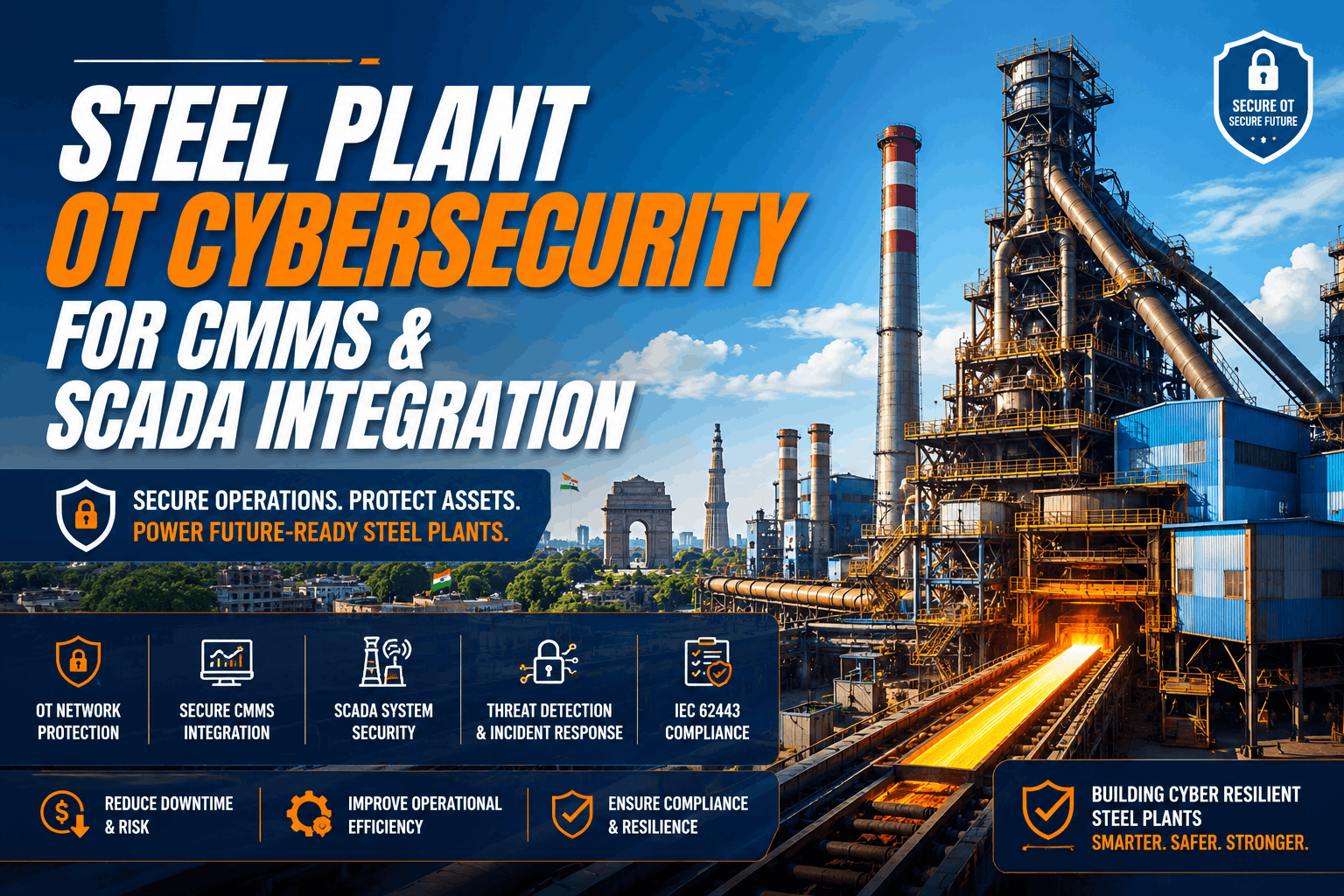
.png)