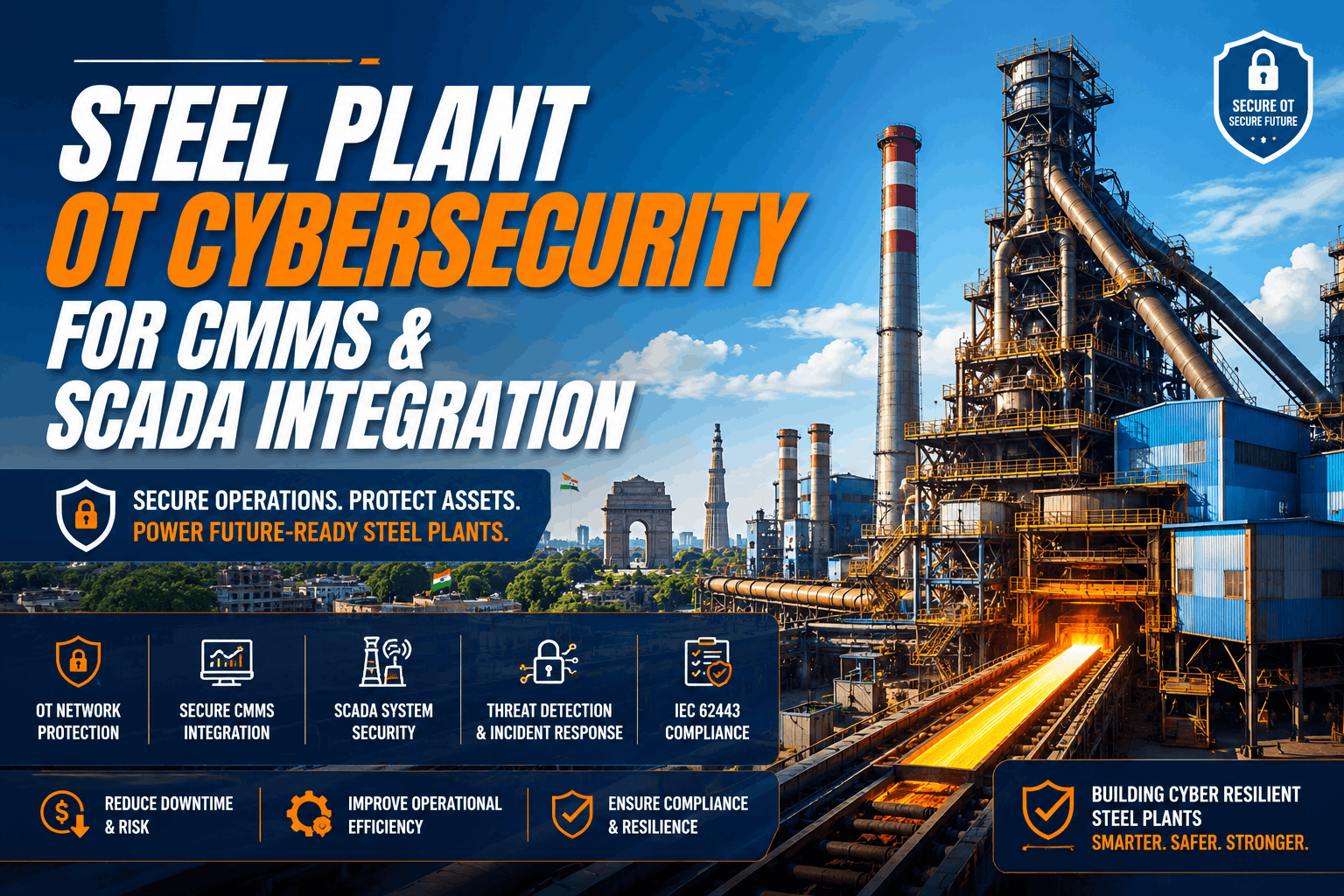
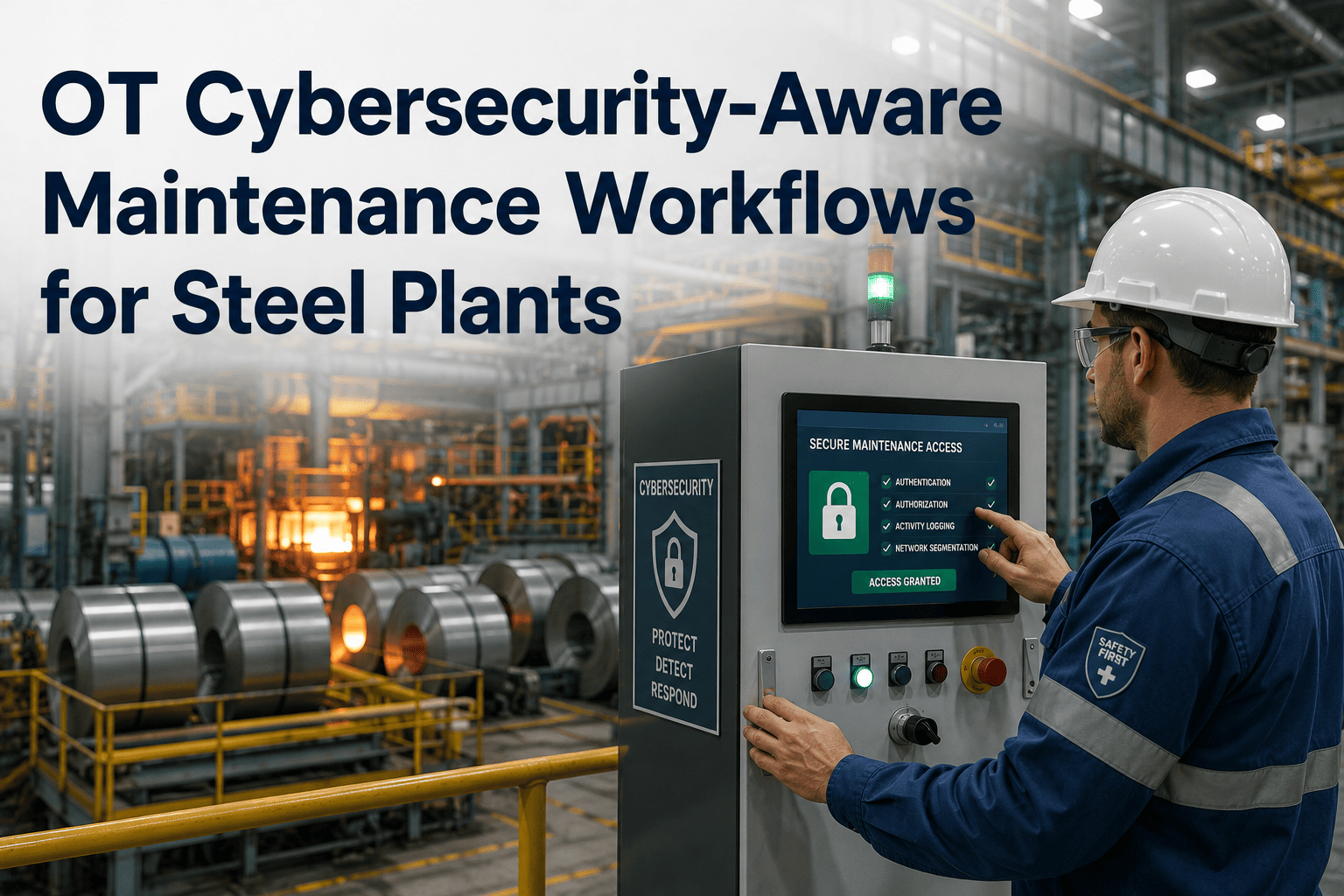
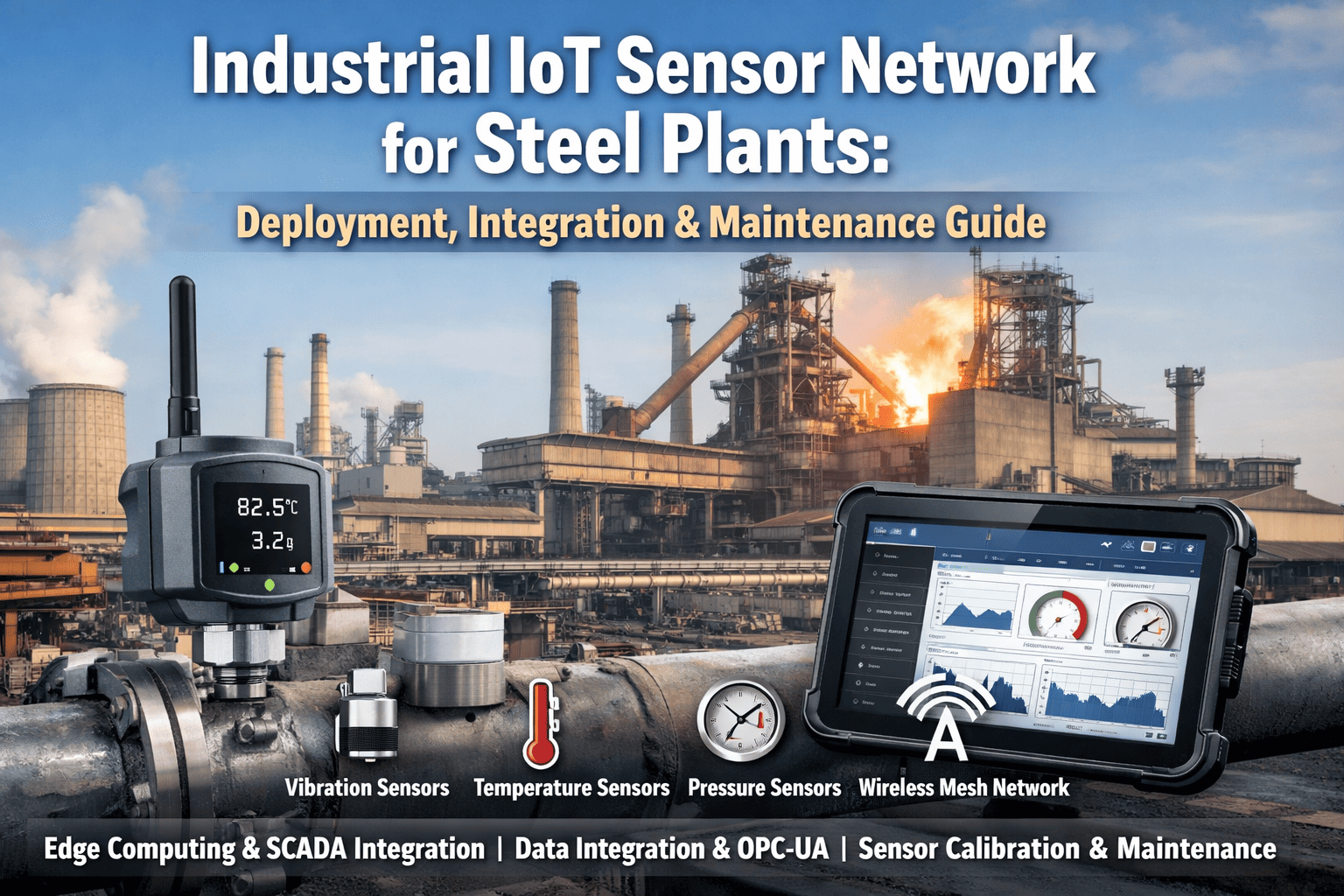
In June 2022, a ransomware attack forced a major European steel producer into emergency shutdown for over two weeks. Blast furnaces that require continuous operation suffered refractory damage worth $2–5 million each, with total losses estimated at $40–80 million in production, equipment damage, and recovery costs. The attack did not target email servers or financial systems — it penetrated the operational technology network, reaching SCADA systems, PLCs, and HMIs that control blast furnaces, rolling mills, and continuous casters. Manufacturing has been the most targeted industry for five consecutive years, accounting for 27.7% of all cybersecurity incidents in 2025. Steel plants face amplified risk because their OT environments control processes where unplanned shutdowns cause physical equipment destruction. Sign up for Oxmaint to secure your CMMS infrastructure with role-based access control and audit-ready logging.
Steel Plant Cybersecurity for OT/IT Systems: Protecting SCADA, IoT and CMMS Infrastructure
Network segmentation, access control, incident response, and compliance frameworks for securing industrial control systems in steel manufacturing environments.
Why Steel Plants Are High-Value Cyber Targets
Steel manufacturing operates processes where unplanned interruption causes physical destruction — not just lost production. A blast furnace emergency shutdown damages refractory linings worth millions. Continuous casters cannot stop mid-pour without destroying the strand. Rolling mill interruptions produce scrapped billets. These physical consequences make steel plants uniquely vulnerable to ransomware operators who know that paying the ransom is cheaper than the alternative. Hacktivist groups like Z-Pentest and Dark Engine have increased targeting of HMI and SCADA systems, with web-based SCADA interfaces and VNC access points as the most frequently compromised entry vectors in 2025.
Four Critical Security Domains for Steel Plant OT
SCADA and DCS Protection
SCADA servers, process historians, HMI workstations, and engineering stations control visibility across blast furnaces, BOF, casters, rolling mills, and utilities. Compromising this layer means controlling the process — or blinding operators to dangerous conditions.
IoT Sensor Hardening
Temperature sensors, vibration monitors, gas detectors, and flow meters connected to the OT network create thousands of potential entry points. Each unmanaged IoT device is a lateral movement opportunity for attackers who have gained initial access. Book a demo to see how Oxmaint manages IoT device inventory with security classifications.
CMMS Access Control
The CMMS contains equipment configurations, maintenance histories, vendor access credentials, and production schedules. Unauthorized access to CMMS data exposes the operational blueprint of the entire facility — telling attackers exactly which systems are most critical and when maintenance windows create vulnerability.
Network Architecture
Flat networks where enterprise IT and plant OT share infrastructure are the single largest enabler of successful attacks. The Purdue Model defines five logical levels — from physical process (Level 0) through enterprise (Level 5) — with security controls at each boundary preventing lateral movement between zones.
Secure Your Maintenance Infrastructure
Oxmaint provides role-based access, audit logging, encrypted data, and secure API integrations built for industrial environments.
Compliance Frameworks for Steel Plant OT Security
Three primary frameworks guide industrial cybersecurity. Steel plants should align to at least one — and cyber insurance underwriters increasingly require documented compliance.
IEC 62443
Defines security levels (SL1–SL4), zones, and conduits for industrial automation systems. Provides a roadmap from basic protection against casual threats (SL1) through defense against state-sponsored actors (SL4).
NIST SP 800-82 Rev 3
Comprehensive guidance on securing ICS environments covering asset inventory, network segmentation, and compensating controls for legacy devices that cannot be patched.
NIS2 Directive
Expands mandatory OT security requirements to steel producers operating in Europe. Requires incident reporting, governance obligations, and documented risk management. Book a demo to see compliance documentation capabilities.
Attack Vectors and Impact on Steel Operations
| Attack Type | Target | Steel Plant Impact | Estimated Cost |
|---|---|---|---|
| Ransomware | HMI / SCADA servers | Emergency BF shutdown, refractory damage | $20M–$80M |
| SIS Manipulation | Safety instrumented systems | Override emergency shutdowns, physical damage | Equipment + safety |
| IP Theft | Process historians / MES | Alloy formulations, quality parameters stolen | Competitive loss |
| Credential Harvest | VPN / remote access | Persistent OT network access for future attacks | $4.56M avg |
| IoT Exploitation | Sensors / field devices | False readings, lateral movement into control layer | Production + safety |
How Oxmaint Supports Steel Plant Cybersecurity
Role-Based Access Control
Granular RBAC ensures technicians, managers, and administrators see only the data and controls their role requires — eliminating shared accounts.
Complete Audit Trail
Every login, work order modification, configuration change, and report export logged with timestamp and user identity for forensic and compliance purposes.
Encrypted Data and API
All data encrypted at rest and in transit. Secure API integrations with industrial systems use token-based authentication with configurable expiration policies.
IoT Device Registry
Maintain a live inventory of every connected sensor and field device with firmware version tracking, vulnerability flagging, and maintenance scheduling. Start your free trial.
Build Cyber-Resilient Maintenance Operations
Your CMMS is either a security asset or a vulnerability. Oxmaint is built for industrial environments where OT security is non-negotiable.
Frequently Asked Questions
Protect Your Steel Plant From the Next Attack
Every day without proper OT security is a day your production infrastructure is exposed. Start building defense-in-depth today.