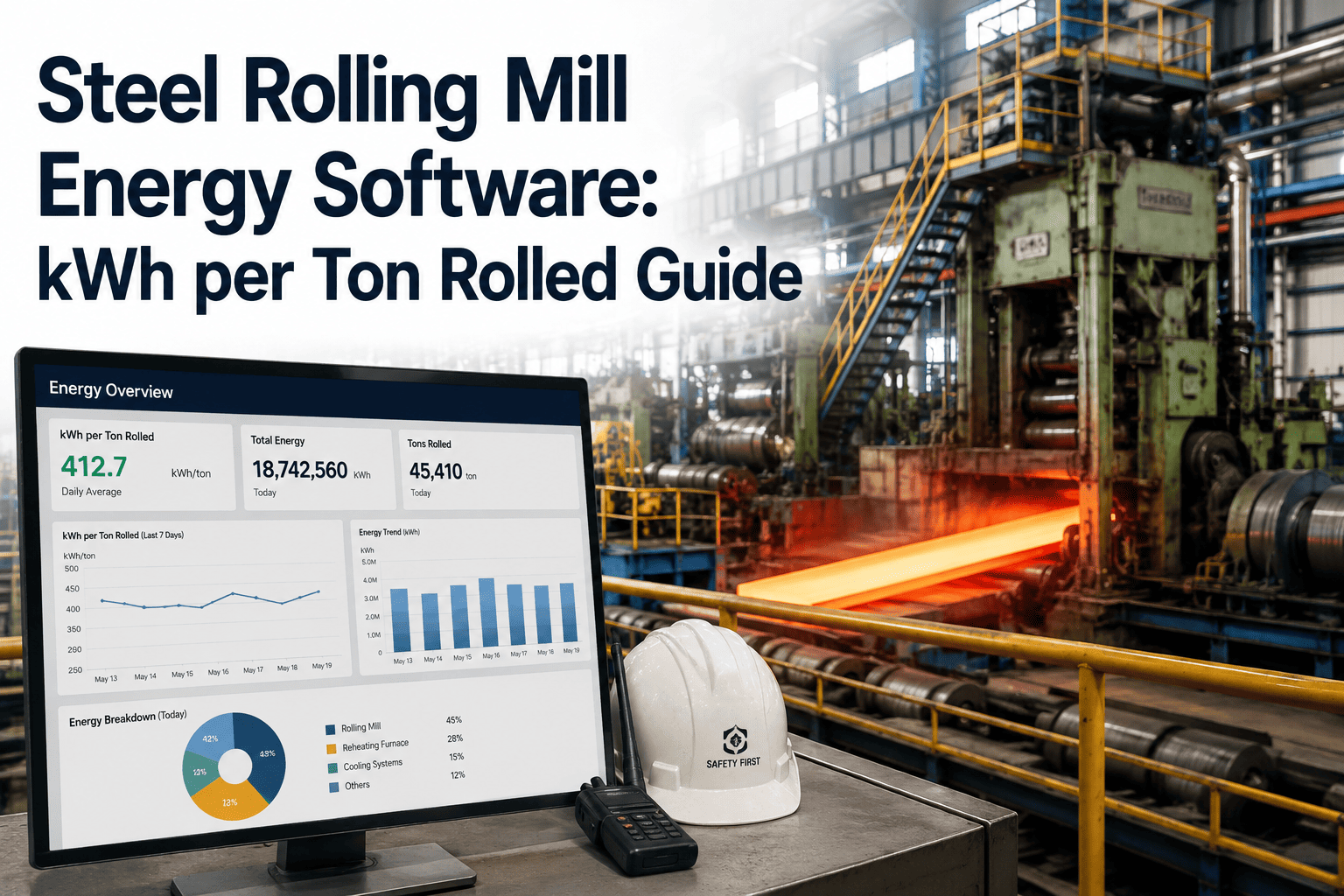
Rolling mills are the workhorses of steel production, but they're also major energy consumers, accounting for a significant portion of total plant operating costs. Traditional approaches to energy management, including manual monitoring and fixed operating parameters, leave substantial savings on the table. AI-powered energy optimization software now enables steel plants to monitor consumption in real-time, predict demand patterns, and automatically adjust operations for maximum efficiency. Schedule a consultation to explore how Oxmaint can transform energy management at your rolling mill facility.
The Case for AI-Powered Rolling Mill Energy Optimization
15-20%
Typical energy cost reduction achieved through AI-driven optimization of rolling mill operations
70-80%
Of total rolling mill energy consumed by reheating furnaces, making them the primary optimization target
10%
Energy reduction achieved by steel plants using digital twins for production optimization
15%
Reduction in unplanned downtime achieved through AI-powered predictive maintenance on rolling equipment
Ready to cut energy costs at your rolling mill? Join leading steel plants using AI analytics to reduce consumption and meet sustainability targets.
Why Rolling Mills Need Energy Optimization Software
Steel rolling mills face mounting pressure from volatile energy prices, tightening emissions regulations, and competitive global markets. The hot rolling process alone is the third-largest energy consumer in integrated steel plants, with reheating furnaces consuming the majority of thermal energy. Manual monitoring and fixed operating recipes miss the granular patterns that drive energy waste, leaving significant optimization opportunities undiscovered.
Modern AI-powered energy management systems analyze vast amounts of operational data to identify inefficiencies invisible to traditional methods. Machine learning algorithms continuously optimize furnace temperatures, rolling speeds, and air-fuel ratios based on real-time conditions, product specifications, and energy prices. Sign up for Oxmaint to centralize energy analytics across your entire rolling mill operation.
AI Energy Optimization Platform Architecture
Effective rolling mill energy optimization requires integrating data from multiple sources across the production line. Modern platforms combine IoT sensor networks, edge computing, and machine learning models to deliver actionable intelligence in real-time.
Energy Optimization System ComponentsFrom data capture to automated optimization
01
Sensor Infrastructure
Deploy high-resolution sensors across reheating furnaces, rolling stands, and auxiliary systems. Monitor temperature, pressure, flow rates, motor current, and vibration at sub-second intervals for comprehensive visibility.
02
Edge Data Processing
Industrial edge computers aggregate data from hundreds of monitoring points, performing initial anomaly detection and data validation locally. Sub-second processing ensures no consumption spike goes unrecorded.
03
AI Analytics Engine
Machine learning models analyze consumption patterns against production schedules, product specifications, and historical baselines. Neural networks detect subtle efficiency degradation invisible to rule-based systems.
04
Predictive Optimization
AI models forecast energy demand based on production schedules and recommend optimal operating parameters. Digital twins simulate scenarios to identify the lowest-energy approach for each production requirement.
05
CMMS Integration
Direct connections to maintenance management systems trigger work orders when efficiency degradation indicates equipment issues. Book a demo to see how Oxmaint connects energy analytics with maintenance workflows.
Key Energy Optimization Capabilities
AI analytics platforms monitor, analyze, and optimize energy consumption across every energy-intensive asset in the rolling mill, from reheating furnaces and rolling stands to auxiliary systems and mobile equipment.
Analytics and Optimization Features
Furnace Optimization
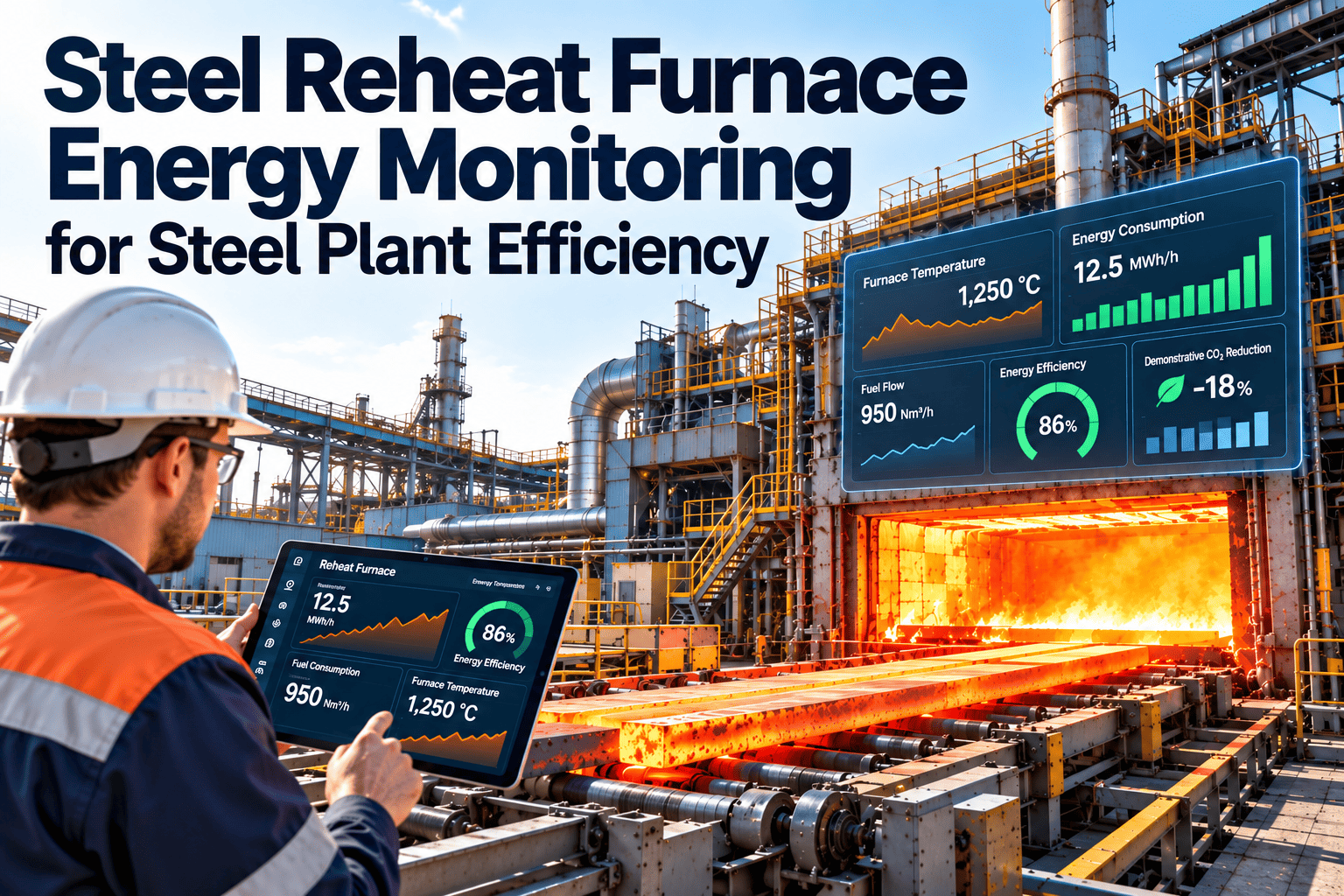
AI continuously adjusts air-fuel ratios, zone temperatures, and slab charging sequences to minimize fuel consumption while maintaining product quality.
Production Scheduling
Optimize rolling schedules to reduce energy intensity during high-cost hours and maximize throughput during off-peak periods when energy is cheaper.
Motor Efficiency
Monitor rolling stand motors and identify when they run at suboptimal efficiency. Switch drives to idle when not in use to reduce energy consumption during gaps.
Waste Heat Recovery
Track heat recovery system performance and identify opportunities to capture and reuse exhaust heat for preheating combustion air or generating steam.
Demand Forecasting
Predict daily and weekly energy requirements based on production schedules. Optimize energy procurement and coordinate with utility time-of-use rates.
Equipment Benchmarking
Compare energy efficiency across identical equipment, shifts, and operators. Identify why one furnace uses more energy than another under similar conditions.
See AI energy optimization in action. Book a demo and we'll show you real-time monitoring and optimization for your rolling mill.
Understanding the capability difference between traditional energy tracking and AI analytics reveals why leading steel manufacturers are transitioning to intelligent energy management systems.
Energy Management Approach Comparison
Traditional Management
Monthly meter readings and manual logging
Fixed operating parameters regardless of conditions
Reactive response to billing surprises
Limited visibility into equipment-level consumption
No correlation with production or market prices
10-15%typical energy waste undetected
AI-Powered Optimization
Real-time monitoring with sub-second resolution
Dynamic parameter adjustment based on conditions
Predictive consumption forecasting
Equipment-level efficiency benchmarking
Price-optimized production scheduling
15-20%reduction with continuous optimization
Energy Monitoring Points in Rolling Mills
Comprehensive energy optimization requires monitoring at multiple points throughout the rolling mill operation. Each monitoring point serves specific optimization and efficiency purposes.
Rolling Mill Energy Monitoring Configuration
Monitoring Point
Key Metrics
Optimization Value
Reheating Furnace
Zone temperatures, fuel flow, air-fuel ratio, exhaust temp
Leak detection, demand-based operation, system sizing
ROI of Rolling Mill Energy Optimization
AI energy optimization investments deliver returns through direct consumption reduction, improved equipment efficiency, optimized procurement timing, and reduced emissions compliance costs.
Documented Steel Industry BenefitsBased on industrial deployment data
5%
Energy consumption reduction through AI optimization
15%
Reduction in unplanned downtime
65%
Faster anomaly detection vs manual
3%
Overall energy cost reduction documented
Calculate your potential savings. Create a free Oxmaint account and our team will help model ROI for your specific rolling mill operation.
Successful rolling mill energy optimization deployment requires careful planning across sensor infrastructure, system integration, and operational change management. A phased approach delivers quick wins while building toward comprehensive optimization.
Typical Deployment Roadmap
Week 1-3
Assessment
Energy audit and baselineSensor infrastructure reviewIntegration architecture
In energy-intensive steel production, fuel and electricity are often your largest controllable costs. Yet most plants manage energy with monthly meter readings and gut instinct. AI analytics reveals the hidden patterns that drive waste and shows exactly where savings opportunities exist.
Industrial Energy Management Expert
Transform Rolling Mill Energy Management with AI
Your spreadsheets cannot detect a furnace running inefficiently or predict energy demand based on tomorrow's production schedule. Oxmaint helps you deploy AI analytics that monitors every consumption point, identifies waste patterns in real-time, and optimizes operating parameters automatically, transforming energy management from monthly reconciliation to continuous optimization.
How quickly can we see ROI from rolling mill energy optimization?
Most rolling mills identify significant savings opportunities within the first 30 days of deployment. Quick wins from anomaly detection and furnace optimization often pay for the system within 6-9 months, with ongoing savings compounding as AI models learn your operation's patterns. Schedule a consultation to discuss expected ROI for your specific facility.
What if our current metering infrastructure is limited?
AI analytics can start delivering value with existing meters, though additional monitoring points unlock more savings. We recommend a phased approach that begins with available data to demonstrate value, then prioritizes meter upgrades based on potential savings impact.
How does AI handle production variability in rolling mills?
AI models automatically correlate energy consumption with production variables including throughput, product mix, slab dimensions, and rolling schedules. This enables energy intensity metrics that normalize for production variability, making it possible to identify true efficiency improvements separate from production changes. Sign up for a free account to see how production correlation works.
Can the system integrate with our existing automation and CMMS?
Yes. Modern energy optimization platforms integrate with SCADA, DCS, MES, and CMMS systems through standard industrial protocols. This enables automated responses such as adjusting furnace parameters, triggering maintenance work orders, and coordinating with production scheduling systems.
Does AI optimization help with emissions reporting and sustainability goals?
Absolutely. AI platforms automatically calculate CO2 emissions from energy consumption and generate regulatory-compliant reports. Real-time carbon tracking helps monitor progress against sustainability targets, and optimization recommendations prioritize actions with both cost and emissions benefits.