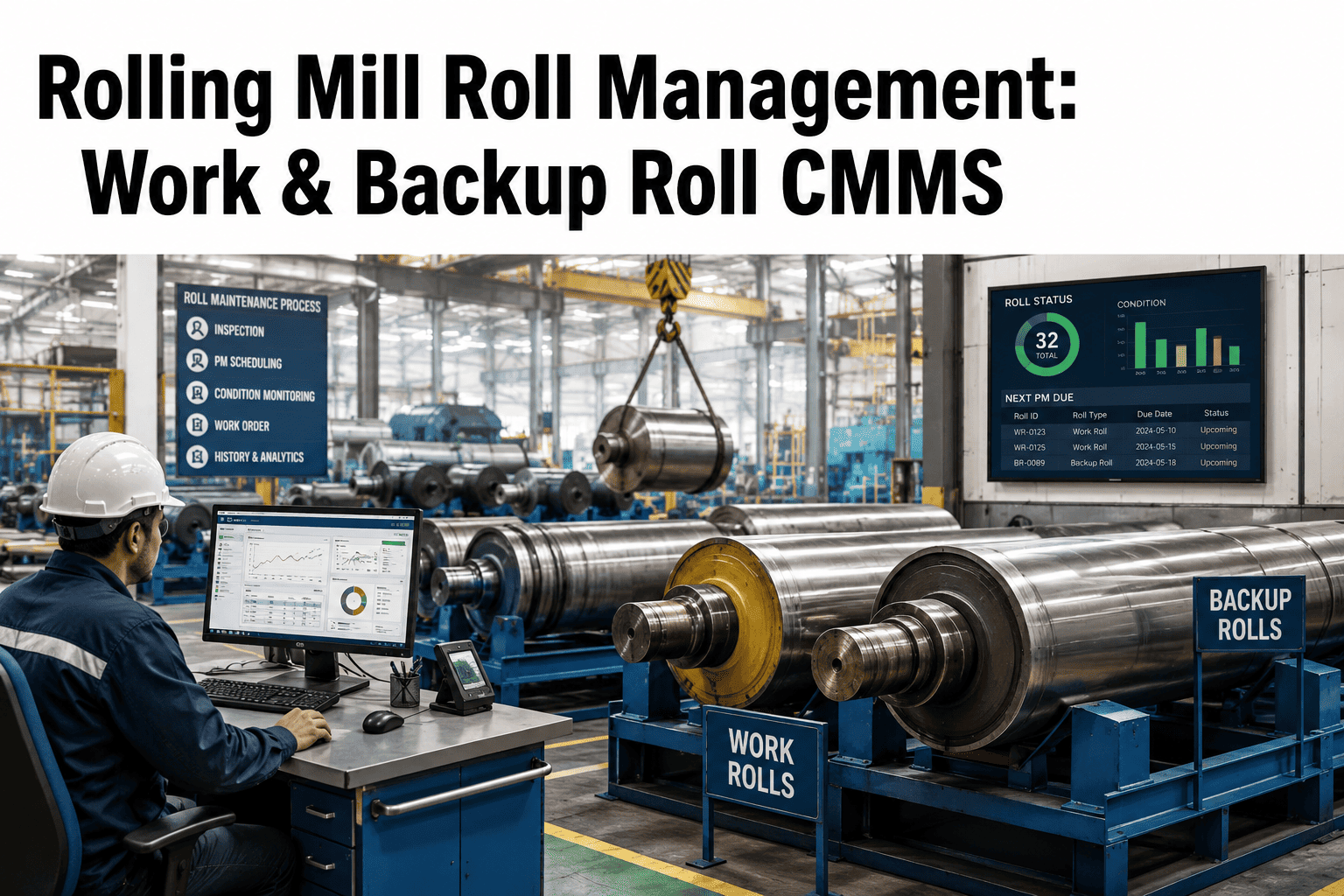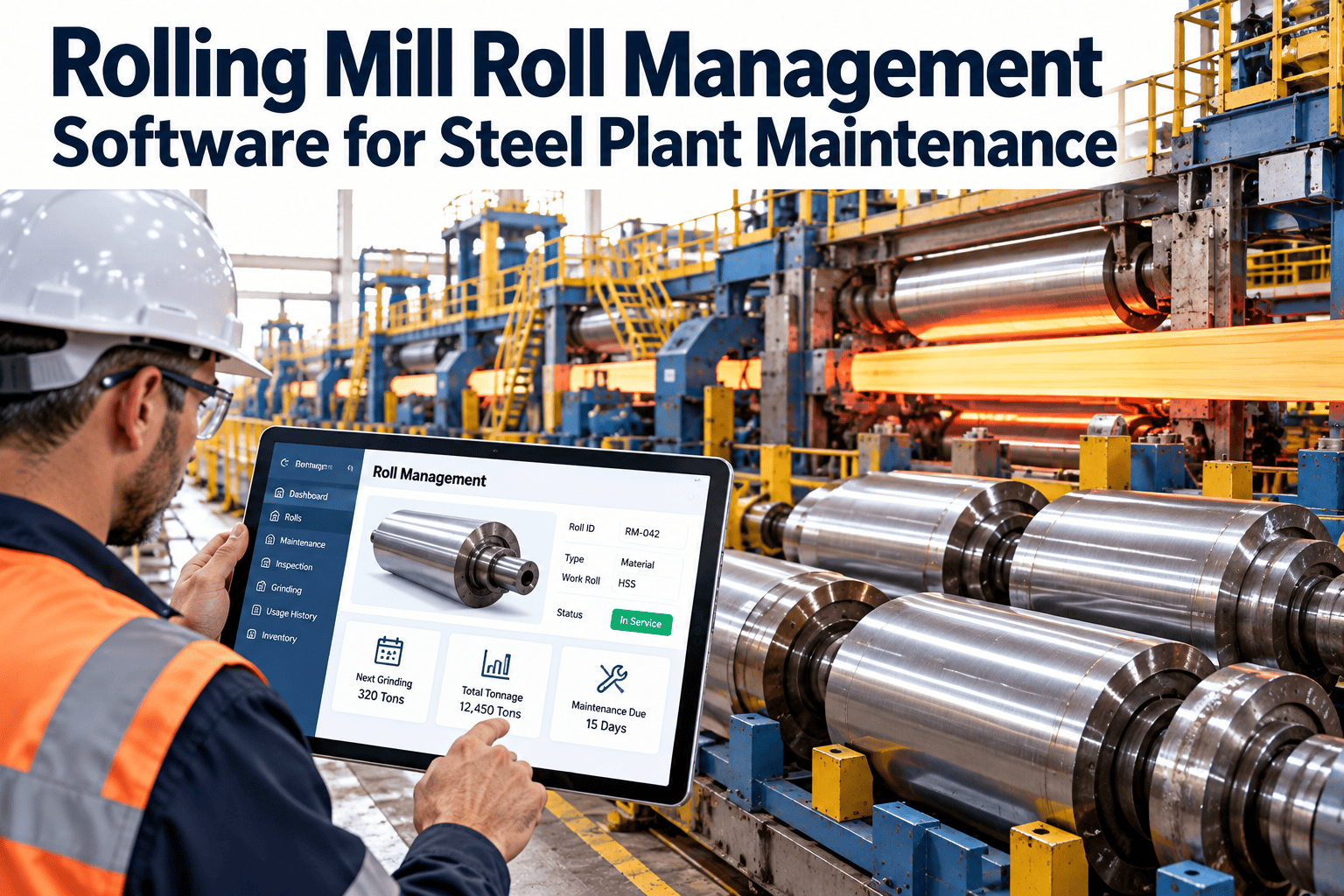
A single work roll on a hot strip mill can cost more than most of the machines around it, and it wears out on a schedule measured in tonnes rolled, not calendar days. Losing track of which roll is in which stand, how many tonnes it has carried since its last grind, or when a backup roll is due for inspection turns a routine roll change into a scramble — and a scramble on a rolling mill means lost campaign time. Roll management software built for steel plants, like the workflows inside Oxmaint, tracks every roll by tonnage, location and condition so the roll shop and the mill floor are always working from the same number.
Know exactly which roll is due for a regrind before it costs you a campaign
Track work rolls and backup rolls by tonnage rolled, grinding history, chock condition and stand location — so roll changes are scheduled, not discovered.
Why roll tracking is harder than tracking any other steel plant asset
Most maintained assets stay in one place. A work roll does not. It moves between a stand, the roll shop grinder, the storage rack and back to a different stand, sometimes on a different mill, and its condition changes continuously with every tonne it rolls rather than on a fixed calendar.
The cost of losing track
Without a system tied to tonnage, plants default to one of two costly habits: pulling rolls early "to be safe," which wastes usable roll life and grinding capacity, or pushing rolls past their safe interval, which risks surface defects on the strip, roll spalling, or in the worst case a roll break mid-campaign. That cost compounds across a large roll inventory. A mid-size hot strip mill can hold anywhere from dozens to well over a hundred work and backup rolls across active stands, the roll shop and storage racks at any given time, and even a modest improvement in average grind interval or a small reduction in unplanned mid-campaign changes adds up to meaningful production time recovered across a year.
The roll lifecycle — and where plants lose visibility
New / reground roll in storage
Roll profile, diameter and grind record logged before it re-enters service.
Installed in stand
Stand position, campaign start reading and chock bearing condition recorded at fitment.
In service — tonnage accumulating
Tonnage meter runs against the roll record; surface condition monitored through the campaign.
Pulled at tonnage or condition limit
Roll change triggered by tonnage threshold, surface inspection or scheduled campaign end.
Roll shop — grind and inspect
Diameter loss, hardness and surface defects logged against the roll's full service history.
Every plant we've studied loses visibility at the same two points: the handoff from stand to roll shop, where condition notes get lost between the mill floor and the grinder, and the handoff back into storage, where a reground roll's new diameter and remaining grind life don't make it back into the scheduling record. A digital record that follows the roll's unique ID through every one of these five stages closes both gaps at once, since the same record travels with the roll instead of being recreated at each stop.
Work rolls versus backup rolls: different wear, different management
Treating every roll the same is one of the fastest ways to overspend on grinding capacity while still getting surprised by failures. The table below separates the two roll types by what actually drives their wear and their change interval, since a work roll and a backup roll can sit in the same stand yet need completely different inspection and scheduling logic to catch their respective failure modes early.
| Attribute | Work roll | Backup roll |
|---|---|---|
| Primary wear driver | Direct contact with strip — surface wear, thermal fatigue, spalling | Contact with work roll only — subsurface fatigue, banding |
| Typical change interval | Every campaign, driven by tonnage and surface finish | Multiple work roll campaigns before regrind is needed |
| Primary inspection method | Surface roughness, visual defect check, diameter measurement | Ultrasonic subsurface flaw detection, bearing chock condition |
| Failure consequence | Strip surface defects, gauge variation, scrap | Roll break, extended mill downtime, chock damage |
| Grinding frequency | High — every removal cycle | Low — scheduled at longer intervals |
Tonnage-based scheduling: the number that should drive every roll change
Calendar-based roll changes ignore the fact that a roll rolling high-tensile grades wears faster per tonne than one rolling mild steel. A tonnage meter tied to the roll's individual record, not the stand's generic schedule, is what makes the change interval accurate.
A work roll rated for 3,200 tonnes before regrind is running in a stand rolling a mix of mild and high-strength low-alloy grades. Tracking tonnage per grade shows the roll is consuming roll life 1.4x faster on HSLA coils. Scheduling its next pull at 2,300 tonnes instead of the generic 3,200-tonne calendar figure avoids a mid-campaign surface defect that would otherwise show up as strip rejects downstream.
Once tonnage data lives in the CMMS against the roll's unique ID, the system can trigger a scheduled work order automatically as the roll approaches its limit — giving the roll shop lead time to plan the grind instead of reacting to a stand that has already been pulled. This lead time matters more than it first appears: a roll shop that finds out a roll needs changing only when the stand is pulled has no chance to line up grinder availability, a replacement roll from storage, or the crane time to make the swap efficiently, while a roll shop working from a forward tonnage forecast can sequence its grinding queue days in advance and hand the mill floor a ready replacement the moment the current roll reaches its limit.
What to track on every roll record
A roll record is only useful if it captures enough detail to answer scheduling and quality questions without a phone call to the roll shop. The fields below are what most steel plants converge on once they move past a paper log or a spreadsheet.
Bearings and gearboxes: the roll's supporting cast
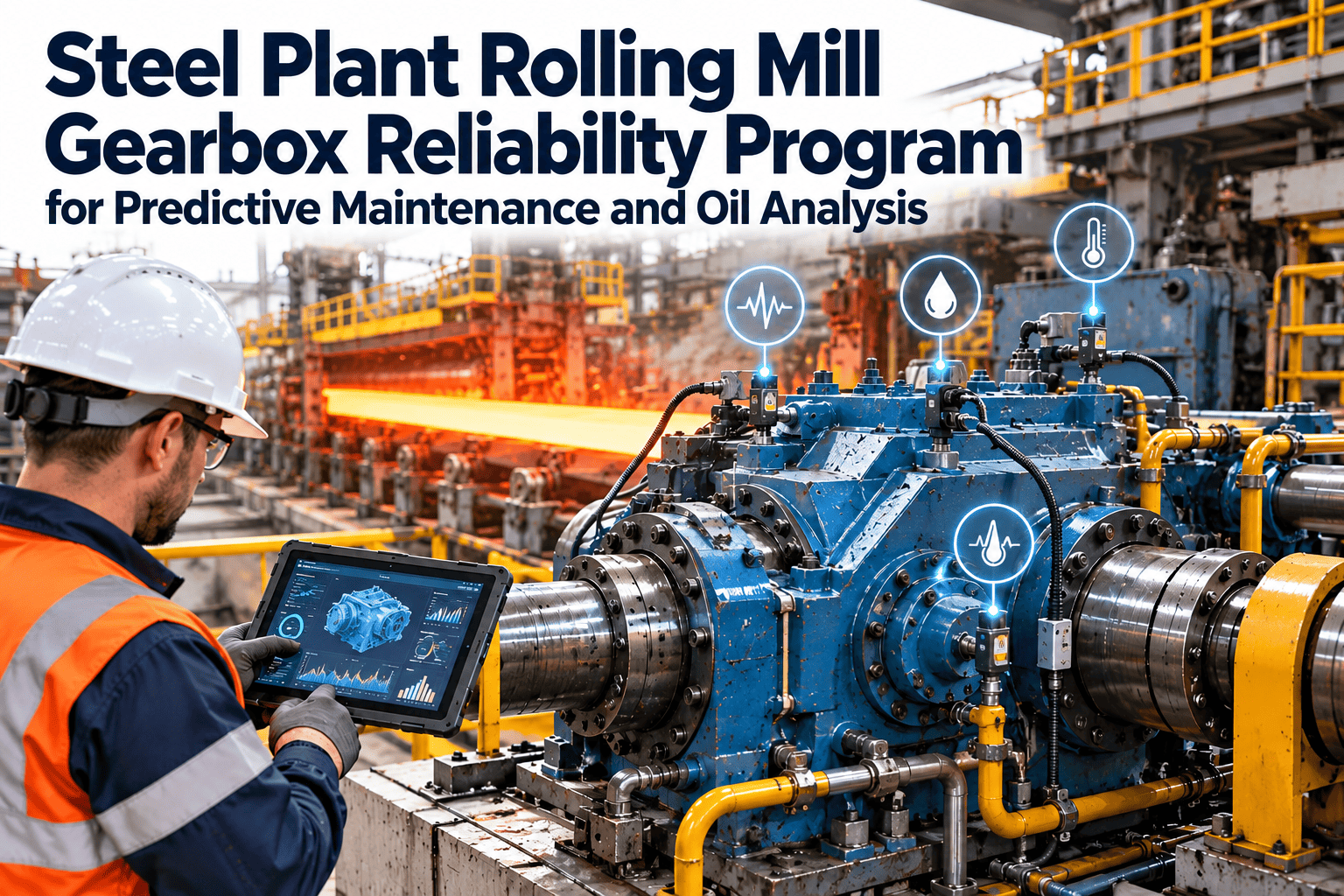
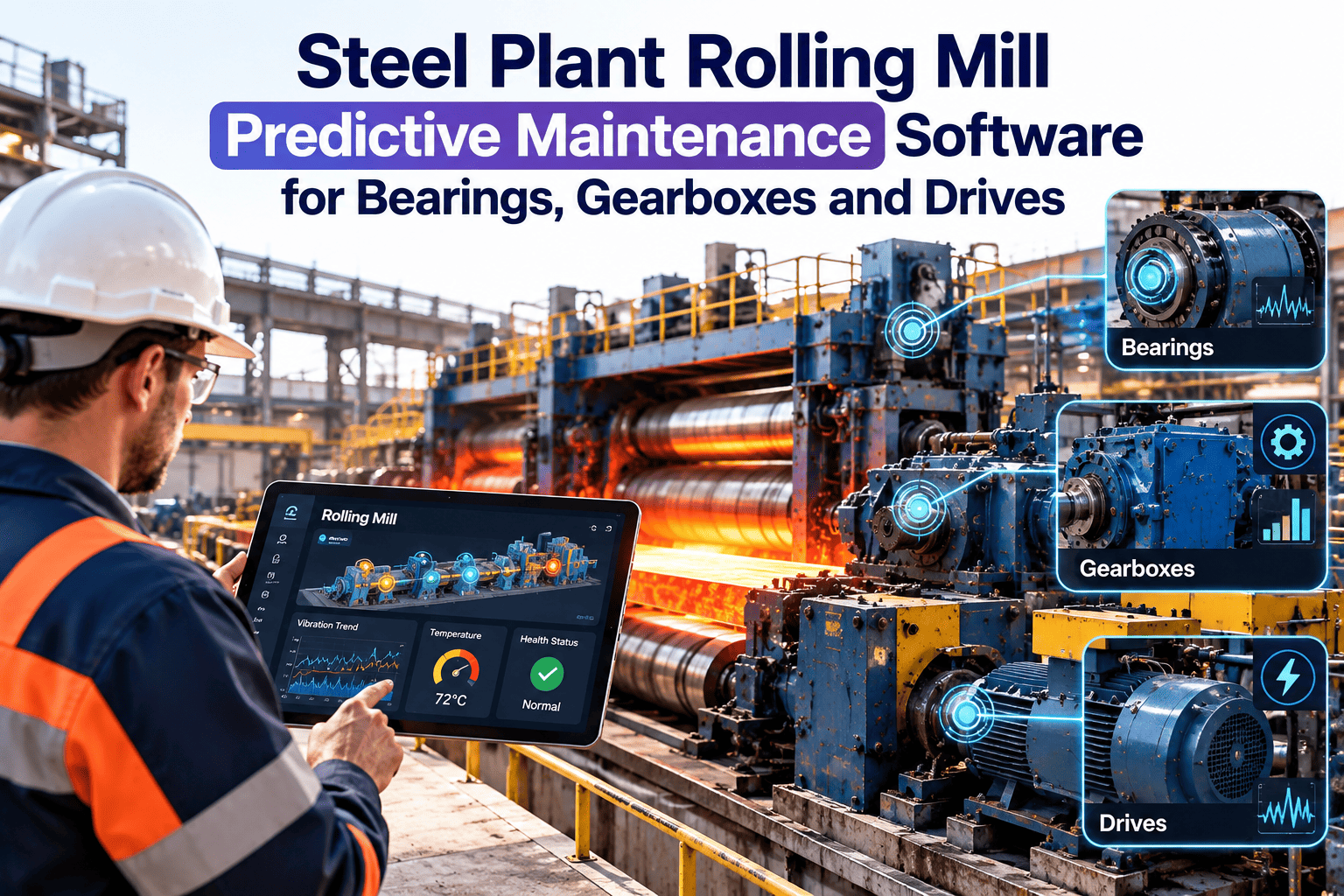
A roll change is only half the reliability picture. Chock bearings, mill housing and drive-side gearboxes carry the same tonnage stress as the roll and fail on their own schedule if left off the maintenance plan — a plant that tracks roll tonnage meticulously but leaves the surrounding drivetrain on a generic calendar PM is only managing half of its rolling mill reliability risk.
Chock bearing monitoring
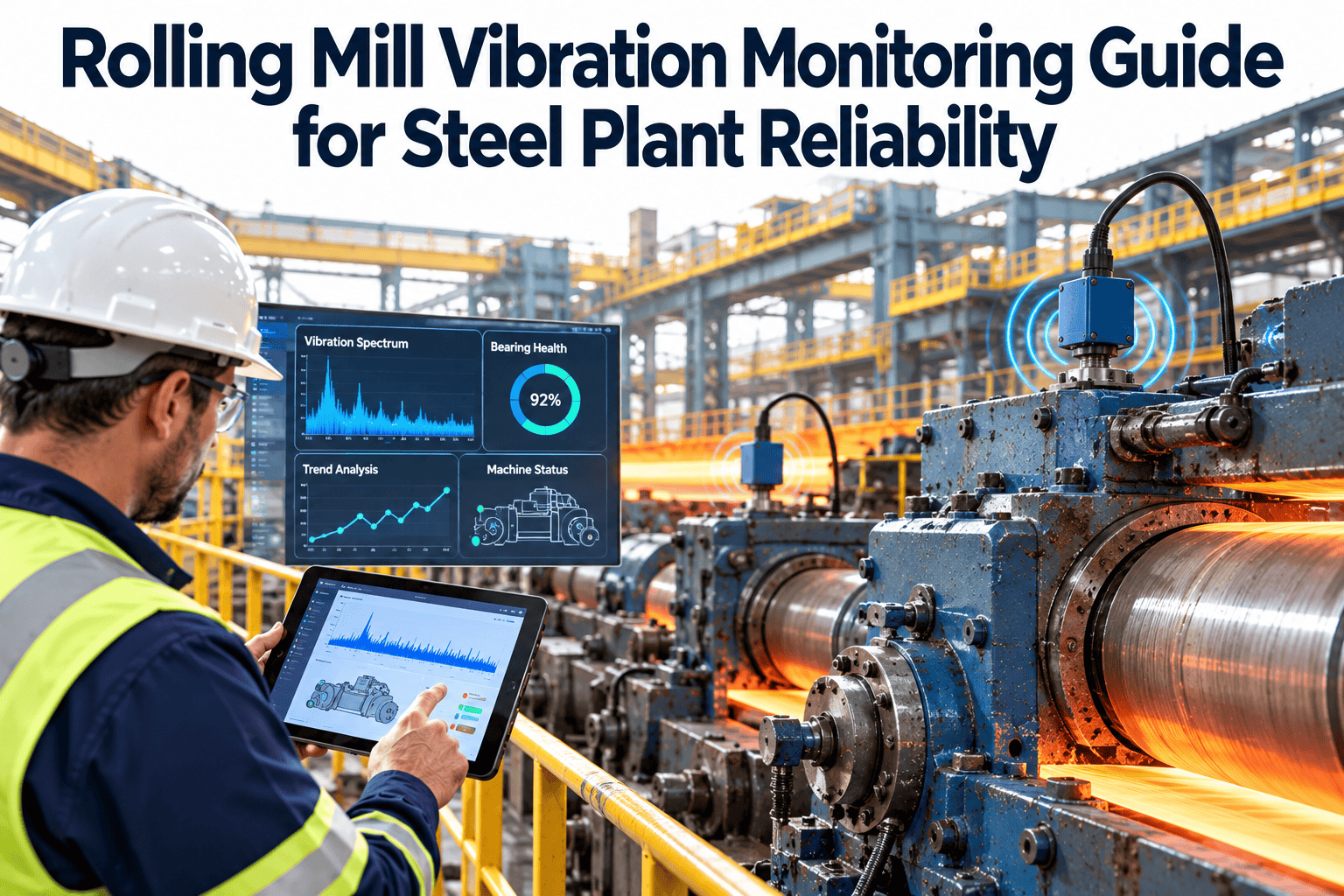
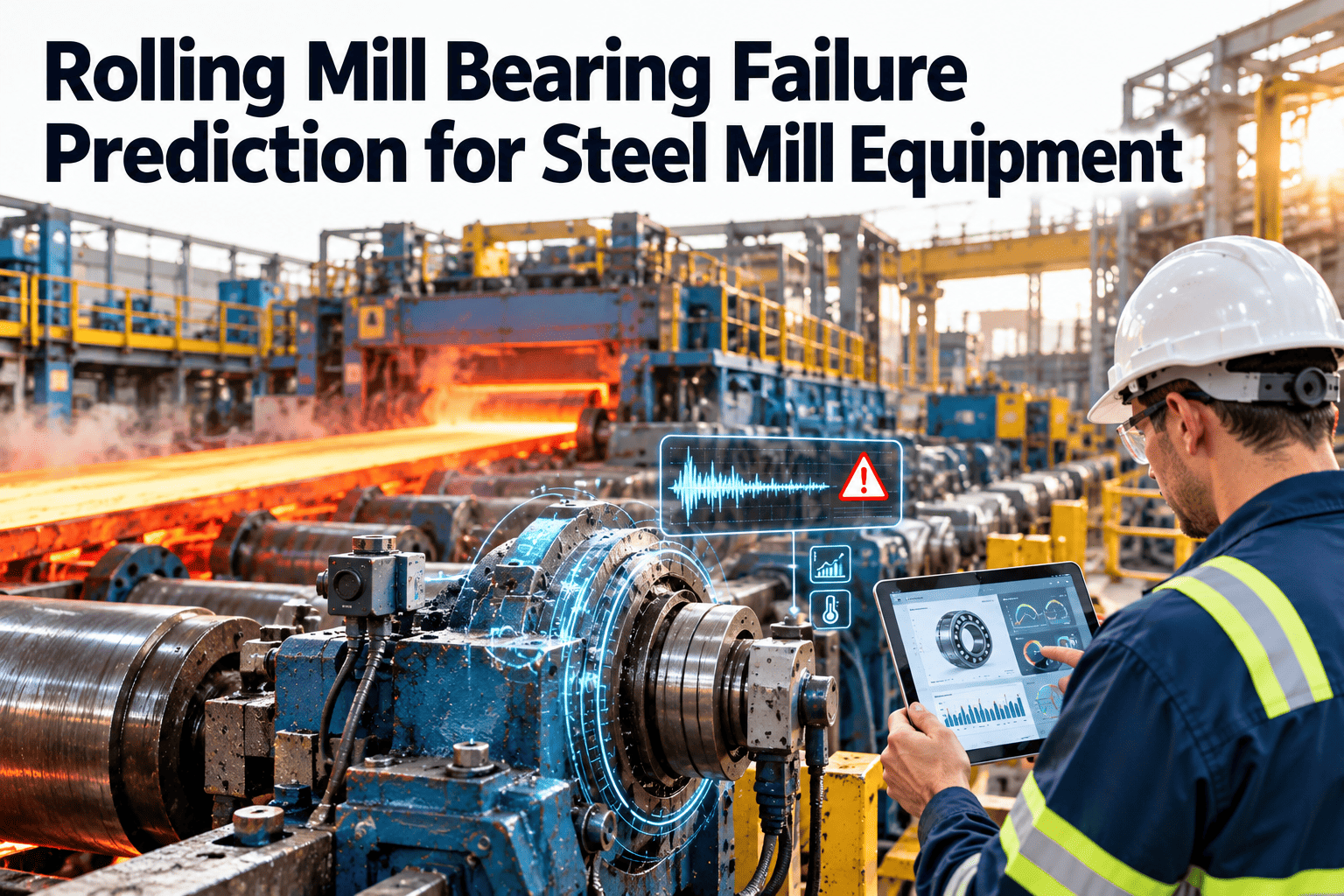
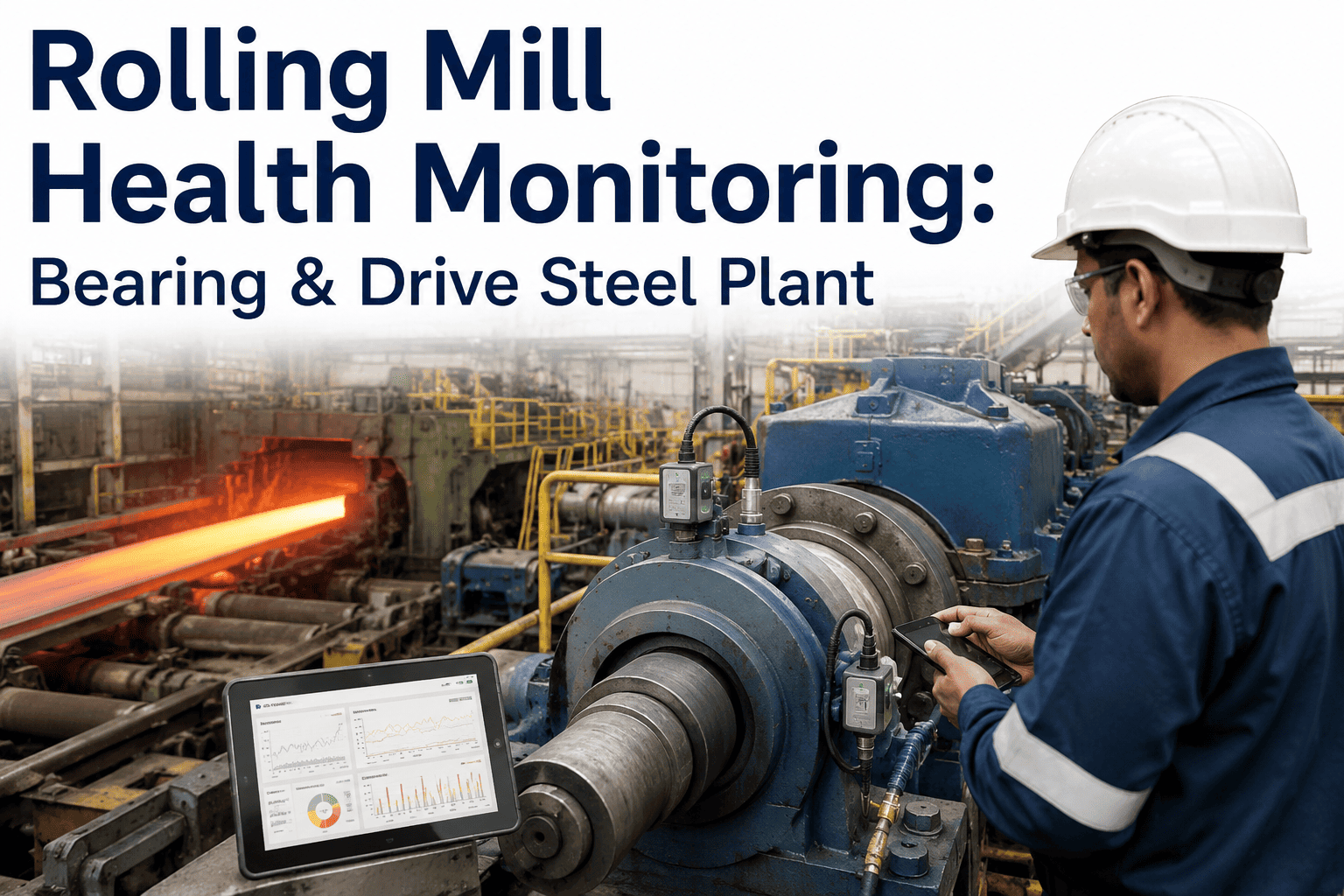
Vibration and temperature trending on chock bearings catches early-stage spalling before it damages the roll neck itself, avoiding a far more expensive repair than a bearing swap.
Drive gearbox condition
Oil analysis and vibration on the drive-side gearbox should be scheduled against the same tonnage counter as the roll, since both wear with rolling load, not calendar time.
Roll shop grinder maintenance
A grinder running out of tolerance passes its error straight onto every roll it touches — grinder calibration checks belong in the same preventive schedule as the rolls themselves.
KPIs that show roll management is actually working
| KPI | Why it matters |
|---|---|
| Tonnes rolled per millimeter of diameter ground off | Measures grinding efficiency and roll material yield over its service life |
| Unplanned roll changes per month | Shows how often tonnage or condition limits are being missed rather than scheduled |
| Average roll change downtime | Directly tied to how well the roll shop and stand handoff is coordinated |
| Strip surface rejects linked to roll condition | Connects roll management directly to product quality, not just mill uptime |
| Backup roll subsurface flaw detection rate | Leading indicator for preventing a roll break rather than reacting to one |
Common mistakes plants make managing roll inventory
Roll management problems rarely show up as a single dramatic failure — they show up as a slow accumulation of small inefficiencies that add up to lost grinding capacity and avoidable mid-campaign changes.
Tracking rolls by stand, not by roll
Logging tonnage against a stand instead of the individual roll loses the history the moment a roll moves — and rolls move constantly between stands, mills and storage.
Treating every grade the same
Using one blanket tonnage limit regardless of product mix either wastes usable roll life on easy grades or risks defects on harder ones — the fix is tracking wear by grade, not just total tonnes.
Losing grind history at handoff
When the roll shop's grind log and the mill floor's tonnage log are two different systems, no one ever sees the complete picture until something goes wrong.
Storage and handling: where good rolls get damaged before they ever hit a stand
A freshly ground roll with a perfect surface finish can be ruined in the roll shop yard just as easily as in the stand. Storage and handling practices deserve the same discipline as the grind itself, since damage picked up here shows up as a defect on the very next campaign, and it is easy for a plant to blame the grind quality when the real cause was a bump against a rack edge during transport.
Where roll management is heading: sensors, automation and tighter tonnage data
Roll shops that once relied entirely on manual logbooks are increasingly pulling tonnage and condition data straight from mill automation systems, narrowing the gap between what the stand actually experienced and what the maintenance record shows.
Automated tonnage capture
Integrating mill automation counters directly into the roll's asset record removes the manual entry step that most often causes tracking gaps between shifts.
Roll wear modeling by grade
Comparing diameter loss against the grade mix rolled during a campaign builds a more accurate wear-rate model than a single blanket tonnage limit per roll type.
Condition-based grind triggers
Combining tonnage with surface inspection data lets a plant pull a roll based on actual condition trending toward its limit, rather than a fixed number that may be conservative or risky depending on the grade mix.
Give every roll a record the whole mill can see
Track tonnage, grinding history and stand location for every work and backup roll in one place.
How Oxmaint supports rolling mill roll management
Oxmaint gives every roll a unique asset record that follows it between the stand, the roll shop and storage, so the tonnage counter, grinding history and chock bearing condition all live in one place instead of three separate logbooks.
From threshold to work order to updated record
Tonnage thresholds set per roll or per grade automatically generate a scheduled work order as the roll approaches its limit, giving the roll shop lead time to plan the grind around the mill's production schedule. Mobile work orders let roll shop technicians log grind results, diameter readings and defect notes directly against the roll record at the grinder, so the next time that roll goes into a stand, the mill floor sees exactly what condition it is in and how many tonnes it has left.
Frequently asked questions
How is roll tonnage tracked if we don't have an automated tonnage meter on every stand?
Tonnage can be logged manually per shift against the roll's asset ID, or integrated from a mill automation system where one exists. Book a Demo to see both setups.
Can the system schedule roll changes automatically?
Yes — a tonnage or condition threshold set on the roll record triggers a scheduled work order for the roll shop before the limit is reached.
How does backup roll subsurface inspection fit into this workflow?
Ultrasonic inspection results are logged against the backup roll's record at each grind cycle, building a flaw-detection history that flags a roll for retirement before a subsurface defect becomes a break.
Does roll management link to strip quality data?
Surface reject and gauge deviation notes can be logged against the roll that was in the stand during that run, connecting roll condition directly to product quality trends.
Is this suitable for a mill with multiple stand configurations?
Yes — each roll record tracks which stand and mill it is currently assigned to, so rolls can be shared or dedicated across configurations. Get Started to set up your first stand.
Stop guessing which roll is due for a change
Move your roll shop from calendar guesswork to tonnage-based scheduling this campaign.