A rolling mill drive turns motor power into controlled roll torque, and it does so under shock loads every time a bar or slab bites. Coupling wear, gearbox damage, bearing heat and small alignment errors rarely announce themselves until a drive trips or a gear tooth breaks. This rolling mill drive maintenance checklist gives steel plant teams one repeatable routine for the whole drive train, from motor to roll. Every inspection can be logged, trended and turned into work in steel plant CMMS software so findings never stay on paper.
Rolling Mill / Steel Plant Maintenance
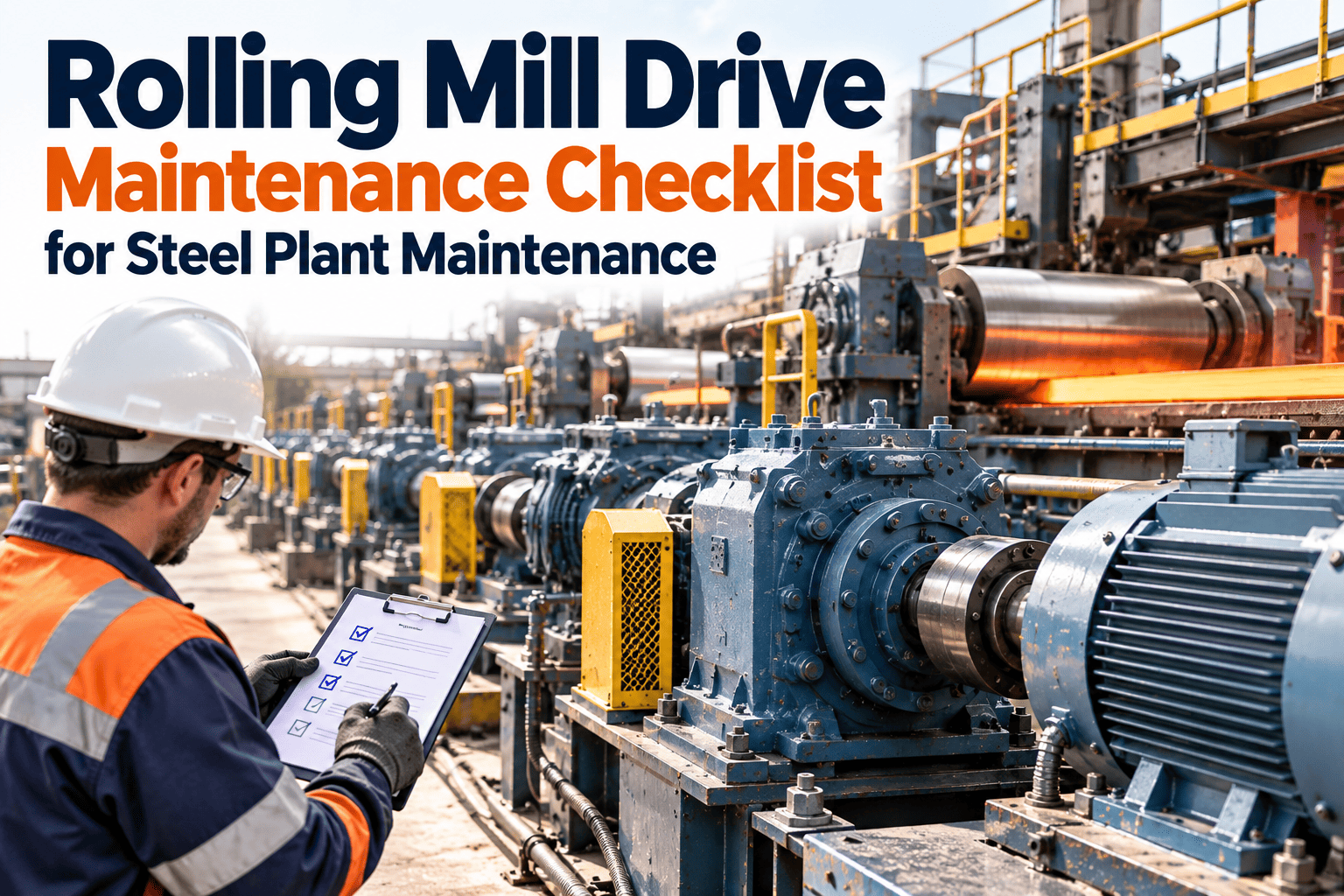
Rolling Mill Drive Maintenance Checklist for Steel Plant Maintenance
Inspect vibration, coupling wear, bearing temperature, lubrication, alignment, electrical condition and abnormal noise across the full main drive train, and act before a drive failure stops the mill.
1Main MotorTemperature, insulation, current
2CouplingWear, grease, fasteners
3GearboxOil, noise, backlash
4SpindleJoints, balance, play
5Roll NecksBearings, seals, heat
Read the Symptom, Trace the Cause
| Symptom | Likely Causes | First Inspection Step |
|---|---|---|
| Rising vibration at running speed | Misalignment, imbalance, loose mounts | Compare readings to baseline, check foundation bolts |
| Vibration at multiples of running speed | Coupling wear, spindle play, gear mesh problems | Inspect coupling teeth and spindle joints |
| Bearing temperature climbing | Lubricant starvation, contamination, overload | Check oil flow, filter differential, cooler function |
| Gearbox noise change | Tooth wear, pitting, backlash growth | Sample oil, inspect through covers, review load history |
| Motor current imbalance | Winding fault, drive controller issue, loose terminals | Thermal scan connections, review drive fault log |
| Mill chatter or gauge variation | Backlash, worn spindles, drive torque oscillation | Inspect spindle joints and coupling clearance |
Why Alignment Drives Everything Else
Poor Alignment Looks Like
- Coupling teeth wearing on one side
- Repeated seal leaks at shaft ends
- Bearing temperatures that differ between ends
- Foundation bolts loosening again and again
Controlled Alignment Looks Like
- Alignment readings recorded after every drive intervention
- Thermal growth allowances documented per drive
- Baseline vibration captured after a good alignment
- Soft foot and base condition checked before any correction
Turn Drive Findings Into Planned Repairs
Capture readings on a mobile device, trend them by asset and create work orders the moment a value drifts.
Drive Train Inspection Checklist
D Daily W Weekly M Monthly S Shutdown
1. Main Motor
- DRecord winding, bearing and cooling air temperatures and compare with the previous shift.
- WCheck cooling filters, air paths and heat exchangers for blockage from scale dust.
- MThermal scan terminal boxes and cable connections for hot joints.
- STest insulation resistance, and on DC machines inspect brushes, commutator and brush gear.
2. Couplings and Spindles
- DListen for knocking or ticking at load changes, which can point to clearance in joints.
- WInspect for grease leakage, loose guards and missing or stretched fasteners.
- MCheck spindle joint clearance, wear pads and balance weights against records.
- SMeasure tooth wear on gear couplings and replace parts by measured condition.
3. Gearbox and Pinion Stand
- DNote gearbox noise, oil temperature, pressure and any leak around covers.
- WReview filter differential pressure and breather condition.
- MTake an oil sample and check for wear metal, water and particle trend.
- SInspect tooth contact pattern, pitting and backlash through inspection covers.
4. Bearings and Roll Necks
- DRead bearing temperatures and vibration points, and flag any step change.
- WCheck seals for cooling water or scale ingress and record the condition.
- MTrend vibration spectra and compare to alert limits set for each bearing.
- SInspect bearings and journals at chock changes and record clearances.
5. Lubrication System
- DConfirm reservoir level, flow, pressure and pump status.
- WCheck coolers, strainers and lines for leaks and restricted flow.
- MVerify grease points on couplings and auxiliary drives were serviced on schedule.
- SReplace filters, inspect the tank and confirm alarm set points work.
6. Electrical and Control
- DReview drive fault history, trips and overload events.
- WCheck panel cooling, filters and door seals for dust ingress.
- MScan busbars, contactors and drive cabinets for abnormal heat.
- STest protection relays, torque limits and emergency stop functions.
Abnormal Noise Guide for Inspectors
Rhythmic knockCheck spindle joints, coupling clearance and loose wedges.
High-pitched whineReview gear mesh, lubrication flow and oil condition.
Grinding or rumbleSuspect a bearing and confirm with vibration and temperature.
Electrical hum changeLook at load, supply balance, drive settings and terminals.
From Reactive Repairs to Condition-Based Drive Care
Stage 1Standard roundsFixed checklist, consistent observations, photo evidence.
Stage 2Trended readingsTemperature, vibration and oil data stored per asset.
Stage 3Alert limitsOut-of-range values open a work order automatically.
Stage 4Planned outagesRepairs scheduled into mill shutdowns with parts ready.
Drive Maintenance KPIs
| KPI | Why It Matters |
|---|---|
| Unplanned drive downtime | Shows the true cost of drive failures on mill output |
| Mean time between drive failures | Tracks reliability gains after alignment and lubrication work |
| Inspection completion rate | Confirms that condition data is actually being collected |
| Overdue lubrication tasks | Flags the most common cause of avoidable bearing damage |
| Work orders from inspections | Proves findings are being converted into corrective action |
| Spare parts availability | Reveals whether critical couplings and bearings are stocked |
How Oxmaint Supports Rolling Mill Drive Maintenance
Asset hierarchyModel each stand with motor, coupling, gearbox, spindle and bearings, each with its own history and documents.
Preventive schedulesRelease daily rounds, lubrication tasks and shutdown inspections by calendar or running hours.
Mobile inspectionsInspectors record temperatures, vibration values and noise notes with photos at the drive.
Work orders and inventoryFailed checks create corrective jobs linked to required spares and stock levels.
Reports and dashboardsCompare stands, review repeat failures and support planning for the next outage.
Rolling Mill Drive FAQs
How often should rolling mill drives be inspected?
Run daily readings, weekly detailed checks and outage inspections for internal parts. Set the rhythm from duty and failure history using scheduled inspections.
What causes most coupling failures?
Misalignment and poor lubrication are common causes, along with shock loads from bar entry. Tracking wear by measurement helps time replacement.
Is vibration monitoring enough on its own?
No. Combine it with temperature, oil analysis and visual checks, because each finds problems the others can miss.
Which drive readings should be trended?
Bearing temperature, vibration, oil condition, motor current and gearbox pressure give the clearest early warning for most mill drives.
Can we use our own checklist items?
Yes. Book a demo to see how your mill's inspection points are set up for each stand.
Keep Every Mill Drive on a Maintenance Plan
Bring drive inspections, lubrication, alignment records and repairs into one steel plant maintenance system.