SAP APM for Steel Industry: Asset Performance Management Excellence
By Frankisthein on February 4, 2026
The steel industry operates at the intersection of extreme complexity and zero tolerance for failure. From blast furnaces reaching 2,500°F to rolling mills processing hundreds of tons per hour, every asset must perform flawlessly to maintain production targets, worker safety, and environmental compliance. Unplanned downtime in a steel mill doesn't just halt production—it can cost millions per hour and create hazardous conditions as molten metal solidifies in equipment.
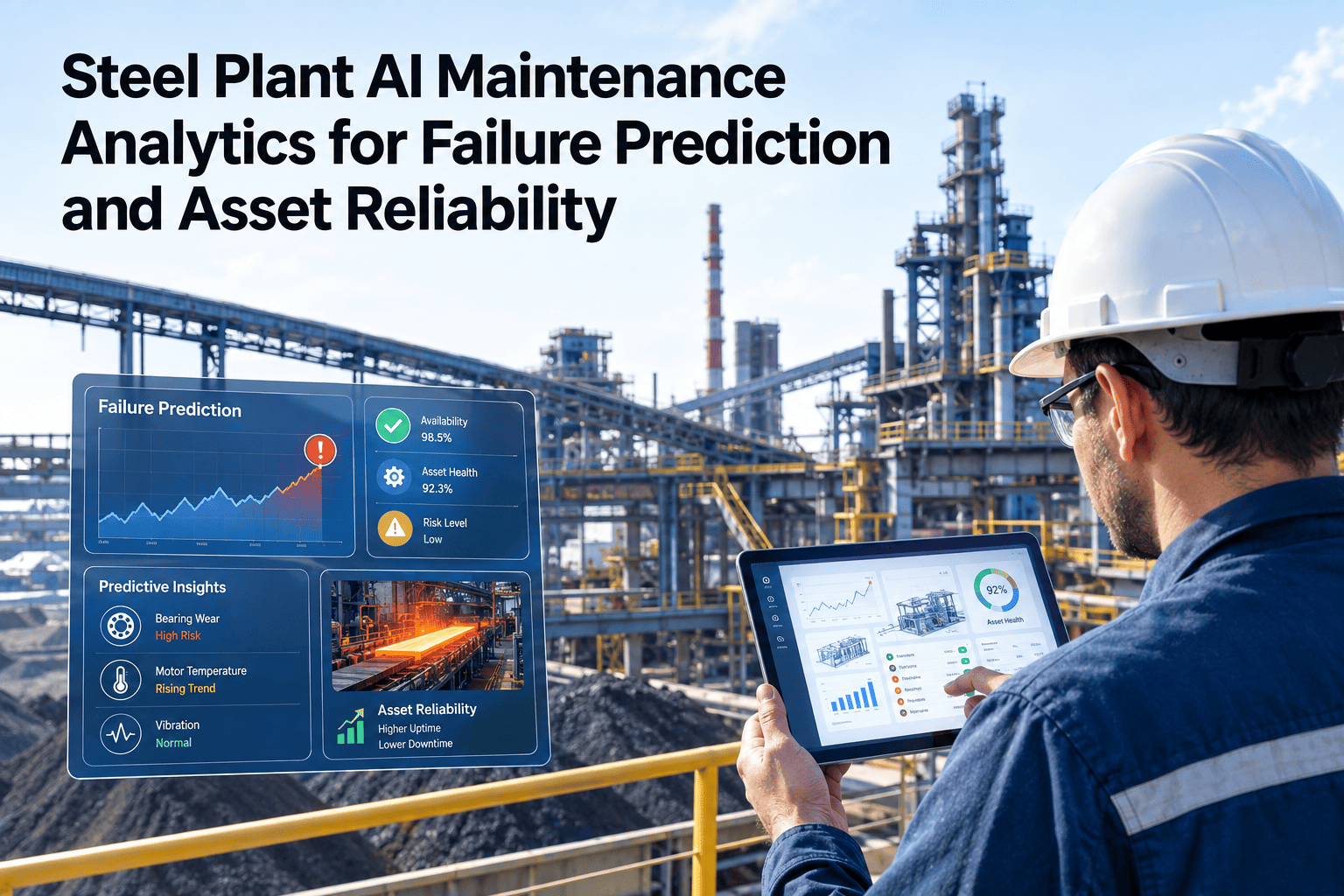
This comprehensive guide explores how SAP Asset Performance Management (APM) transforms steel industry operations from reactive maintenance to predictive excellence. We examine real-world applications across continuous casting, rolling operations, and materials handling, and provide actionable strategies for implementation. Steel producers ready to maximize asset performance can explore SAP APM integration solutions today.
Industry Landscape
The High Stakes of Steel Industry Asset Management
65%
of steel mill downtime is preventable with predictive maintenance
35%
reduction in maintenance costs with APM implementation
90%
equipment availability achieved by leading mills
Source: World Steel Association, McKinsey Steel Analytics 2023-2025
Traditional time-based maintenance strategies are no longer sufficient in modern steel production. The volatility of raw material costs, pressure for decarbonization, and global competition demand operational excellence at every level. SAP APM provides the intelligence layer that transforms maintenance from a cost center into a strategic advantage, enabling mills to predict failures before they occur, optimize maintenance schedules around production demands, and extend asset lifecycles while reducing total cost of ownership.
Understanding SAP APM in Steel Operations Context
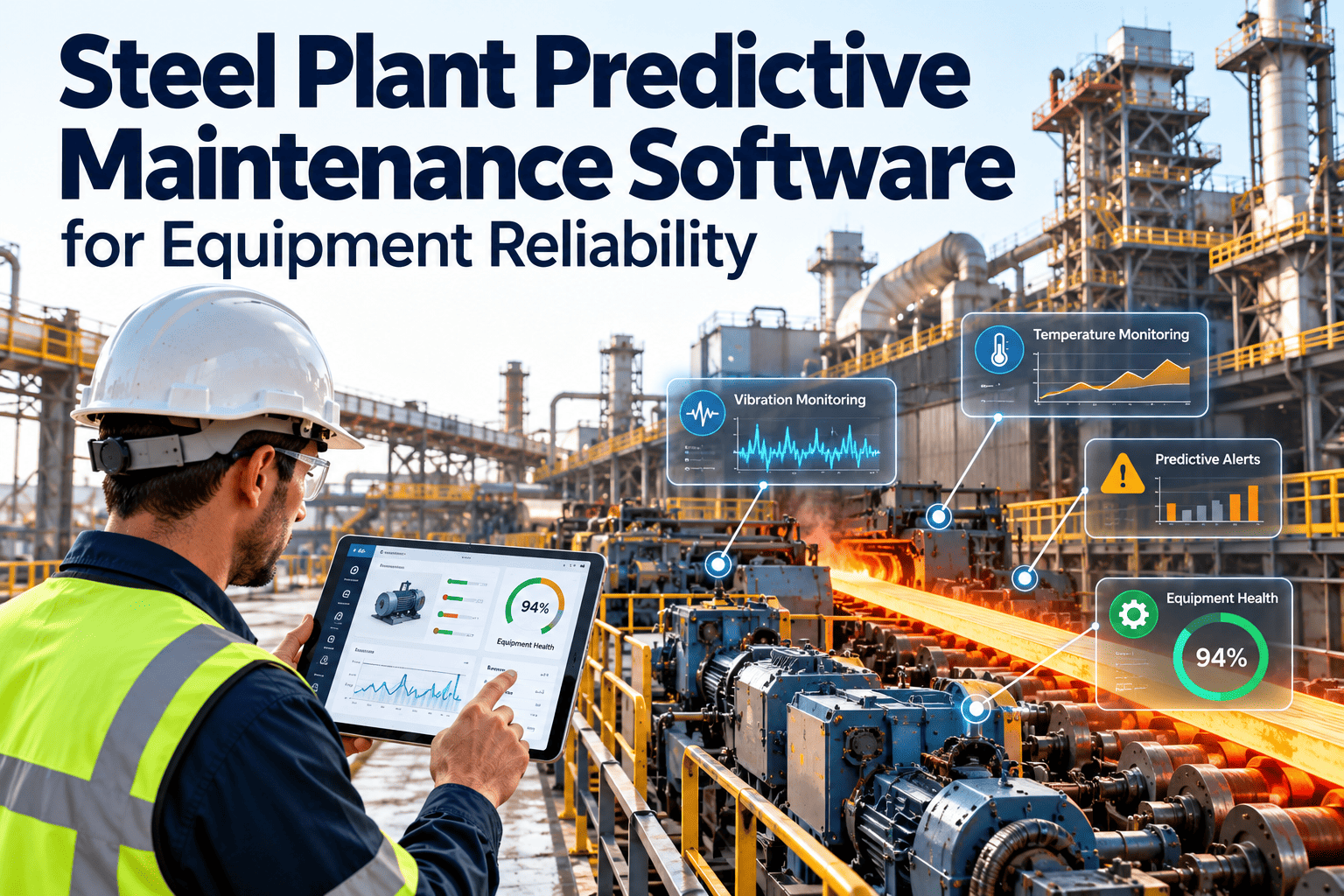
SAP Asset Performance Management is not just software—it's a comprehensive approach that integrates real-time sensor data, historical performance records, and advanced analytics to provide actionable insights. For steel producers, this means connecting data from distributed control systems (DCS), programmable logic controllers (PLCs), and enterprise resource planning (ERP) systems into a unified platform that predicts equipment behavior and prescribes optimal interventions.
SAP APM Implementation Framework for Steel Mills
From data integration to continuous optimization
01
Asset Digitalization
Create digital twins of critical equipment with sensor integration and IoT connectivity
02
Predictive Analytics
Deploy machine learning models to forecast failures and optimize maintenance windows
03
Work Order Automation
Generate intelligent maintenance notifications and integrate with SAP PM/EAM
04
Continuous Improvement
Refine models based on outcomes and expand coverage to additional asset classes
The power of SAP APM lies in its ability to transform disparate data streams into coherent intelligence. Vibration sensors on rolling mill bearings, temperature readings from reheating furnaces, and throughput data from material handling systems all feed into predictive models that identify degradation patterns weeks or months before catastrophic failure occurs.
Critical Applications Across Steel Production Processes
Steel production encompasses multiple distinct processes, each with unique asset management challenges. SAP APM delivers specialized solutions for each production stage, from iron-making through finishing operations.
Traditional vs. APM-Enabled Maintenance Strategy
✗
Reactive Approach
Fixed-interval maintenance schedules
Manual data collection and analysis
Run-to-failure on non-critical assets
Siloed maintenance and operations teams
Emergency shutdowns and expedited repairs
Limited visibility into asset health
Paper-based work order systems
High Costs & Frequent Failures
✓
SAP APM Strategy
Condition-based maintenance triggers
Automated sensor data integration
Predictive failure prevention
Integrated cross-functional workflows
Planned interventions during campaigns
Real-time asset performance dashboards
Mobile-enabled digital work orders
Optimized & Predictable
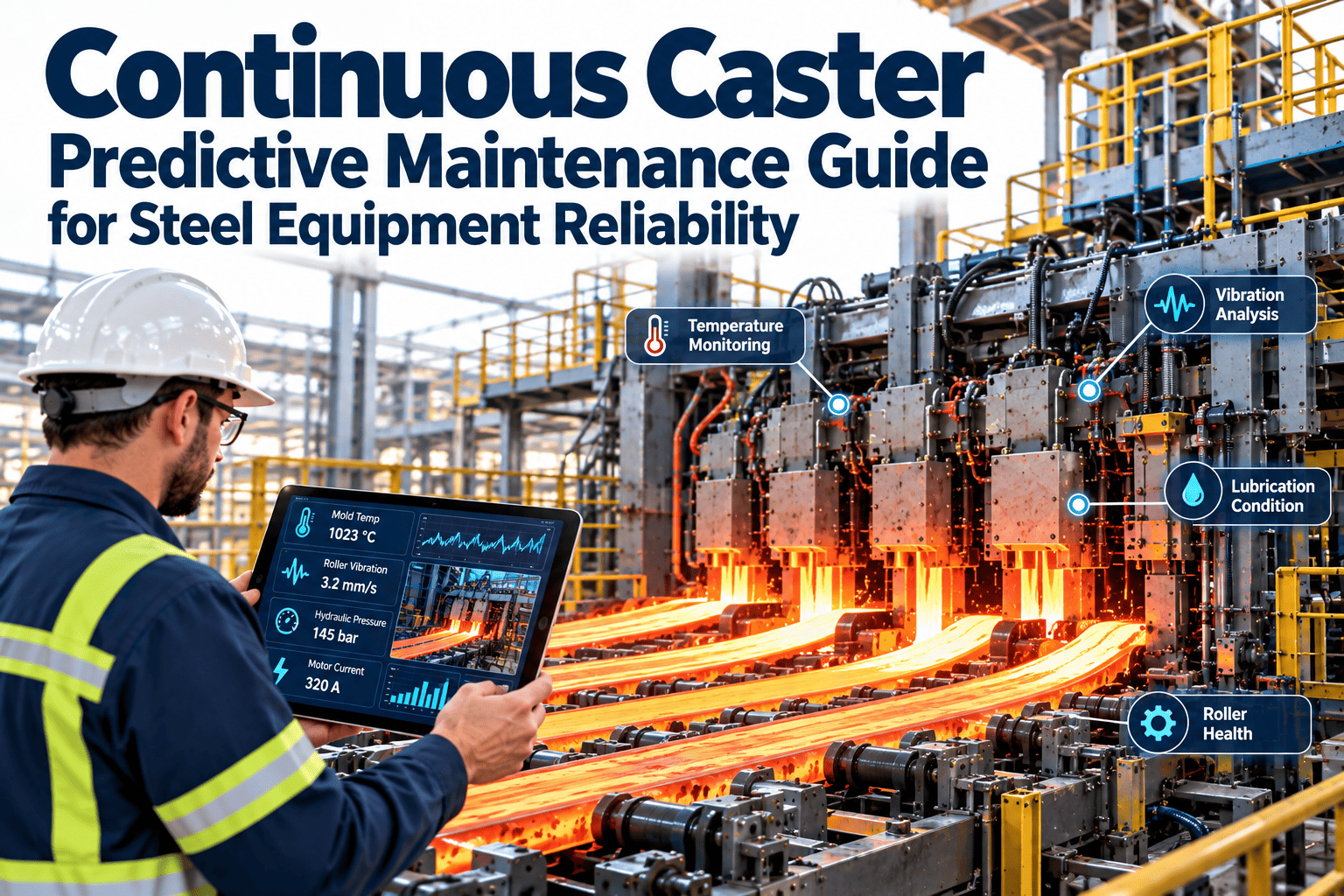
Consider a continuous casting machine—one of the most critical and expensive assets in modern steel production. Traditional maintenance might replace tundish nozzles and mold components on a fixed schedule, often prematurely or sometimes too late. SAP APM monitors casting parameters in real-time, detecting subtle changes in heat transfer, flow rates, and vibration signatures that indicate impending failures, allowing precise interventions that maximize component life while preventing breakouts.
SAP APM Performance Impact Metrics
Measured outcomes from steel industry implementations
25%
Downtime Reduction
Unplanned Outages
30%
Extended Asset Life
Critical Equipment
40%
Faster Diagnostics
Root Cause Analysis
15%
Energy Savings
Optimized Operations
Integration with Existing SAP Ecosystem
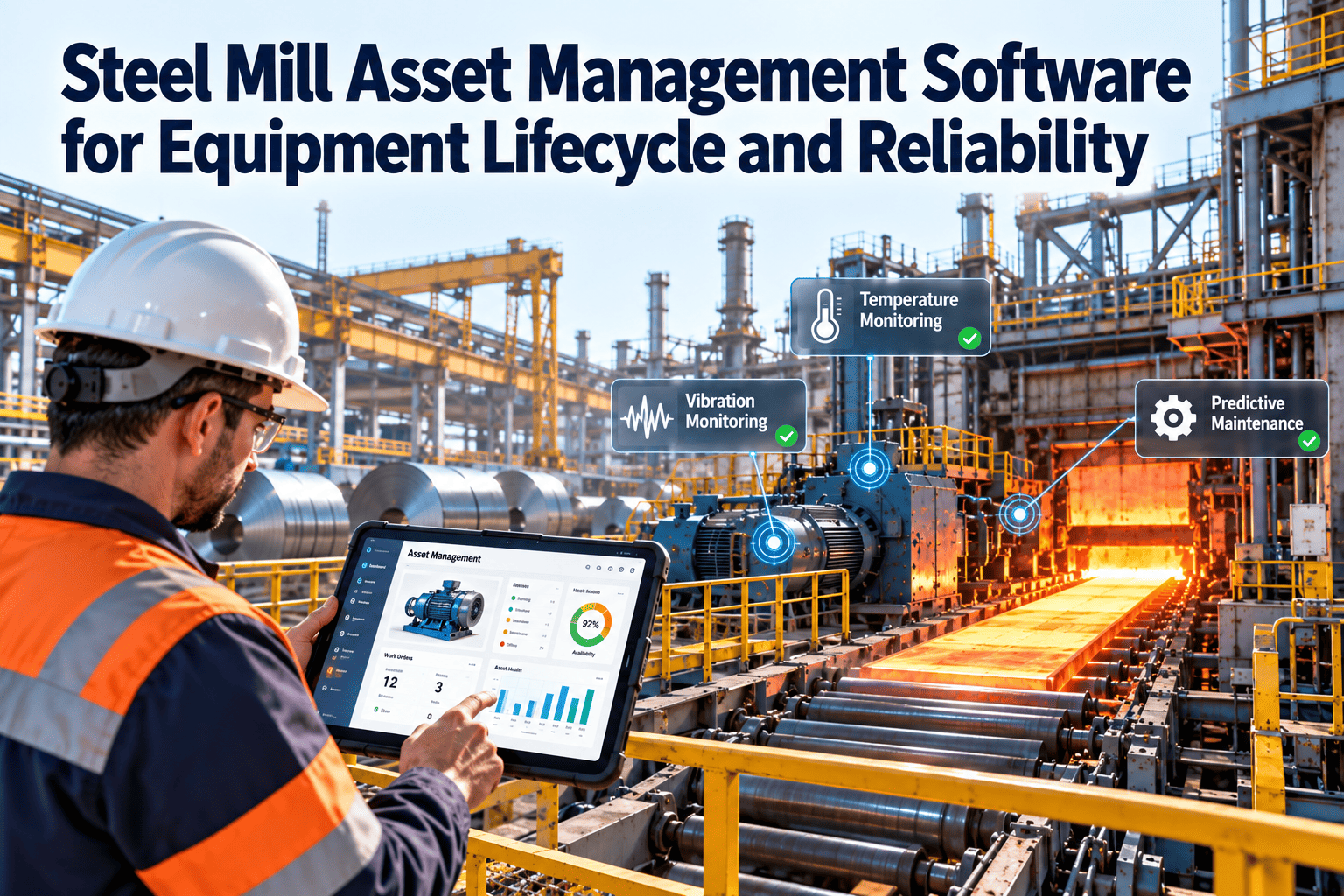
Most steel producers already operate SAP ERP systems for financial management, procurement, and sales operations. SAP APM's native integration with SAP S/4HANA, SAP PM (Plant Maintenance), and SAP EAM (Enterprise Asset Management) creates seamless workflows that eliminate data silos and manual reconciliation.
SAP APM Integration Advantages for Steel Mills
Unified Data Model
Single source of truth for asset master data, maintenance history, and performance metrics.
Automated Procurement
Predictive insights trigger spare parts ordering through SAP MM before failures occur.
Financial Visibility
Direct cost tracking from asset performance to P&L impact with real-time analytics.
Mobile Workforce
SAP Fiori apps deliver APM insights to technicians on the shop floor in real-time.
The Business Case: ROI Analysis for Steel Producers
Implementing SAP APM requires significant investment in sensors, connectivity infrastructure, training, and software licensing. However, the return on investment becomes evident quickly when measured against the true cost of equipment failures in steel production.
ROI Comparison: Traditional Maintenance vs. SAP APM
Annual costs for a mid-sized integrated steel mill (2M tons/year)
Traditional Maintenance
Unplanned Downtime$8M - $12M
Emergency Repairs$3M - $5M
Premature Replacements$2M - $4M
Production Losses5-8% Capacity
Total Impact: $13M - $21M
VS
SAP APM Implementation
Software & Licensing$400k - $800k/yr
Sensors & Infrastructure$300k - $500k/yr
Training & Support$200k - $300k/yr
Capacity Gains+3-5% Production
Annual Investment: $900k - $1.6M
Beyond direct cost savings, SAP APM enables strategic advantages that traditional maintenance cannot deliver. Improved asset reliability supports just-in-time production models, reducing inventory carrying costs. Enhanced visibility into equipment condition allows mills to accept premium orders with tight delivery windows confidently. Environmental compliance becomes easier as emissions-critical equipment is monitored continuously for optimal performance.
Transform Your Steel Operations with SAP APM
Move beyond reactive maintenance. Discover how integrated APM solutions can maximize your asset performance, reduce operational costs, and drive sustainable production excellence.
Successful SAP APM deployment follows a structured approach that balances quick wins with long-term transformation. Steel producers should avoid "big bang" implementations and instead adopt a phased strategy that proves value incrementally while building organizational capability.
SAP APM Maturity Journey for Steel Production
Phase 1
Foundation & Pilot (3-6 Months)
Asset Criticality AssessmentPilot on 2-3 Critical AssetsData Integration ArchitectureTeam Training Program
Phase 2
Scale & Optimize (6-12 Months)
Expand to Process AreasAdvanced Analytics ModelsWork Order AutomationMobile App Deployment
The most successful implementations begin with a focused pilot on assets where failure has the highest business impact—typically continuous casters, hot strip mills, or blast furnace equipment. This approach builds confidence, demonstrates ROI, and allows the organization to develop expertise before expanding scope. Each phase should include measurable success criteria tied to availability, maintenance cost, and production throughput.
Enabling Global Operations with Multilingual Capabilities
Steel production is a global industry with mills operating across diverse linguistic regions. SAP APM's multilingual support ensures that maintenance technicians, engineers, and managers can interact with the system in their preferred language, reducing errors and accelerating adoption.
Global SAP APM Deployment Support
Comprehensive language coverage for multinational steel operations
English
Mandarin
German
Japanese
Korean
Spanish
Portuguese
Russian
Localized Interfaces
Native language dashboards, alerts, and work instructions for all users.
Technical Documentation
Maintenance procedures and troubleshooting guides in regional languages.
Knowledge Sharing
Cross-site collaboration platforms with automatic translation capabilities.
For multinational steel corporations operating mills in Asia, Europe, and the Americas, language support is not just a convenience—it's essential for standardizing maintenance practices and sharing best practices across sites. Explore how multilingual APM drives operational consistency.
Achieve Asset Performance Excellence in Steel Production
Join leading steel producers who have transformed maintenance from reactive to predictive. Our SAP APM integration expertise helps you maximize uptime, reduce costs, and build sustainable competitive advantage.
SAP APM is a comprehensive solution that combines IoT sensor data, advanced analytics, and machine learning to predict equipment failures, optimize maintenance schedules, and extend asset lifecycles. For steel mills, it integrates with existing SAP systems to provide end-to-end visibility from shop floor sensors to executive dashboards, enabling data-driven maintenance decisions that reduce downtime and costs.
How does SAP APM differ from traditional CMMS systems?
Traditional Computerized Maintenance Management Systems (CMMS) track work orders and schedule preventive maintenance on fixed intervals. SAP APM goes beyond this by continuously monitoring asset condition through sensors, using AI to predict when failures will occur, and automatically generating maintenance recommendations based on actual equipment health rather than arbitrary time schedules. This shift from reactive/preventive to predictive maintenance typically reduces costs by 20-30%.
What types of assets benefit most from SAP APM in steel mills?
High-value, critical production assets see the greatest benefit: continuous casting machines, rolling mill stands and drives, reheating furnaces, ladle handling cranes, blast furnace equipment, and electrical arc furnaces. These assets have high replacement costs, significant downtime impact, and generate rich sensor data that enables accurate predictive models. Even legacy equipment can be retrofitted with sensors to enable APM monitoring.
How long does SAP APM implementation take for a steel mill?
A phased implementation typically spans 12-18 months from initial pilot to enterprise-wide deployment. The first pilot phase (3-6 months) focuses on 2-3 critical assets to prove value and build internal expertise. Expansion phase (6-12 months) scales to full production areas. Ongoing optimization continues indefinitely as models are refined and new capabilities added. Quick wins often appear within the first 3 months of the pilot phase.
Does SAP APM require replacing existing control systems?
No. SAP APM is designed to integrate with existing DCS, PLC, SCADA, and historian systems through standard industrial protocols (OPC UA, Modbus, etc.). It acts as an intelligence layer on top of your current infrastructure, extracting data for analysis without disrupting production systems. This non-intrusive approach allows mills to preserve investments in existing automation while adding predictive capabilities.
What level of IT infrastructure is required?
SAP APM can be deployed on-premises, in the cloud (SAP Cloud Platform), or in hybrid configurations. Minimum requirements include reliable network connectivity between shop floor and enterprise systems, adequate data storage for historical trending (typically 1-5 years), and computing resources for analytics processing. Many mills start with edge computing devices for local data collection and processing, syncing insights to central cloud platforms for enterprise-wide visibility.