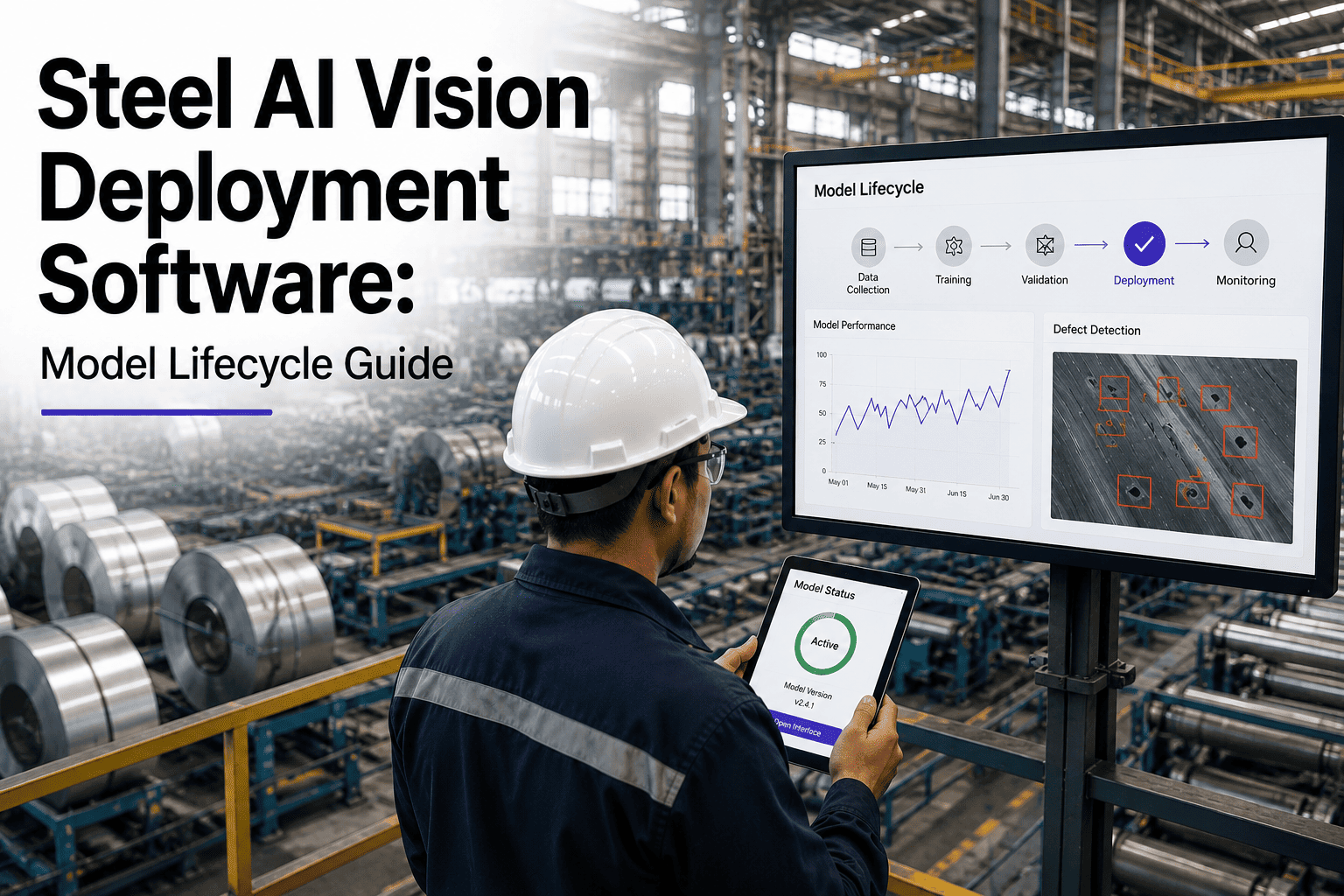
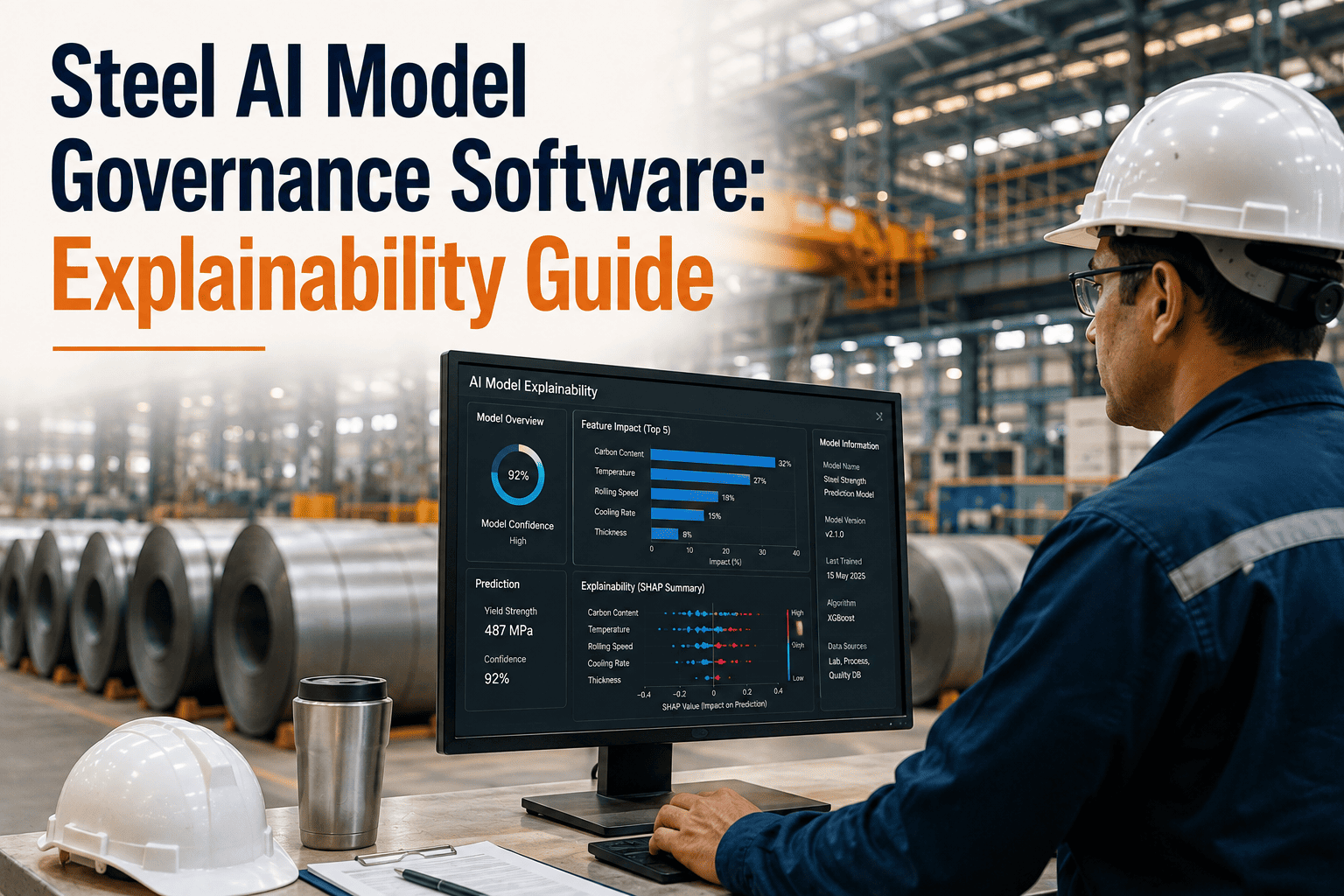
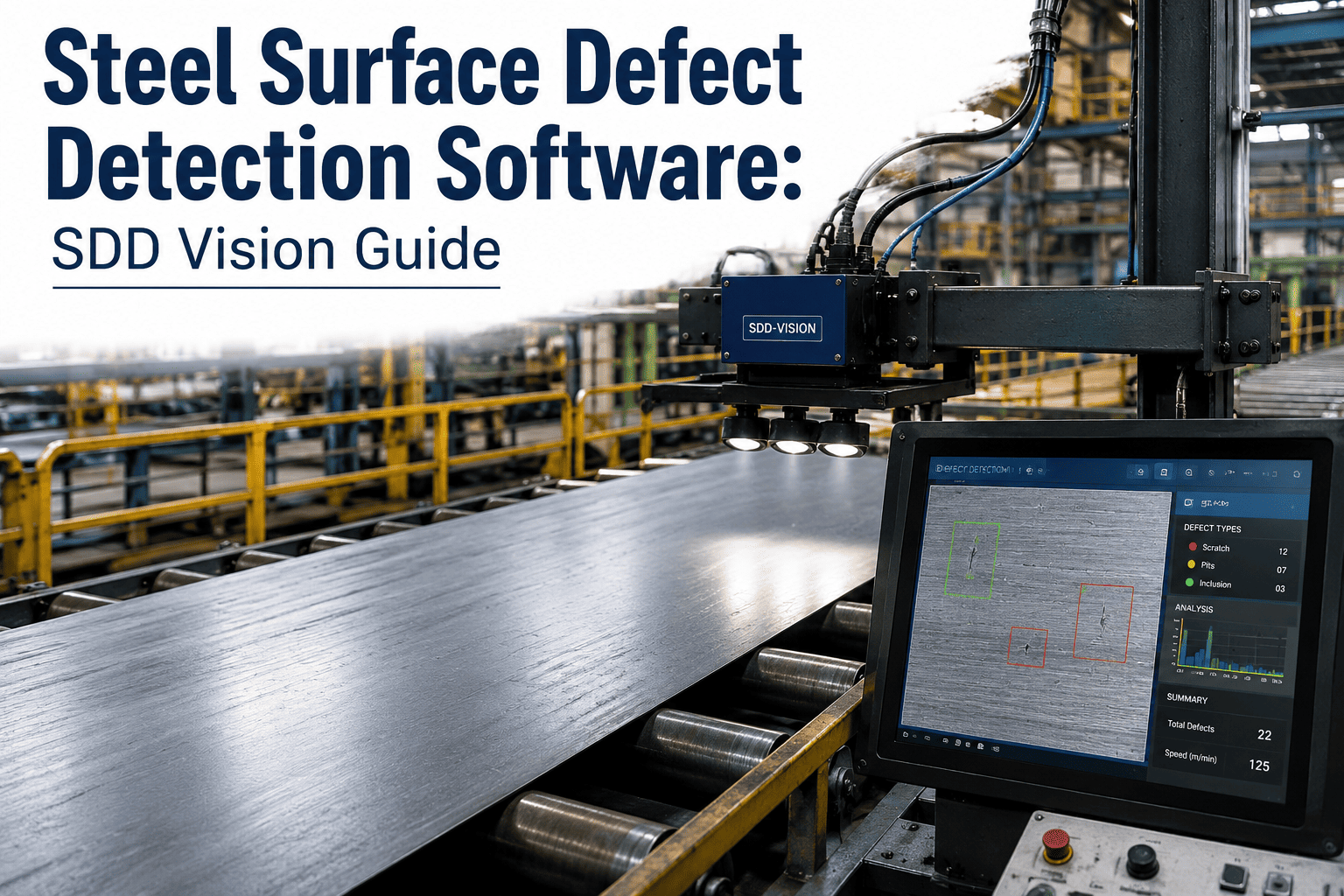
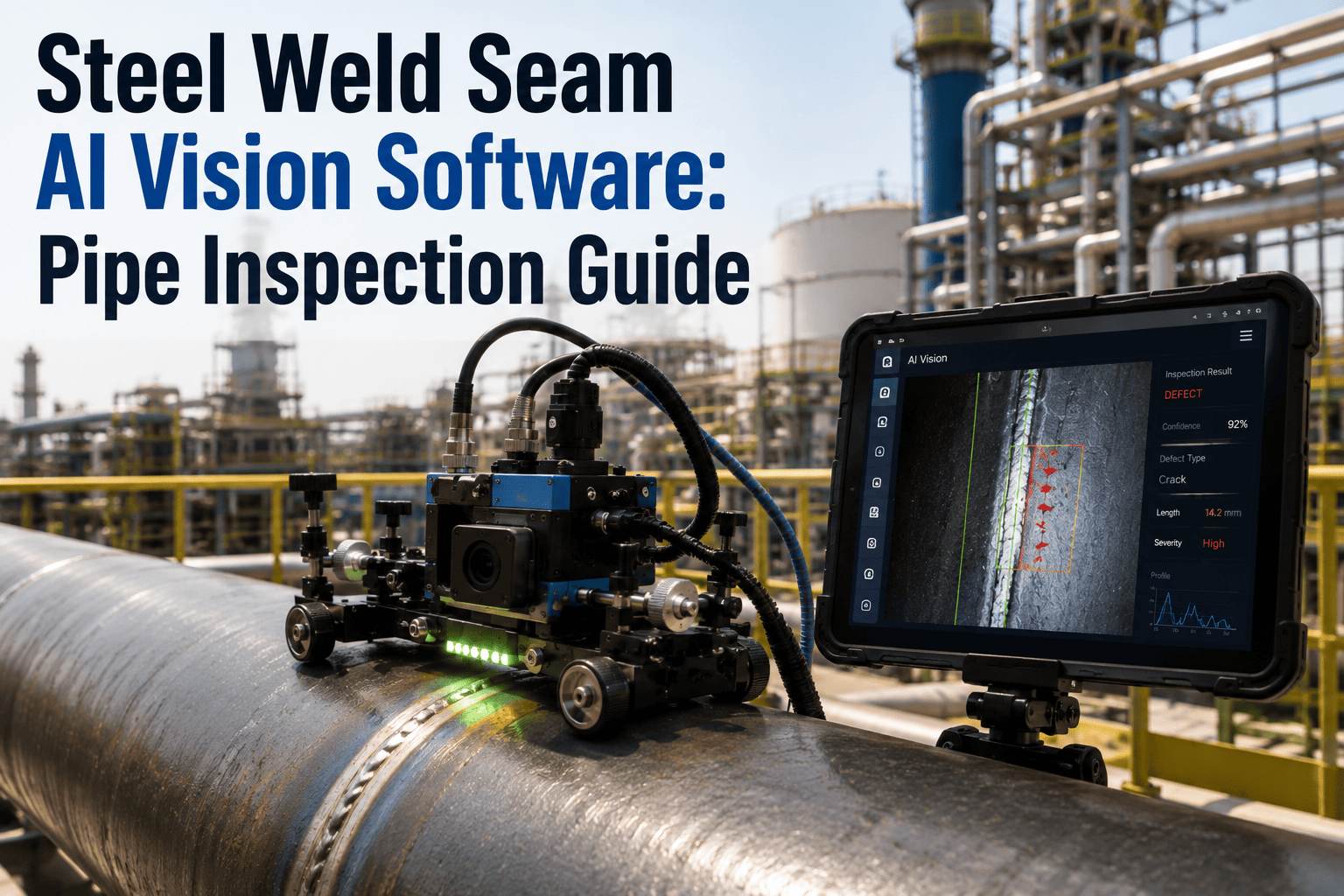
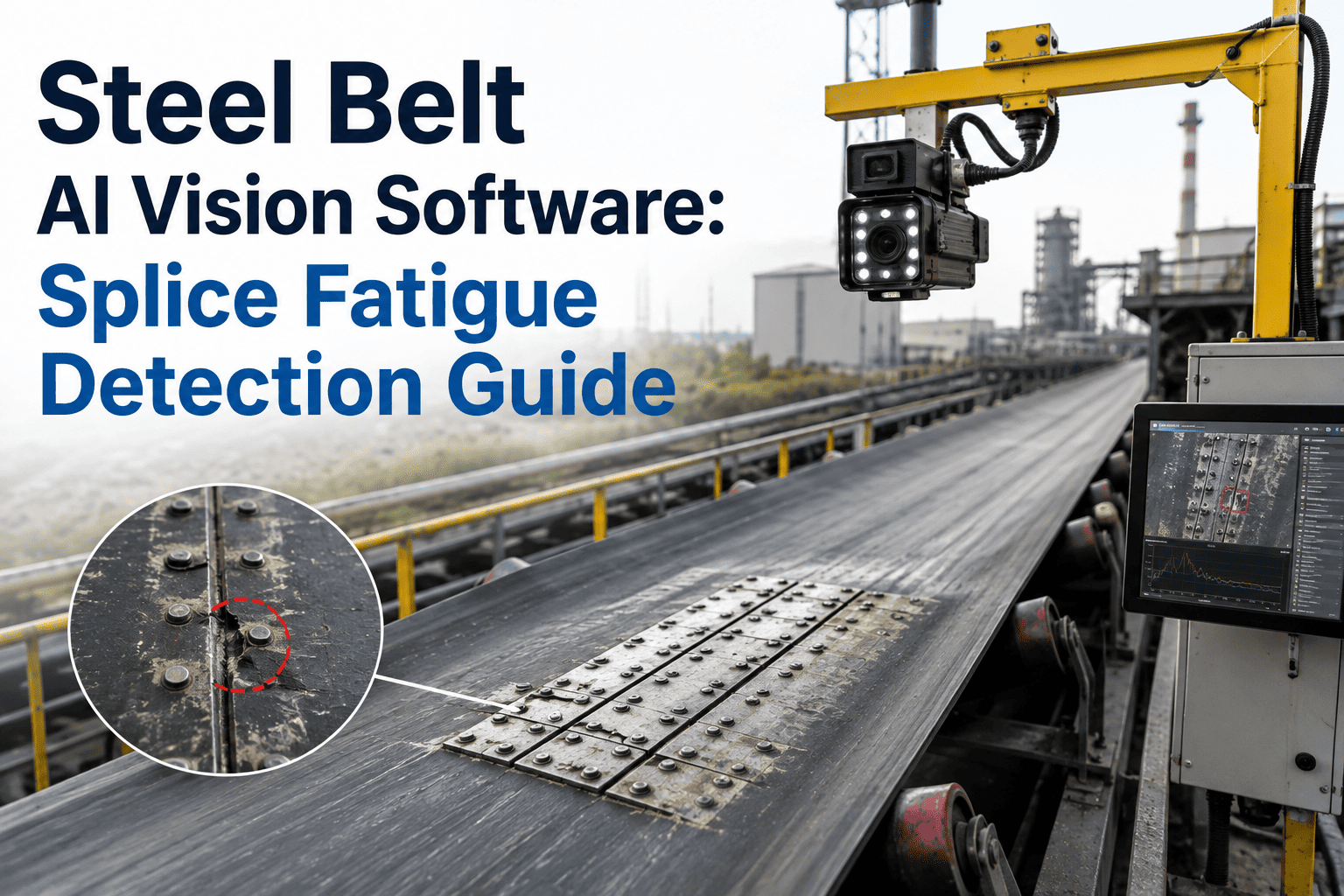
A galvanizing line installed a computer vision camera to catch surface defects that inspectors were missing at line speed, and in testing the model caught 96% of scratches and coil breaks the human eye missed. Production went live, and within three weeks the false-alert rate had crept up so high that operators started ignoring the system altogether, because nobody had planned for glare changes between shifts or a camera that slowly drifted out of focus. Steel plants that pilot AI vision rarely fail on the model itself — they fail on everything around it, from where the camera sits to who retrains it once the light on the mill floor changes with the seasons. OxMaint's vision deployment layer is built to carry a model through every one of those stages without losing accuracy along the way.
From Camera Placement to Production Inference — In One System
OxMaint manages the full computer vision lifecycle inside your CMMS, so a defect or safety model keeps its accuracy long after the pilot ends.
96%
defect detection accuracy achievable in controlled pilot testing on steel surface lines
3-6 wk
typical window before an unmonitored vision model starts drifting after go-live
40%+
of vision pilots stall at the camera placement and lighting stage, before a single model is trained
The Computer Vision Deployment Lifecycle in Steel Plants
A production-grade vision system moves through five distinct stages. Skipping or rushing any one of them is where most steel plant deployments lose accuracy or stall completely.
1
Camera Placement
Position and angle cameras against real mill-floor conditions — steam, glare, vibration, and shift-to-shift lighting changes, not the clean test bench.
2
Data Labeling
Build a labeled defect or event dataset from actual plant footage, covering rare edge cases as well as the common failure patterns.
3
Model Training
Train and validate the model against a holdout set from a different shift or season, so accuracy numbers reflect real plant variability.
4
Inference Deployment
Run the model live at line speed, routing every flagged event into a work order or alert instead of a dashboard nobody watches.
5
Drift Monitoring
Track detection accuracy continuously and trigger a scheduled retrain the moment performance slips below the agreed threshold.
Vision Lifecycle — OxMaint
Keep the Model Accurate Long After Go-Live
OxMaint tracks every camera, every model version, and every drift alert in one place — so your vision system stays as accurate on day 300 as it was in the pilot demo.
Where Vision Models Break in Production
These are the five most common points of failure once a vision model leaves the test bench and starts running on a live steel line, ranked by how often they cause a plant to shut the system off.
Most Common
Lighting and Glare Changes
Shift changes, seasonal daylight, and steam all shift the lighting a camera sees, and a model trained on one lighting condition misreads another.
Frequent
Camera Drift and Fouling
Vibration, dust, and coolant spray slowly shift camera angle and focus, degrading accuracy without anyone noticing until defects slip through.
Common
New Product or Coil Variants
A model trained on one steel grade or coating often misclassifies a new product variant it never saw during the original training set.
Occasional
Alert Fatigue From False Positives
When false alerts are not tuned down early, operators learn to ignore the system entirely, long before accuracy actually becomes a real problem.
Occasional
No Owner for Retraining
Once the vendor's implementation team leaves, no one on staff is assigned to retrain the model, so it keeps running on aging data indefinitely.
Vision Model Accuracy Benchmarks by Deployment Stage
Detection accuracy shifts predictably across the deployment lifecycle. Knowing the expected range at each stage helps a plant tell normal variation apart from a model that genuinely needs retraining.
Deployment Stage
Expected Accuracy
Common Cause of Drop
OxMaint Response
Pilot / Test Bench
94-97%
Controlled lighting, limited product range
Baseline accuracy recorded per camera
First 30 Days Live
85-92%
Real lighting and product variation appears
Daily accuracy tracking against alerts confirmed
Steady State
90-95%
Model tuned to real plant conditions
Weekly drift check against threshold
Post-Drift, No Retrain
Below 80%
Camera fouling, new product, seasonal light
Automatic retrain triggered before this point
What a Vision Deployment Programme Costs — and Returns
Vision deployment costs scale with the number of cameras and models, but so do the returns, once inspection labor, scrap reduction, and missed-defect claims are counted together.
Single-Line Deployment
1-3 cameras, one defect model
Typical setup time
4-8 weeks
Inspection labor saved
1-2 FTE per shift
Payback window
3-6 months
Multi-Line Rollout
5-15 cameras, 2-3 model types
Typical setup time
3-5 months
Inspection labor saved
4-8 FTE across shifts
Payback window
5-9 months
Plant-Wide Programme
20+ cameras, defect + safety models
Typical setup time
6-12 months
Inspection labor saved
12+ FTE plant-wide
Payback window
8-14 months
We had a defect detection model that looked perfect in the demo and fell apart within a month of going live because nobody was watching the accuracy day to day. Once OxMaint started flagging drift automatically, our retrain cycle went from reactive and chaotic to something we run on a schedule, and the operators trust the alerts again.
— Quality Systems Manager, flat-rolled steel producer
Frequently Asked Questions
How many cameras does a typical steel plant vision deployment need?
A single defect-detection line usually needs one to three cameras, while a plant-wide safety and quality programme can involve twenty or more across multiple lines and shipping areas.
How does OxMaint know when a vision model needs retraining?
OxMaint compares live detection accuracy against confirmed outcomes recorded in the CMMS and flags any model that drops below your set threshold, triggering a scheduled retrain automatically.
Can existing plant cameras be used, or do we need new hardware?
Most existing IP cameras with a clear line of sight can be integrated directly. New hardware is only needed where coverage gaps exist or where placement needs to change for accuracy reasons.
What is a realistic accuracy target for a production vision system?
Top-performing steel plant deployments maintain 90 to 95% detection accuracy in steady state, after the first 30 days of live tuning against real plant conditions have passed.
How do we start a vision deployment without a full plant-wide budget upfront?
Most plants start with a single-line deployment to prove accuracy and ROI, then expand using the same camera and model templates.
Start a free trial to scope your first line.
Vision Lifecycle — OxMaint
Deploy It. Monitor It. Keep It Accurate.
95%
steady-state accuracy
22%
scrap reduction, top tier