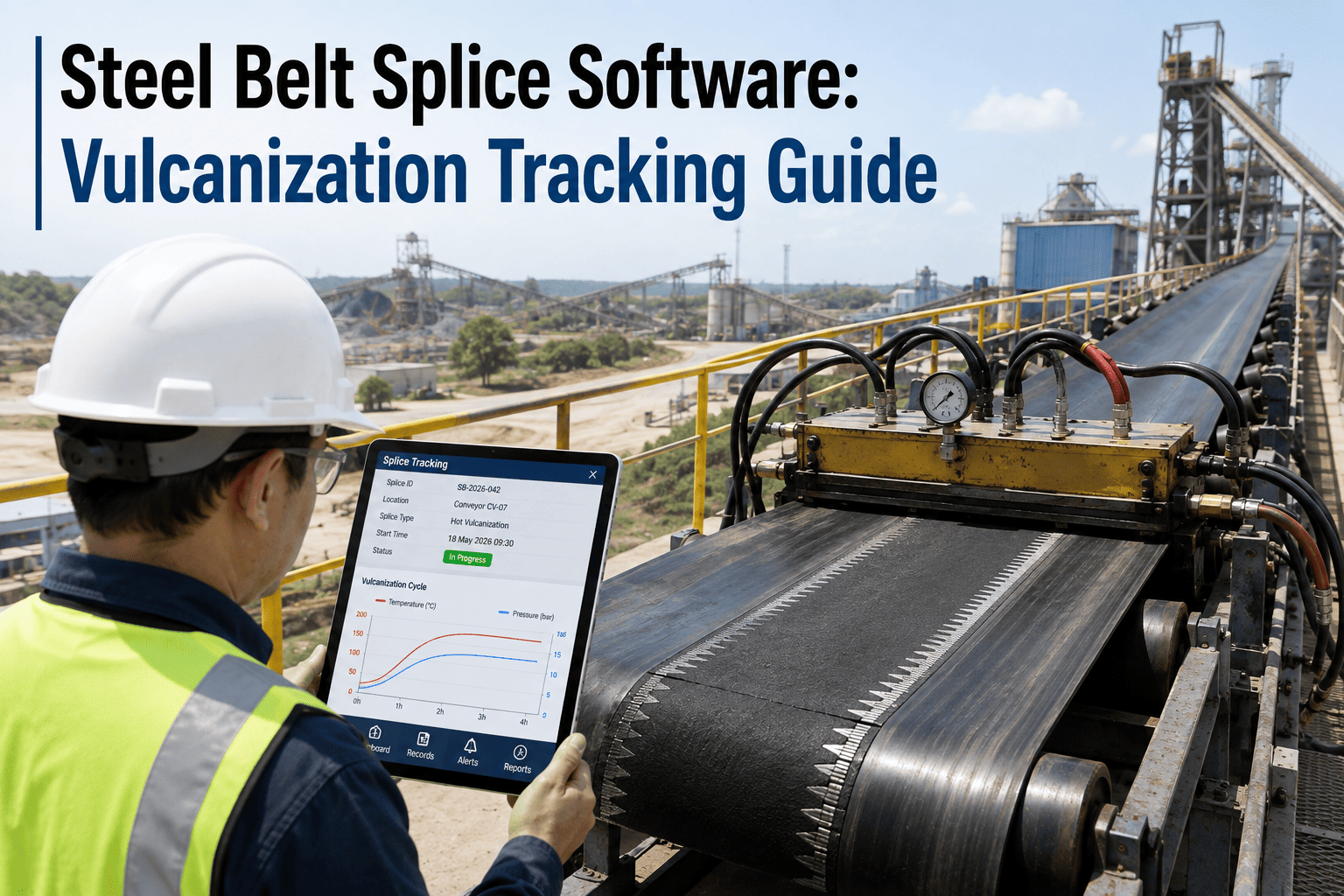
A belt splice fails on a Tuesday, a technician snaps a photo on their personal phone, and three weeks later an OEM warranty reviewer asks for proof of when the defect was found and where. Nobody can produce it — the photo is buried in a camera roll with no timestamp, no location, and no link to the work order it was supposed to support. This is the quiet failure point behind a huge share of denied warranty claims, disputed insurance payouts, and audit findings in steel plants: the defect was real, the repair was done, but the evidence was never captured in a form anyone could trust later. OxMaint timestamps, GPS-tags, and annotates every belt defect photo the moment it's taken, so the proof exists before anyone thinks to ask for it.
Every Defect Photo Should Defend Itself
Timestamped, GPS-tagged, annotated photo evidence attached directly to the work order — ready for PM planners, insurers, and OEM vendors without a single follow-up email.
60%+
of warranty and insurance claims flagged or delayed for insufficient or unverifiable photo documentation.
7–30 days
typical claim submission window — most plants blow past it reconstructing evidence after the fact.
Minutes
a reviewer needs to approve a claim with a clear, timestamped, geotagged photo set — versus days for a disputed one.
Camera Roll vs. Timestamped Evidence — What Actually Holds Up
Most plants think they have photo documentation because technicians take pictures. The problem is where those pictures live and what they can prove once a claim reviewer starts asking questions. A photo with no metadata is an opinion. A photo with a timestamp, GPS coordinate, work order link, and annotation is evidence.
Camera Roll Photo
No timestamp tied to the actual inspection moment
No location data — can't confirm which line or belt
Lives on a personal phone, not linked to the work order
Easy to dispute as staged or reused from a prior incident
Lost when a technician changes shifts or leaves the company
Timestamped Evidence
Captured at the moment of inspection, time-locked automatically
GPS-tagged to the exact belt, zone, or asset location
Attached directly to the work order and asset history
Annotated with defect type, severity, and technician notes
Stored centrally — retrievable years later for any claim or audit
Five Places Photo Evidence Pays for Itself
Timestamped defect photos aren't just a maintenance nicety — they change outcomes with the people who actually decide whether you get paid, reimbursed, or cleared. Here's where the evidence carries the most weight, ranked by how often it comes up.
Most Common
OEM Warranty Claims
OEMs reject claims on missing or ambiguous evidence more often than on actual ineligibility. A photo showing the defect in place, with a timestamp inside the coverage window and the serial number visible, is usually the difference between an approved claim and a rejected one.
High Value
Insurance & Equipment Damage Claims
Adjusters expect geotagged, dated photos as standard practice now, not an extra step. A clear before-and-after set with location data makes a circumstantial case strong enough to settle quickly instead of getting escalated for investigation.
Recurring
Contractor & Installer Disputes
When a belt fails shortly after installation or a repair, timestamped pre-work photos prove the starting condition and protect your team from being blamed for damage that existed before the crew arrived.
Compliance
Safety & Regulatory Audits
Auditors expect a demonstrated link between findings and corrective action. A photo attached to a closed work order, with a technician signature and timestamp, satisfies that requirement without anyone digging through paper files.
Long-Term
PM Planning & Wear Trending
A photo history of the same belt section over months shows exactly how a cut or fray progressed, letting planners schedule a replacement before it becomes a failure instead of guessing from memory.
Belt Defect Evidence — OxMaint
Every Photo, Time-Locked and Linked to the Work Order
Stop reconstructing timelines from memory when a claim reviewer calls. OxMaint captures the timestamp, GPS location, and annotation the moment the photo is taken — no extra step for the technician.
What Each Reviewer Actually Wants to See
An OEM claims desk, an insurance adjuster, a PM planner, and a safety auditor are all looking at the same photo for different reasons — and each one rejects incomplete evidence for a different reason too.
The Defect Capture Workflow — From Walk-By to Closed Claim
The plants that never scramble for evidence all follow roughly the same sequence, and it starts the moment a technician spots something wrong on the belt line.
1
Technician Spots the Defect
During a routine walk-by or scheduled inspection, a cut, fray, mistracking, or splice failure is identified on the belt.
2
Photo Captured On the Spot
The photo is taken directly through the mobile app, automatically time-stamped and GPS-tagged to the exact belt asset — no separate camera, no manual note-taking.
3
Defect Annotated
The technician marks defect type and severity directly on the photo, so the reviewer doesn't have to guess what they're looking at.
4
Work Order Auto-Generated
The annotated photo attaches automatically to a new or existing work order, and the right planner or supervisor is notified.
5
Repair Photographed for Closure
Once repaired, a closing photo documents the completed fix, creating a full before-and-after record on the same work order.
6
Evidence Ready for Any Claim
Months later, the complete timestamped record is pulled up in seconds for a warranty claim, insurance review, or audit — no digging through phones or email threads.
Approved vs. Denied — What the Difference Costs
The gap between a claim that gets paid and one that gets denied usually isn't the failure itself — it's whether the paperwork can prove what happened. Here's what that looks like in real dollars.
Approved OEM Claim
Complete timestamped evidence
Belt replacement cost covered$18,000
Claim processing timeSame day
Reviewer follow-up requestsNone
Net cost to plant$0
Denied Warranty Claim
Missing timestamp or location proof
Belt replacement cost, unreimbursed$18,000
Staff time reconstructing timeline$2,400
Appeal & resubmission delay4–8 weeks
Net cost to plant$20,400
Delayed Insurance Payout
Incomplete photo set escalated
Investigation delay3–6 weeks
Additional evidence requests2–4 rounds
Downtime while claim is pending$6,000+
Total avoidable delay cost$6,000+
We used to lose warranty claims not because the belt wasn't actually defective, but because nobody could prove when we found it. Techs had photos on their own phones, half of them without dates, and by the time the OEM asked for evidence it was gone. Since we moved to OxMaint, every defect photo is timestamped and tied to the work order automatically. Our OEM claim approval rate went from something we dreaded to something we don't even think about anymore.
— Maintenance Planning Manager, Integrated Steel Producer
What to Look For in Belt Defect Photo Evidence Software
Not every mobile app that lets a technician attach a picture counts as evidence software. These four things separate a real evidence system from a glorified camera roll.
Automatic Timestamp & GPS Tagging
The metadata has to be captured at the moment of the photo, not added manually afterward, or it carries no weight with a reviewer who disputes it.
Direct Work Order Linking
A photo sitting in a general gallery proves nothing. It needs to be attached to the specific asset and work order it documents.
On-Photo Annotation
Defect type, severity, and technician notes marked directly on the image let a reviewer understand the finding without a phone call back to the plant.
Long-Term Central Storage
Warranty windows and audit lookbacks can stretch years out. Evidence needs to be retrievable long after the technician who took the photo has moved on.
Frequently Asked Questions — Belt Defect Photo Evidence
Why do OEMs reject warranty claims that have photos attached?
Usually because the photo has no verifiable timestamp or location, so the reviewer can't confirm the defect was found within the coverage window.
See how automatic tagging fixes this before a claim is ever filed.
What metadata actually matters for a defect photo to hold up?
A timestamp, GPS coordinate, and a direct link to the work order or asset record together make the strongest case. Metadata alone without corroborating notes tends to hold up less well if it's disputed.
Can technicians still use their own phones to take defect photos?
Yes, most systems capture photos through a mobile app on the technician's existing device — the difference is the app time-stamps and tags the photo automatically instead of leaving it in a personal camera roll.
How long should belt defect photo evidence be kept?
Long enough to cover the longest warranty window or audit lookback period your plant faces, often two to five years. Central storage avoids losing evidence when a technician changes roles or leaves.
Does timestamped photo evidence actually speed up claim approval?
Yes — a reviewer looking at a complete, verifiable photo set can typically approve a claim in minutes instead of escalating it for investigation.
Book a demo to see the workflow on your own belt lines.
Belt Defect Evidence — OxMaint
Stop Losing Claims to Missing Evidence
100%of photos auto-timestamped and geotagged
Minutesto pull complete evidence for any claim
$20K+avoidable cost per denied warranty claim