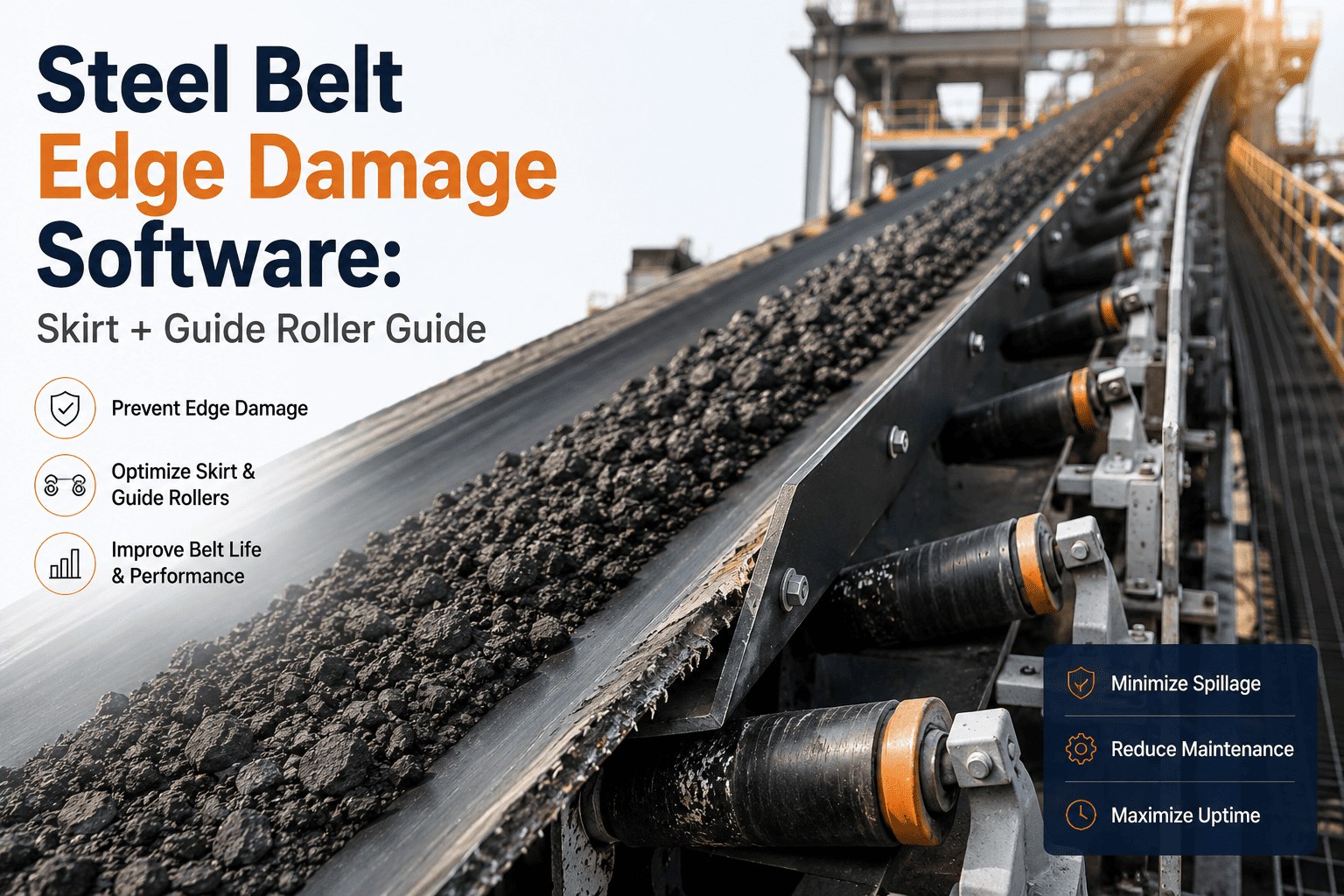
Belt edge damage is the single most under-reported failure mode on steel plant conveyor systems, and it is also the most expensive one to ignore. A worn skirt rubber seal or a seized guide roller rarely causes an unplanned stop on the day it fails — it causes one six to ten weeks later, when the exposed steel cord carcass finally tears across a splice and the belt has to be pulled mid-shift. Steel producers running sinter, coke, pellet, and scrap handling conveyors lose more uptime to edge-related belt replacement than to any other single conveyor cause. The fix is not a bigger belt or a stronger splice — it is a documented inspection and wear-tracking discipline that catches skirt and roller degradation while it is still a work order, not a shutdown. If your plant is still tracking belt edge condition on a paper walkdown sheet, start a free trial with OxMaint to see how edge damage tracking should actually work.
Belt Edge Damage Severity
The Four Stages of Belt Edge Failure — And Where Most Plants Notice It
Stage 1
Skirt Rubber Wear
Skirt rubber compresses and thins at the loading zone. Gap opens between rubber and belt surface. Invisible without a straight-edge check.
Stage 2
Fines Spillage & Edge Fray
Material escapes the skirt gap and abrades the belt edge continuously. Rubber cover starts fraying along the running edge.
Stage 3
Carcass Exposure
Steel cord or fabric carcass becomes visible along the edge. Belt strength at that cross-section drops sharply.
Stage 4
Edge Tear / Splice Failure
Exposed carcass catches on a structural member or idler frame. Belt tears across, usually at the nearest splice.
61%
Of unplanned steel plant conveyor stoppages trace back to edge damage that was visible at Stage 1 or 2
₹38L+
Average cost of an emergency mid-shift belt replacement on a main sinter or coke conveyor
6–10 wks
Typical time between first visible skirt wear and a full edge tear if left untracked
4x
Belt life extension reported by plants running scheduled skirt and roller inspection routes
Root Cause
Why Belt Edges Fail — Four Causes That Show Up on Every Steel Plant Walkdown
Edge damage is not random. It follows a small set of mechanical causes, each of which leaves its own signature on the belt, the skirt board, and the guide roller. Recognizing the signature tells your maintenance team exactly which component to correct before the belt itself takes damage.
Skirt Rubber Compression Set
Rubber loses its ability to spring back after weeks of static load against the belt. The seal gap widens unevenly, letting fines cut into one edge more than the other.
Guide Roller Seizure
A bearing inside a vertical guide roller seizes and stops rotating. The belt edge then drags against a fixed steel surface instead of a free-spinning roller, cutting a groove within days.
Belt Mistracking
A misaligned idler frame or uneven loading pushes the belt sideways. One edge repeatedly contacts the structure, skirt board, or chute wall.
Skirt Board Misalignment
The skirt board itself sits closer to the belt on one side after a structural shift or a rushed repair, concentrating wear at a single point rather than spreading it evenly.
OxMaint · Belt Edge Tracking
Every Skirt and Roller Check Becomes a Trackable Record — Not a Memory
OxMaint turns skirt rubber gap checks and guide roller free-spin tests into a scheduled inspection route with photo evidence and wear trend history per conveyor. No more relying on a technician remembering that one skirt panel looked thin three weeks ago.
Skirt Rubber Management
Managing Skirt Rubber Wear — The Inspection Points That Actually Predict Failure
Skirt rubber does not fail evenly, and a single visual glance from the walkway rarely catches the problem in time. A proper skirt inspection checks four measurable points at every loading zone, on a fixed schedule, with the readings logged against the previous check rather than judged in isolation.
1
Gap Measurement at Three Points
Measure the skirt-to-belt gap at the front, middle, and rear of each skirt panel. A gap exceeding 3mm on steel handling conveyors is the standard trigger point for a rubber replacement work order.
2
Compression Set Check
Lift the rubber away from the belt by hand and release. Rubber that does not return to its resting position within a second or two has lost its seal function even if the gap measurement still looks acceptable.
3
Fines Trail Inspection
A visible fines trail below a skirt panel confirms the seal has already failed at that point, regardless of what the gap measurement shows. This is the earliest physical evidence of Stage 2 damage.
4
Belt Edge Photo Log
A timestamped photo of the belt edge directly below each skirt panel, taken on every inspection round, builds the wear trend that tells you how many weeks of service life remain before carcass exposure.
Guide Roller Condition
Guide Roller Monitoring — Catching a Seized Bearing Before It Cuts the Belt Edge
A guide roller that has stopped rotating is one of the fastest routes to a belt edge cut on the entire conveyor system, because the failure mode changes from gradual wear to direct abrasion within a single shift. The table below shows the difference between a healthy roller check and a failing one, and what each condition means for the belt.
OxMaint · Guide Roller Work Orders
A Seized Guide Roller Should Trigger a Work Order the Same Day It Is Found
OxMaint lets inspectors log a guide roller as healthy, early-warning, or failed directly from the mobile app during the walkdown. Early-warning rollers automatically generate a scheduled work order; failed rollers escalate immediately to the shift supervisor with the exact conveyor and roller position attached.
The OxMaint Approach
How OxMaint Builds Belt Edge Discipline Into Daily Conveyor Rounds
Edge damage tracking only works if it fits inside the inspection round your team is already walking, rather than adding a separate administrative task. OxMaint attaches skirt and guide roller checks directly to the conveyor asset record so every reading builds a wear history automatically.
Route-Based Inspection Checklists
Every skirt panel and guide roller on a conveyor is set up as a checkpoint on a mobile inspection route, so technicians walk the same sequence every time and nothing gets skipped when a different person covers the shift.
Automatic Wear-Trend History
Gap measurements and roller condition ratings are stored per checkpoint over time, so a supervisor can see at a glance whether a given skirt panel is degrading faster than the rest of the conveyor.
Threshold-Triggered Work Orders
When a gap measurement crosses the replacement threshold or a roller is logged as failed, OxMaint raises the work order automatically instead of waiting for someone to notice it on a spreadsheet at the end of the week.
Belt Replacement Cost Avoidance Log
Every skirt or roller repair completed before an edge tear is logged against the estimated cost of an emergency belt replacement it prevented, giving the maintenance team a running record of avoided downtime cost.
Impact
What Plants Report After Six Months of Edge Damage Tracking
4x
Longer average belt service life on conveyors with active skirt and roller tracking
72%
Reduction in emergency mid-shift belt replacements within two quarters
₹1.2Cr+
Typical annual saving on belt purchase and emergency labor cost for a mid-size steel plant
15 min
Average time to complete a full skirt and roller inspection route per conveyor
Maintenance Team Questions
Belt Edge Damage — What Steel Plant Maintenance Teams Ask
How often should skirt rubber and guide rollers be inspected on a steel plant conveyor?+
Loading zone skirts and the guide rollers nearest them should be checked weekly on high-throughput conveyors such as sinter and coke feed lines. Lower-duty conveyors can move to a biweekly schedule once a stable wear trend is established.
OxMaint's route scheduling keeps this cadence consistent across shifts automatically.
What gap measurement should trigger a skirt rubber replacement?+
Most steel plants set the replacement threshold at a 3mm skirt-to-belt gap, measured at the front, middle, and rear of each panel. A gap that is uneven across those three points is often a bigger warning sign than the absolute measurement itself, since it points to a skirt board alignment issue rather than simple wear.
Can a guide roller failure really cause a full belt tear?+
Yes. A seized roller stops acting as a rolling contact and becomes a fixed abrasive surface. Within days this cuts through the belt cover into the carcass at the exact point of contact, and the resulting weak spot commonly tears during a load surge or a splice pass.
Is belt mistracking always the cause of one-sided edge wear?+
Not always. One-sided wear can come from mistracking, an unevenly loaded chute, or a skirt board that was reinstalled slightly off-center after a repair. Logging gap readings from both edges separately in a system like OxMaint helps isolate which cause is actually driving the pattern.
What is the fastest way to start tracking belt edge condition without a big rollout project?+
Start with the three or four highest-throughput conveyors and set up skirt and roller checkpoints only on those. Most teams see a usable wear trend within three inspection cycles.
Book a demo to see a working checkpoint setup before rolling it out plant-wide.
OxMaint · Steel Plant Conveyor Reliability
Stop Losing Belts to Damage You Could Have Seen Coming
Skirt rubber wear and guide roller seizure give weeks of warning before they cost you a belt. OxMaint turns that warning into a scheduled inspection, a tracked wear trend, and an automatic work order — so the next edge tear on your plant is one that never happens.