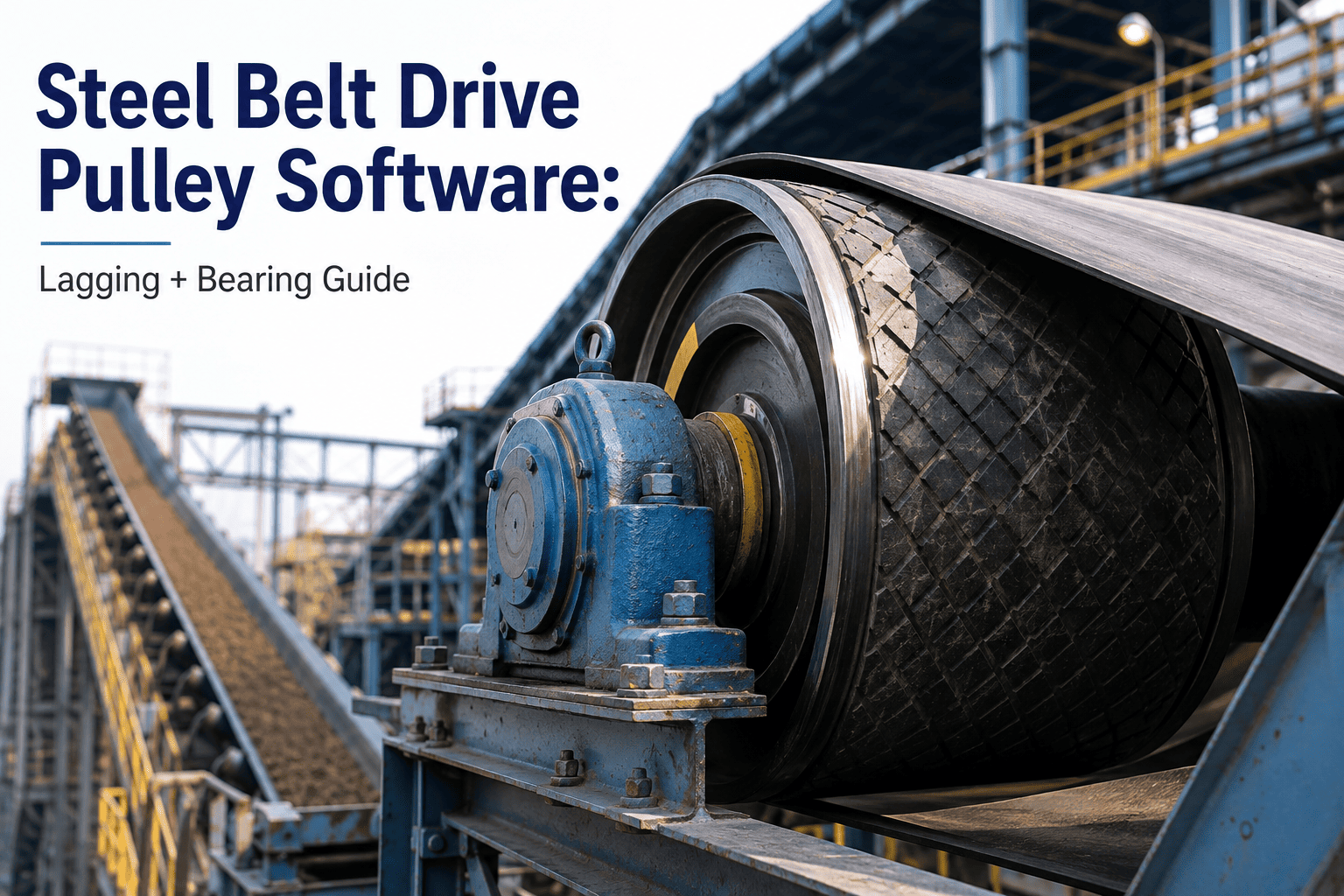
Drive pulley failures on steel plant conveyor systems rarely happen without warning — they build for months along two quiet failure paths: rubber lagging that thins and debonds under abrasive ore, sinter, and coke fines, and pulley bearings that run hot and loud long before they seize. A single unplanned drive pulley replacement on a main raw material conveyor can halt feed to a blast furnace, sinter plant, or coking line for eight to fourteen hours, and the shell, bearing housing, and shaft damage that follows a lagging failure usually costs far more than the lagging itself. Most plants still inspect pulleys on a fixed calendar instead of tracking the two measurable signals that actually predict failure: lagging wear depth and bearing vibration and temperature trend. Digitizing that inspection and trend data turns pulley maintenance from a guessing game into a scheduled, low-cost intervention. Start a free trial with Oxmaint to track lagging wear and bearing condition across every drive pulley in your plant.
Steel Plant Drive Pulley Maintenance: Reading the Lagging and Bearing Wear Signature
Track rubber lagging wear depth, debonding, and drive pulley bearing condition across raw material, sinter, and finished product conveyors before a pulley failure stops production.
Why Drive Pulley Lagging and Bearings Fail Without Warning
A steel plant drive pulley does two jobs at once: the rubber or ceramic lagging bonded to the shell creates the friction that lets the belt transmit motion without slipping, and the bearings at each end carry the full radial and belt-tension load of the conveyor. Both parts degrade gradually and both are easy to miss on a walkaround inspection. Lagging wears from the outside in, losing groove depth a fraction of a millimeter at a time under abrasive sinter fines, coke breeze, and iron ore pellets, while the bond line underneath can be failing from moisture ingress or impact damage long before the rubber surface looks worn.
Bearings fail on a separate but related timeline. As lagging wears unevenly or starts to debond in patches, the pulley runs slightly out of round, which increases vibration loading on the bearings at both ends. A bearing that would normally run for years under balanced load can be pushed into failure within months once lagging asymmetry sets in. Because neither failure mode produces an obvious external symptom until very late, most plants only catch them once belt slip, tracking issues, or an unusual bearing noise forces a shutdown inspection — by which point the shell, seals, or shaft may already be damaged.
The Six Wear Signatures That Precede a Pulley Failure
Rubber separates from the steel shell in patches, usually starting at the pulley edge where moisture enters first. Debonded lagging flexes under load, accelerating tear-out and exposing bare shell within weeks.
Groove depth thins evenly across the face until traction drops and belt slip begins. Wear rate varies by material handled — sinter and coke wear lagging roughly twice as fast as finished coil or plate conveyors.
Uneven lagging wear unbalances the pulley, raising vibration amplitude at both bearing housings. A sustained rise of more than 25% over baseline signals developing bearing damage weeks before audible noise appears.
Housing temperature climbing above the plant baseline for that duty cycle points to lubrication breakdown, contamination, or increasing internal friction from race damage.
A pulley wearing unevenly across its face pushes the belt off-center. Persistent tracking correction at one pulley location is often the first field-visible sign of lagging asymmetry.
Once lagging debonds, moisture reaches the bare shell and welded end discs, corroding the base metal the next lagging application needs to bond to and shortening the shell's remaining service life.
Recommended Inspection Intervals by Pulley Position
Not every pulley on a steel plant conveyor system carries the same risk. Drive (head) pulleys under the highest tension and traction load need the tightest inspection cycle, while idler-adjacent tail and bend pulleys can run on a longer cycle unless they sit in a high-moisture or high-fines transfer zone.
| Pulley Position | Visual Lagging Check | Wear Depth Measurement | Bearing Vibration/Temp Check |
|---|---|---|---|
| Main Drive (Head) Pulley | Weekly | Monthly | Weekly |
| Secondary Drive Pulley | Bi-weekly | Monthly | Bi-weekly |
| Take-Up Pulley | Monthly | Quarterly | Monthly |
| Tail Pulley | Monthly | Quarterly | Monthly |
| Transfer Point Bend Pulley | Bi-weekly | Quarterly | Monthly |
| Sinter/Coke Handling Pulleys | Weekly | Bi-weekly | Weekly |
How a Thin Spot Becomes a Bearing Seizure
Lagging and bearing failures follow a connected sequence. A localized wear or debonding spot rarely stays isolated — it changes how the belt grips the pulley, which changes the load the bearings see, which accelerates bearing wear, which allows more pulley runout, which accelerates lagging wear further. Recognizing which stage a pulley is at determines whether the fix is a scheduled re-lagging or an emergency shutdown.
Reactive vs. Trended Pulley Management
Five Mistakes That Shorten Pulley Life in Steel Plants
Most premature pulley failures trace back to a handful of repeatable program gaps rather than a single bad component. Fixing these before they compound saves far more than reacting to the failure they eventually cause.
Recording wear data only after a pulley is already pulled for repair leaves no baseline to compare against, so the next failure looks just as sudden as the last one.
A tail pulley on a finished product line and a head pulley on a sinter feed conveyor do not wear at the same rate. A single fleet-wide inspection interval under-services the pulleys that need it most.
Operators adjusting belt tracking repeatedly at the same pulley are compensating for wear asymmetry. Logging the correction as a nuisance instead of a symptom delays the inspection that would catch it early.
When vibration data lives in one system and wear depth lives in a paper log, nobody connects the two trends until a bearing has already failed from the load imbalance lagging wear created.
Applying new lagging over a shell that was corroding under the old debonded section sets the next application up to fail early. A full shell check belongs in every re-lagging job, not just visibly damaged ones.
What a Pulley Condition Program Needs to Get Off the Ground
A pulley wear and bearing tracking program does not need a full sensor retrofit to start delivering value. Most plants get useful trend data within the first inspection cycle using tools already on hand, then add automated sensing later where the return justifies it.
Record current lagging depth and bearing vibration/temperature for every drive, take-up, and tail pulley in the plant as the starting reference point for every future reading.
Name the crew or role responsible for each pulley position's inspection cycle so wear depth and bearing checks happen on schedule rather than opportunistically.
Define separate wear depth and vibration thresholds for high-abrasion pulleys versus low-wear positions instead of a single plant-wide alert level that misses fast-wearing units.
Bring reliability and maintenance leads together to review which pulleys are trending toward threshold before the next scheduled shutdown window, so re-lagging can be planned rather than forced.
Catch Lagging Wear Before It Reaches the Bearings
Oxmaint logs wear depth measurements per pulley, trends bearing vibration and temperature against baseline, and triggers a work order the moment a reading crosses your threshold — before a debonding patch becomes an unplanned shutdown.
How Oxmaint Tracks Pulley Lagging and Bearing Condition
Record lagging groove depth at each measurement point on every drive, take-up, and tail pulley. Trend lines show which pulleys are wearing faster than their material-handling baseline.
Log handheld or sensor-fed vibration and temperature readings per bearing housing. Alerts fire when a reading drifts a set percentage above that pulley's rolling baseline.
Mark debonded or damaged lagging sections against a pulley face diagram so inspectors compare against the last recorded condition instead of relying on memory.
Set separate inspection intervals for drive, take-up, tail, and transfer-point pulleys, weighted for material type, so sinter and coke conveyors get tighter cycles automatically.
Once wear depth crosses a configured threshold, a re-lagging work order generates automatically with the pulley's measurement history attached for the maintenance crew.
Cross-reference wear rate against belt tension, tracking adjustments, and material throughput to identify whether wear is normal duty cycle or a correctable operating condition.
Five Warning Signs a Pulley Needs Attention Now
Between scheduled inspection cycles, a handful of field-visible signs are worth acting on immediately rather than waiting for the next round. None of these on their own guarantee an imminent failure, but each one shortens the safe window before one becomes likely.
Slip that clears once the belt is running but recurs every startup usually points to lagging traction loss rather than a tensioning issue alone.
A change in bearing sound, even without a temperature spike yet, is often the first audible sign that vibration has already been trending upward for weeks.
Debris that looks like torn lagging fragments on the walkway below a pulley confirms active debonding, not just surface wear.
If operators are adjusting the same pulley's tracking more than once a shift, the pulley face is very likely wearing unevenly already.
Standing water or persistent dampness at the lagging-to-shell boundary is the leading early indicator of debonding before any bulge or gap is visible.
Measurable Results from Pulley Condition Tracking
Frequently Asked Questions
How is lagging wear depth actually measured?
Inspectors use a groove depth gauge at fixed points across the pulley face and log the reading against the original design depth. Oxmaint stores each reading per pulley so wear rate trends over time instead of relying on a single point-in-time check — start a free trial to set up wear depth logging.
What causes lagging to debond from the pulley shell?
Moisture ingress at the pulley edge, poor original bonding, impact damage from tramp material, and prolonged exposure to abrasive fines are the most common causes. Debonding almost always starts small and spreads once the bond line is broken.
How does uneven lagging wear affect pulley bearings?
Uneven wear unbalances the pulley and increases radial load variation at both bearing housings, raising vibration and eventually temperature. Left unaddressed, bearing life can drop to a fraction of its rated service life.
Can bearing vibration data come from handheld tools instead of permanent sensors?
Yes. Handheld vibration and temperature readings logged at each inspection round still build a usable trend line per pulley. Permanent sensors improve resolution but are not required to start trending. Book a demo to see both setups.
How often should sinter and coke handling pulleys be inspected?
These pulleys see the most abrasive fines in the plant and typically need weekly visual checks and bi-weekly wear depth measurement, roughly double the cycle used for finished product conveyors.
Stop Losing Conveyor Uptime to Pulley Failures
Oxmaint logs lagging wear depth, trends bearing vibration and temperature, maps debonding zones, and automates re-lagging work orders before a worn pulley takes down a main conveyor. Free trial, no credit card required.