Steel plants are adding AI faster than their networks can keep up with it — quality vision on the finishing line, bearing anomaly detection on rolling mill drives, safety monitoring near cobots and overhead cranes — and every one of those workloads runs into the same wall the moment it depends on a cloud round trip. A defect image traveling to a remote data center and back typically costs 1 to 2 seconds of variable delay, and a line moving at production speed cannot wait that long before the bad section has already passed the inspection point. Edge compute solves this by running the trained model on an NVIDIA GPU rack sitting inside the plant itself, so inference happens in single-digit to low double-digit milliseconds instead of seconds, with no dependency on whether the plant's internet connection is having a good day. It is not a replacement for the cloud — model training, fleet-wide analytics, and long-term trend storage still belong there — it is the piece that makes real-time steel plant AI actually real-time, and it is worth seeing how local inference plugs into a plant's existing maintenance workflow inside Oxmaint before deciding where each workload should run.
EDGE COMPUTE · LOCAL INFERENCE · OXMAINT PLATFORM
Run AI Where the Steel Actually Moves
Deploy trained models onto plant-floor NVIDIA hardware and get real-time decisions without a cloud round trip. Predictive maintenance, vision inspection, and safety monitoring, all running locally.
Every Production Line Has a Decision Budget
Every process running on a steel line has a fixed window in which a defect, an anomaly, or a safety event has to be caught before it becomes irreversible. That window is set by line speed, not by how fast your data center happens to be. A rolling mill running material past an inspection point at production pace might allow only a few hundred milliseconds between the camera capturing a frame and a reject or stop signal reaching the control system. A cloud round trip — image out, inference on a remote server, decision back — typically consumes 1 to 2 seconds even on a strong connection, and worst-case latency on a congested link can run considerably higher. Edge compute changes the math entirely: because the trained model runs on a GPU physically sitting next to the line, the same decision returns in single-digit to low double-digit milliseconds, comfortably inside almost any production decision budget, and immune to whatever the plant's internet connection is doing at that moment.
Cobot / crane safety stop
20–50 ms budget
Vision-guided pick cell
50–100 ms budget
High-speed line inspection
~300 ms budget
Cloud round trip (typical)
1,000–2,000 ms
Edge inference (NVIDIA GPU)
4–15 ms
What Belongs at the Edge, and What Belongs in the Cloud
The right answer is almost never "everything at the edge" or "everything in the cloud" — it is matching each workload to the layer built for it. Industrial AI maps cleanly onto the same hierarchy automation engineers already use to describe plant systems: device-level inference at the line, cell and line-level edge compute for correlating multiple sensors, and plant or enterprise-level cloud compute for training and fleet-wide reporting. Getting this split right is what keeps real-time decisions fast while still letting the plant learn from data across every shift and every site.
RUNS AT THE EDGE
Millisecond-Window Decisions
Vision defect detection, safety-stop triggers, vibration and bearing anomaly scoring, quality pass/fail calls — anything where the line cannot wait for a network round trip.
SYNCED BETWEEN BOTH
Contextualized Work Orders
Confirmed edge anomalies are packaged with asset context and pushed into the CMMS and historian, so the plant floor gets a fast decision and the record stays complete.
RUNS IN THE CLOUD
Training, Fleet Analytics, Trend Storage
Model retraining on aggregated data, cross-plant benchmarking, drift detection, and long-term historian storage — workloads with hours to days of latency tolerance.
Surface and Coil Quality Vision
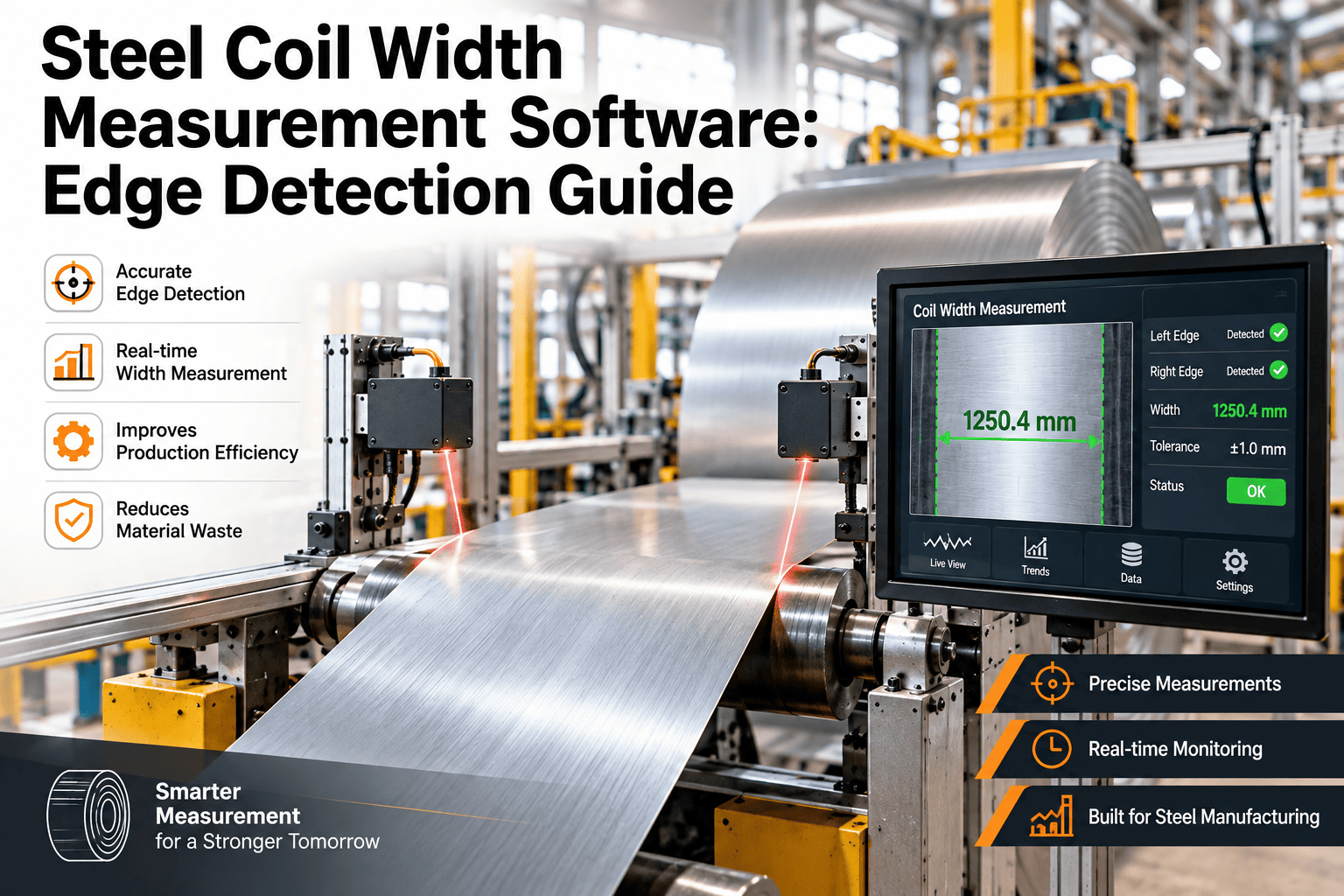
Cameras running edge inference catch scale, cracks, and coating defects on hot strip and coil lines at full production speed, flagging rejects before the material clears the inspection stand.
Rolling Mill and Drive Anomaly Scoring
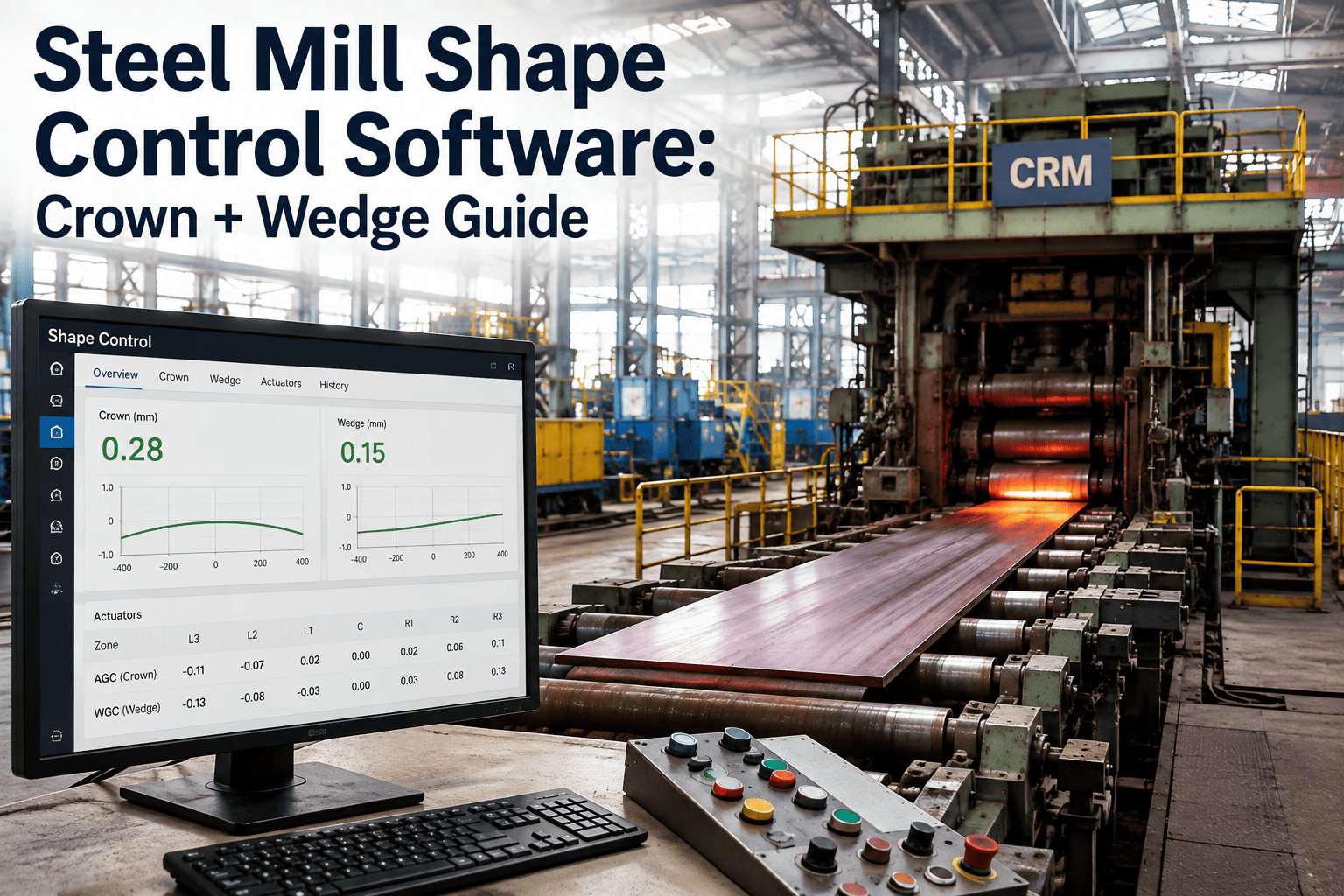
Vibration and current signatures from mill drives and roll bearings are scored locally against known fault patterns, opening a work order the moment a reading drifts from baseline.
Cobot and Crane Safety Monitoring
Human-approach detection near cobots and overhead cranes needs a 20 to 50 millisecond total loop from camera to protective stop — an envelope no cloud round trip can meet.
Energy and Furnace Load Optimization
Local inference on furnace and utility data adjusts load and combustion parameters in near real time, without waiting on a remote server to return a recommendation.
STEEL PLANT EDGE COMPUTE CMMS · OXMAINT PLATFORM
Give the Plant Floor Its Own Inference Layer
Route confirmed edge anomalies straight into work orders, with full asset context, while training and reporting stay right where they belong — in the cloud.
Inside a Typical Plant-Floor Edge Rack
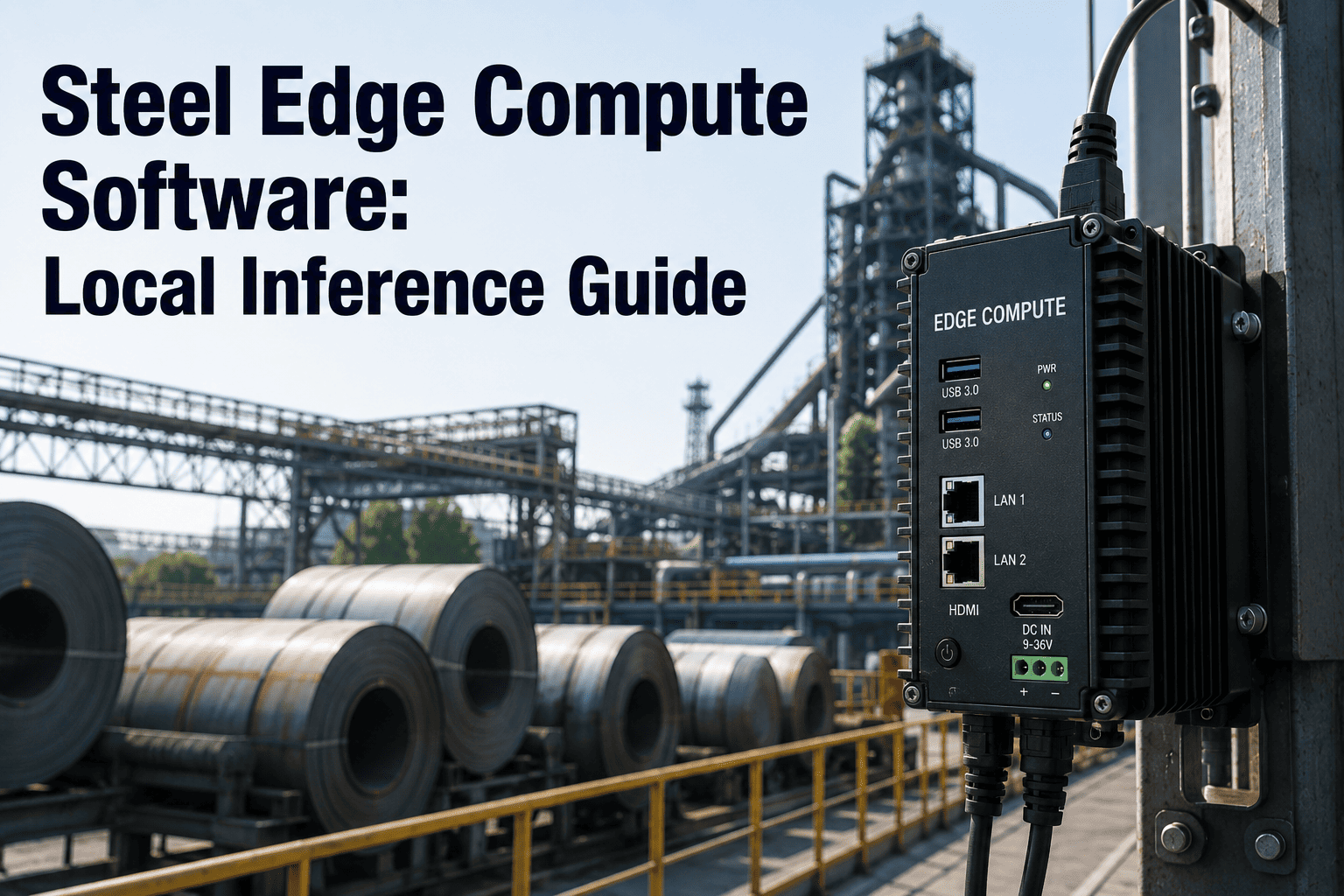
Edge racks deployed on steel plant floors range from compact fanless modules bolted next to a single vision system to rack-mounted GPU appliances serving several production cells at once. What they share is a design built for the plant environment, not a server room: sealed enclosures, wide operating temperature ranges, and network interfaces that speak the industrial protocols already running on the floor rather than requiring a translation layer.
Processor
NVIDIA Jetson Orin NX or Jetson AGX Orin class GPU module
Typical Inference Speed
4–15 ms per frame for vision and anomaly-scoring workloads
Connectivity
Dual Gigabit Ethernet, native OPC-UA, Modbus, MQTT, PROFINET
Enclosure
Fanless, DIN-rail or rack mountable, sealed against dust and moisture
Operating Range
Rated for wide industrial temperature swings on the plant floor
Network Dependency
None for inference — continues running through internet or VPN outages
Deployment Time
Typically under a few hours per node, no rewiring of existing equipment
| Factor | Cloud-Only Inference | Edge Compute (NVIDIA Local Inference) |
|---|---|---|
| Typical decision latency | 1,000–2,000 ms round trip | 4–15 ms on-device |
| Works during a network outage | No — inference stops with the connection | Yes — inference continues locally |
| Where sensitive footage and process data live | Leaves the facility for every inference call | Stays inside the plant network |
| Best suited to | Training, fleet analytics, long-term trend storage | Real-time inspection, safety, condition monitoring |
| Ongoing inference cost pattern | Recurring compute and egress fees per call | Upfront hardware, low marginal cost per inference |
Our vision system was catching maybe seven in ten scale defects because the cloud round trip meant we were already three coils past the frame that triggered the alert. Moving inference onto a GPU rack next to the line closed that gap almost entirely — the reject signal now lands before the coil clears the stand.
— Process Engineer, Hot Strip Mill, Integrated Steel Plant
Getting an Edge Rack Live Without Touching Production
Deploying edge compute on a steel line is a hardware install, not a software migration, which is what keeps it fast. A GPU node is mounted near the line, connected to the existing camera or sensor feed, and loaded with a pre-optimized model — no changes to PLC logic, no rewiring of the production line itself. Most single-node deployments go from unboxing to a live dashboard in a matter of hours, with the model tuned against real production data over the following days.
HOUR 0–2
Mount and Connect
GPU node installed near the line, wired into the existing camera, sensor, or historian feed.
DAY 1–3
Load and Calibrate
Pre-optimized model deployed and tuned against live production frames or signal data.
WEEK 1
Validate Against Line Speed
Inference timing and accuracy confirmed at full production speed, thresholds fine-tuned.
WEEK 2+
Route Into the CMMS
Confirmed anomalies open work orders automatically, with asset context attached.
Frequently Asked Questions — Steel Plant Edge Compute
How much faster is edge inference compared to sending data to the cloud?
Edge inference on an on-site NVIDIA GPU typically returns a decision in 4 to 15 milliseconds. A cloud round trip usually costs 1 to 2 seconds, which is too slow for most real-time line-speed decisions.
Does edge compute mean we no longer need the cloud at all?
No. Edge handles real-time inference; the cloud still handles model training, fleet-wide analytics, and long-term data storage. Most steel plants run both layers together, each doing the job it is built for.
What happens to edge inference if the plant loses internet connectivity?
Nothing changes on the line. Because the model runs on local hardware, inference continues through internet or VPN outages, and only cloud-bound tasks like reporting pause until the connection returns.
Can edge-detected anomalies turn into maintenance work orders automatically?
Yes — confirmed anomalies are packaged with asset context and routed into the CMMS as a prioritized work order. You can see this flow end to end with a free trial against your own line data.
Does installing edge hardware require rewiring existing production equipment?
No. A GPU node connects to your existing camera, sensor, or historian feed and requires no changes to PLC logic or production wiring, which is why most single-node installs complete in a matter of hours.
STEEL PLANT LOCAL INFERENCE PLATFORM · OXMAINT
Put Real-Time AI Where the Decision Actually Happens
Deploy edge compute on your production floor and connect every confirmed anomaly straight into your maintenance workflow — start with one line today.