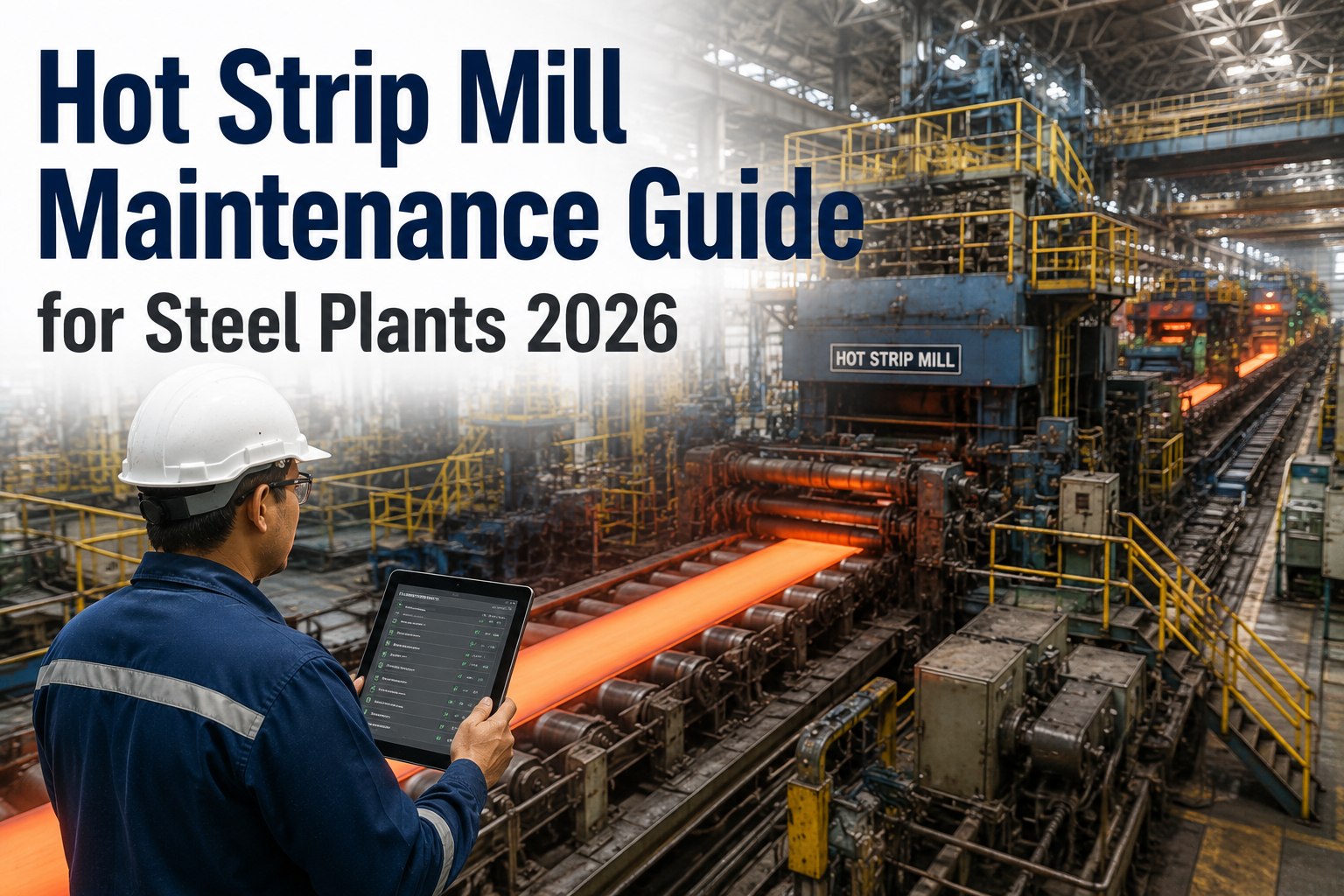
Hot strip mills are where slab becomes coil, and where a large share of the yield a steel plant will ever recover — or lose — actually gets decided. Scale that isn't removed before the finishing stands embeds into the surface. Edge cracks propagate under thermal stress, and camber pulls the strip out of tolerance across its width. Shape defects such as wave and coil break often aren't caught until the coil reaches the pickling line or the customer's press shop, by which point the tonnage is already sunk. A structured hot strip mill quality tracking system closes that gap by capturing defect data at the point of rolling and linking it back to root cause before the next heat runs. Start a free OxMaint trial to build your first HSM quality tracking workflow, or book a 30-minute demo with a specialist.
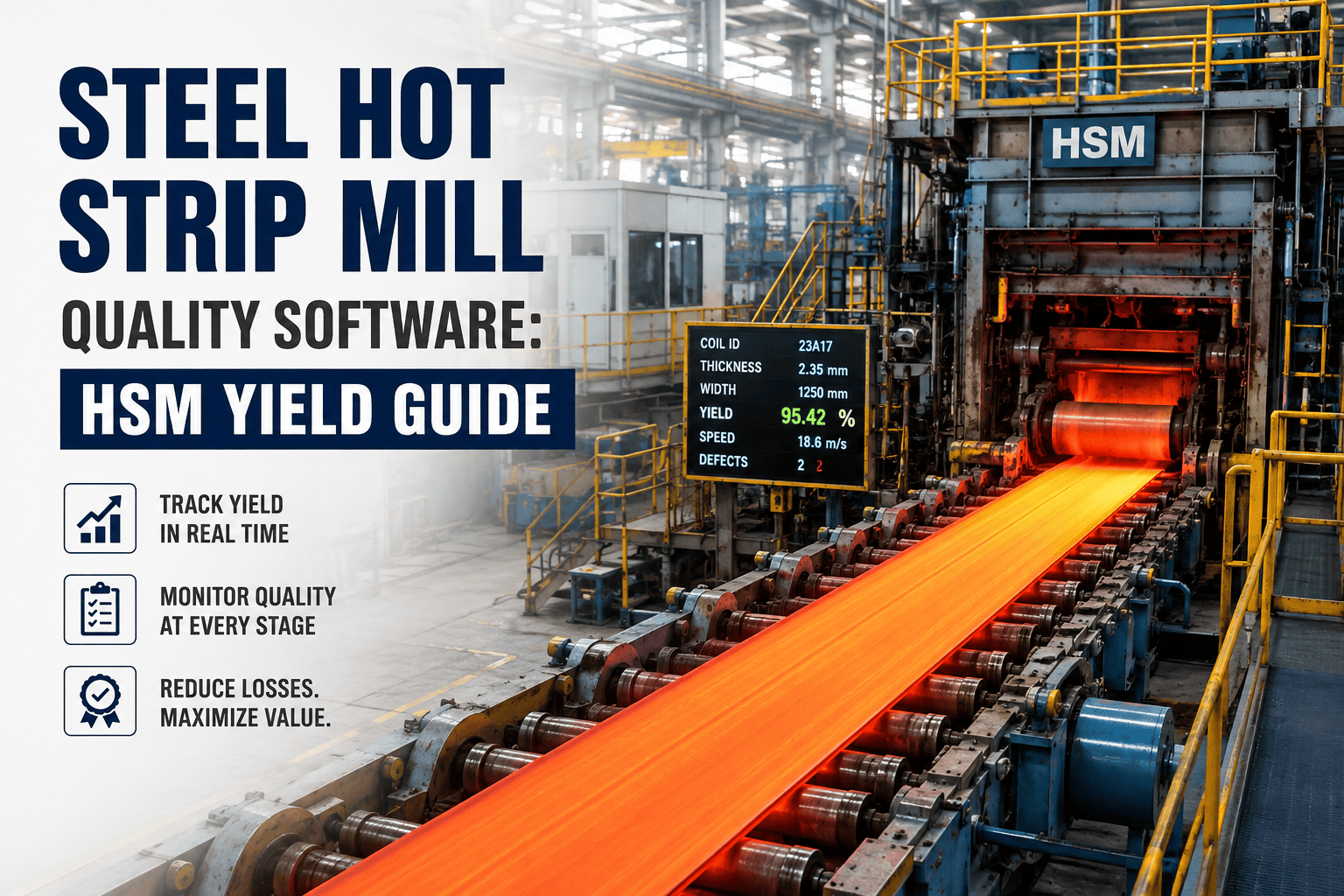
Steel Hot Strip Mill Quality Software
Catch scale, edge crack, shape, and gauge defects at the mill — before they turn into downstream cold rolling rejects and customer claims.
The Four Defect Families Every HSM Quality Program Has to Track
Hot strip mill defects are not random — they cluster into a small number of families, each with its own detection window, root cause pattern, and downstream cost. Treating them as one undifferentiated "reject" category is why most plants can describe how much tonnage they lost last month but not why.
Primary and secondary scale that survives descaling gets rolled into the strip surface at the finishing stands, producing pitting or scale streaks that only show up clearly after pickling.
Thermal gradients between the strip edge and body, combined with excessive width reduction in early roughing passes, cause micro-cracks that propagate under tension in later stands.
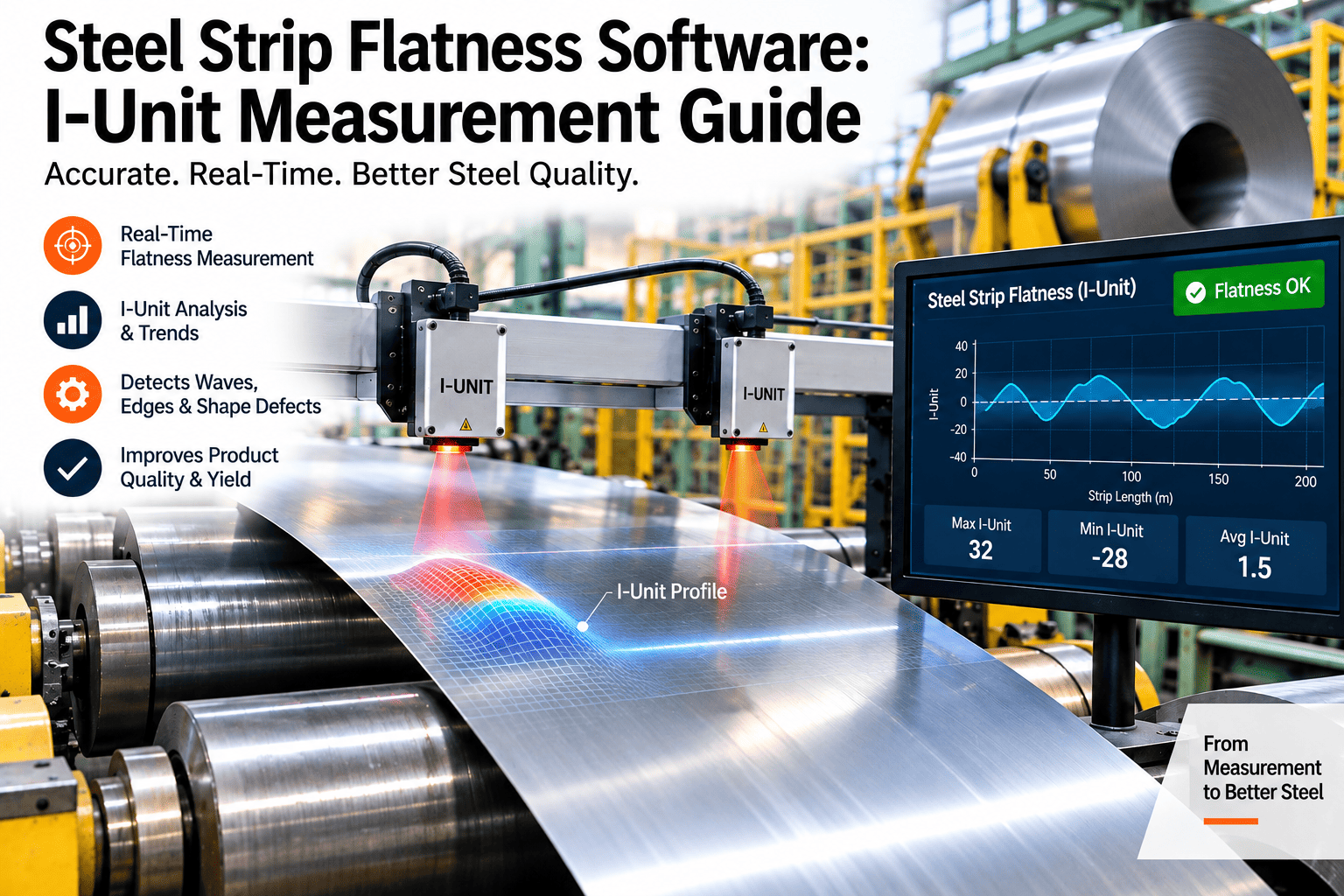
Camber, edge wave, center buckle, and coil break come from uneven roll gap, mismatched work roll wear, or tension imbalance between stands, and are frequently invisible until the coil is uncoiled downstream.
Thickness drift along the strip length or across its width, driven by roll eccentricity, hydraulic gap control response lag, or coiling tension changes, pushes the coil outside cold mill entry tolerance.
When Each Defect Is Actually Caught — and What It Costs
The later a defect is caught in the process, the more value has already been added to the tonnage that gets scrapped or downgraded. OxMaint's quality module is built to move detection and root cause tagging as far upstream as possible.
| Defect Type | Typical Detection Stage | Yield Impact | Common Root Cause | Downstream Risk |
|---|---|---|---|---|
| Rolled-in Scale | Surface inspection / after pickling | Localized downgrade or scrap | Descaler nozzle wear, low header pressure | Cold rolling surface reject |
| Edge Cracking | Slitting or coil edge trim | Trim loss, width scrap | Thermal gradient, roughing width reduction | Repeat cracking through cold reduction |
| Camber / Wave | Downcoiler or customer receiving | Full coil downgrade | Roll gap or tension imbalance | Press shop rejection, customer claim |
| Coil Break | Uncoiling at customer site | Partial to full coil scrap | Coiling tension, cooling rate mismatch | High-value customer claim, grade downgrade |
| Gauge Drift | Cold mill entry inspection | End crop loss, tolerance downgrade | Roll eccentricity, AGC lag | Cold mill schedule rejection |
OxMaint links every defect logged on the hot strip mill back to the stand, the pass schedule, and the operating conditions at the time it was rolled — so root cause investigation starts with data instead of guesswork, every time a claim comes in.
How OxMaint Runs Hot Strip Mill Quality Tracking
A quality program on a continuous, high-speed mill only works if data capture doesn't slow anyone down. OxMaint is built around fast logging at the pulpit and automatic linkage to the coil, the stand, and the operating parameters.
Operators and inspectors tag defects directly against the coil ID from a mobile or pulpit screen, with defect type, location on the strip, and severity captured in seconds.
Every logged defect is automatically linked to the roughing and finishing stand configuration, roll change history, and pass schedule in effect at the time the coil was rolled.
Statistical process control limits on gauge, crown, and shape parameters trigger alerts before a run of coils drifts far enough out of tolerance to be scrapped.
Recurring defect codes are grouped by stand, shift, and grade so quality engineers can see whether a defect is a one-off or a systemic pattern worth a maintenance work order.
Cold rolling and pickling line rejects are traced back to the originating HSM coil record, closing the loop between what the customer sees and what happened at the mill.
Plant managers see yield loss broken down by defect family, stand, and grade on one dashboard, replacing end-of-month spreadsheet reconciliation with a live view.
Frequently Asked Questions
Can OxMaint link a cold rolling reject back to the original hot strip mill coil?
Does OxMaint support different defect codes for different steel grades?
How fast can operators log a defect without slowing the mill down?
Can OxMaint alert quality engineers before a defect trend becomes a full coil downgrade?
Is OxMaint able to handle high coil volumes across multiple hot strip mill lines?
Every Coil Carries a Story. Make Sure Your Team Can Read It.
OxMaint gives hot strip mill teams coil-level defect logging, stand and pass genealogy, SPC-driven alerts, and downstream traceability — in one system that turns scattered inspection notes into a real yield improvement program.