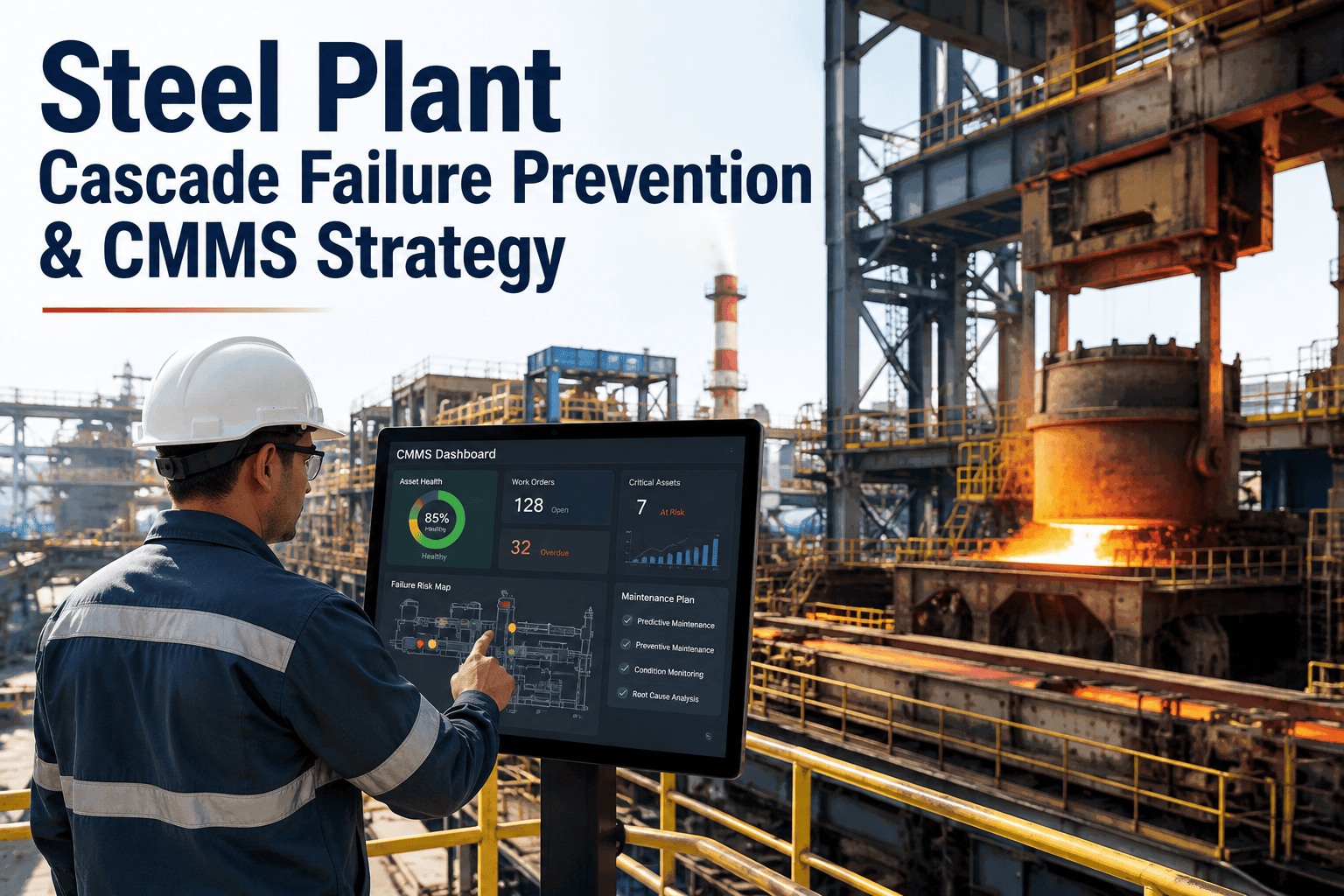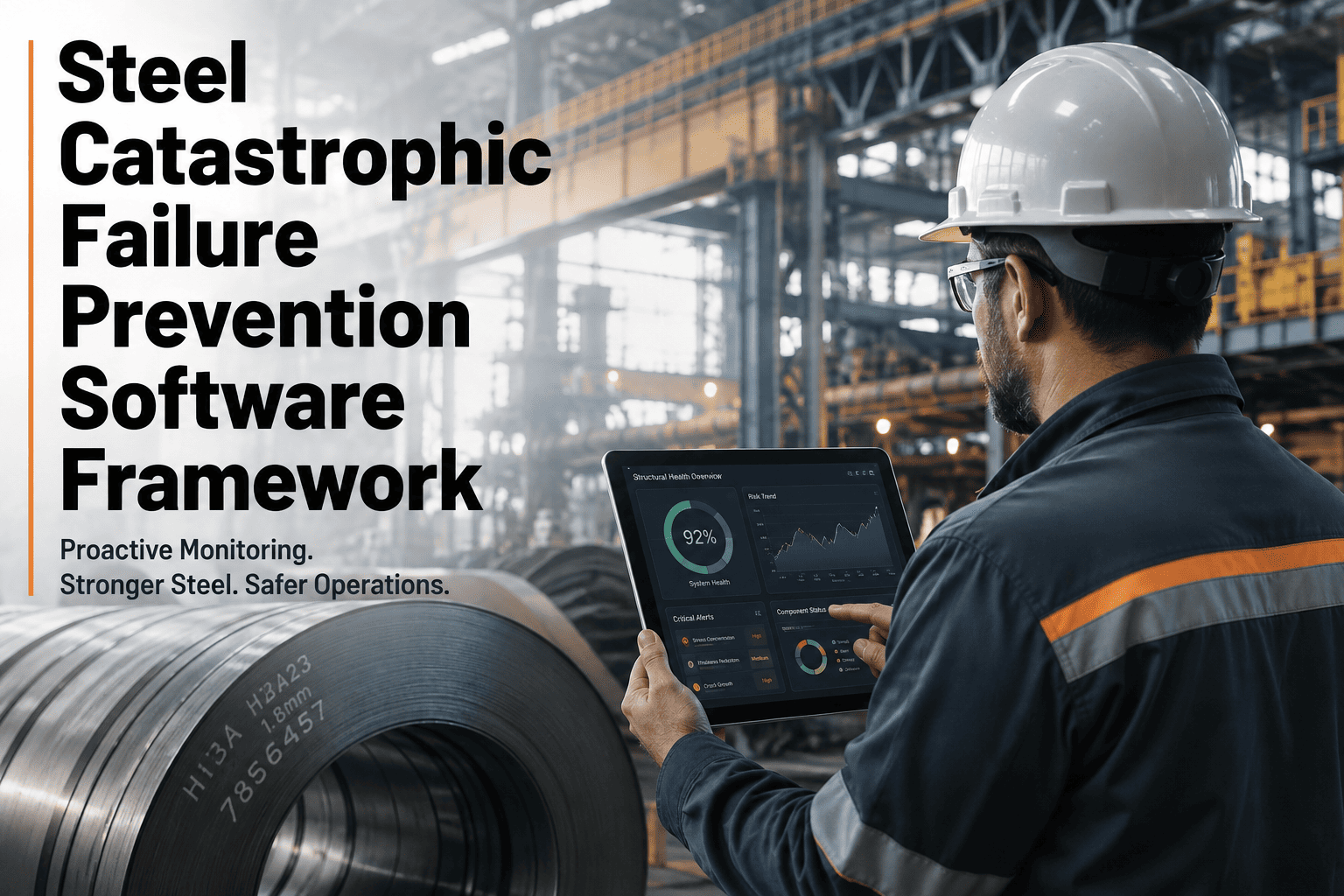
A bearing seizure on a continuous caster does not stay a bearing problem for long. The strand freezes against the rollers, the tundish chills, and a repair that should take thirty minutes on a bench turns into a fourteen-hour recovery involving cut torches, crane time, and a damaged strand that never becomes saleable steel. That is the defining trait of a catastrophic failure in a steel plant — it is rarely one component that breaks, it is the chain reaction that follows. A hydraulic press that loses accumulator pressure, a reheat furnace walking beam that drifts off its cooling curve, or a mill drive gearbox shedding a tooth under load all follow the same pattern: a quiet signal for days or weeks, then a sudden, expensive, sometimes dangerous event. Oxmaint's predictive maintenance CMMS is built to catch that quiet signal before it becomes the event, on the four asset classes where steel plants lose the most money and the most production days.
Stop The Failure Before It Starts A Chain Reaction
Hydraulic presses, reheat furnaces, caster bearings, and mill drives share one trait — their failures cascade. A structured PdM CMMS gives you the days or weeks of warning needed to intervene before the cascade begins.
How One Small Fault Becomes A Plant-Wide Stoppage
Catastrophic failures rarely announce themselves as catastrophic. They start small, get ignored because nothing looks urgent yet, and then arrive all at once.
Minor Signal
Pressure drift, bearing warmth, a flow reading slightly off baseline
Ignored Window
No alarm trips, no work order raised, production continues
Secondary Damage
Bearing seizes, seal ruptures, mechanism binds under load
Plant-Wide Stop
Line down, safety event risk, days of recovery and repair
The Assets Where A Single Failure Costs The Most
These four asset classes account for a disproportionate share of catastrophic downtime because their failures have nowhere to hide and no redundancy to fall back on.
Hydraulic Press & Roll Gap Cylinder
Accumulator pre-charge loss and contaminated fluid cause servo valve stiction, uncontrolled actuator movement, and strip thickness deviation. Near hot metal, a burst line adds fire risk to the production loss.
Reheat Furnace Walking Beam
Skid pipe cooling flow blockage and mechanism wear let the furnace drift off its combustion curve, producing uneven slab heating, refractory stress, and eventually a forced shutdown to correct beam travel.
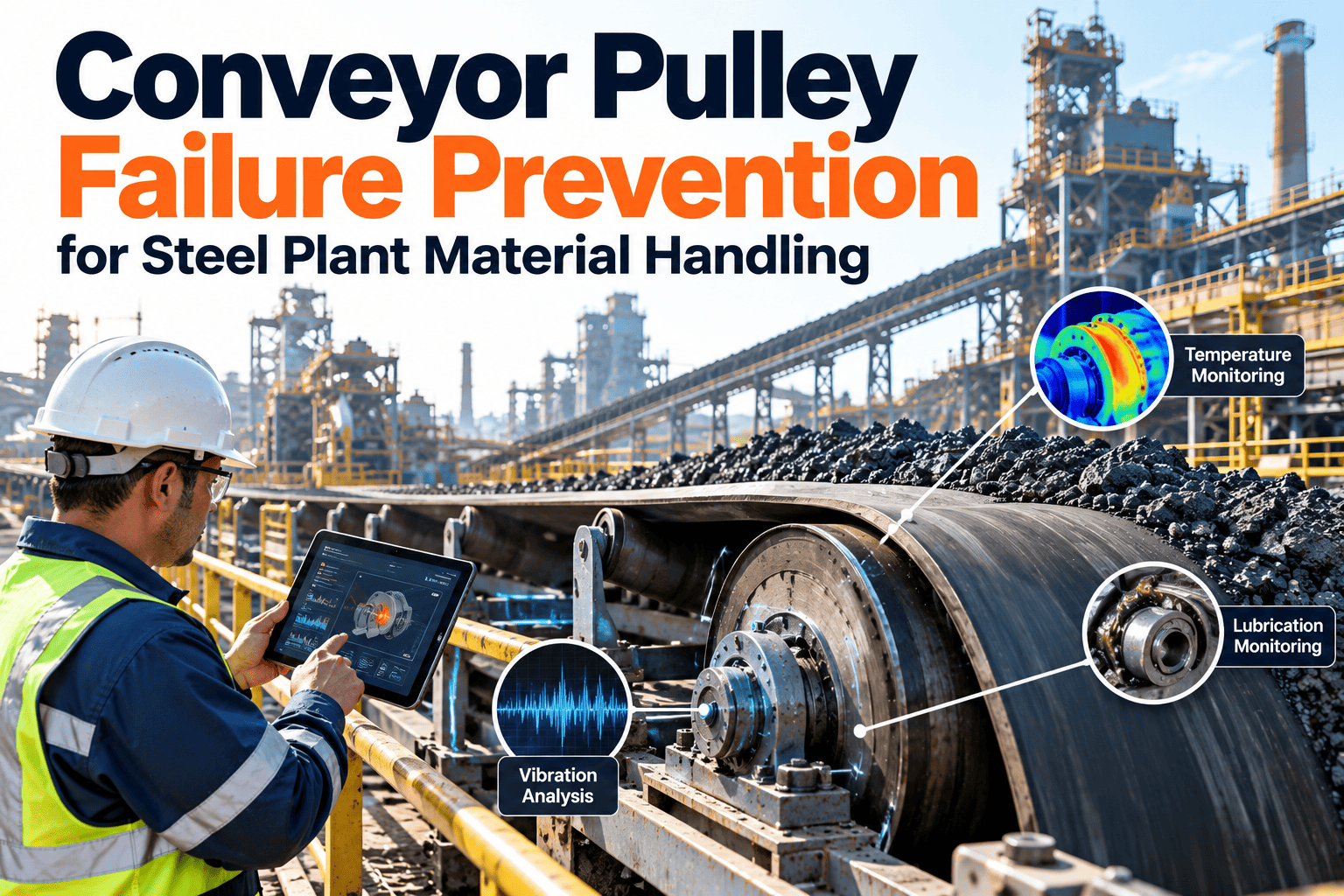
Continuous Caster Segment Bearing
A segment roll bearing running hot under load can seize mid-cast. The strand freezes against the rolls, the tundish chills, and the resulting breakout can damage the strand and the caster itself in under a minute.
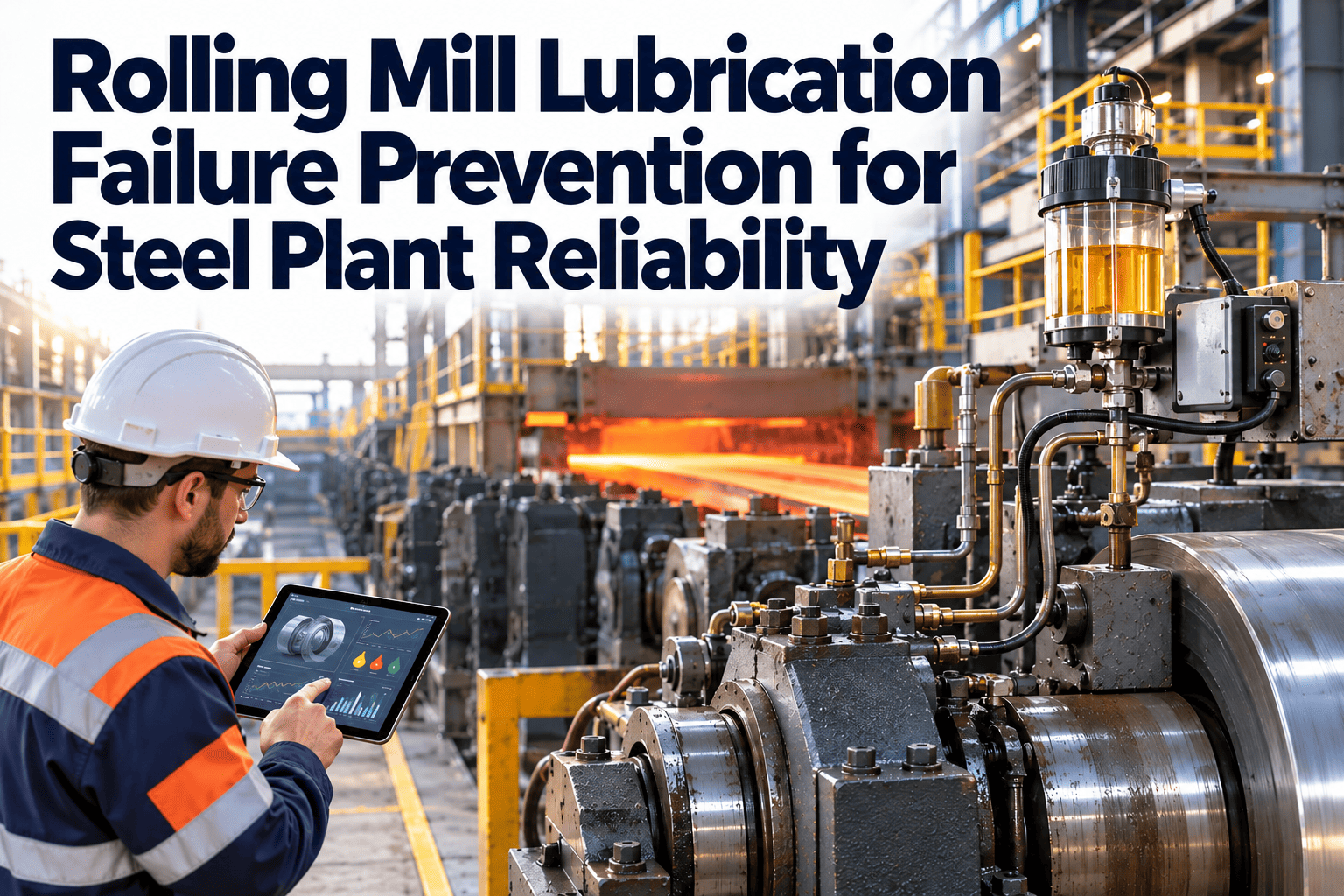
Rolling Mill Drive & Gearbox
Gear tooth fracture and bearing spalling under peak rolling torque stop the entire finishing line, not just the one stand — and the shock load often damages the coupling and driven roll as well.
Put A Warning Window On Every Critical Asset
Configure condition thresholds for your press, furnace, caster, and mill drives in one CMMS built for cascading failure modes.
What Actually Catches Each Failure Mode
| Asset | Monitored Signal | Detection Method | Escalation In Oxmaint |
|---|---|---|---|
| Hydraulic Press | Accumulator pressure, oil cleanliness | Pressure decay trend, ISO 4406 particle count | Auto work order below cleanliness target |
| Reheat Furnace | Skid pipe flow, zone temperature | Flow rate trend against baseline curve | Alert when zone drifts off combustion curve |
| Caster Segment Bearing | Bearing vibration, mold thermocouple pattern | Vibration trend plus edge-based pattern alarm | Priority 1 alert routed to shift supervisor |
| Mill Drive Gearbox | Vibration RMS, motor current signature | Trend against asset's own baseline signature | Work order scheduled for next planned outage |
Swipe horizontally on mobile to see the full table.
Not Every Asset Deserves The Same Attention
Predictive investment pays off fastest where failure consequence is highest and redundancy is lowest — these are typically 10 to 15% of plant assets but drive 70 to 80% of unplanned downtime cost.
Zero Redundancy
Caster segment rolls, mill drive gearboxes, main furnace fans — a failure here stops the line immediately with no workaround available.
Cascading Risk
Hydraulic power units, reheat furnace walking beam mechanisms — failure damages downstream equipment and product quality before it stops the line outright.
Contained Impact
Auxiliary pumps, secondary cooling circuits — degradation is recoverable within a shift and rarely forces an unplanned full-line stop.
Why A Planned Repair Costs A Fraction Of An Emergency One
Higher cost for the same bearing swap when it forces an unplanned line stop instead of landing in a planned outage window
Cost of a single hour of unplanned downtime at an integrated steel mill in lost production, scrap, and energy alone
Typical predictive alert accuracy range, improving from the low end during initial learning to the high end within six months
Share of hydraulic system failures traced back to particle contamination — one of the most preventable failure modes in the plant
How The Platform Builds Your Warning Window
Asset-Specific Failure Models
A hydraulic press leaks pressure, a furnace drifts off its curve, and a gearbox sheds gear-mesh harmonics — Oxmaint applies the right condition model to each asset class rather than one generic anomaly threshold.
Automatic Work Order Escalation
When a monitored signal crosses its threshold, Oxmaint raises a work order automatically with the asset, the reading, and a recommended action — no manual review step standing between signal and response.
Criticality-Based Tiering
Assets are classified by cascade risk and redundancy, so your Tier 1 caster and mill drive assets get tighter monitoring intervals than a secondary auxiliary pump.
Full Failure History Per Asset
Every past threshold breach, work order, and repair is logged against the asset, so the next warning sign is read against real history instead of a guess.
The economics of maintenance in a steel plant are dominated not by the part cost but by the production window a repair lands in — the same bearing, the same crew, and the same torque spec can cost several times more when the failure forces an unplanned stop.
Frequently Asked Questions
Give Your Critical Assets A Warning Window, Not A Surprise
Configure catastrophic failure prevention for your press, furnace, caster, and mill drives in Oxmaint before the next cascade starts.