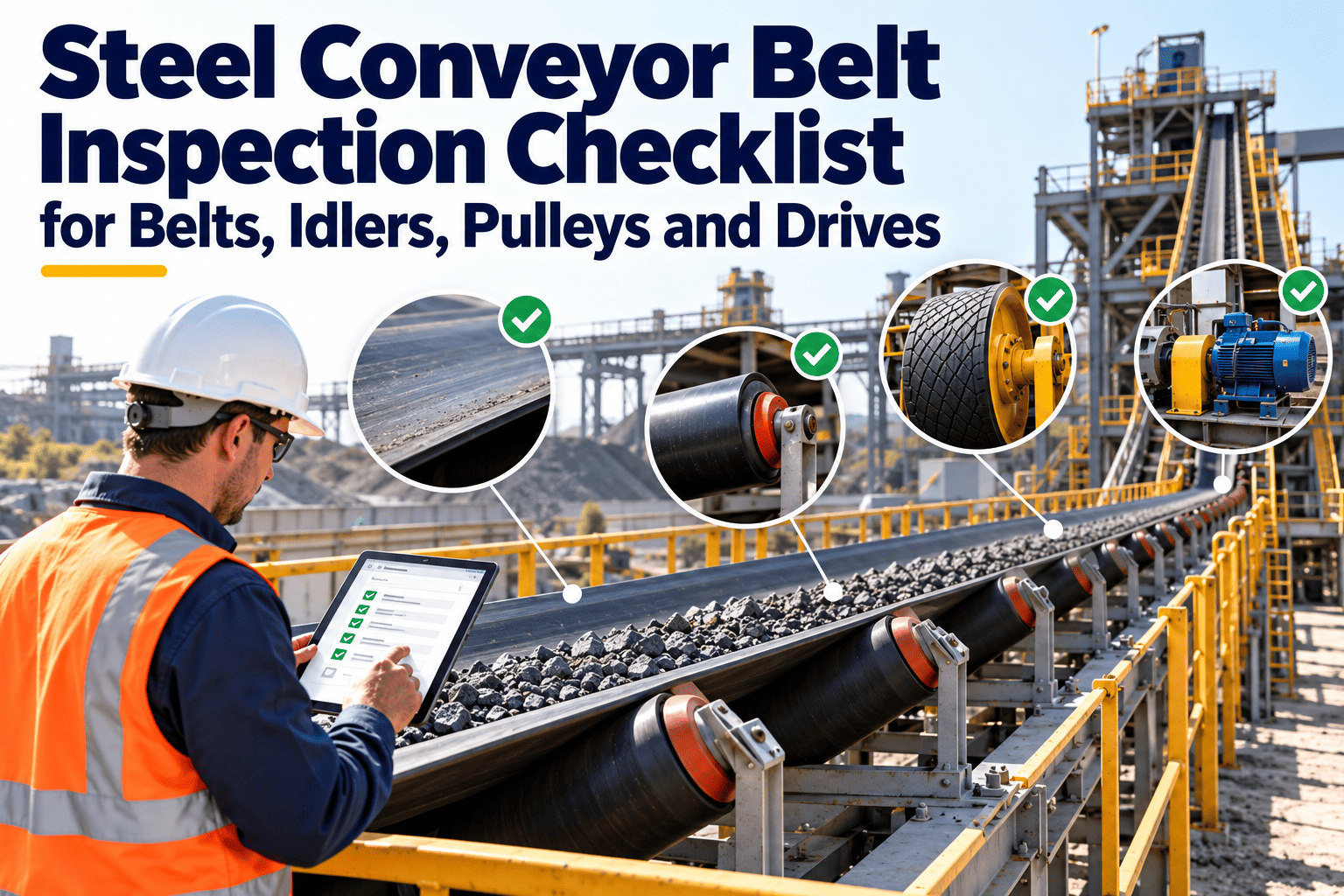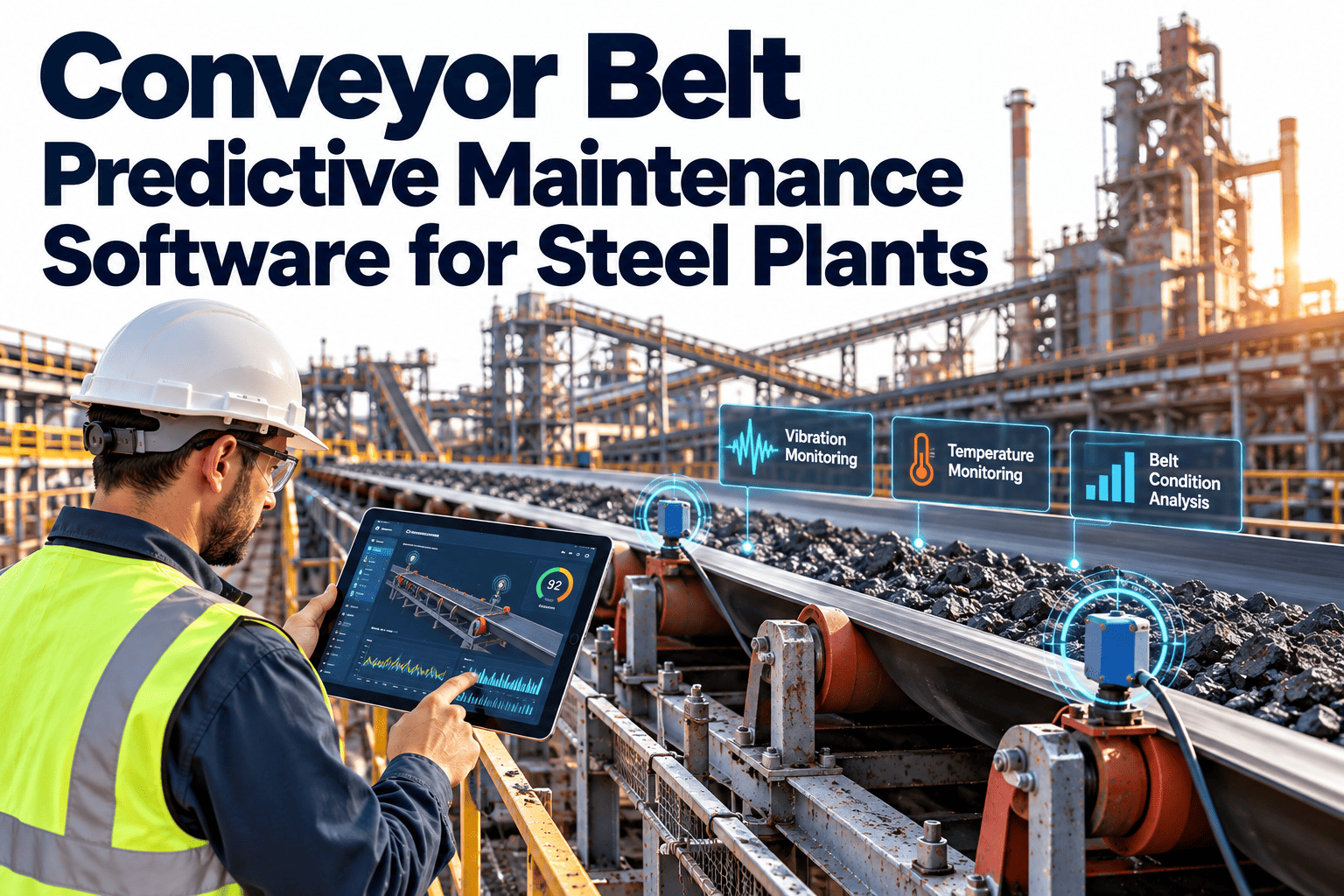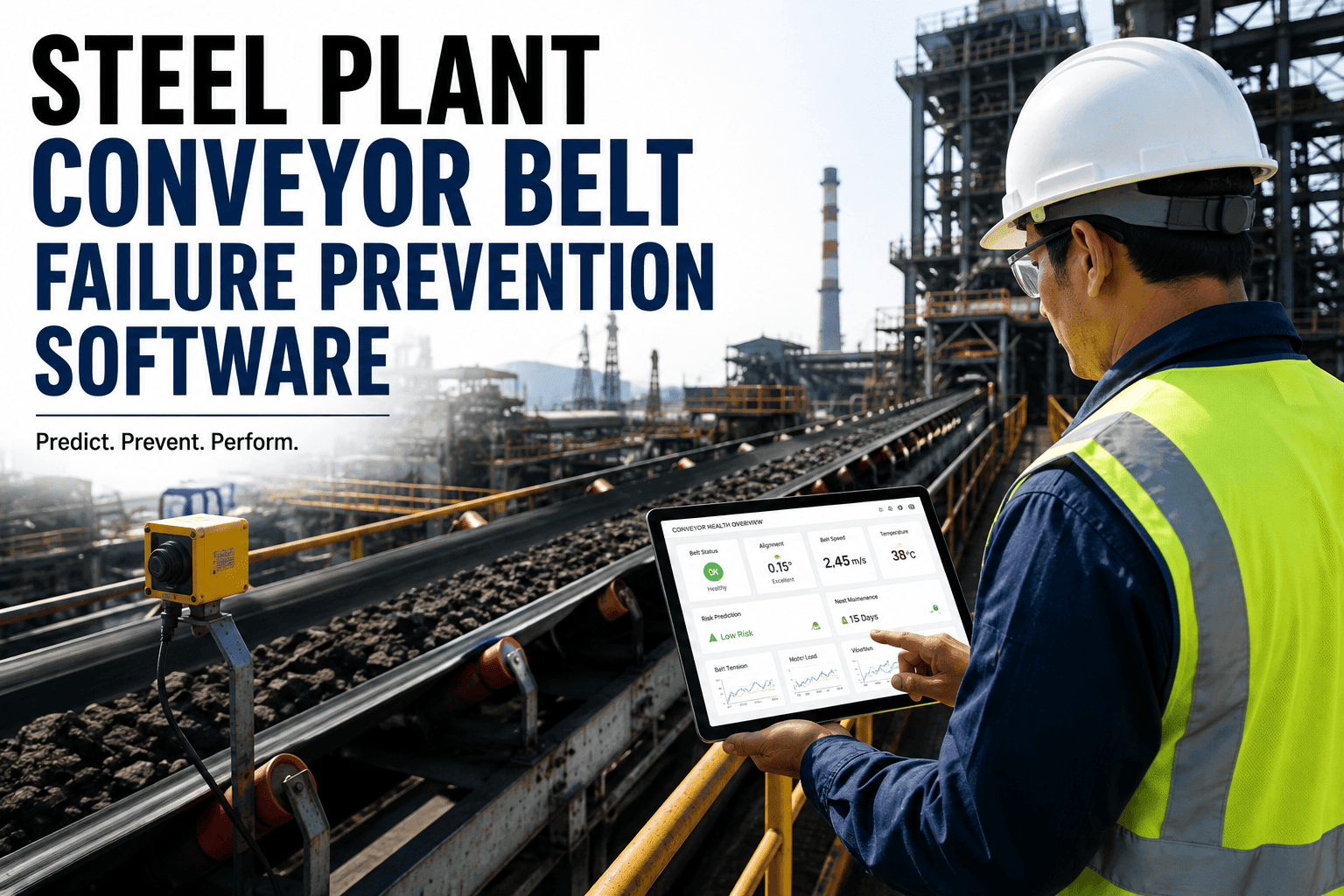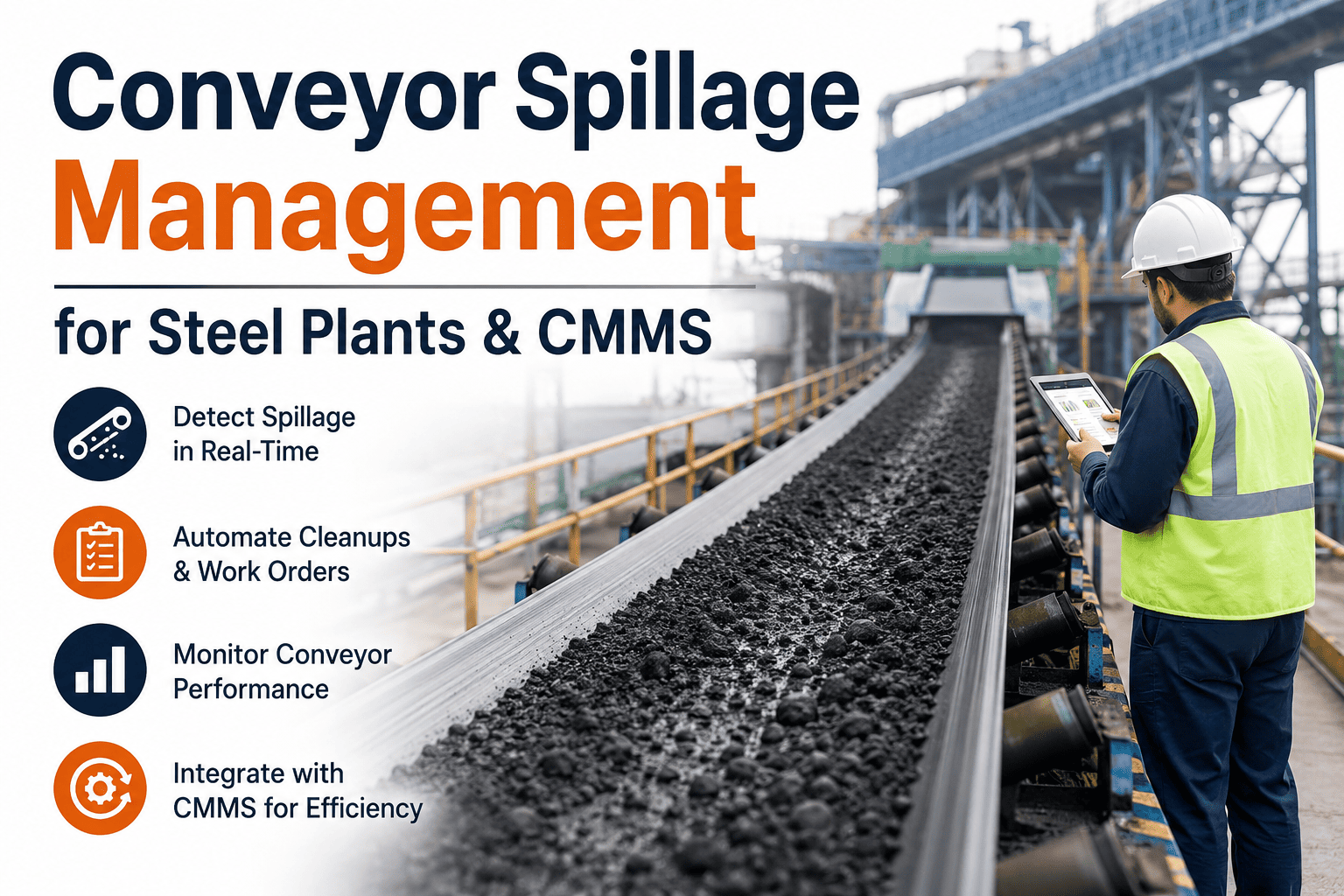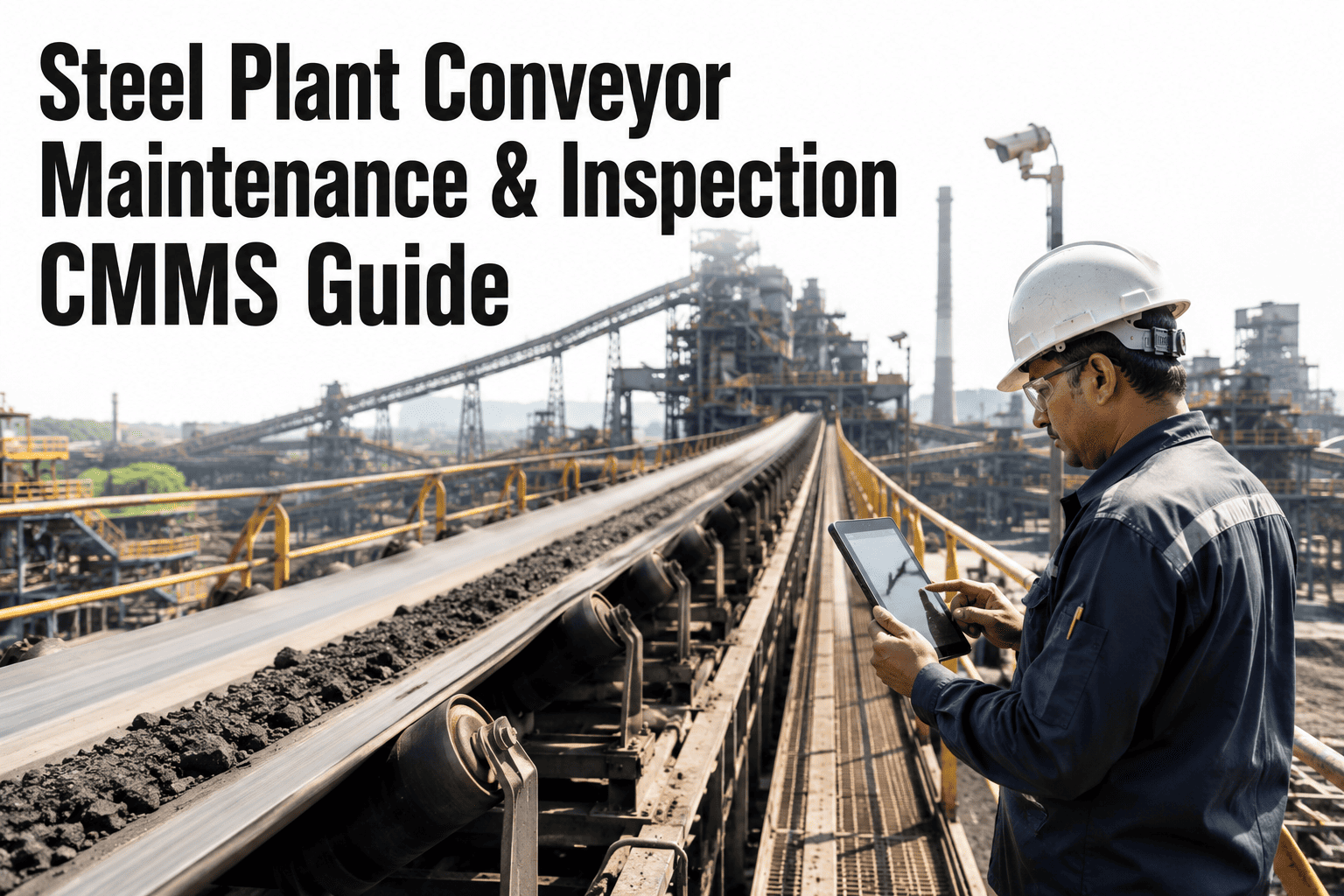
Steel plant conveyor maintenance is the backbone of continuous production — when a single belt stops, the entire material flow from raw ore to finished coil grinds to a halt. Effective steel plant conveyor maintenance and inspection combines routine belt conveyor PM, roller and pulley checks, drive-motor servicing, and take-up system calibration into a structured, CMMS-driven workflow. Plants that rely on manual logs or reactive fixes typically see 15–25% higher unplanned downtime on conveyor routes than those using a dedicated CMMS for scheduling and inspection tracking. This guide walks through the essential inspection checkpoints, PM cadences, and software capabilities that keep miles of conveyor running — and shows how OxMaint helps teams transition from spreadsheet chaos to predictive, audit-ready maintenance. Ready to modernize your conveyor program? Start Free Trial.
CONVEYOR MAINTENANCE GUIDE
Is One Conveyor Failure Costing Your Plant More Than Your Annual CMMS Budget?
A single hour of conveyor downtime in an integrated steel plant can cost $15,000–$50,000 in lost throughput. When you operate miles of belt conveyors carrying raw materials, coke, sinter, and finished products, reactive maintenance is not a strategy — it is a liability. Structured PM, scheduled inspections, and CMMS-driven work orders are how reliability teams keep the line moving.
Avg. unplanned conveyor downtime cost
$32K/hr
at a mid-size integrated steel plant
INSPECTION & PM CHECKLISTS
Steel Plant Conveyor Inspection & PM Checklist by Component
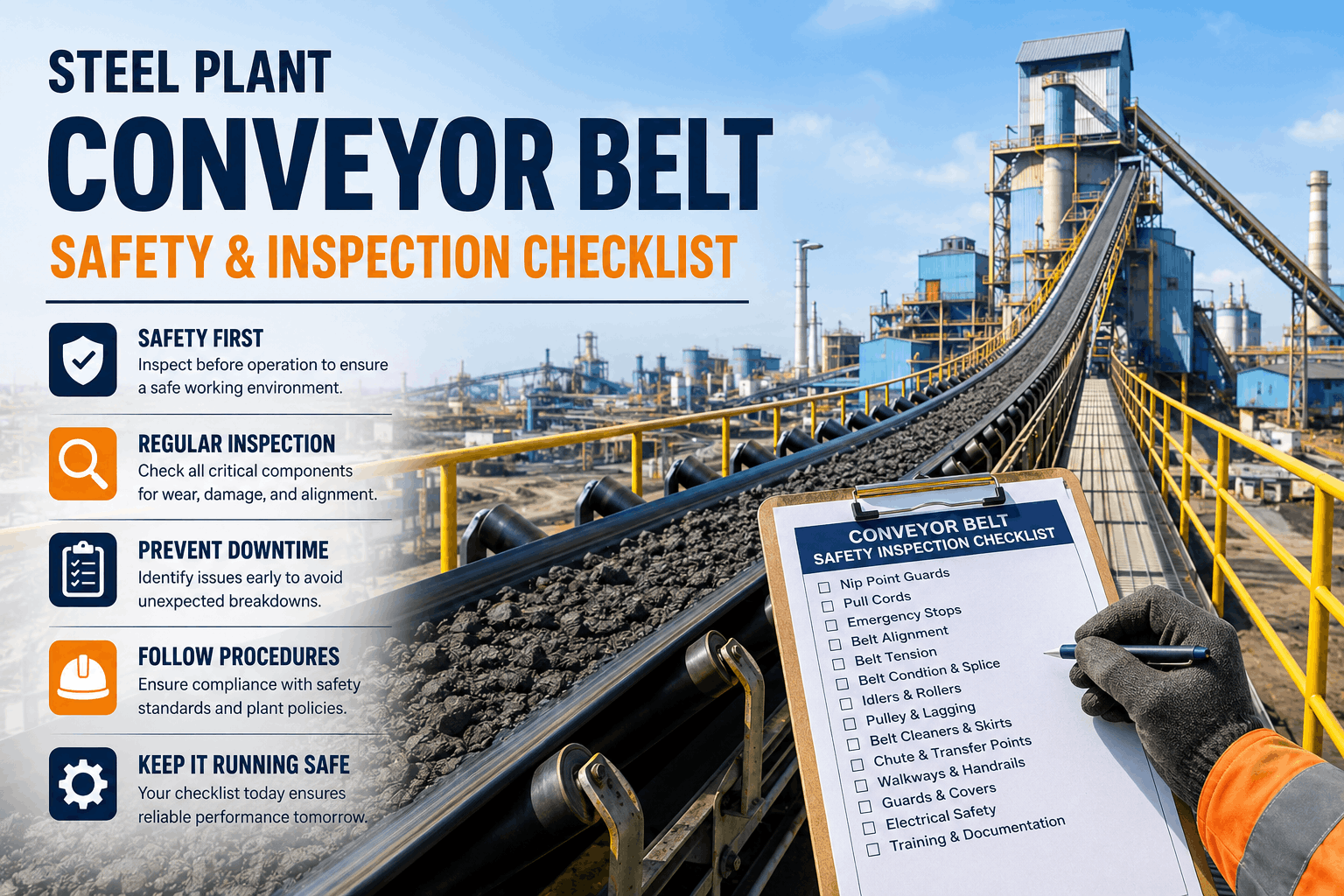
A structured conveyor inspection in a steel plant covers five critical subsystems. Missing any one of them during a PM round can cascade into a belt rip, motor burnout, or structural failure that idles production for 4–18 hours. Below is a tiered checklist that reliability teams can deploy directly into a CMMS like OxMaint as recurring work-order templates.
Belt & Splice Inspection
- Inspect belt surface for cuts, gouges, and hardening from heat exposure
- Check mechanical splices for missing or loose fasteners — torque to spec
- Measure belt thickness at 10-meter intervals; flag if below 70% of original
- Verify belt tracking — deviation greater than 25 mm requires immediate correction
- Photograph and log any hot spots indicating friction or material buildup
Idlers & Rollers
- Spin-test every carry idler — replace any that do not rotate freely
- Listen for grinding or squealing bearings with an ultrasound probe
- Check for material buildup on return rollers — clean to prevent misalignment
- Inspect roller lagging wear — replace if thickness is below 3 mm
- Verify idler frame integrity — no cracks, loose bolts, or corrosion pitting
Drive Motor & Gearbox
- Collect vibration data on drive and non-drive-end bearings — ISO 10816 zones
- Check oil level and sample gearbox lubricant for metal particles every 90 days
- Inspect motor cooling fan and air — clear dust and sinter fines
- Measure motor current draw under load — compare to baseline amperage
- Verify coupling alignment — laser align if angular or parallel offset exceeds 0.05 mm
Take-Up & Tension System
- Verify gravity take-up travel is within the designed operating range
- Inspect hydraulic take-up cylinders for leaks and pressure drift
- Lubricate take-up pulley bearings per OEM schedule
- Check wire rope or chain condition on counterweight assemblies
- Record tension readings and trend in CMMS for predictive analysis
Safety & Controls
- Test all pull-cord and belt-sway switches along the full conveyor length
- Verify slip detection and speed sensors trigger E-stop within 2 seconds
- Inspect chute blockage sensors and pluggage detection devices
- Confirm all guards, nip-point covers, and emergency stops are functional
- Audit LOTO points and verify lockout tagout compliance documentation
Structural & Chutes
- Inspect conveyor stringer welds for cracks — especially at transfer points
- Check chute liners for wear — replace when thickness drops below 50%
- Examine support foundations for settlement or cracking
- Inspect skirt boards and dust seals at loading zones
- Document structural anomalies with photos and GPS-tagged asset records
PM CADENCE & FREQUENCY
How Often Should You Inspect Steel Plant Belt Conveyors?
Inspection frequency should be driven by criticality, duty cycle, and operating environment — not by a one-size-fits-all calendar. A conveyor carrying abrasive sinter at 1,800 tph in a 60°C hot zone demands a tighter PM interval than a light-duty finished-product belt. Below is a proven cadence framework used by high-reliability steel plants, ready to configure as recurring PM triggers in a steel conveyor CMMS.
| Inspection Type | Frequency | Key Tasks | Typical Duration |
|---|---|---|---|
| Walkaround Visual | Every shift (8–12 hrs) | Belt tracking, spillage, noise checks, safety device visual | 15–30 min |
| Weekly PM Round | Weekly | Roller spin tests, lubrication top-off, chute cleaning | 1–2 hrs per conveyor |
| Monthly Inspection | Monthly | Motor current draw, gearbox oil sample, take-up travel measurement | 2–4 hrs per conveyor |
| Quarterly Deep PM | Quarterly | Vibration analysis, laser alignment, belt thickness survey, thermography | 4–8 hrs per conveyor |
| Annual Overhaul | Annually (during outage) | Pulley lagging replacement, full belt condition assessment, structural NDT | 8–24 hrs per conveyor |
REAL-WORLD SCENARIO
The Cost of Reactive vs. CMMS-Driven Conveyor Maintenance
Consider a mid-size integrated steel plant operating 14 belt conveyors across its raw material handling yard, sinter plant, and hot strip mill — roughly 11 kilometers of total belt length. The maintenance team logged inspections on spreadsheets and triggered work orders only when operators reported a noise or a slip event. Here is what changed when they moved to a CMMS-driven PM and inspection model.
- Unplanned conveyor downtime: 187 hours/year across 14 conveyors
- Emergency repairs: 3–4 per month, often requiring overtime labor
- Belt replacements: 2 catastrophic belt rips per year averaging $45K each in belt cost alone
- Spare parts stockout rate: 22% — critical idlers often not on hand
- Estimated annual loss: ~$420,000 in downtime and emergency repair costs
- Unplanned conveyor downtime: 54 hours/year — a 71% reduction
- Emergency repairs: Less than 1 per month — most issues caught during scheduled PM
- Belt replacements: Zero catastrophic rips in 12 months — thickness trending caught wear early
- Spare parts stockout rate: 4% — min/max triggers auto-generated purchase requests
- Estimated annual savings: ~$298,000 recovered — payback in under 4 months
HOW OXMAINT HELPS
How OxMaint Transforms Steel Plant Conveyor Maintenance
OxMaint brings AI-powered CMMS and EAM capabilities specifically to the maintenance and reliability challenges of heavy-continuous operations like steel plants. Instead of paper logs and tribal knowledge, every conveyor asset, inspection checklist, work order, and spare part is managed in one connected platform — with predictive analytics that flag failures before they happen. Here is how OxMaint maps directly to the conveyor maintenance problems outlined above.
Automated PM Scheduling
Convert every checklist item above into a recurring work order triggered by calendar date, runtime hours, or condition threshold. OxMaint auto-assigns to the right technician with the parts and procedures attached — eliminating missed PMs and manual scheduling errors.
Outcome: 40–60% reduction in missed PM tasks
Predictive Failure Alerts
Feed vibration, temperature, motor current, and belt-thickness data into OxMaint's AI engine. The platform detects anomaly patterns — such as bearing defect frequencies or progressive belt wear — and generates priority work orders before a failure occurs, not after.
Outcome: 30–50% cut in unplanned downtime
Asset & Spare-Parts Tracking
Maintain a complete asset hierarchy from conveyor system down to individual idler and motor. OxMaint links each asset to its BOM, spare-part inventory, warranty, and service history — with auto-reorder triggers when stock drops below minimum.
Outcome: Stockout rate drops from 20%+ to under 5%
Mobile Inspection & Compliance
Technicians complete conveyor inspections on mobile devices at the point of work — with photo capture, digital signatures, and timestamped checklists. Every record is audit-ready for ISO 55000, OSHA, and internal safety compliance, with no paperwork to file.
Outcome: 100% audit-ready records, zero paper work orders
KPI BENCHMARKS
Conveyor Maintenance KPIs Every Steel Plant Should Track
What gets measured gets managed. High-performing steel plant reliability teams monitor a core set of conveyor-specific KPIs to benchmark performance and justify maintenance investment. OxMaint auto-calculates all of these in real time on its analytics dashboard — no manual data entry required.
90%+
Conveyor Availability Target
World-class plants maintain above 92% availability on critical raw-material belts
<5%
PM Compliance Rate Gap
Percentage of scheduled PMs completed on time — OxMaint flags anything overdue
70%+
Planned Maintenance Ratio
Share of maintenance hours that are planned vs. reactive — industry benchmark is 80%+
<2%
Reactive Work Order Ratio
Emergency work orders as a percentage of total — lower means fewer firefights
See OxMaint on Your Conveyors — Book a 30-Min Demo
Walk through a live conveyor PM schedule, inspection checklist, and predictive alert workflow configured for your steel plant. No slide deck — just the product on real-world assets.
FAQ
Steel Plant Conveyor Maintenance — Frequently Asked Questions
How often should conveyor belts be inspected in a steel plant?
Steel plants should perform a visual walkaround inspection of critical conveyors every shift (8–12 hours), a hands-on PM round weekly, a detailed mechanical inspection monthly, and a comprehensive deep PM including vibration analysis and thermography quarterly. High-criticality belts carrying hot sinter or coke may require even more frequent attention — daily at minimum. A CMMS like OxMaint automates these cadences so nothing falls through the cracks.
What are the most common causes of conveyor failure in steel plants?
The top causes are bearing failures on idlers and pulleys (35–40% of incidents), belt misalignment and tracking issues (20–25%), material spillage and buildup causing jams (15–20%), and drive-motor or gearbox faults (10–15%). Most of these develop gradually and are detectable through condition monitoring and regular inspection — which is why predictive maintenance in a CMMS reduces unplanned failures by 30–50%.
How much does conveyor downtime cost a steel plant?
Unplanned conveyor downtime in an integrated steel plant typically costs $15,000–$50,000 per hour depending on where the conveyor sits in the production chain. A conveyor feeding the blast furnace or BOF is far more costly than a finished-product handling belt. For a plant with 14 conveyors averaging 180 hours of unplanned downtime per year, the annual loss can exceed $400,000 — which is why Start Free Trial of a CMMS pays for itself within months.
Can a CMMS help with conveyor belt life extension?
Yes. A CMMS extends belt life by enforcing consistent PM (cleaning, tracking correction, tension adjustment), tracking belt thickness measurements over time to plan replacements before failure, and capturing root-cause data on every incident to prevent recurrence. Plants using CMMS-driven conveyor maintenance typically see 20–35% longer belt life compared to reactive programs.
How long does it take to implement a CMMS for conveyor maintenance?
A focused CMMS implementation for conveyor maintenance can be completed in 2–6 weeks depending on the number of conveyors and existing data quality. OxMaint streamlines this with asset import templates, pre-built conveyor PM checklists, and onboarding support — so your team can be scheduling inspections and generating work orders within the first week. Book a Demo to see the implementation roadmap for your plant.
Stop Fighting Conveyor Fires. Start Preventing Them.
Join the steel plants that have cut unplanned conveyor downtime by 50%+ with OxMaint's AI-powered CMMS. Your first inspection checklist is live in under a day.
Free 14-day trial · No credit card