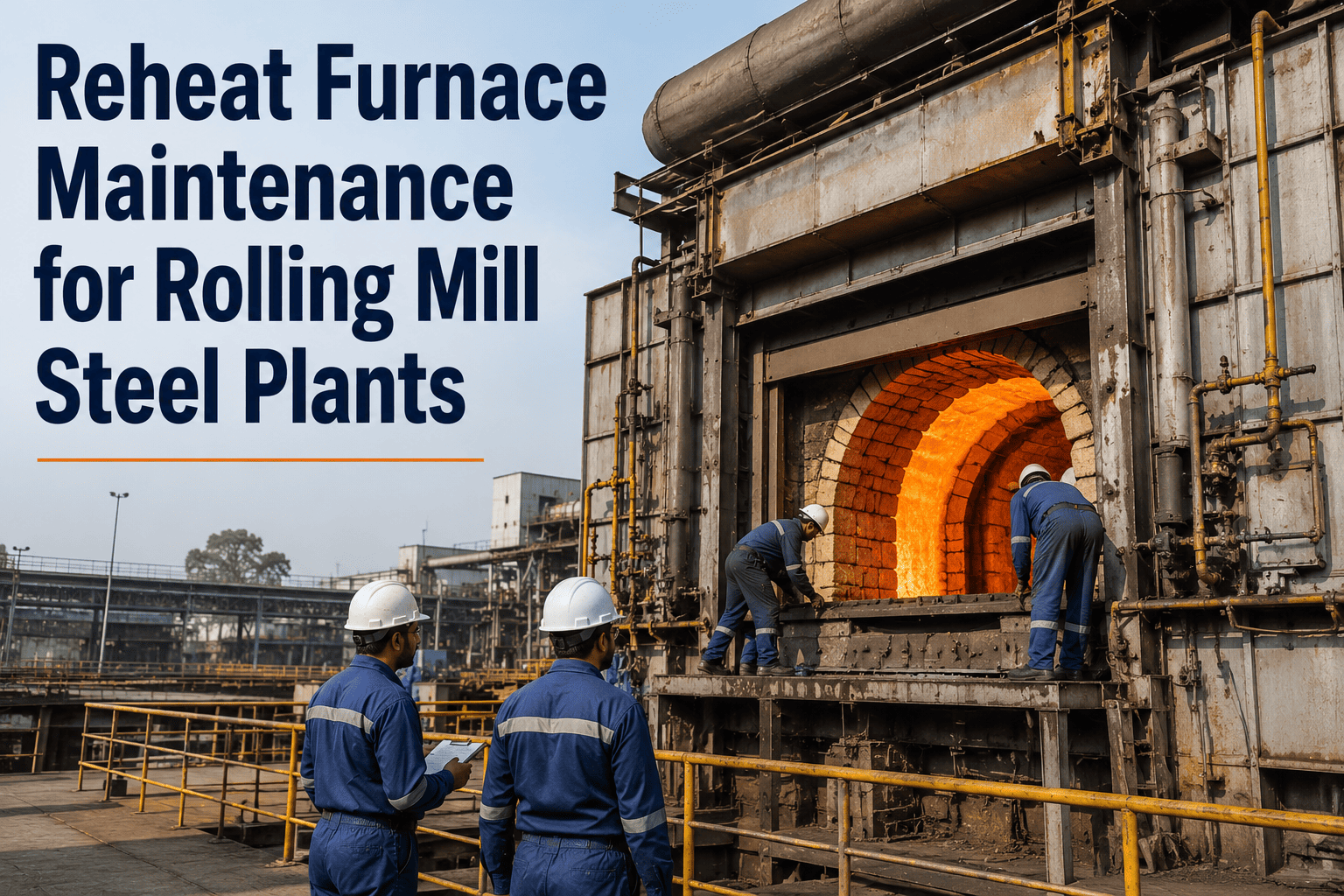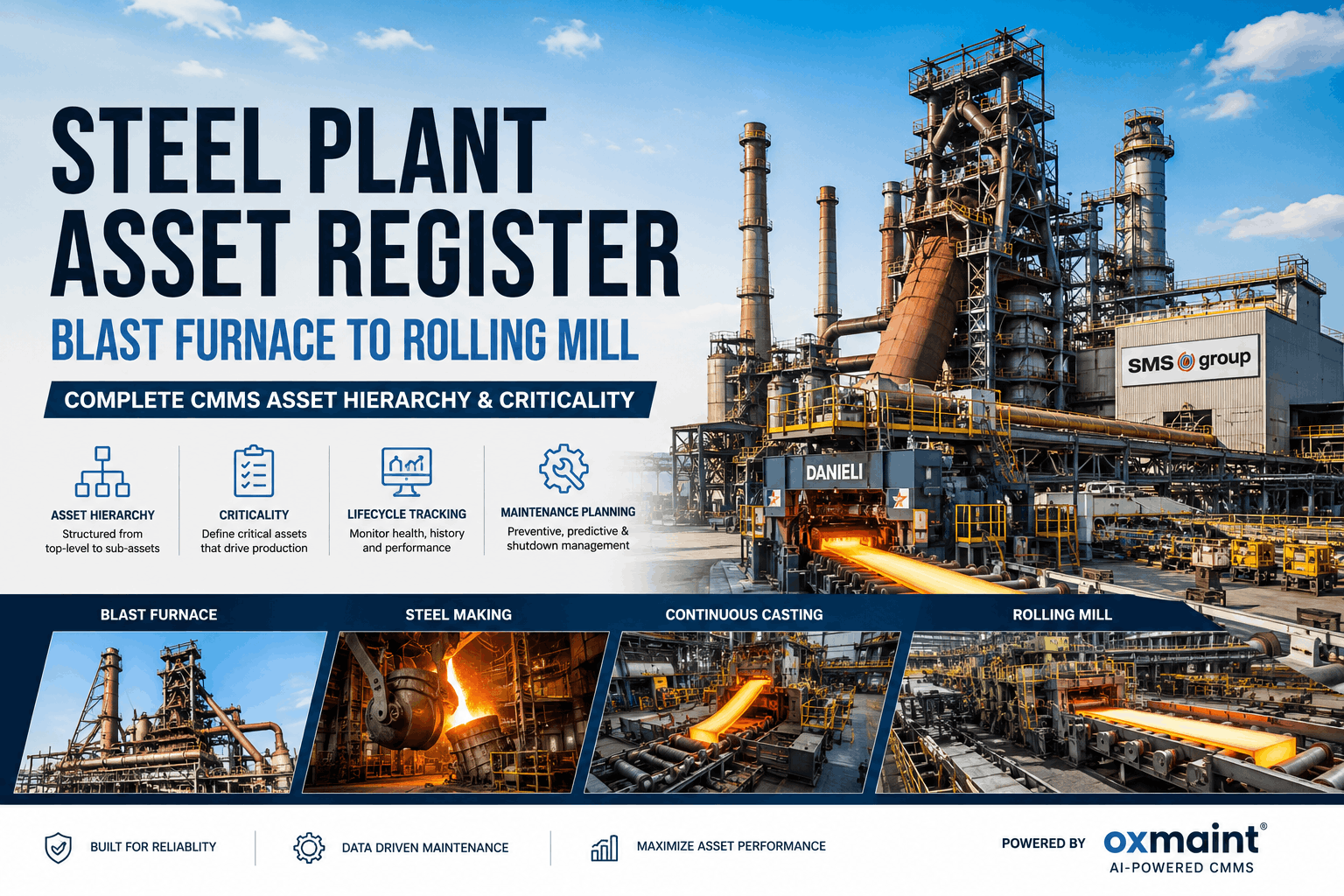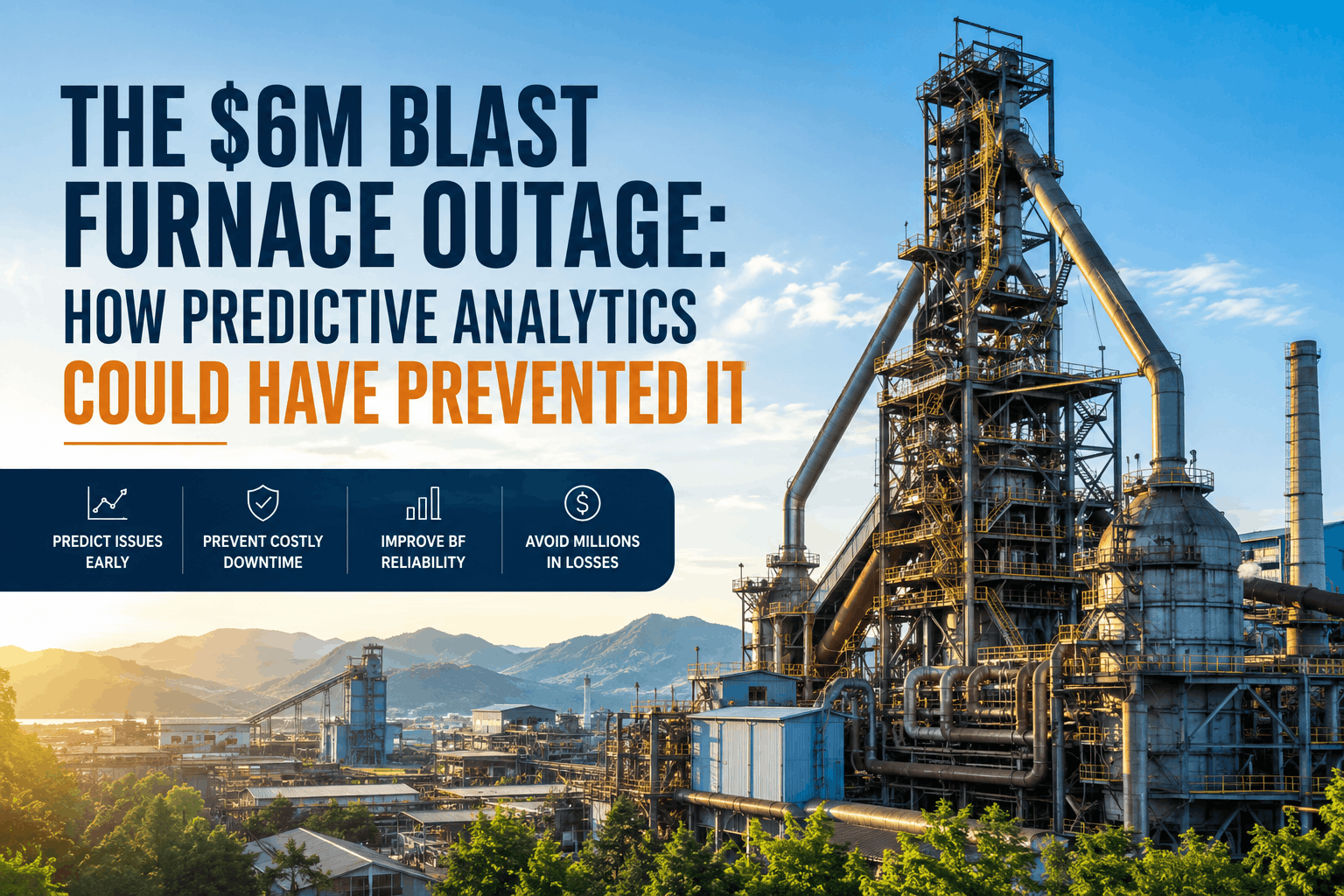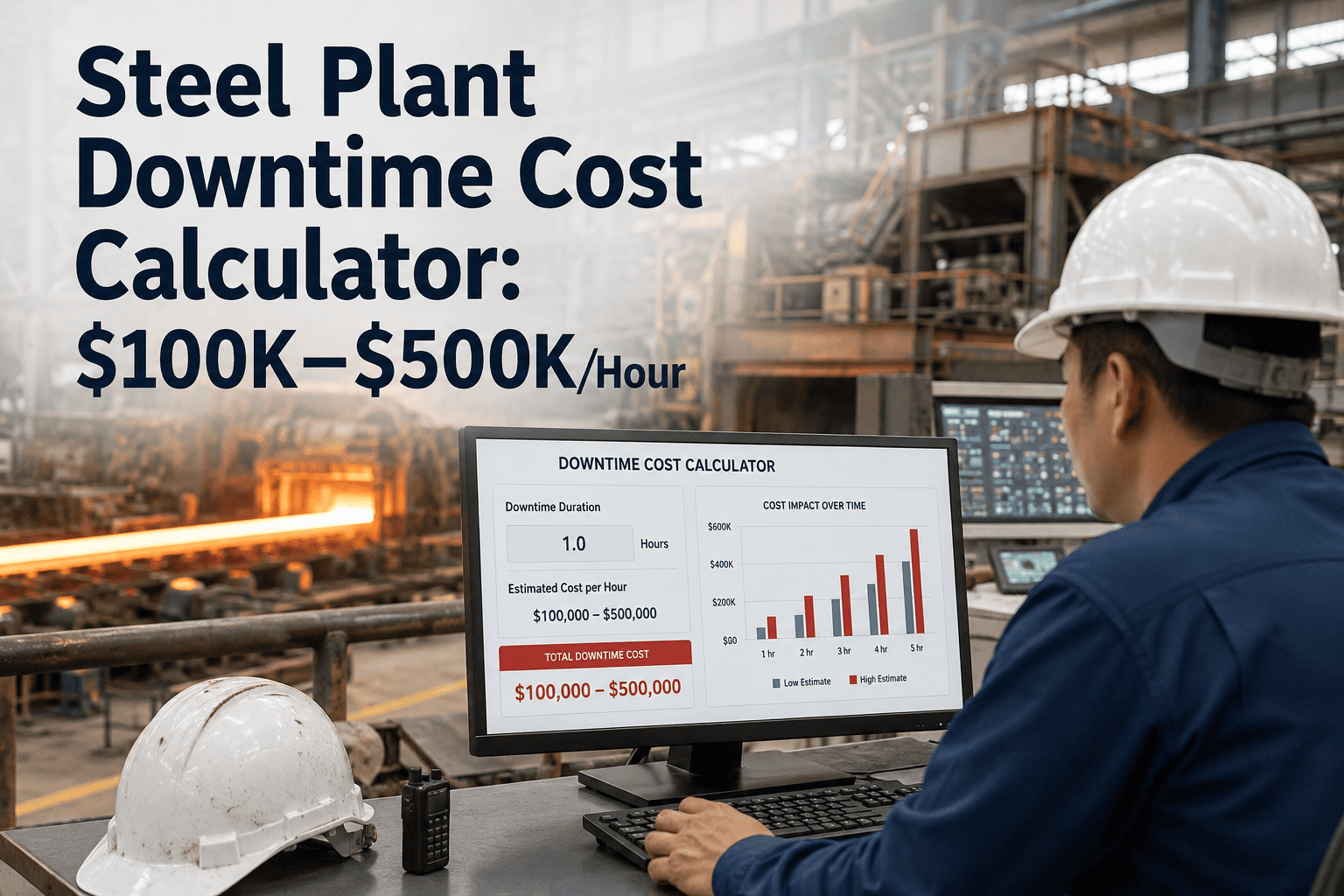
When a blast furnace trips or a rolling mill drive fails, most steel plants capture exactly one number afterward: the repair work order cost. The real cost of that hour also includes lost production revenue, restart energy waste, scrap and quality rework, and contractual penalties on delayed shipments — a total that industry benchmarks place between $100,000 and $500,000 per hour depending on the production area. Finance teams relying on maintenance-system numbers alone typically see less than half of that real impact. This guide breaks down the full downtime cost formula mills use to size reliability budgets, and you can start logging every outage with its true cost attached inside a Start Free Trial of Oxmaint.
Your Last Outage Cost More Than the Repair Bill — Do You Know How Much?
Steel plant downtime runs $100,000 to $500,000 per hour depending on which production area fails, yet most plants track only the repair cost and miss 55–70% of the real financial impact. Here is the complete cost model reliability and finance teams use together.
Why Your Downtime Number Is Probably Wrong
Maintenance systems capture repair labor and parts. ERP systems capture lost tonnage. Nobody captures all four cost pillars in one place — which is why finance teams typically see only 30–45% of the true cost of a downtime event.
Market value of tonnage that can't be recovered within the same shift. On a 3 MTPA flat-rolled mill, every idle hour represents roughly 340 tonnes of unrecoverable output.
Furnaces held at temperature without processing material, plus the energy spike needed to bring a cooled caster or furnace back to thermal stability.
Off-spec material from the restart phase becomes scrap or costly rework, typically $8,000 to $22,000 per rolling mill restart in direct material cost.
Late-delivery clauses typically run 0.5–2% of invoice value per week of delay, generating $15,000 to $60,000 in penalties within 30 days of one missed order.
What an Idle Hour Actually Costs, By Equipment
Not all downtime is equal. A one-hour stop on the blast furnace carries a fundamentally different cost profile than the same hour on a slitting line.
| Production Area | Cost Per Hour | Primary Cost Driver |
|---|---|---|
| Blast Furnace | $200,000 – $350,000 | Continuous hot metal loss, reheat risk |
| Electric Arc Furnace | $50,000 – $350,000 | Heat cycle loss, tap-to-tap delay |
| Rolling Mill (Hot/Cold) | $50,000 – $150,000 | Drive or bearing failure, off-spec restart |
| Continuous Caster / BOF | 240–480 heats lost per outage | Vessel and refractory failure |
| Blended Plant Average | $100,000 – $250,000 | World Steel Association benchmark |
A 24-hour unplanned event at a mid-size integrated mill translates to $1.2 million to $8.4 million in direct production loss alone — before scrap, energy, and penalty costs are added on top.
The Downtime Cost Formula Finance Actually Wants to See
Lost Production Value = Idle Hours × Hourly Output (tonnes) × Contribution Margin per Tonne. This single line is usually the largest number, and the one most plants already track. The other three are where the missing 55–70% hides.
A 6-hour unplanned stop on a hot strip mill producing 42 tonnes/hour at a $185/tonne contribution margin: Lost Production Value = 6 × 42 × $185 = $46,620. Add $18,000 in quality rework, $9,000 in restart energy, and $22,000 in penalty exposure from two delayed orders. True event cost: $95,620 — more than double the production-loss figure most plants report.
Cascade Effect: How One Failure Becomes Three
A primary failure rarely stays contained. Secondary equipment stress, recovery labor for schedule catch-up, and knock-on delays across downstream lines typically add 15–25% to the direct cost of the original event.
A bearing, drive, or refractory failure stops the asset and halts direct output.
Upstream and downstream equipment absorbs abnormal load or thermal swings during the stoppage.
Schedule catch-up labor, expedited parts, and delayed downstream orders extend the true cost window.
Stop Guessing What Downtime Really Costs Your Mill
Oxmaint attaches a verified total cost to every downtime event — production loss, restart energy, scrap, and penalties — the moment the work order closes.
Turning This Number Into an Approved Reliability Budget
Log production loss, restart energy, rework, and penalty exposure against the same outage record, not four separate systems.
Anchor every event to the per-hour range for that specific asset so the number holds up under finance review.
Add 15–25% before presenting the total, accounting for secondary stress and recovery inefficiency.
Structured preventive maintenance programs typically return 30–60x their annual cost in avoided downtime.
Steel Plant Downtime Cost — Common Questions
Add lost production value (idle hours × output × contribution margin) to restart energy cost, scrap or rework cost, and penalty exposure. Most plants only calculate the first term. You can see the full model inside a Start Free Trial of Oxmaint.
Repair cost lives in the maintenance system, lost tonnage lives in the ERP, and energy or penalty costs often live nowhere at all. Without one shared event record, 55–70% of the true cost never gets aggregated.
A blast furnace stop runs $200,000 to $350,000 per hour versus $50,000 to $150,000 per hour for a rolling mill drive failure, mainly because hot metal loss and reheat risk compound continuously.
Secondary equipment stress and recovery labor typically add 15–25% on top of the direct repair and production-loss cost, so a $200,000 event often closes out nearer $240,000–$250,000.
Yes, when it's configured to log all four cost pillars against a single event record instead of just repair labor and parts. See the workflow by scheduling a Book a Demo session with our team.
Give Every Outage a Verified Total Cost
Join the steel plants using Oxmaint to attach production loss, restart energy, scrap, and penalty cost to every downtime event automatically — no spreadsheets required.
Free 14-day trial · No credit card