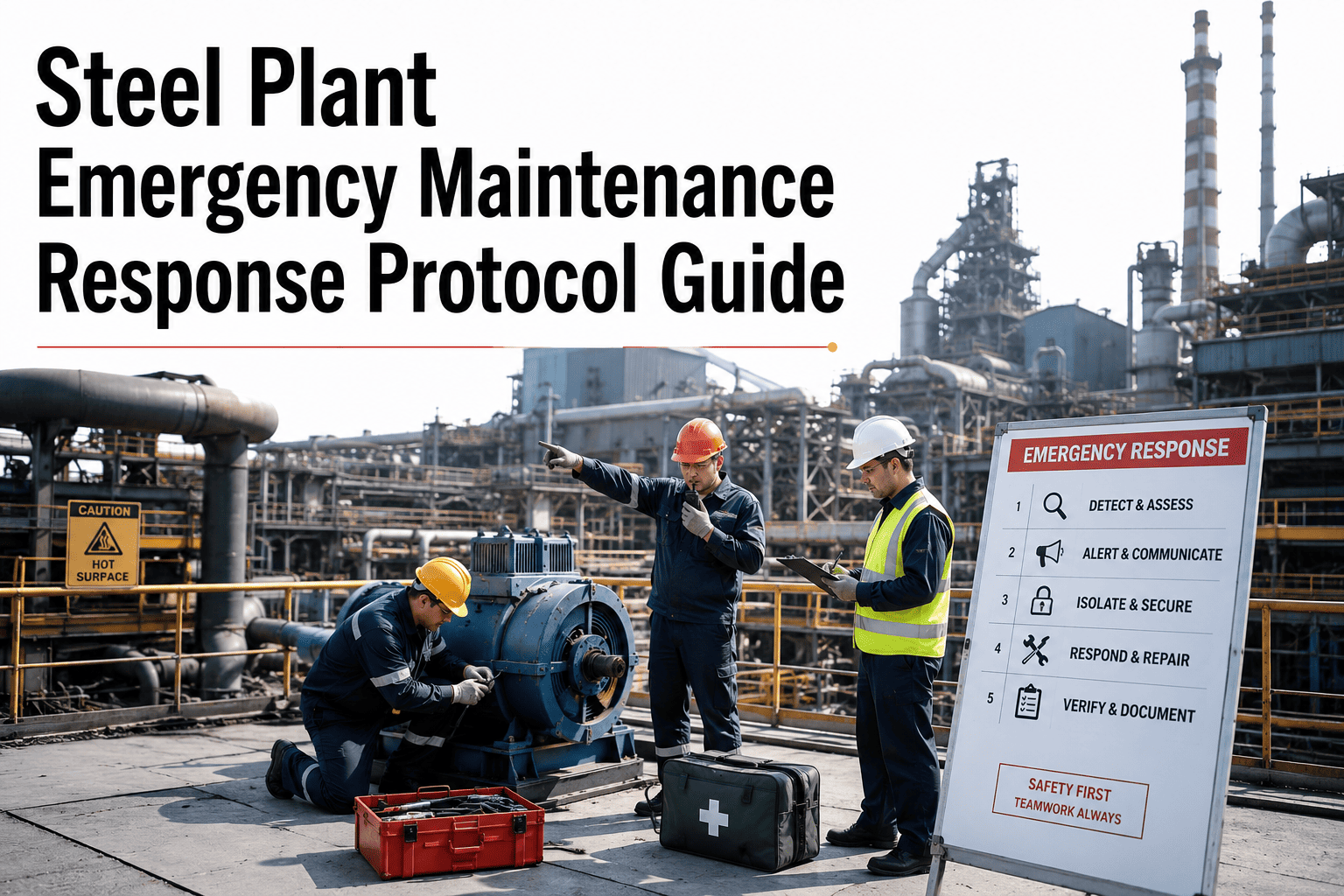
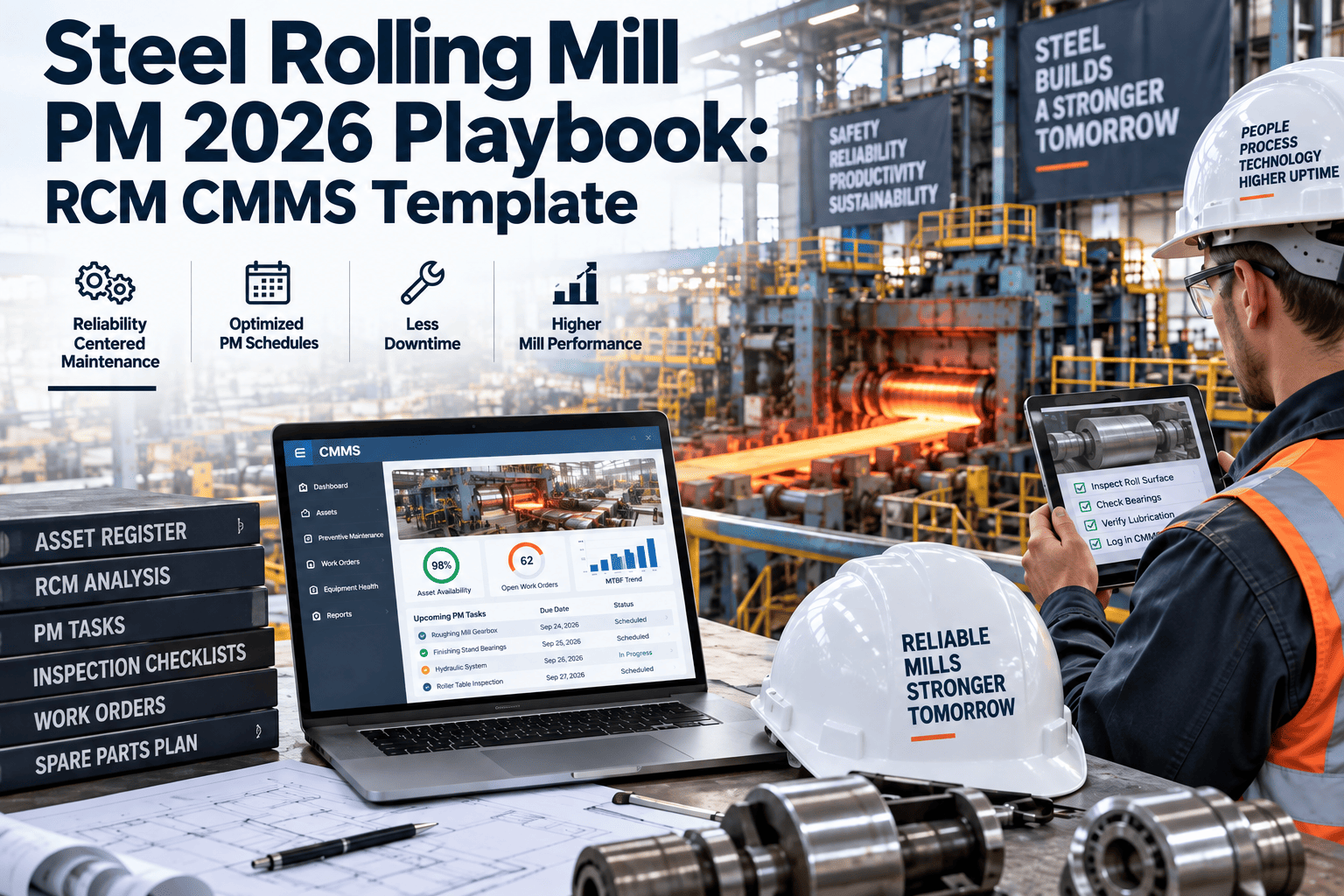
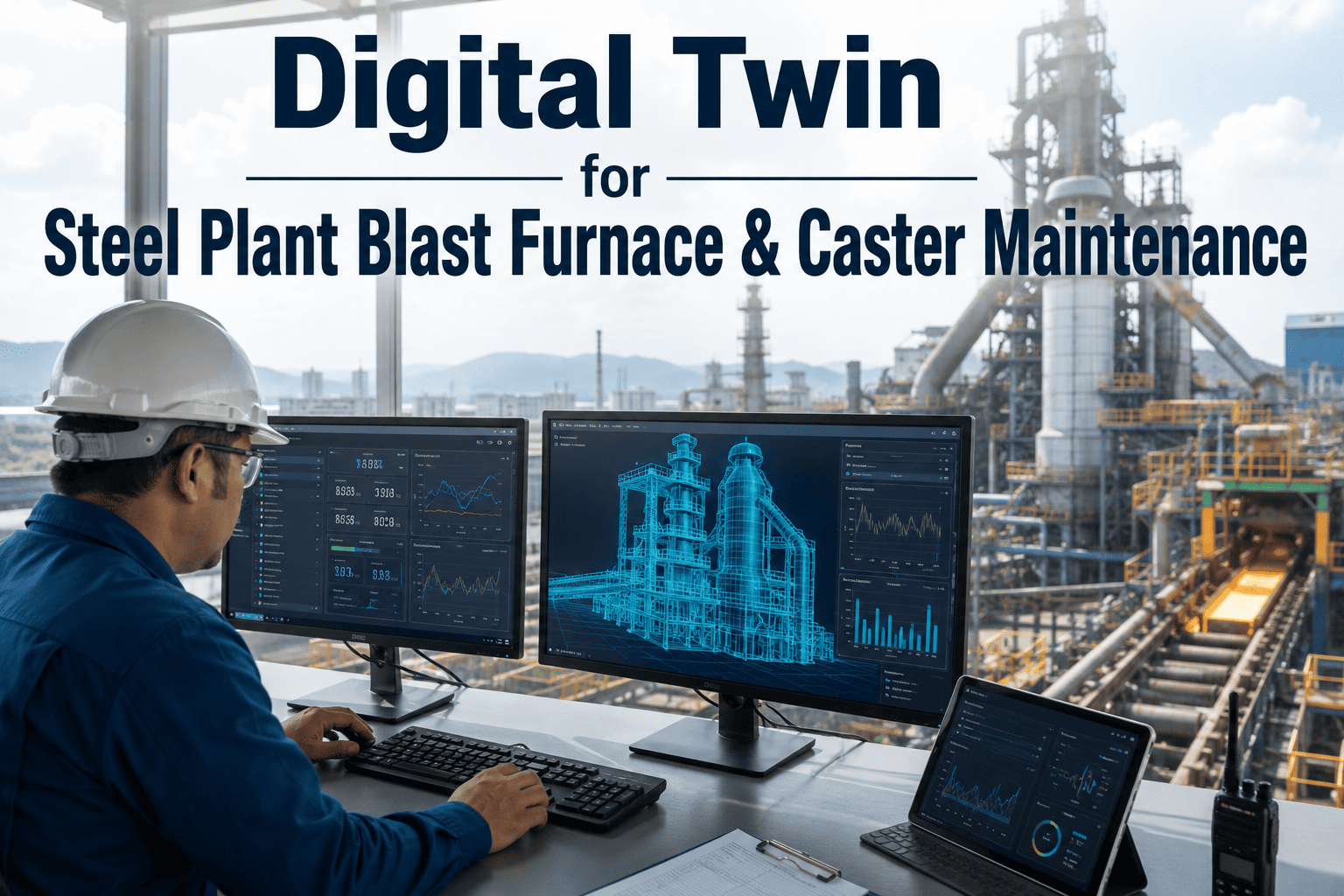
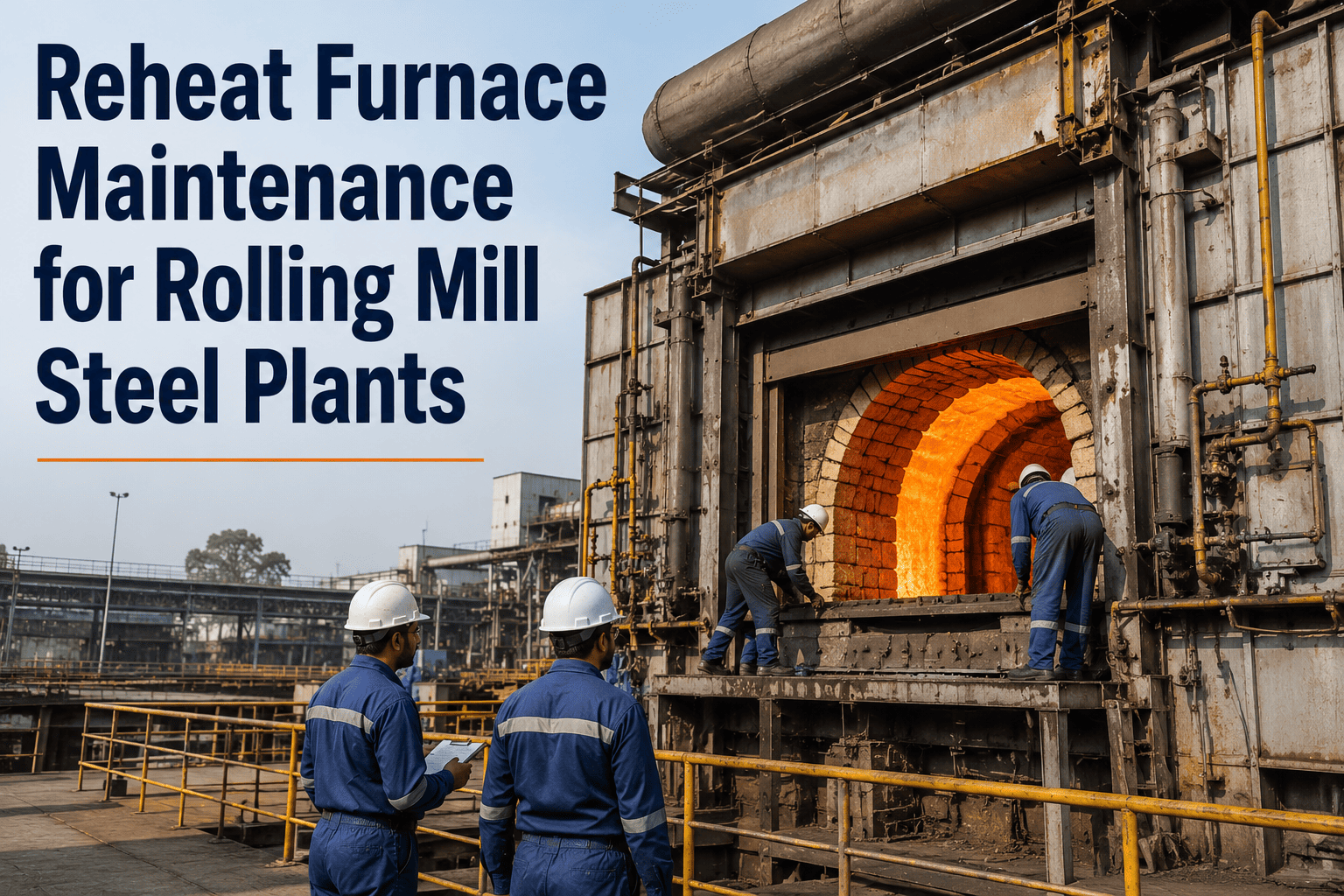
A caster breakout at 2am does not wait for the day-shift reliability engineer to wake up, and neither does a rolling mill emergency stop that halts an entire production line. Steel plants that handle these moments well share one trait: the response does not depend on who happens to be on shift. Escalation tiers, night-shift coverage, and cross-craft coordination are defined ahead of time, not improvised in the first five minutes of a crisis. Plants without that structure lose critical minutes deciding who to call, whether a lockout is complete, and which craft needs to respond first — minutes that turn a controllable event into a longer shutdown. This guide walks through how steel plants structure emergency maintenance response, from escalation tiers to CMMS-linked workflows, and you can start free with Oxmaint to see how the escalation logic runs inside a live work order.
EMERGENCY RESPONSE · PROTOCOL GUIDE · STEEL PLANT · 2026
Steel Plant Emergency Maintenance Response: Built for the Worst Five Minutes, Not the Best Case
Escalation tiers, night-shift coverage, cross-craft coordination, and safety verification — coordinated through CMMS-linked workflows so response never depends on who is on shift.
4Escalation tiers from local response to full plant mobilization
24/7Coverage structure that does not depend on who is on shift
3High-risk scenarios every plant should pre-script a response for
100%Safety verification required before any emergency work order closes
Why Emergency Response Breaks Down at the Worst Possible Time
Most emergency response failures are not technical — they are coordination failures. A night-shift operator sees a bearing housing overheating on a rolling mill and is not sure whether to trigger a full stop or wait for a supervisor. A caster breakout alarm fires and three different crafts show up without knowing who has authority to make the call. A blast furnace upset happens on a weekend when the usual escalation contact is unreachable, and the backup contact was never documented anywhere the shift lead could find it. None of these are equipment problems. They are the result of response steps that live in someone's memory instead of a system every shift can follow the same way, day or night.
The cost of that gap is rarely visible until the post-incident review. A plant might find that the equipment damage from an event was minor, but the total downtime was extended by twenty or thirty minutes simply because the right specialist was the third person called instead of the first. Multiply that across a handful of emergency events a year and the lost production time often exceeds the cost of the failure itself. Structuring the response ahead of time — tiers, contacts, and craft routing documented in one system — is what closes that gap, and it costs nothing to build compared to what a single delayed response can cost in lost heats or scrapped coil.
Escalation Tiers — From Local Response to Full Plant Mobilization
T1
Tier 1 — Local Operator Response
Response window: 0–5 minutes
Operator identifies the abnormal condition, initiates local isolation if trained and authorized, and logs the event. Covers single-equipment issues with no immediate safety exposure beyond the local area. A clear go/no-go checklist tells the operator exactly when to escalate instead of guessing.
T2
Tier 2 — Craft Maintenance Dispatch
Response window: 5–15 minutes
Shift lead dispatches the correct craft based on failure type — mechanical, electrical, or hydraulic — with the work order auto-flagged emergency priority and routed to the on-call technician. The technician sees prior work history on the same asset before ever reaching the floor.
T3
Tier 3 — Cross-Craft & Supervisor Escalation
Response window: 15–30 minutes
Event affects multiple systems or crafts — for example a caster breakout involving mechanical, electrical, and refractory response together. Maintenance supervisor coordinates the combined response and confirms lockout status across all crews before anyone re-enters the affected area.
T4
Tier 4 — Plant-Wide Mobilization
Response window: 30+ minutes
Full facility impact or safety risk — blast furnace upset, major structural event. Plant manager and safety officer are notified automatically, off-site specialists are contacted, and every crew's status is tracked centrally until stand-down. A full incident timeline is captured automatically for the post-event review.
DEFINE IT BEFORE YOU NEED IT
Escalation Should Not Be Decided in the First Five Minutes of a Crisis
Pre-script your tiers, contacts, and craft routing so every shift responds the same way, whether it is 2pm on a Tuesday or 3am on a Sunday.
Three Scenarios Every Steel Plant Should Pre-Script
Blast Furnace Emergency
Immediate stove and cooling water status check before any other action
Predefined evacuation zone and gas monitoring protocol activated automatically
Furnace-specific specialist contact list attached directly to the work order
Refractory and burden condition logged before restart is even considered
Caster Breakout Response
Ladle and tundish status verified before mechanical crews enter the pit
Cross-craft response — mechanical, electrical, refractory — dispatched as one coordinated group
Downstream rolling schedule automatically flagged for impact assessment
Mold and segment condition documented for the metallurgical follow-up review
Rolling Mill Emergency Stop
Lockout verification required from every crew before restart is authorized
Root-cause checklist attached to the stop event before the line is cleared to run
Quality hold flagged on any coil in process at the moment of the stop
Drive and hydraulic system readouts captured automatically at the moment of trip
Night-Shift Coverage — Closing the Gap Where Most Delays Happen
Emergency response data across steel plants consistently shows the same pattern: response times are longest between midnight and 6am, not because night-shift crews are less capable, but because fewer decision-makers are on site and escalation contacts are harder to reach. Closing that gap does not require more headcount. It requires making the same escalation tiers, contact lists, and craft routing that work during the day equally available and equally clear at 3am — documented in the CMMS rather than in a binder in a supervisor's office that no one can find during the event itself.
Night shifts also tend to have thinner cross-craft coverage, which is exactly when Tier 3 escalations are hardest to execute. Pre-assigning a rotating on-call list for each craft, with automatic notification the moment a Tier 2 event does not resolve within its response window, removes the need for a night-shift lead to manually track down a name and number under pressure. The system escalates on schedule whether or not anyone remembers to make the call.
We used to have a laminated escalation chart taped to the wall in the control room, and it was three revisions out of date by the time anyone needed it. Now the on-call list and craft routing live in the system itself, so a night-shift operator sees the same accurate response path a day-shift supervisor would.
Maintenance Superintendent — Integrated Steel Plant, USA
Frequently Asked Questions — Steel Plant Emergency Maintenance Response
How many escalation tiers should a steel plant define?
Most plants use three to four tiers, moving from local operator response up to plant-wide mobilization. The exact number matters less than making sure every tier has a clear trigger, a response-time window, and a named responder so nobody has to decide in the moment. You can
map your tiers free to see how routing works in practice.
What is the biggest cause of delayed emergency response at night?
Outdated or hard-to-find escalation contacts are the most common cause, followed by unclear authority over who can call a full stop. When the on-call list lives in a CMMS instead of a printed chart, night-shift crews reach the right person on the first call instead of the third.
How does cross-craft coordination work during a caster breakout?
Mechanical, electrical, and refractory crews are dispatched together as one coordinated response rather than separately, with a supervisor confirming lockout status across all crews before anyone enters the pit area. The downstream rolling schedule is flagged automatically so scheduling teams know impact before crews finish the repair.
What safety verification is required before an emergency work order closes?
Lockout verification from every crew involved, confirmation that the root-cause checklist is complete, and sign-off from the responsible supervisor are typically required. For quality-sensitive stops, any coil or heat in process at the moment of the event also needs a documented disposition before the work order can close.
Can emergency response protocols be linked directly to CMMS work orders?
Yes. Escalation tiers, craft routing, and safety checklists can be built directly into the emergency work order flow so the correct steps trigger automatically instead of relying on someone remembering them under pressure.
Book a walkthrough to see the workflow end to end.
GET STARTED
Make Emergency Response the Same Every Shift, Every Time
Pre-script your escalation tiers, craft routing, and safety verification so response never depends on who happens to be on shift.