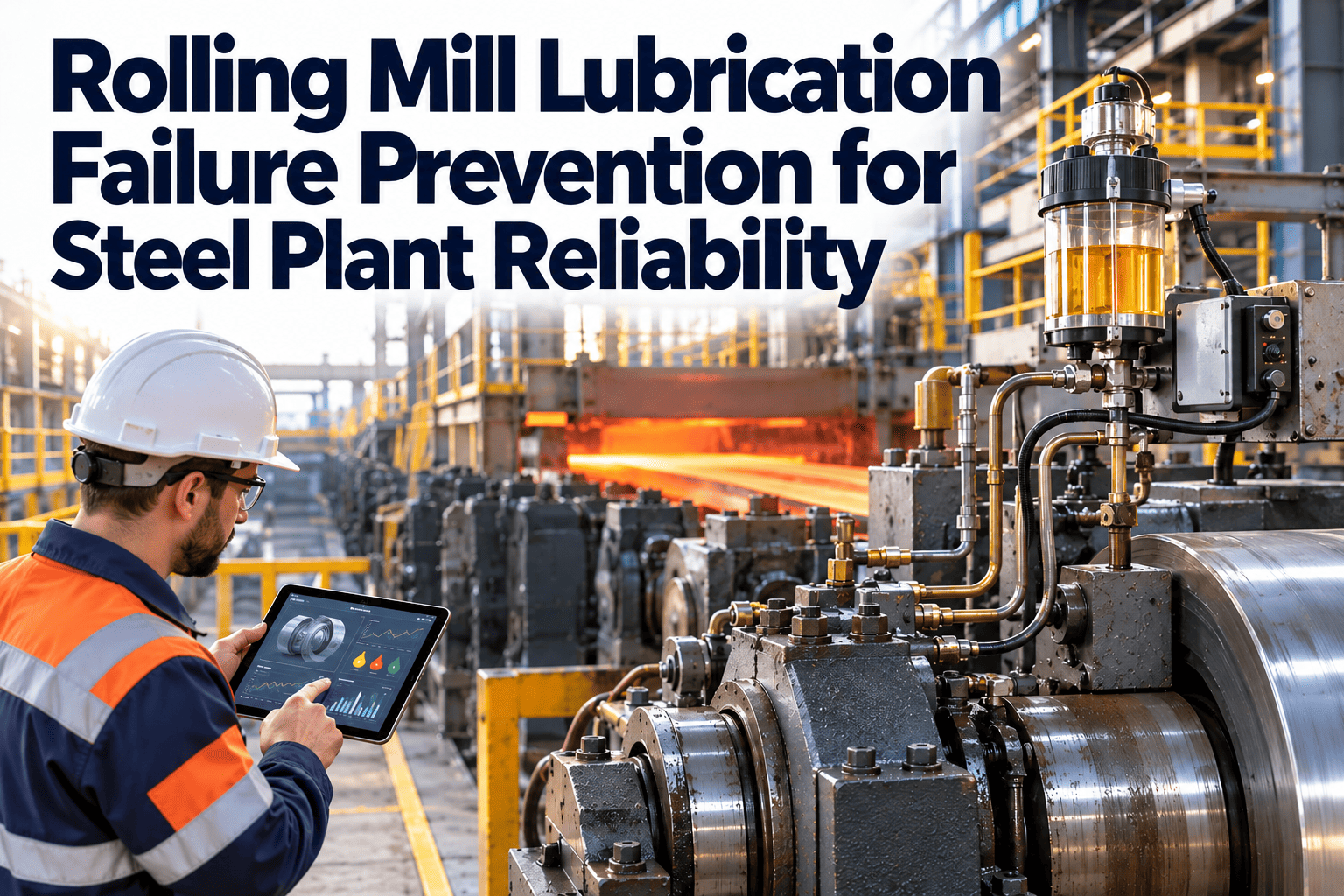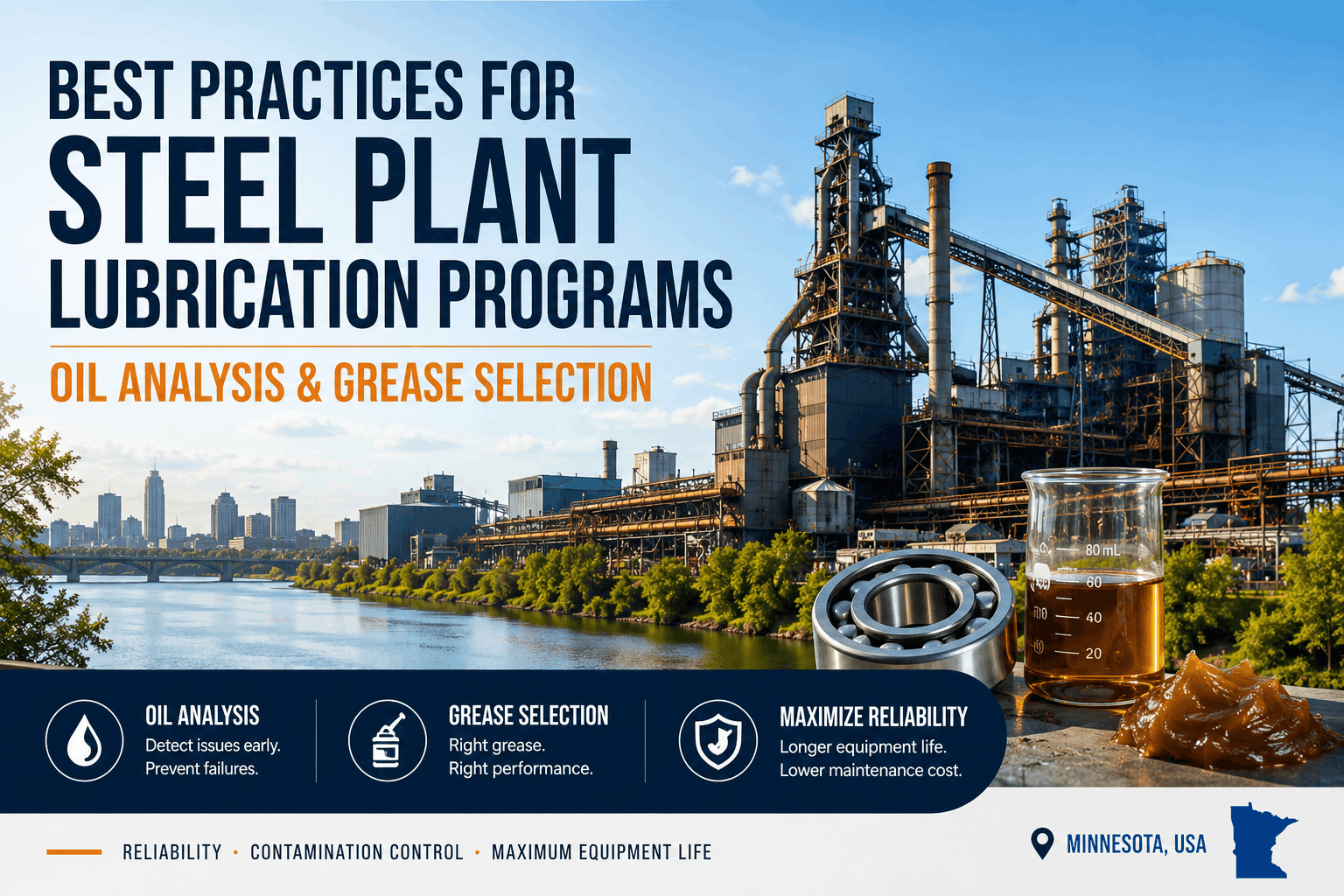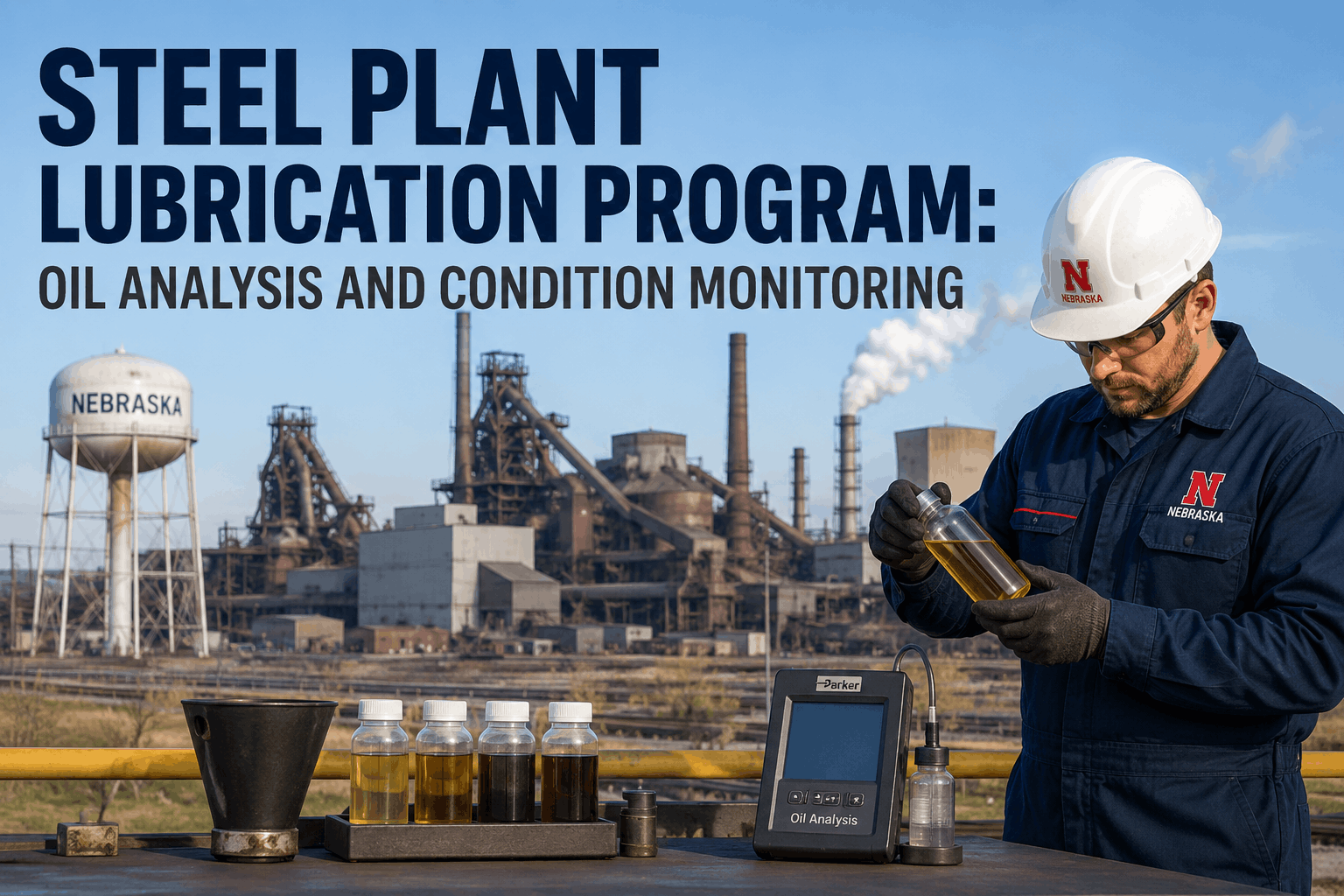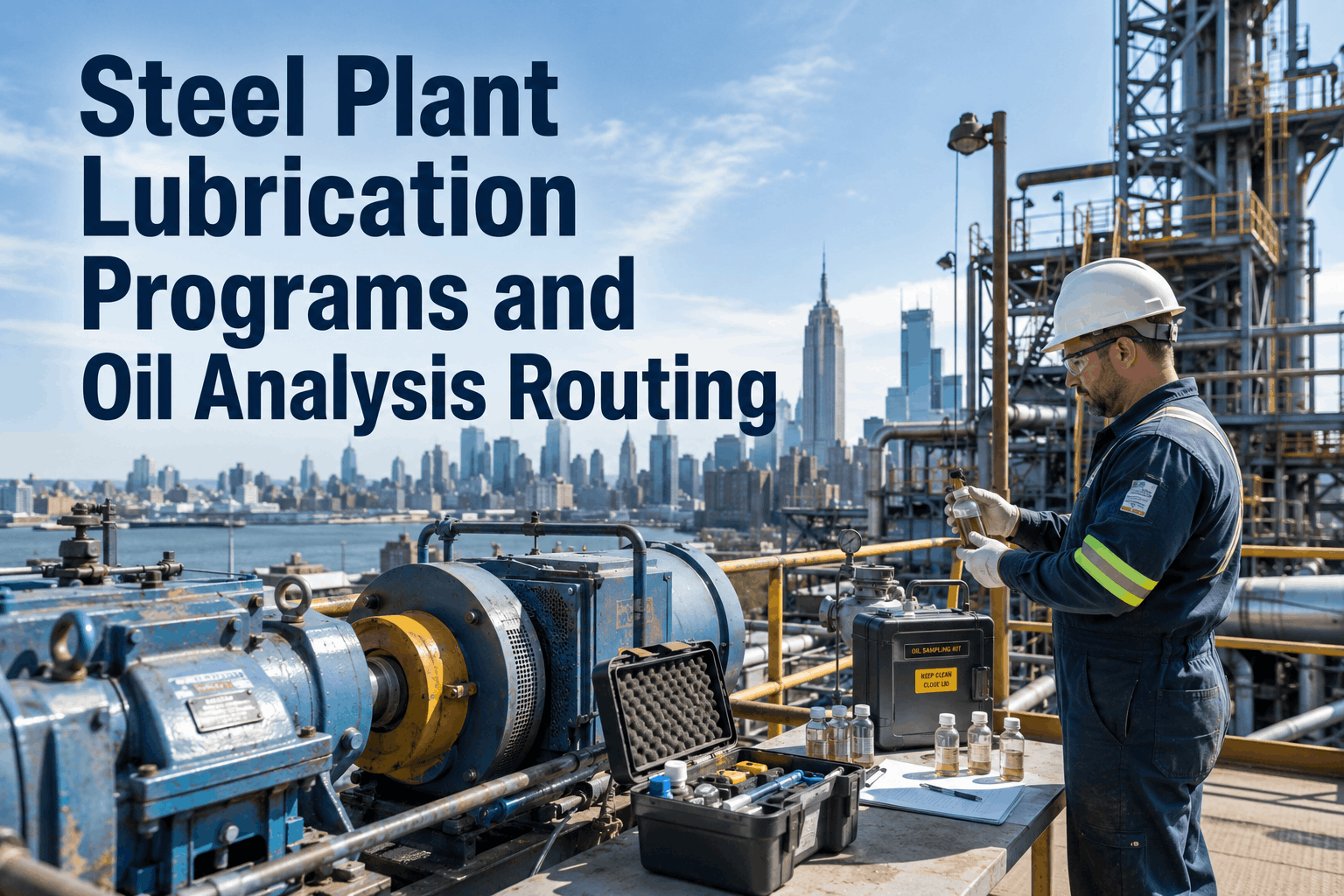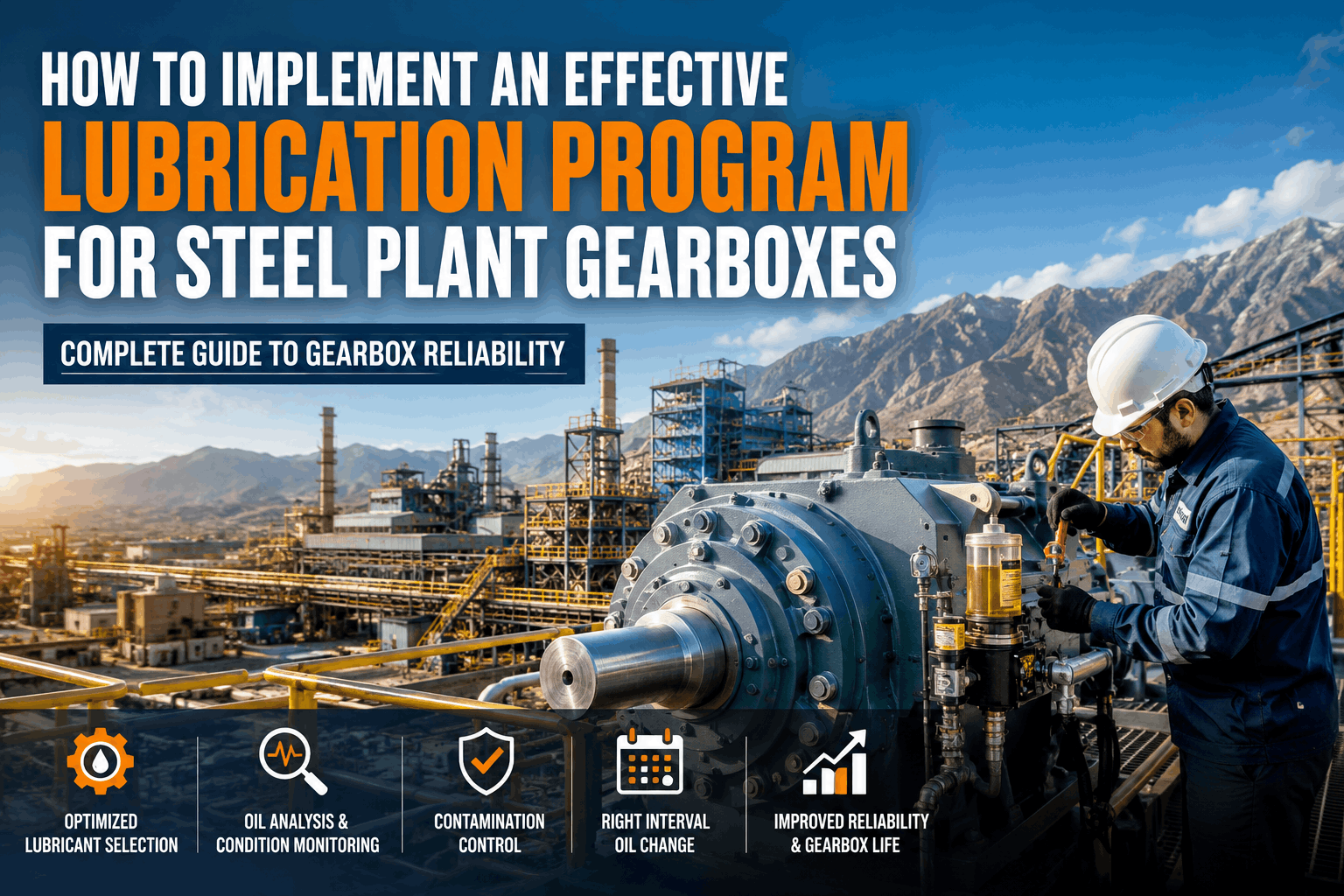
Steel plant gearboxes operate under extreme conditions—high torque loads, continuous operation, temperature fluctuations, and contaminated environments push lubrication systems to their limits. When gearbox lubrication fails, the consequences are catastrophic: tooth pitting develops within weeks, bearing races wear at accelerated rates, and catastrophic failure occurs without warning. Industrial facilities lose $150,000 to $500,000 per unplanned gearbox replacement, including emergency repair labor, lost production revenue, and expedited component costs. The difference between a gearbox lasting 5 years and 15 years is not the quality of the gearbox itself—it is the quality of the lubrication program managing it. Proactive oil analysis, contamination control, viscosity monitoring, and scheduled oil changes transform gearbox reliability from a gamble into a predictable, manageable asset. OxMaint's gearbox lubrication tracking system automates oil sampling schedules, monitors wear debris trends, triggers oil change work orders, and maintains complete lubrication history—ensuring every steel plant gearbox receives the precision maintenance required for extended life and reliable operation.
Steel Plant Gearbox Lubrication Program: Complete Implementation Guide
Gearbox failures cost steel plants $250K+ per incident. This comprehensive guide covers oil analysis protocols, contamination control strategies, viscosity selection, wear debris monitoring, and scheduled oil change intervals—ensuring maximum gearbox reliability and extended asset life.
Understanding Gearbox Lubrication: Why Steel Plant Failures Happen
Gearbox lubrication is fundamentally different from general machine lubrication. Gears experience extreme boundary and mixed-film lubrication regimes where tooth surfaces contact at pressures exceeding 1.5 million PSI—a condition where standard industrial oils cannot maintain protective film strength. Steel plant gearboxes operating under load experience metal-to-metal contact that generates micro-welding and scuffing unless the lubricant contains anti-wear (AW) and extreme pressure (EP) additives specifically formulated for gear applications. When contamination enters the gear mesh—iron particles from bearing wear, water from condensation, or dust from inadequate sealing—the lubricant's film strength degrades rapidly. Abrasive particles become cutting tools that accelerate tooth surface damage. Water promotes oxidation and rust formation on gear flanks. The combination triggers accelerated wear, pitting initiation, and rapid progression to catastrophic failure. Steel mills that implement structured lubrication programs—scheduled oil analysis, contamination control at the source, viscosity management, and timely oil replacement—achieve 85% reduction in gearbox-related downtime and extend gearbox service life from 7-8 years to 15+ years. OxMaint's lubrication management platform tracks every gearbox, schedules every oil analysis, monitors wear debris trends, and triggers oil change work orders automatically—transforming gearbox maintenance from reactive crisis management to predictable, data-driven reliability.
Oil Analysis Framework: The Foundation of Predictive Gearbox Maintenance
Oil analysis is the critical early warning system that identifies gearbox problems before they become catastrophic failures. Ferrous particle concentration trends reveal bearing race degradation and tooth surface distress weeks or months before audible noise or temperature rise. Copper content rising above baseline indicates brass bushings or bronze bearing cages wearing abnormally. Water content exceeding 500 ppm signals seal degradation or condensation accumulation that will accelerate oxidation. Total Acid Number (TAN) trending shows lubricant chemical breakdown—when TAN approaches 2.0 mg KOH/g, oxidation is irreversible and oil replacement becomes urgent. Steel plants operating gearboxes in harsh environments establish baseline oil analysis samples immediately after installation or commissioning, then establish monitoring intervals based on duty cycle: continuous duty gearboxes require analysis every 500-800 operating hours, intermittent duty every 1000-1500 hours. Analysis results are compared to trending baselines—not absolute industry standards—because a 50% increase in iron particle concentration from your baseline is a warning signal regardless of whether absolute particle count falls within "acceptable" industry ranges. Schedule a consultation with lubrication specialists to establish baseline oil analysis protocols for your specific gearbox applications and operating conditions.
Contamination Control Strategy: Preventing Particle Ingress at the Source
Contamination is the root cause of 60% of gearbox failures in steel plants. The typical contamination sources include breather filters allowing dust ingress, degraded seals permitting water entry, internal bearing wear generating iron particles, and improper oil handling during maintenance. A single particle larger than 10 microns can scratch a gear tooth surface—initiating a stress concentration that becomes the failure initiation point. Water droplets suspended in lubricant accelerate oxidation and promote rust formation. Steel plant facilities implementing comprehensive contamination control achieve particle count reductions of 70-80% within six months. Proactive strategies include: upgrading breather filters to desiccant cartridges that remove 99.5% of particles and 80% of moisture; installing kidney loop filtration systems that continuously circulate gearbox oil through high-efficiency filters (3-5 micron absolute) during idle periods; establishing sealed lubrication storage areas with humidity control; implementing oil transfer procedures using filtered containers and spill prevention; conducting quarterly seal inspections for degradation signs; and maintaining detailed maintenance logs documenting every contamination event. OxMaint's contamination tracking system logs breather replacement dates, seal inspection results, kidney loop operating hours, and stores analysis reports—enabling contamination trend analysis and predictive seal replacement scheduling.
Lubricant Selection and Viscosity Management for Steel Plant Gearboxes
Selecting the correct lubricant grade and formulation is the foundational decision that determines gearbox service life. Steel plant gearboxes typically operate in one of three viscosity ranges: ISO VG 46 for high-speed, moderate-load applications like cooling fan drives and positioning mechanisms; ISO VG 68 for standard steel mill duty including rolling mill pinions, coil winders, and material handling conveyors; ISO VG 100 for slow-speed, high-torque applications including main mill drives, punch presses, and heavy crane mechanisms. Selecting viscosity too light results in inadequate film thickness—allowing gear teeth to scuff and bearings to wear prematurely. Selecting viscosity too heavy increases power loss, raises operating temperature, and accelerates oxidation of the base oil. Beyond viscosity grade, the additive package is equally critical: extreme pressure (EP) and anti-wear (AW) additives protect gear teeth under boundary lubrication conditions where film thickness is measured in fractions of a micron. Modern synthetic gear oils (polyalphaolefin, polyol ester, or PAG-based) offer superior thermal stability, longer drain intervals (often 2-3x longer than mineral oils), and lower volatility—offsetting their higher initial cost through extended intervals and reduced oil disposal frequency. Steel plants with high ambient temperatures (>100°F consistently) benefit from synthetic oils maintaining film strength across wider temperature ranges. Facilities operating in dusty or contamination-prone environments benefit from synthetic oils' superior water shedding properties and oxidation stability. OxMaint's lubricant tracking system stores OEM specifications, documents oil type and viscosity for every gearbox, flags misapplications, and triggers viscosity confirmation testing during every oil analysis.
Oil Change Intervals: Condition-Based vs. Time-Based Strategies
Traditional steel plant maintenance programs established fixed oil change intervals: every 18 months, every 2000 operating hours, or annually regardless of condition. This approach results in either premature disposal of usable oil (wasting money and creating environmental burden) or extended use of degraded oil (risking gearbox failure). Modern condition-based oil change strategies use oil analysis data—specifically Total Acid Number (TAN) and particle count trends—to determine precisely when replacement becomes necessary. TAN measures the chemical degradation of base oil and additive depletion. Fresh gear oil has TAN of 0.3-0.8 mg KOH/g. As operating hours accumulate and oxidation occurs, TAN rises gradually. When TAN reaches 2.0-2.5 mg KOH/g, the oil has lost significant reserve alkalinity and oxidation becomes self-perpetuating—replacement is urgent. Particle count trending provides the second critical trigger: when particle concentration increases 30-50% above baseline despite normal operation, it signals accelerated wear and an upcoming failure. Oil analysis intervals of 500-1200 hours coupled with clear TAN and particle count thresholds provide data-driven replacement decisions. A typical 2000-hour annual operation gearbox receiving analysis every 750 hours generates 2-3 analysis reports annually. If all reports show TAN <1.5 and particle count <15% baseline increase, oil replacement can be extended to 2500 hours. If one report shows TAN >1.8, oil change is scheduled immediately. This condition-based approach typically reduces annual oil consumption by 25-40% while simultaneously reducing gearbox failure risk. Steel plants implementing condition-based oil management report extending mineral oil drain intervals from 1500-2000 hours to 2500-3000 hours and synthetic oil intervals from 3000-4000 hours to 5000-6000 hours.
Implementing the Gearbox Lubrication Program: Roles, Responsibilities, and Execution
Successful gearbox lubrication programs require cross-functional coordination between maintenance engineers, reliability technicians, and operations leadership. The maintenance engineer establishes lubrication specifications (OEM grades, analysis intervals), approves oil products, and manages the approved products list. The reliability technician schedules oil sampling, collects samples correctly, submits them to accredited laboratories, and interprets trending results. Operations leadership ensures technicians have protected time for sampling activities and approves oil change work orders that may require brief production pauses. Steel plants typically assign 0.5-1.0 FTE to gearbox lubrication program coordination across all facilities—a responsible investment that prevents multimillion-dollar equipment failures. The program implementation roadmap begins with baseline documentation: compile all gearbox nameplate data, document current oil types and change intervals, collect initial oil analysis samples, and establish trending baselines. Within 60 days, establish analysis schedules, implement sample bottles and labeling protocols, and train technicians on proper sampling technique (sampling from lowest reservoir point, using clean containers, labeling with date/time/technician ID). Within 90 days, integrate work orders into your CMMS (Computerized Maintenance Management System) triggered by oil analysis red flags and analysis due dates. OxMaint's CMMS platform integrates gearbox asset registry, oil analysis scheduling, wear debris trending, and condition-based oil change triggers into a unified system—automatically generating work orders and maintaining complete lubrication documentation.
Frequently Asked Questions — Steel Plant Gearbox Lubrication Programs
Transform Gearbox Reliability with Data-Driven Lubrication Management
OxMaint automates gearbox oil analysis scheduling, contamination control tracking, wear debris trending, and condition-based oil change triggers across every gearbox in your steel facility. Establish baseline oil analysis protocols, schedule every inspection, and monitor TAN/particle trends—preventing catastrophic failures before they occur. Eliminate emergency repairs. Extend asset life. Protect equipment reliability with precision lubrication management.