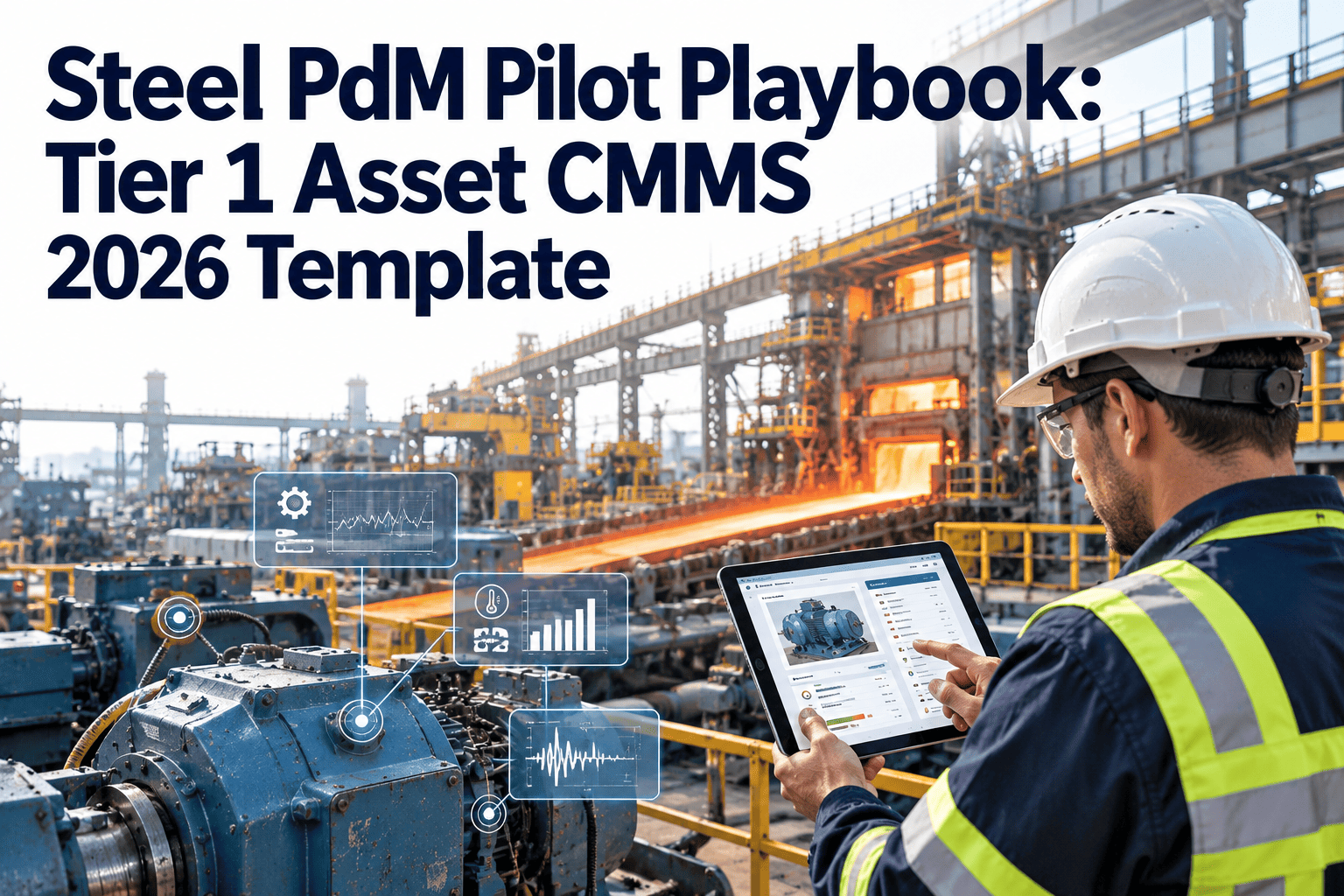
Most steel plants that try to roll out predictive maintenance across every asset at once collapse within the first year, buried under sensor noise, integration headaches, and reliability teams that stop trusting alerts within weeks. A single undetected blast furnace turbo-blower bearing failure can cost $50,000 to $300,000 in lost production for every hour the line sits idle, and no amount of enthusiasm survives a rollout that tried to monitor everything on day one. The mills getting real results do it differently — they pick 10 to 15 Tier 1 assets, the ones whose failure stops production or threatens safety, and prove the model there first. This scoped pilot typically costs $30,000 to $80,000 and shows measurable downtime reduction within 8 to 12 weeks, giving plant leadership hard numbers instead of vendor promises. If you want to see how a Tier 1 pilot gets scoped on a working CMMS, book a demo with Oxmaint and walk through your own asset list with our team.
Start Predictive Maintenance Where It Actually Pays Off
Stop trying to sensor the entire plant on day one. Scope a pilot around 10-15 Tier 1 assets, connect it to your CMMS, and prove downtime reduction before you scale to the rest of the mill.
Why Every Successful Program Starts With Tier 1, Not the Whole Plant
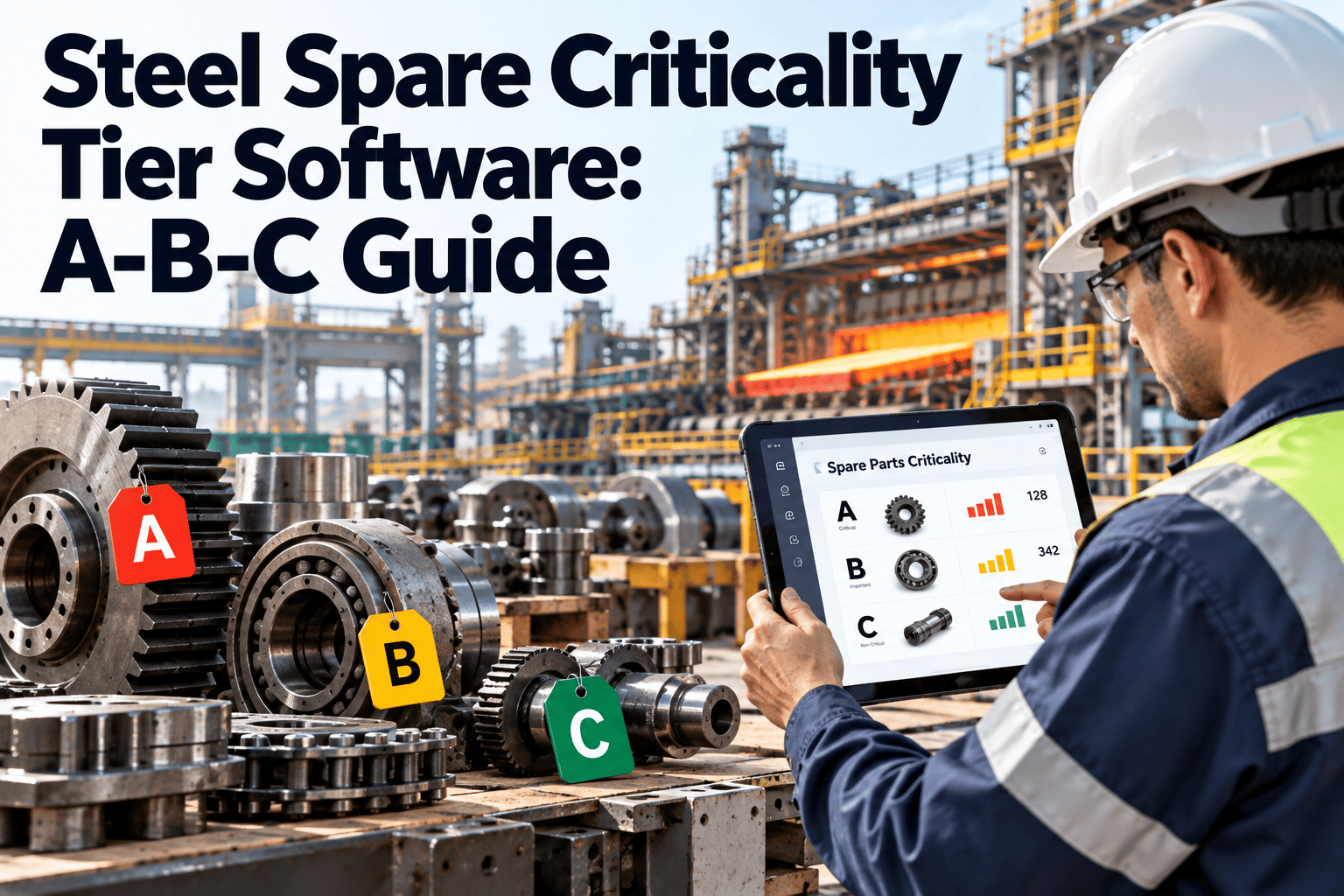
Not every asset in a steel plant deserves the same maintenance investment, and treating a conveyor idler the same as a blast furnace turbo-blower is how PdM budgets get wasted. A Tier 1 asset is one where failure either stops production outright or creates a safety event — cooling water pumps on a blast furnace, caster segment drives, hot strip mill main drives, and reheat furnace combustion systems all sit in this category. These are the assets where a single prevented failure pays for the entire pilot several times over, which is exactly why plant leadership can approve a $30,000-$80,000 budget without a multi-year business case attached. Trying to sensor 300 assets in month one means spreading the same budget so thin that no single asset gets meaningful coverage, and it means reliability engineers are drowning in alerts from low-value equipment before the program has proven anything. A scoped pilot flips that: fewer assets, deeper monitoring, faster proof, and a result the CFO can actually read on a single page.
What a Tier 1 Pilot Actually Costs, Asset by Asset
Sensor hardware runs $500 to $5,000 per monitored asset depending on whether you are installing basic vibration monitoring or a fuller package with thermal imaging, oil analysis tie-ins, and motor current signature capture. On top of hardware, budget for integration work connecting sensor data into your CMMS so anomalies become work orders instead of sitting in a separate dashboard nobody checks, plus software licensing for the monitoring platform itself. Most mills underestimate the integration line item, then wonder why the pilot generates alerts that never turn into scheduled repairs. The table below breaks down where a typical $30,000-$80,000 Tier 1 pilot budget goes across a 10-15 asset scope, so you can size your own numbers before the first sensor ships.
| Budget Line | Typical Range | What It Covers |
|---|---|---|
| Sensor hardware | $500-$5,000 per asset | Vibration, thermal, oil analysis, motor current sensors |
| CMMS integration | $8,000-$20,000 | API connection so anomalies auto-generate work orders |
| Software licensing | $5,000-$15,000 | Monitoring platform and alert dashboard for the pilot period |
| Criticality ranking & site walk | $3,000-$8,000 | Confirming which assets truly qualify as Tier 1 |
| Team training & workflow tuning | $4,000-$10,000 | Alert threshold tuning to avoid fatigue, technician onboarding |
The Five Phases Every Working Pilot Moves Through
A pilot that skips straight to sensor installation without a criticality ranking usually ends up monitoring the wrong equipment, and a pilot that never tunes alert thresholds ends up abandoned within three months because technicians stop trusting the notifications. Each phase below builds on the one before it, and rushing past any single phase is the most common reason pilots stall before they reach a scale decision.
See a Tier 1 Pilot Scoped Against Your Own Asset List
Bring your equipment list to a working session and leave with a realistic pilot budget, a confirmed Tier 1 shortlist, and a CMMS workflow ready to catch the first anomaly.
What the First 14 Weeks Actually Look Like
Plant leadership asking "when will we see results" deserves a specific answer, not a vague promise. Pilots that follow the five-phase structure above tend to hit the same milestones in roughly the same order, which is useful for setting expectations with the CFO before the first sensor is even mounted.
Building the ROI Case Your CFO Will Actually Approve
Vendor projections and industry averages rarely survive a CFO meeting, but three years of your own CMMS history usually does. Pull every unplanned downtime event, every emergency work order, and every expedited parts purchase tied to the Tier 1 assets in your pilot scope, then calculate what each failure actually cost in lost production, not what a textbook says it should have cost. Mills that build the case this way — with specific failures, specific dollar amounts, and specific assets — consistently get pilots approved on the first pass instead of the third budget cycle. Once the pilot is running, the same discipline applies to tracking results: every avoided failure, extended service interval, and deferred capital replacement should link back to a CMMS record that makes the ROI auditable, not anecdotal.
| Outcome Metric | Typical Pilot Result | What Drives It |
|---|---|---|
| Unplanned downtime | 30-50% reduction | Failures caught at the anomaly stage instead of the breakdown stage |
| Maintenance spend | 20-40% reduction | Fewer emergency repairs, less overtime, less expedited parts markup |
| Asset service life | 20-40% extension | Early intervention before secondary damage compounds |
| Return on pilot investment | 10:1 to 25:1 within 24 months | A small number of large avoided failures on Tier 1 equipment |
The Mistake That Kills Pilots Before They Prove Anything
Alarm fatigue, not sensor failure, is the single biggest reason predictive maintenance pilots get shut down. A plant that installs sensors across even a modest 10-15 asset pilot without a tuned alert workflow ends up generating dozens of notifications a week, and reliability teams that get buried in noise start ignoring everything within a month — including the alert that mattered. The fix is not fewer sensors, it is tighter integration between the monitoring platform and the CMMS, so that only confirmed anomalies with a clear next action reach a technician's queue. Pilots that route alerts straight into prioritized work orders with equipment history, recommended parts, and estimated repair duration attached see technicians actually act on them, because the alert already looks like a normal maintenance task instead of an unfamiliar dashboard ping. This single design choice is usually the difference between a pilot that scales to the rest of the plant and one that quietly gets abandoned after six months.
Frequently Asked Questions
Turn Your Tier 1 Asset List Into a Working Pilot
Get a criticality ranking, a realistic budget, and a CMMS workflow that routes anomalies straight into prioritized work orders from week one.