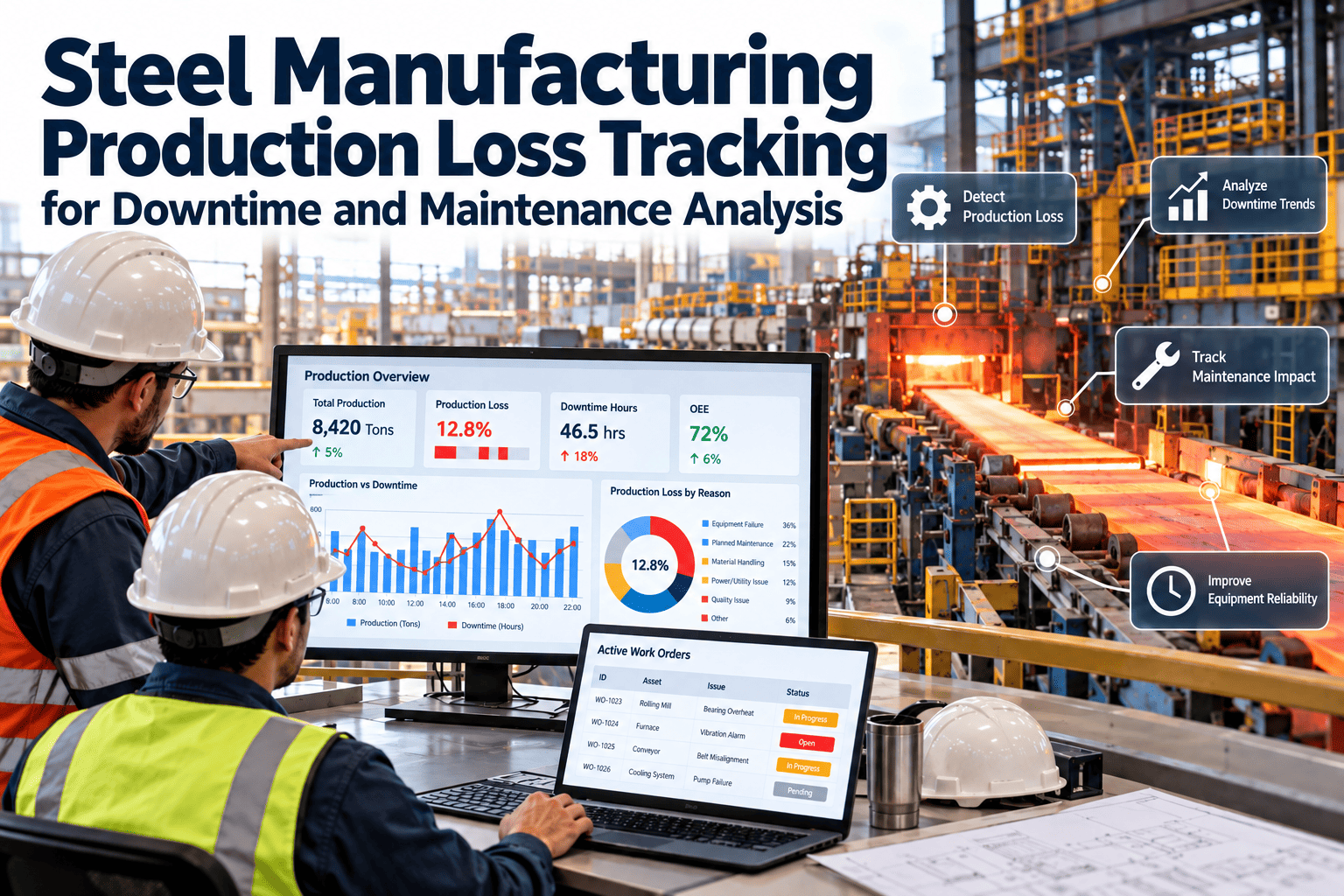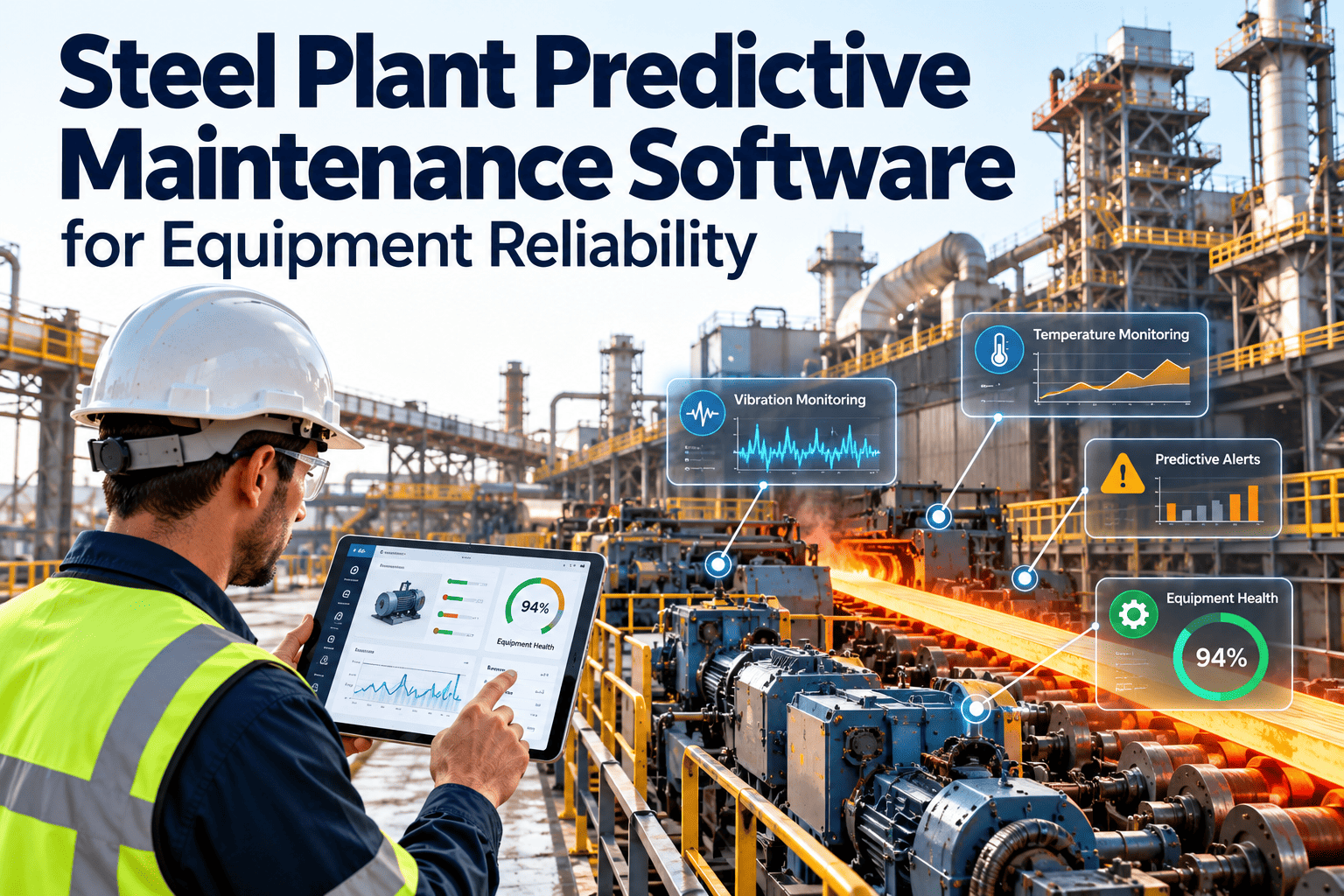
An hour of unplanned downtime on a hot strip mill or a continuous caster does not just cost the repair — it costs the tonnage that line would have produced, the scrap generated during restart, and the schedule disruption that follows every downstream process. Steel producers already track downtime closely, but most plants still treat each stoppage as an isolated event rather than connecting it to the failure history sitting in the CMMS. This guide breaks down where unplanned downtime actually comes from in steel manufacturing and how root cause data, predictive alerts and automated work orders — the kind Oxmaint's maintenance platform is built around — turn that history into fewer surprise stoppages.
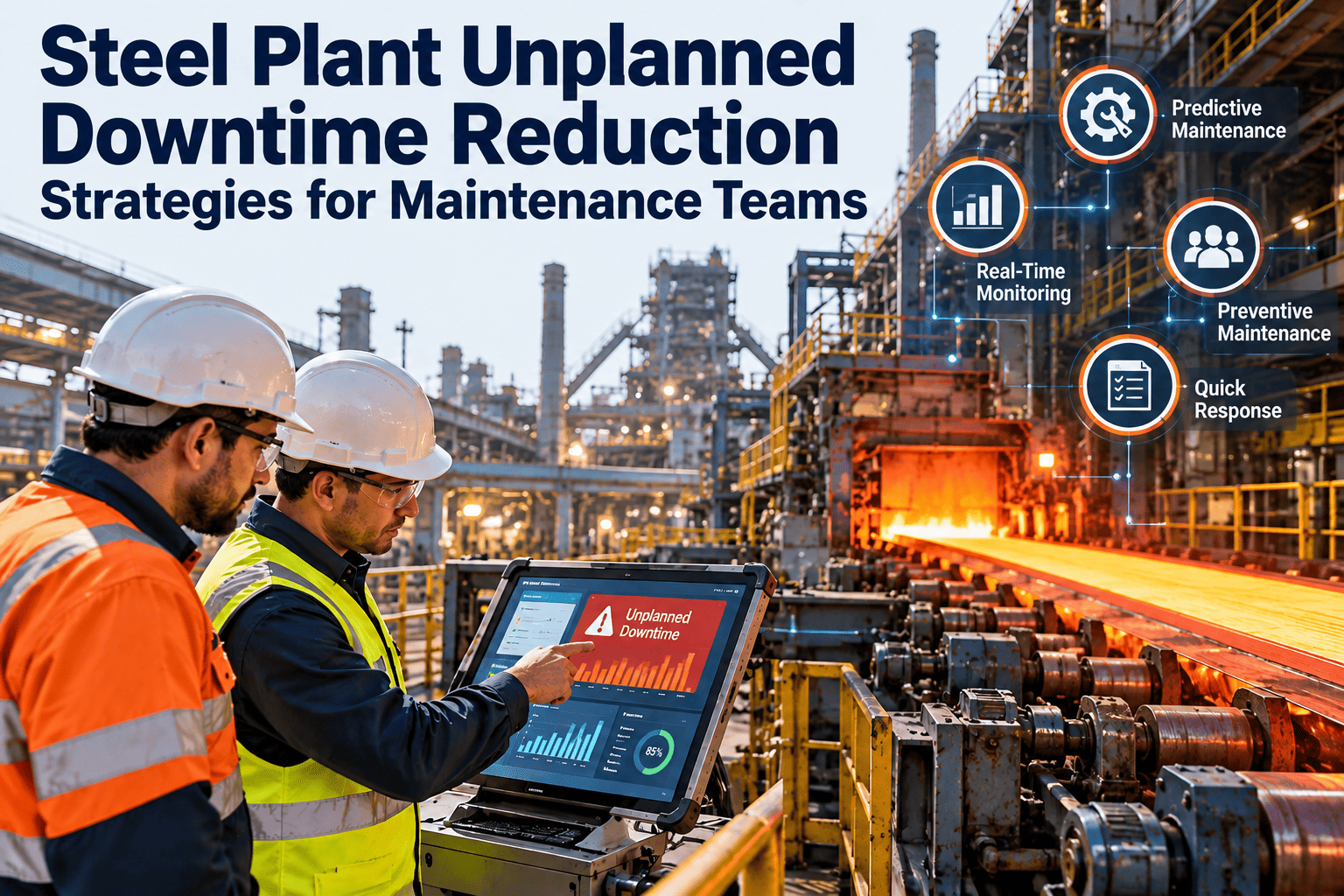
Steel Plant Unplanned Downtime Reduction Strategies for Maintenance Teams
Turn failure history, predictive alerts and root cause analysis into fewer unexpected production stoppages — without adding headcount to your maintenance team.
What Unplanned Downtime Actually Costs a Steel Plant
Downtime cost in steel manufacturing rarely shows up as a single number. It shows up as lost tonnage on the line that stopped, quality issues from a cold restart, overtime to recover the schedule, and knock-on delays for every downstream process waiting on that line's output.
These costs compound quickly on a plant running near capacity. A caster breakout, for example, does not just halt casting — it can force a full sequence restart, generate scrap heats, and push the rolling mill schedule behind for the rest of the shift. A single failed drive motor on a hot strip mill can idle an entire finishing line while every upstream furnace keeps producing steel with nowhere to go, forcing operators to either slow the melt shop or divert material into intermediate storage it was never scheduled for.
The Most Common Sources of Unplanned Stoppages
Unplanned downtime in steel manufacturing tends to cluster around a recognizable set of causes, even though the specific failure varies by process area.
- Mechanical wear on rolls, bearings and drive components that were not flagged before failure
- Refractory and lining degradation in furnaces and ladles that progresses faster than the inspection interval catches
- Hydraulic and lubrication system failures on rolling stands and casters
- Electrical faults on drive motors, transformers and control systems tied to high-duty-cycle equipment
- Sensor and instrumentation failures that mask a developing mechanical problem until it becomes a stoppage
What most of these causes have in common is that they rarely appear without warning. A bearing that seizes overnight usually had rising vibration readings or repeat minor work orders in the weeks before. The stoppage is unplanned only because nobody connected the earlier signals to the eventual failure, which is a data and process gap far more than it is a mechanical surprise.
Reading Failure History Before It Becomes a Stoppage
The single highest-leverage habit in downtime reduction is treating repeated work orders on the same asset as a pattern to investigate, not a series of unrelated tickets to close.
| Early Signal | What It Often Precedes | Typical Lead Time |
|---|---|---|
| Repeated minor repairs on same bearing or coupling | Bearing seizure, drive failure | Weeks |
| Rising vibration trend on rolling stand drive | Gearbox or motor failure | Days to weeks |
| Refractory thickness approaching minimum | Burn-through, unplanned reline | Weeks to months |
| Recurring hydraulic pressure alarms | Seal or pump failure | Days |
| Intermittent sensor faults on critical loop | Loss of process visibility ahead of a fault | Days |
Stop Losing the Warning Signs Between Work Orders
Oxmaint links repeated repairs, inspection findings and condition alerts back to the same asset record, so the pattern is visible before the failure is.
Root Cause Analysis: Getting Past the Symptom
Closing a work order with "replaced bearing" as the resolution note treats the symptom, not the cause. A structured root cause step catches the difference between a random failure and a systemic one.
Predictive Alerts: Moving From Calendar-Based to Condition-Based
Fixed-interval preventive maintenance catches a large share of failures, but it is a blunt instrument against equipment that wears at different rates depending on production mix, grade changes and duty cycle.
Predictive and condition-based approaches use the data already available — vibration readings, temperature trends, hydraulic pressure, repair frequency — to flag an asset before it reaches failure, rather than waiting for the next scheduled inspection to catch it. This does not require replacing existing PM schedules; it layers on top of them, catching the assets that are degrading faster than their calendar interval assumes.
- Set alert thresholds based on each asset's own baseline, not a generic industry figure
- Route alerts directly into a draft work order so a flagged condition does not sit in an inbox unactioned or get lost between shift handovers
- Review flagged assets weekly against the production schedule to find a window for intervention before failure
- Feed confirmed predictive catches back into PM intervals to refine future scheduling
Automated Work Orders: Closing the Gap Between Signal and Action
A predictive signal only reduces downtime if it turns into a scheduled repair before the asset fails. In many plants, that handoff is where the process breaks down — an alert gets noted, but no work order follows until the failure actually occurs.
- Alert or inspection finding logged separately from the work order system
- Follow-up depends on someone remembering to act on it
- No link between the signal and the eventual failure record
- Alert automatically generates a draft work order tied to the asset
- Planner reviews and schedules it into the next available window
- Outcome is recorded back against the same asset history
Benchmarking Downtime Across Process Areas
Not every process area in a steel plant contributes to unplanned downtime the same way, and lumping them into a single plant-wide figure can hide where the real opportunity sits. Breaking downtime out by area — melt shop, caster, hot mill, cold mill, finishing — usually shows that a small number of process areas account for a disproportionate share of lost production time.
Melt shop downtime tends to cluster around refractory and electrode issues on EAF operations, or tap-hole and cooling system faults on blast furnace operations. Caster downtime is dominated by breakouts, mold-related defects and segment wear. Rolling mill downtime skews toward roll changes, bearing failures and hydraulic faults on the stands themselves. Tracking these separately, rather than as one aggregate number, makes it far easier to target root cause work where it will actually move the needle.
- Break downtime totals out by process area monthly, not just by plant-wide aggregate
- Rank process areas by both downtime hours and production value lost per hour
- Compare current-period downtime against a trailing twelve-month average to catch emerging problem areas early
- Share area-level downtime data with operations, not just maintenance, since operating practices often influence failure rates
Where Steel Plants Are Investing in Reliability Right Now
Steel producers have been steadily shifting maintenance budgets toward reliability-focused spending rather than pure reactive repair capacity, largely because the cost of unplanned downtime on high-throughput lines has become harder to absorb as production schedules tighten.
- Condition monitoring is expanding from a handful of flagship assets to a broader set of Tier 1 and Tier 2 equipment, as sensor costs have come down
- Maintenance and operations teams are working from a shared view of asset condition rather than separate reporting lines, shortening the time between a flagged issue and a scheduled repair
- Plants are putting more weight on mean time between failures as a planning metric, not just downtime hours, since it exposes chronic problem assets a raw downtime total can mask
None of these trends require a wholesale technology overhaul to start. Most plants get meaningful results by first making sure the data they already collect — work orders, inspection findings, condition readings — lives in one connected system rather than several disconnected ones.
A Practical Checklist for Reducing Unplanned Downtime
- Rank assets by downtime impact, not just repair cost, to focus effort where it matters most
- Review repeat work orders monthly for patterns across the same asset or component
- Confirm root cause is documented, not just the repair action taken
- Set condition-based alert thresholds for Tier 1 and Tier 2 equipment
- Route flagged conditions into draft work orders automatically instead of manual follow-up
- Track mean time between failures for chronic assets and revisit PM intervals quarterly rather than leaving them fixed indefinitely
- Confirm spare parts availability for the assets most likely to trigger an unplanned stoppage, and review that list at least twice a year
How Oxmaint Supports Downtime Reduction
Oxmaint connects the pieces that usually sit in separate systems — work order history, inspection findings, condition alerts and spare parts — into one record per asset, so patterns are visible before they turn into a stoppage.
Common Mistakes That Keep Downtime High
A few recurring habits tend to keep unplanned downtime flat even after a plant invests in better tracking tools. Recognizing them is often the fastest way to get more value out of the data already being collected.
- No distinction between a one-off repair and a recurring failure
- Root cause field left blank or filled with generic text
- Chronic assets never flagged for review despite repeat visits
- Repeat work orders on the same component automatically flagged
- Root cause required before a work order can be closed
- Chronic assets reviewed on a recurring cadence, not only after failure
A second common mistake is measuring downtime only in aggregate hours, without weighting it by the production value of the line affected. An hour lost on a bottleneck caster is not equivalent to an hour lost on a redundant auxiliary line, and treating them the same in reporting can misdirect improvement effort toward the wrong assets. A third mistake worth naming is letting predictive alerts pile up without a clear owner, since an alert nobody is accountable for acting on delivers no more protection than having no alert at all.
We were closing work orders fast but not actually learning anything from them. Once repeat failures on the same drive components started showing up automatically instead of buried in individual tickets, we caught two chronic issues we had been repairing the same way for over a year.
Frequently Asked Questions
Turn Failure Patterns Into Fewer Surprises
Oxmaint connects work order history, condition alerts and root cause data so your team catches the next failure before it becomes a stoppage.