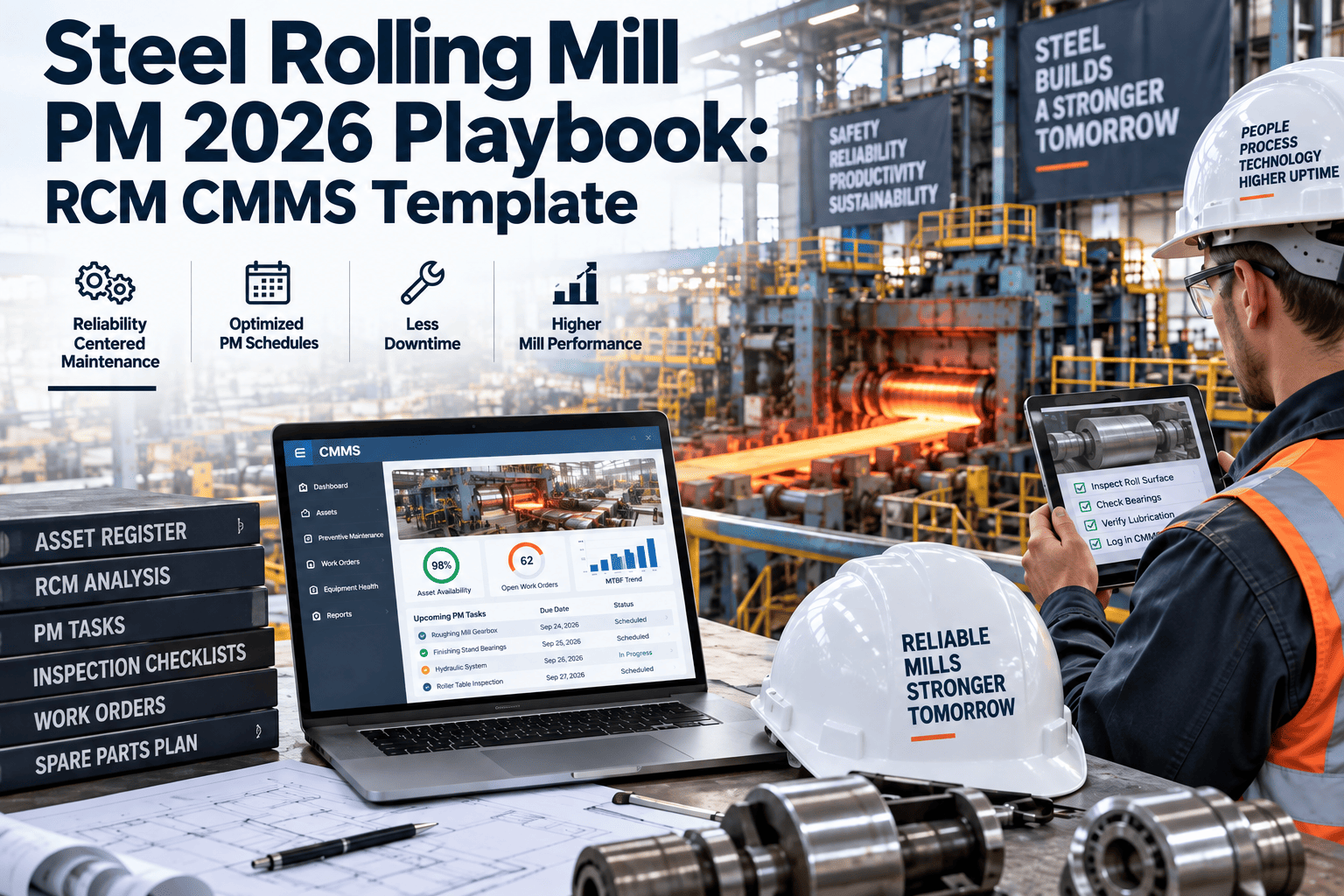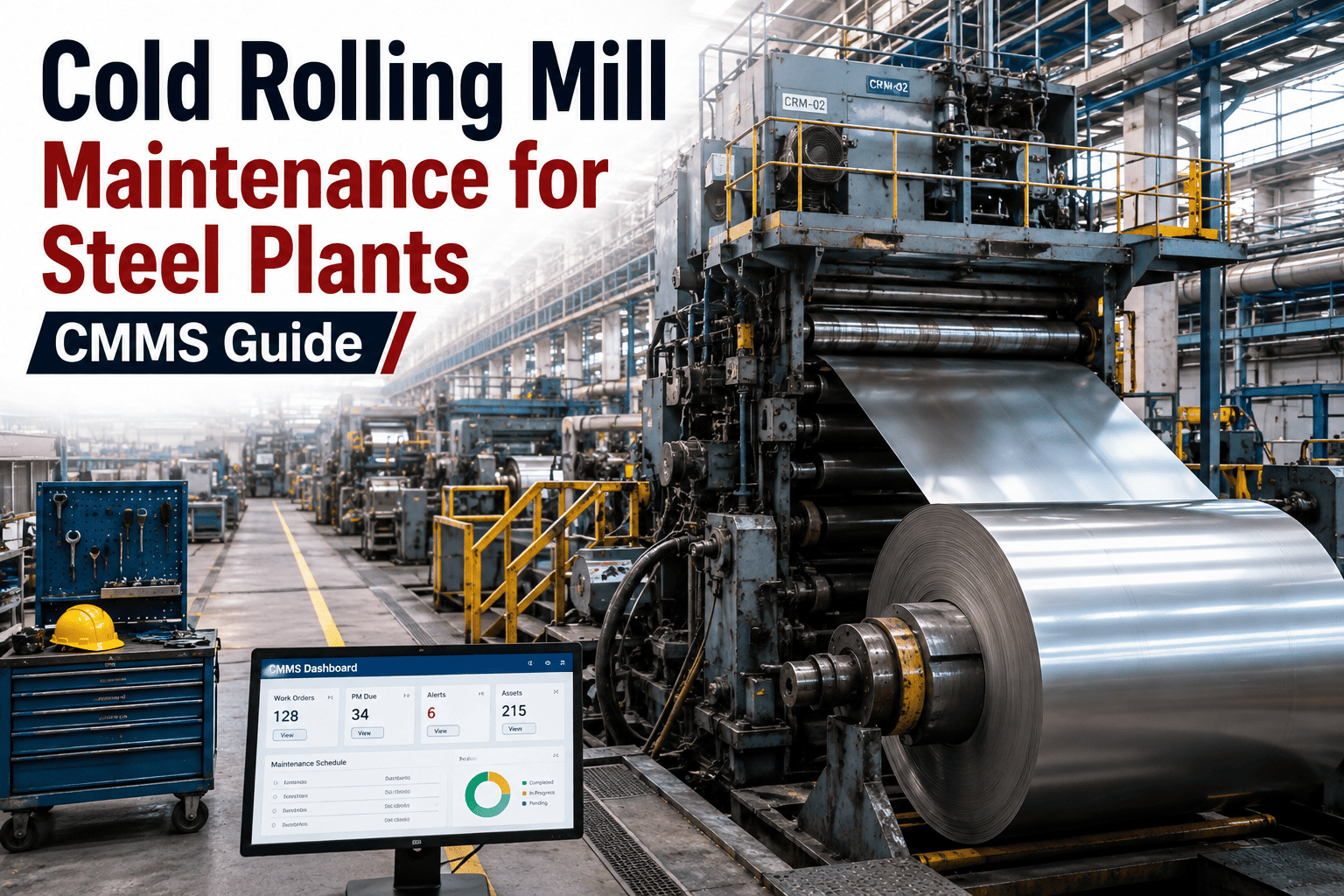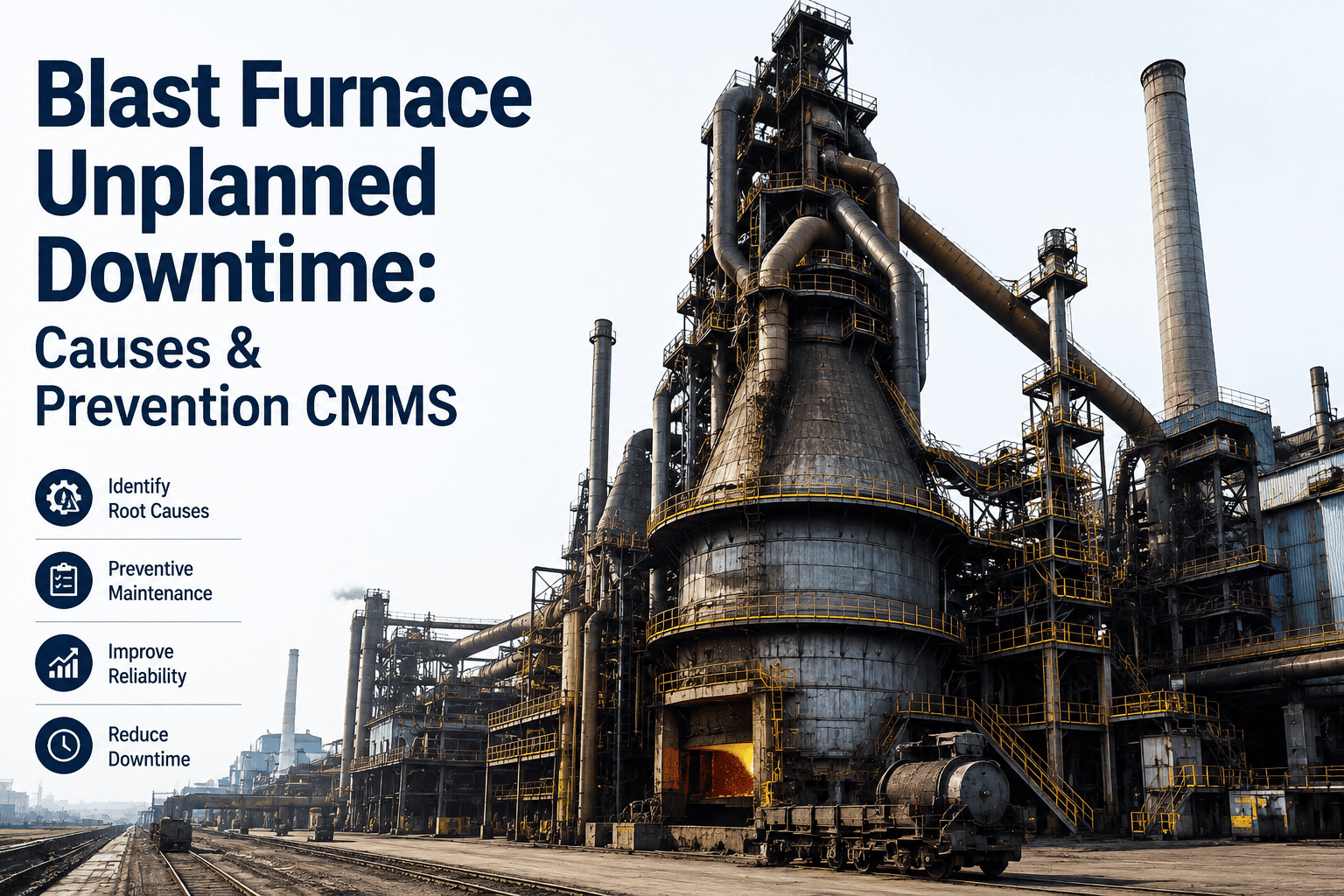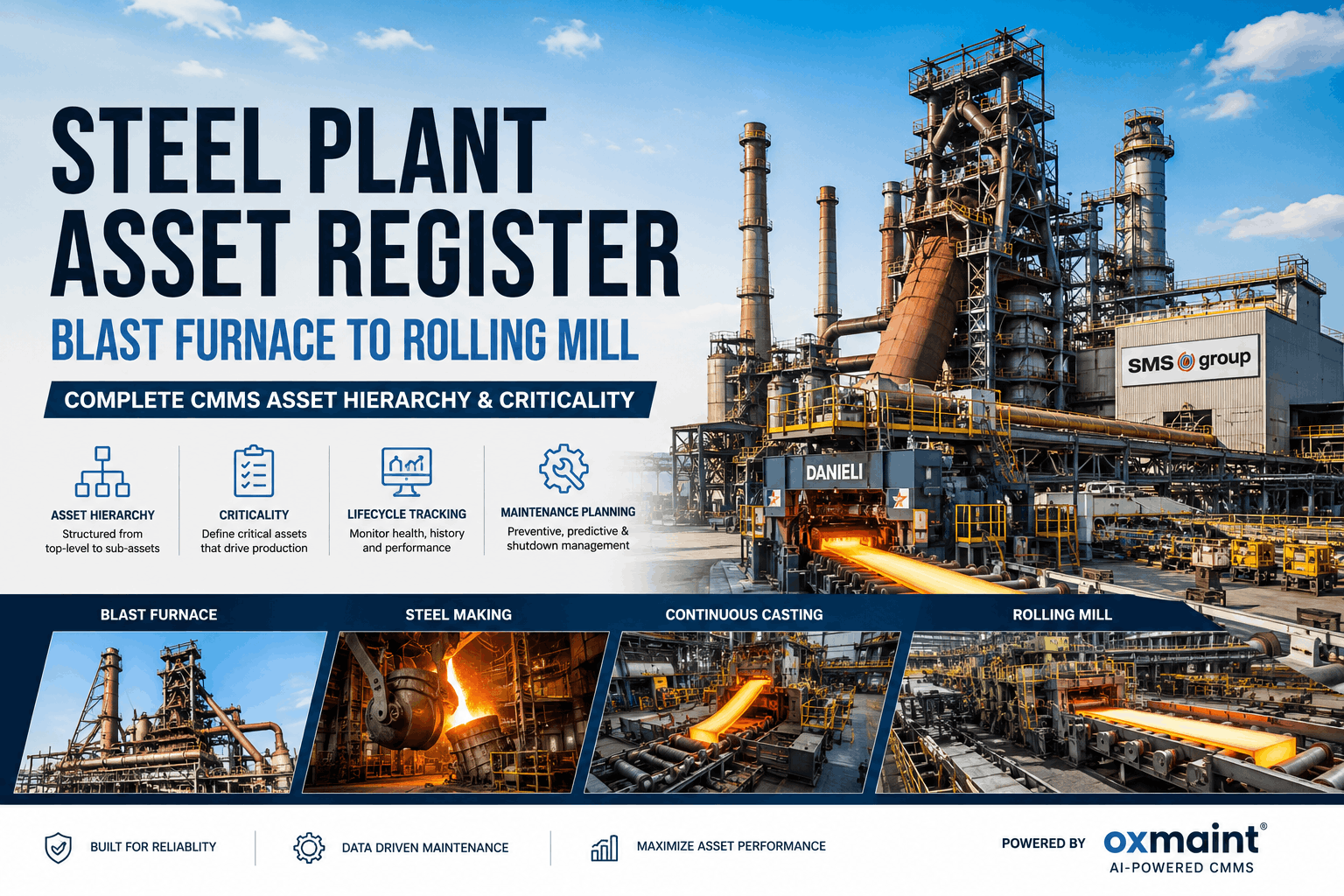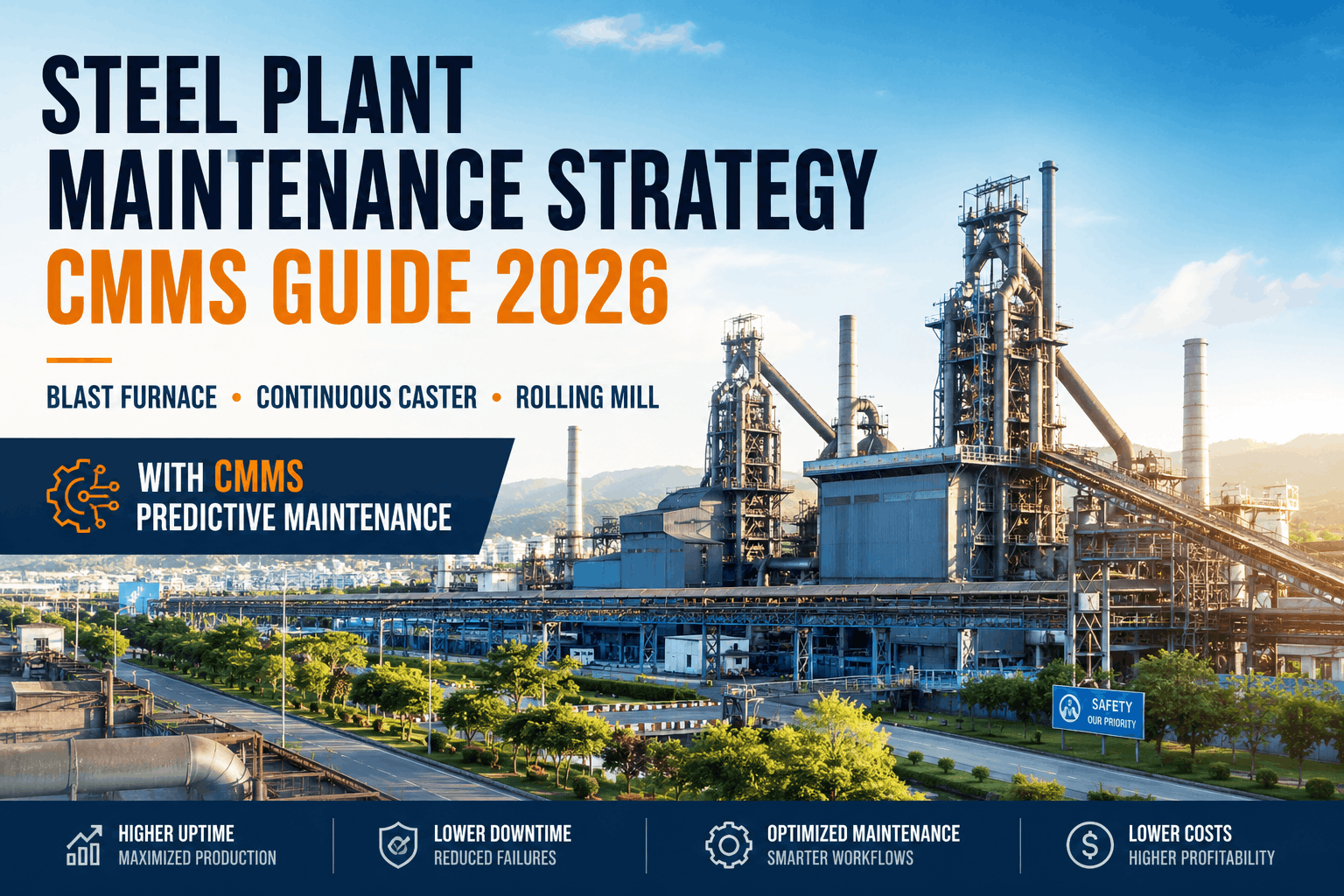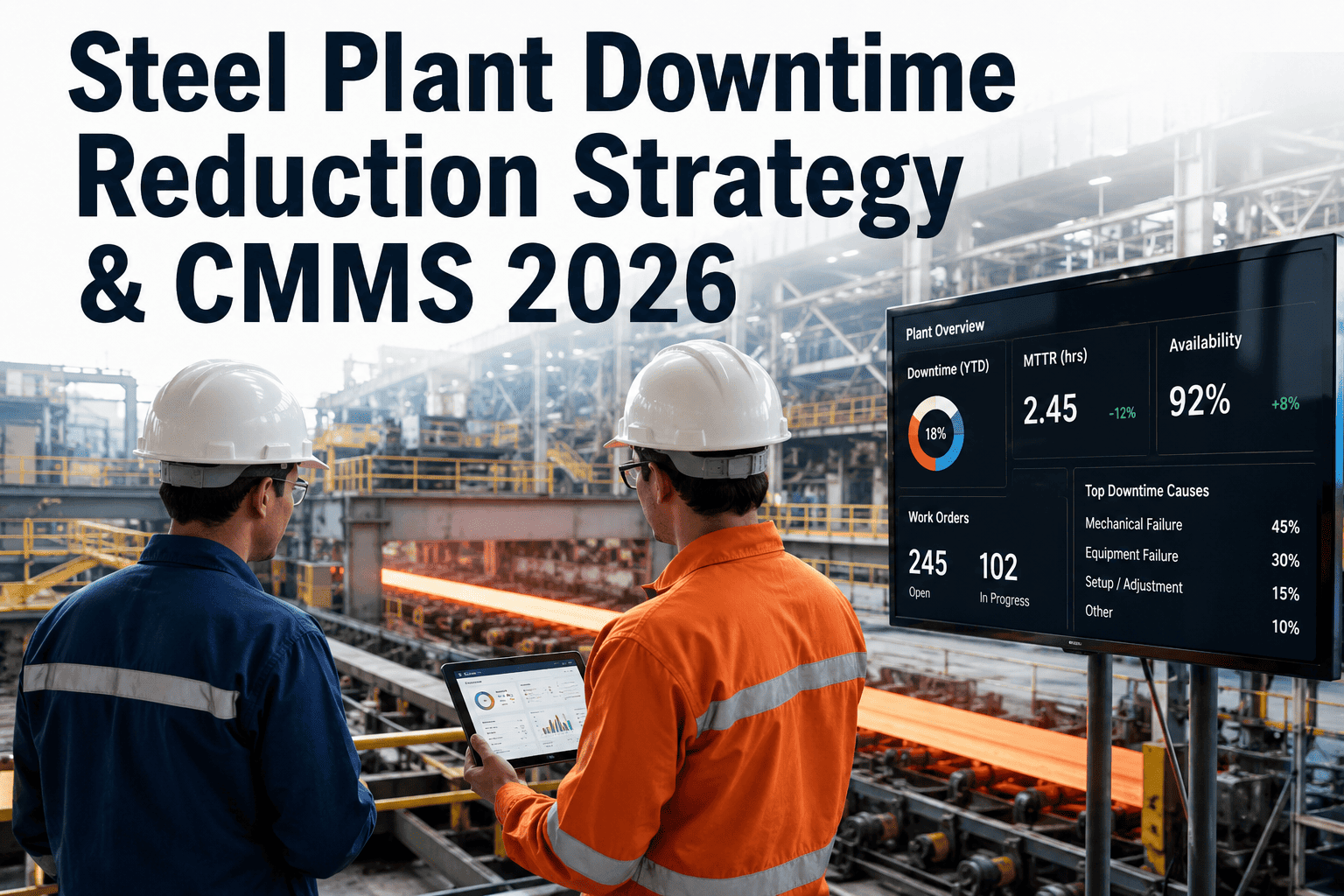
Steel plant downtime costs integrated mills anywhere from $200K to over $500K per hour on major process lines, making steel plant downtime reduction the single highest-leverage reliability initiative for 2026. When a blast furnace drops or a rolling mill seizes, every minute of lost production erodes margin that cannot be recovered. Disciplined CMMS-driven reliability programs—anchored in bad actor analysis, planned-to-unplanned ratio improvement, and precision maintenance execution—help integrated and mini-mills cut unplanned downtime 30–50% within the first year. This guide breaks down the exact downtime strategy steel plants need, and how OxMaint turns those strategies into measurable uptime. Ready to stop bleeding production hours? Start Free Trial and see the difference on your floor today.
Steel Downtime Reduction 2026
Every hour of unplanned downtime on your process line costs $200K–$500K+. How much are you losing?
Bad actors, aging preventive maintenance schedules, and disconnected spreadsheets are quietly draining profitability. OxMaint's AI-powered CMMS gives steel plants the structure to cut unplanned downtime by 30–50%, improve blast furnace availability, and keep rolling mills running at full capacity.
$500K+
Cost per hour of lost production
30–50%
Unplanned downtime reduction with CMMS
85%+
Target blast furnace availability
Top-Loss Analysis
How to reduce steel plant downtime: The 5-step reliability blueprint
Reducing steel plant downtime requires moving from a reactive firefighting culture to a disciplined, data-driven reliability program. Here is the proven 5-step blueprint used by integrated mills and mini-mills to recover lost hours.
Bad Actor Identification
Run a top-loss Pareto analysis on work order history to identify the 20% of assets causing 80% of unplanned downtime. In steel plants, bad actors are typically hydraulic systems, crane drives, cooling water pumps, and caster rollers.
Planned-to-Unplanned Ratio Shift
World-class mills maintain an 80/20 planned-to-unplanned work ratio. Most reactive plants sit at 40/60. Route more work through scheduled PMs and condition-based tasks to push the ratio above 70% planned within 6 months.
Precision Maintenance Execution
Standardize laser alignment, dynamic balancing, and torque procedures. Precision maintenance on couplings and bearings reduces vibration-induced failures, extending mean time between failures (MTBF) by up to 40% on rolling mill drives.
Predictive Maintenance Integration
Deploy vibration analysis, oil degradation sensors, and thermal imaging on critical rotating equipment. Catching bearing degradation 14 days before failure transforms a catastrophic outage into a scheduled 2-hour fix.
CMMS-Driven Root Cause Analysis (RCA)
Every unplanned event triggers an RCA workflow inside your CMMS. Closing the loop with permanent corrective actions ensures the same failure mode never takes down the caster or furnace twice.
KPI Tracking & Accountability
Track MTBF, MTTR, OEE, and downtime hours per asset class in real-time dashboards. Visibility drives accountability—when shift teams see the data, reliability performance improves organically.
Cost of Inaction
The true cost of steel plant downtime (and the ROI of fixing it)
When a blast furnace goes down, the cost isn't just lost steel production—it's raw material spoilage, emergency labor premiums, energy reheating costs, and downstream supply chain penalties. Quantifying this is the first step to building a business case for a downtime reduction strategy.
Annual Downtime Loss Formula
Downtime Hours × Production Rate × Margin per Ton = Annual Loss
Example: A plate mill losing 400 unplanned hours/year at 120 tons/hr and $150/ton margin loses $7.2M annually—before factoring in penalty clauses.
CMMS Payback Formula
Annual Downtime Savings + Labor Efficiency Gains = Total ROI
Example: A 180-asset mini-mill spending $42K/yr on CMMS that recovers just 100 hours of downtime saves $3.5M+—a payback period under 30 days.
| Process Area | Avg. Unplanned Downtime/Yr | Cost per Hour | Annual Loss | Recovery with OxMaint CMMS |
|---|---|---|---|---|
| Blast Furnace | 120 hrs | $500K | $60.0M | $18M – $30M |
| Continuous Caster | 200 hrs | $250K | $50.0M | $15M – $25M |
| Hot Rolling Mill | 300 hrs | $200K | $60.0M | $18M – $30M |
| Cold Rolling / Finishing | 250 hrs | $150K | $37.5M | $11M – $18M |
Blast Furnace & Rolling Mill Uptime
Blast furnace availability and rolling mill downtime: Critical assets to protect
Not all assets are created equal. Steel plant reliability programs must prioritize the critical path—the equipment whose failure immediately halts liquid steel production or finished product shipping. Focus your CMMS strategy on these three zones to maximize uptime.
Blast Furnace & Steelmaking
Blast furnace downtime reduction hinges on monitoring tuyere health, cooling stave leaks, and hot blast stove cycling. A single stave failure can drop the furnace for 48+ hours. OxMaint schedules refractory inspections and tracks thermal anomalies to push availability past 85%.
Continuous Caster
Caster reliability requires meticulous mold oscillator maintenance, spray chamber alignment, and roller bearing lubrication. Unplanned sequence breaks cost up to $250K/hr. OxMaint automates lubrication routes and tracks mold life to prevent breakouts.
Rolling Mills
Rolling mill downtime is driven by gearbox failures, coupler wear, and roll changes. Precision alignment and vibration monitoring on mill stands can extend component life by 40%. OxMaint triggers work orders automatically when PdM sensors detect threshold deviations.
See OxMaint on Your Assets
Book a 30-minute demo and discover how much downtime you can eliminate
Stop relying on whiteboards and reactive maintenance. See how OxMaint's AI-powered CMMS streamlines work orders, predicts failures, and recovers millions in lost production.
How OxMaint Helps
How OxMaint drives steel plant uptime with AI-powered CMMS
OxMaint is built for the harsh realities of steel manufacturing. By connecting work order management, predictive analytics, and spare-parts inventory in one platform, it gives maintenance and reliability teams the tools to execute a winning steel downtime reduction strategy.
Automated Work Order Management
Eliminate paper work orders and whiteboard scheduling. OxMaint auto-generates PMs, routes tasks to technicians' mobile devices, and captures digital sign-offs—cutting administrative time by 60% and ensuring no preventive task slips through the cracks.
Predictive Maintenance Analytics
OxMaint's AI analyzes vibration, temperature, and oil data to predict asset failures 7–14 days before they happen. Shift from reactive breakdowns to precision maintenance, cutting unplanned downtime on critical rolling mill drives by 30–50%.
Spare-Parts Inventory Optimization
Waiting for parts causes 25% of unplanned downtime. OxMaint links BOMs to assets, tracks stock levels in real-time, and auto-generates reorder alerts—ensuring critical bearings, couplers, and valves are always in stock without over-investing in inventory.
Maintenance Analytics & KPI Dashboards
Track MTBF, MTTR, OEE, and planned-to-unplanned ratios in real-time. OxMaint's customizable dashboards give plant managers instant visibility into blast furnace availability and caster reliability, making ISO 55000 compliance and audit-readiness effortless.
Real-World Impact
Mini-mill recovery: A worked example
Case Scenario
180-asset mini-mill producing rebar and wire rod
The Challenge
A regional mini-mill was spending $42K/yr on spreadsheet-based maintenance tracking. They suffered 520 hours of unplanned rolling mill downtime annually, costing $104K/hr in lost margin—totaling $54M in lost production. Their planned-to-unplanned ratio was stuck at 35/65, and spare parts shortages caused 30% of delays.
The OxMaint Solution
Within 90 days of deploying OxMaint, the mill digitized 1,800 work orders, set up automated PM routes, and integrated vibration sensors on 40 critical mill stands. The AI-driven CMMS flagged 12 impending bearing failures before they caused unplanned outages.
The Results (12 Months)
- 45% reduction in unplanned downtime (234 hours recovered)
- $24.3M saved in reclaimed production margin
- 72% planned work ratio (up from 35%)
- 30-day payback on CMMS investment
Frequently Asked Questions
Steel plant downtime reduction strategy: Questions answered
What is the biggest cause of steel plant downtime?
The biggest causes of steel plant downtime are reactive maintenance cultures, inadequate preventive maintenance on critical rotating equipment, and spare-parts stockouts. Bad actors like rolling mill gearboxes, hydraulic systems, and caster bearings typically account for 60–80% of unplanned hours. Implementing a CMMS to track failure modes and automate PM scheduling directly addresses these root causes.
How much can a steel plant reduce downtime with a CMMS?
Integrated mills and mini-mills that implement a disciplined, CMMS-driven reliability program typically cut unplanned downtime by 30–50% within the first 12 months. By improving the planned-to-unplanned ratio, standardizing precision maintenance, and adding predictive analytics, plants recover hundreds of production hours. You can see exactly how OxMaint achieves this—Book a Demo for a personalized walkthrough.
How does blast furnace downtime reduction work?
Blast furnace downtime reduction focuses on maximizing campaign life and preventing forced outages. This involves scheduling regular refractory and cooling stave inspections, monitoring hot blast stove cycling, and tracking thermal anomalies. A CMMS like OxMaint automates these inspection routes, logs condition data, and triggers corrective work orders before minor issues escalate into 48-hour furnace dropouts.
How long does it take to implement a steel downtime CMMS?
A focused CMMS implementation for a steel plant takes 4 to 8 weeks. This includes asset hierarchy setup, PM schedule migration, spare-parts BOM linking, and technician training. OxMaint's onboarding team specializes in rapid deployment for heavy industry, ensuring your maintenance teams are actively using the system to reduce downtime within the first month.
What is the planned-to-unplanned maintenance ratio in steel plants?
The planned-to-unplanned maintenance ratio measures the percentage of maintenance work that is scheduled versus reactive. World-class steel plants maintain an 80/20 ratio, meaning 80% of work is planned. Most struggling plants sit at 40/60. Using a CMMS to automate PM scheduling and integrate predictive maintenance is the fastest way to push this ratio above 70% planned.
Start Your Downtime Reduction Journey
Stop losing $500K an hour. Start your steel plant uptime revolution today.
Join the integrated mills and mini-mills using OxMaint to predict failures, automate work orders, and recover millions in lost production margin. Your competitors are already optimizing—don't let them outpace your floor.
Free 14-day trial · No credit card required