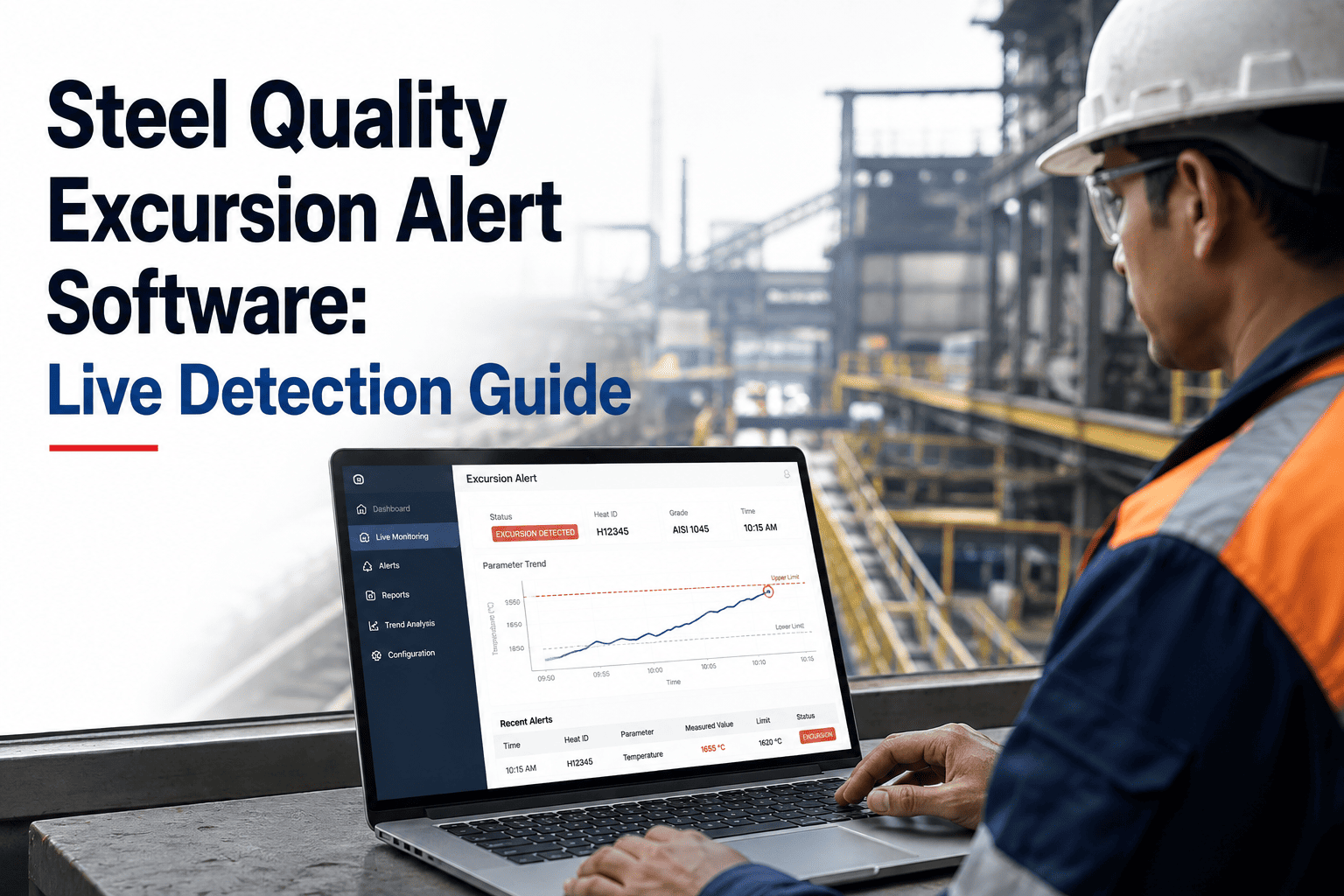
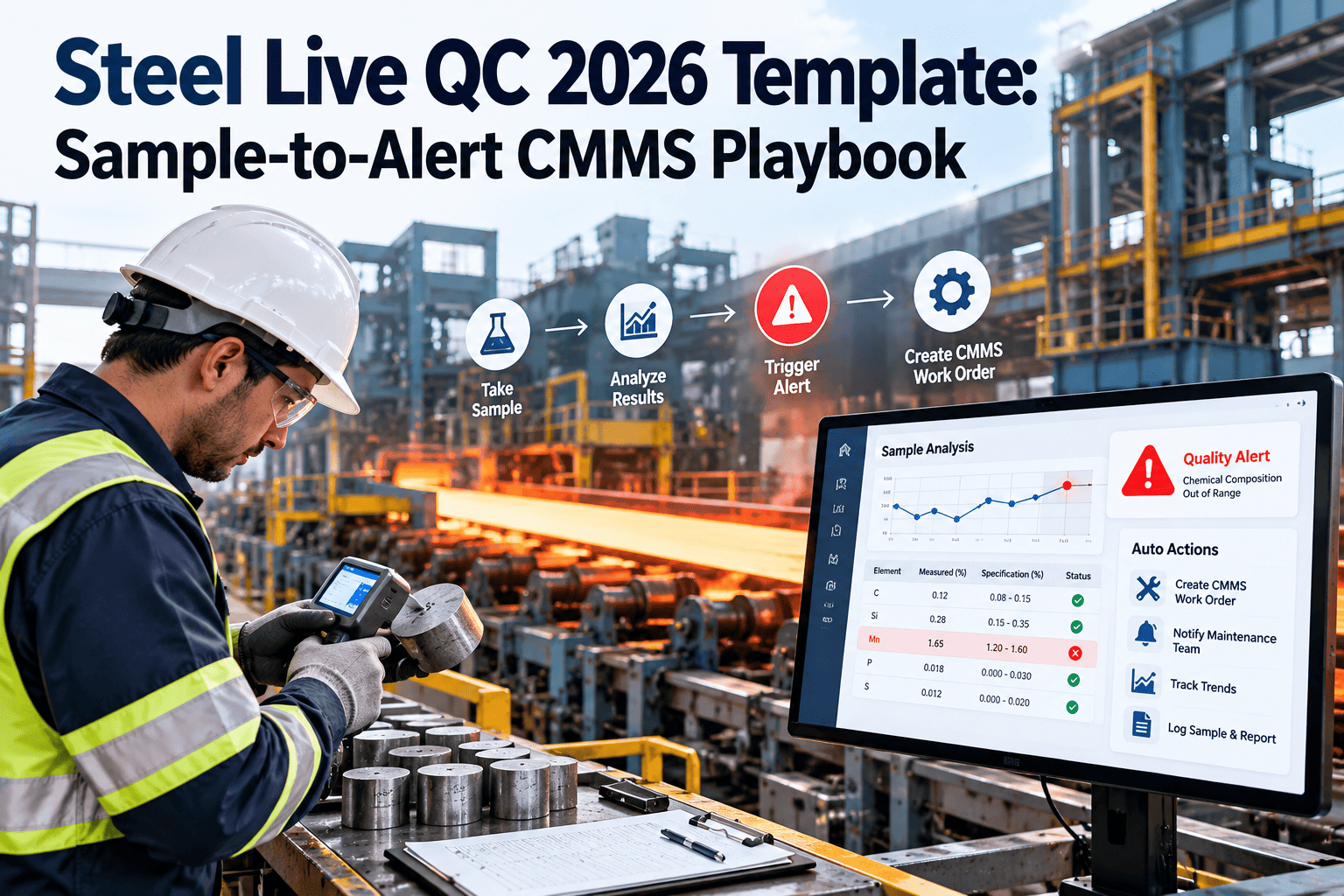
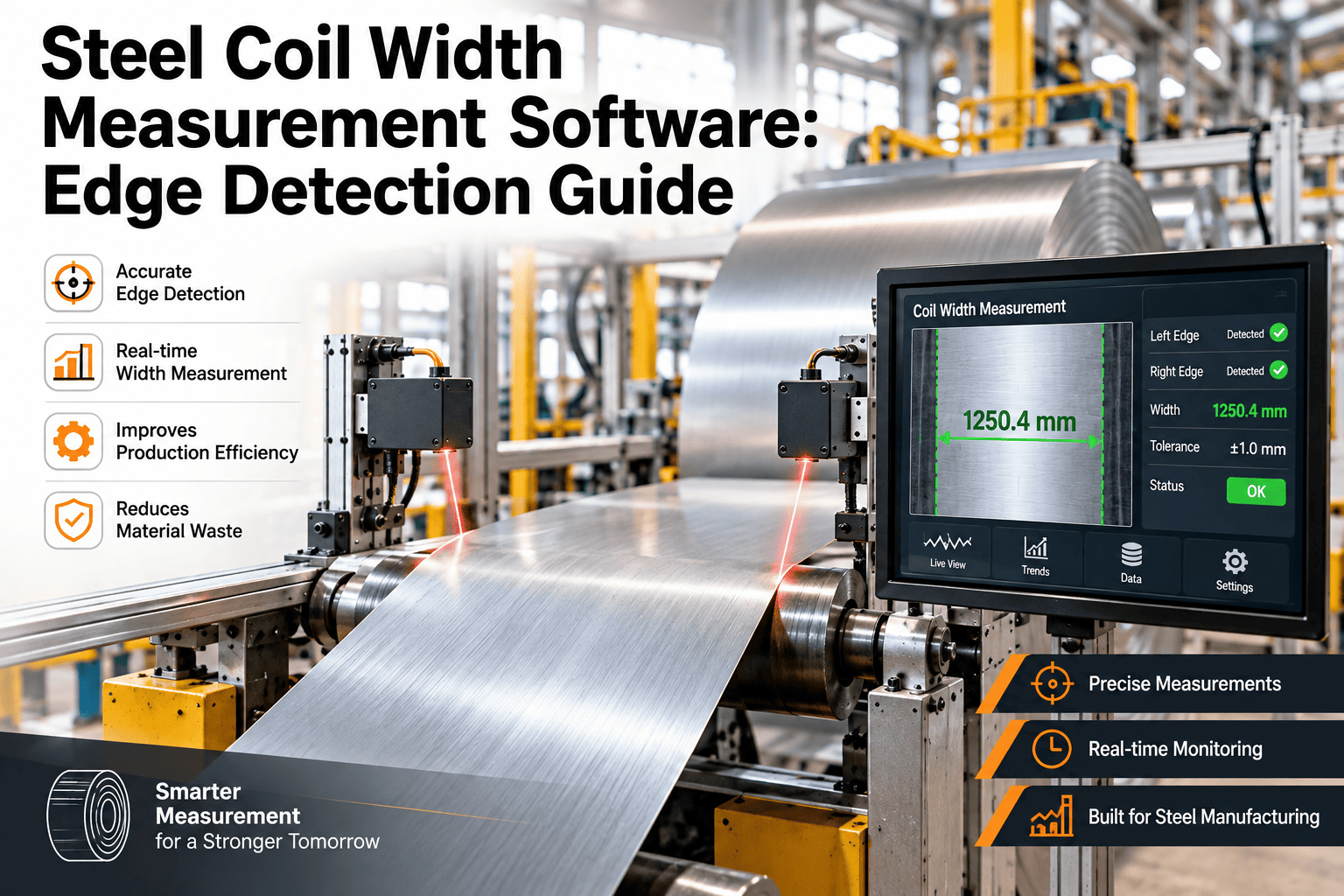
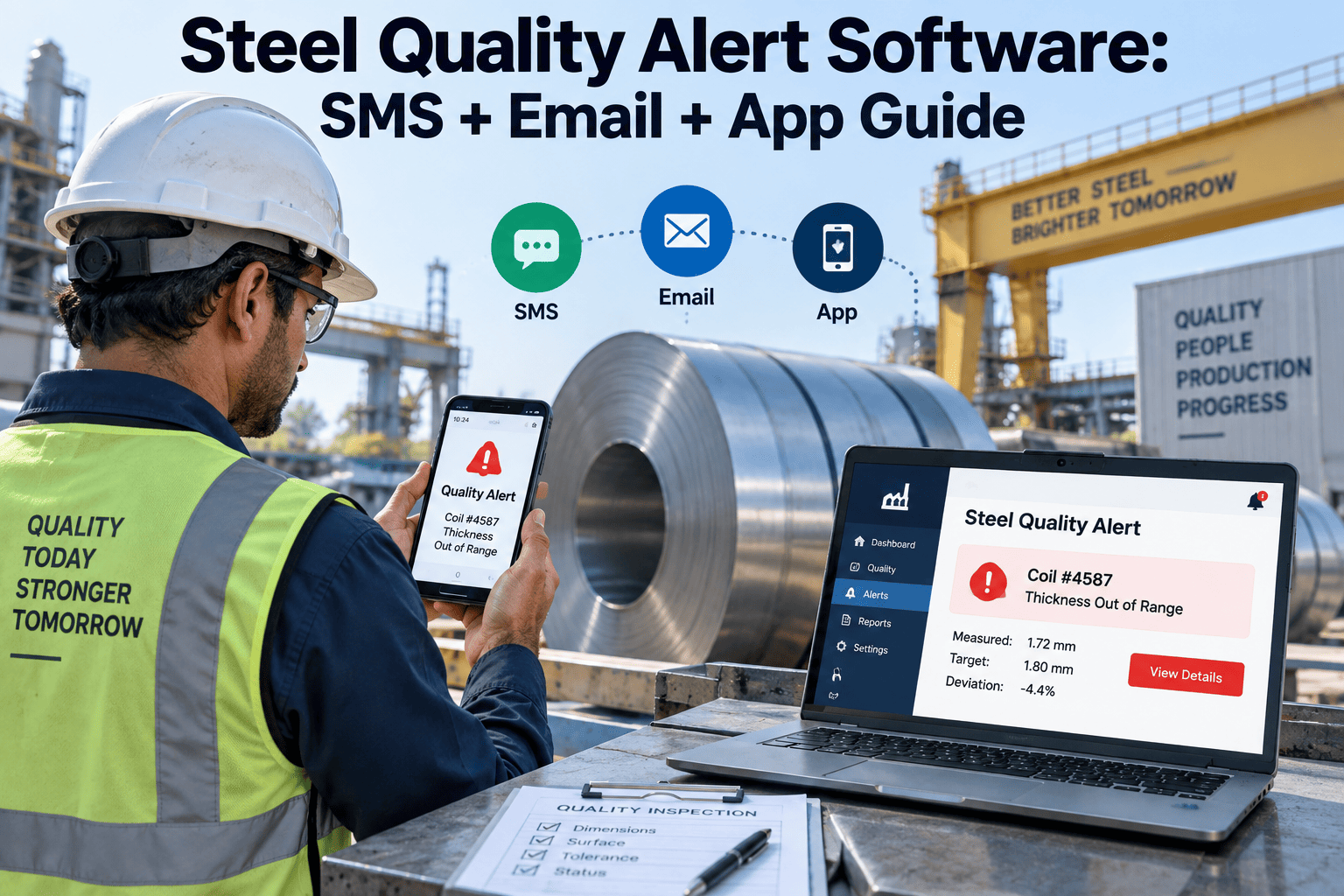
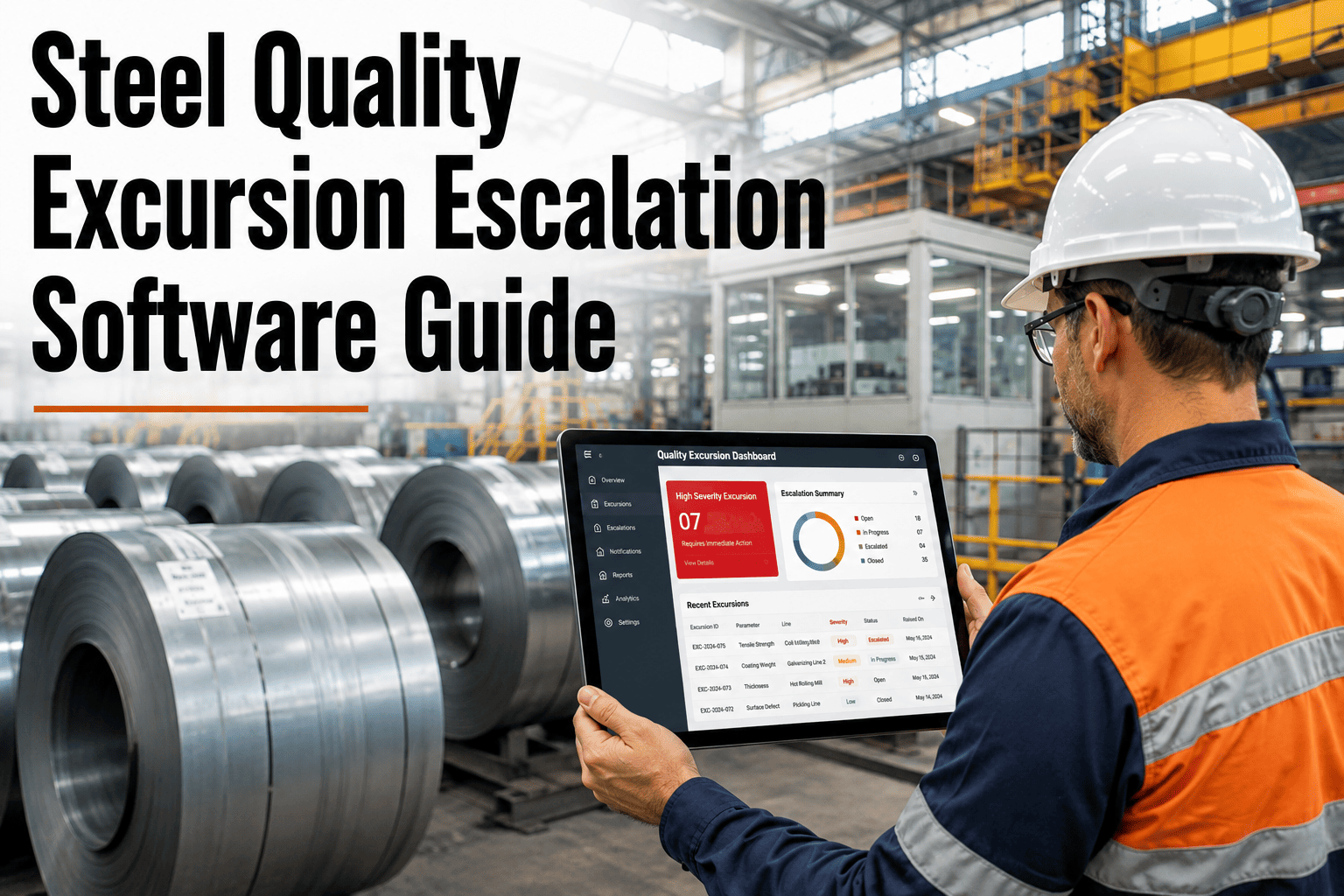
A quality excursion in a steel plant rarely announces itself with a loud failure — it shows up as a gauge reading drifting half a millimeter off target, a coating thickness sliding out of tolerance, or a chemistry result that's a fraction outside spec. By the time a lab report or end-of-shift review catches it, an entire coil, heat, or production run may already be off-spec scrap. Live detection changes that window from hours to seconds, catching the drift while there's still time to adjust the line instead of writing off the output. Start a free trial to see live excursion alerts running against your own process data, or book a demo to walk through detection setup for your lines.
Live Quality Detection · Steel Process Alerts · OxMaint
Catch the Excursion Before It Becomes a Scrapped Coil
Off-spec strip, gauge deviation, and surface defects all leave a signal in the process data minutes before anyone notices on the floor. Live alerting closes that gap and puts the decision back in your operator's hands while the line is still running.
$3,400
average scrap cost per coil when a gauge or coating excursion runs undetected for a full production cycle
22 min
typical delay between an off-spec reading and lab confirmation without live process alerting in place
31%
of annual scrap and rework volume traced back to excursions that could have been caught within the first minute
96%
detection accuracy achieved on gauge and thickness deviations once live alerting is tuned to line-specific tolerances
$2.1M
Average annual scrap cost tied to late-detected quality excursions at a mid-size flat products facility. Live alerting on gauge, coating, and surface parameters typically recovers 40-55% of that loss by giving operators a window to correct the line instead of finishing the run off-spec.
What Counts as a Quality Excursion
A quality excursion is any measured parameter that drifts outside its control limits during production — not necessarily out of final spec yet, but heading there. Gauge deviation on a cold rolling line, coating weight drift on a galvanizing line, chemistry variance in a ladle, and surface defects picked up by inline cameras are the four most common categories in steel processing. The challenge isn't measuring these values; most plants already have the sensors and lab systems in place. The challenge is surfacing the drift to the right person while the line is still running the affected material, rather than after the coil is coiled, cooled, and sitting in the yard.
Gauge and Thickness Deviation
Real-time comparison against target thickness catches roll wear or tension issues before an entire coil runs thin or thick
Coating Weight Drift
Galvanizing and coating lines flagged the moment applied weight trends toward the tolerance edge, not after lab sampling
Chemistry and Composition Variance
Ladle and melt chemistry results compared against grade specification in real time, alerting before casting begins
Surface Defect Detection
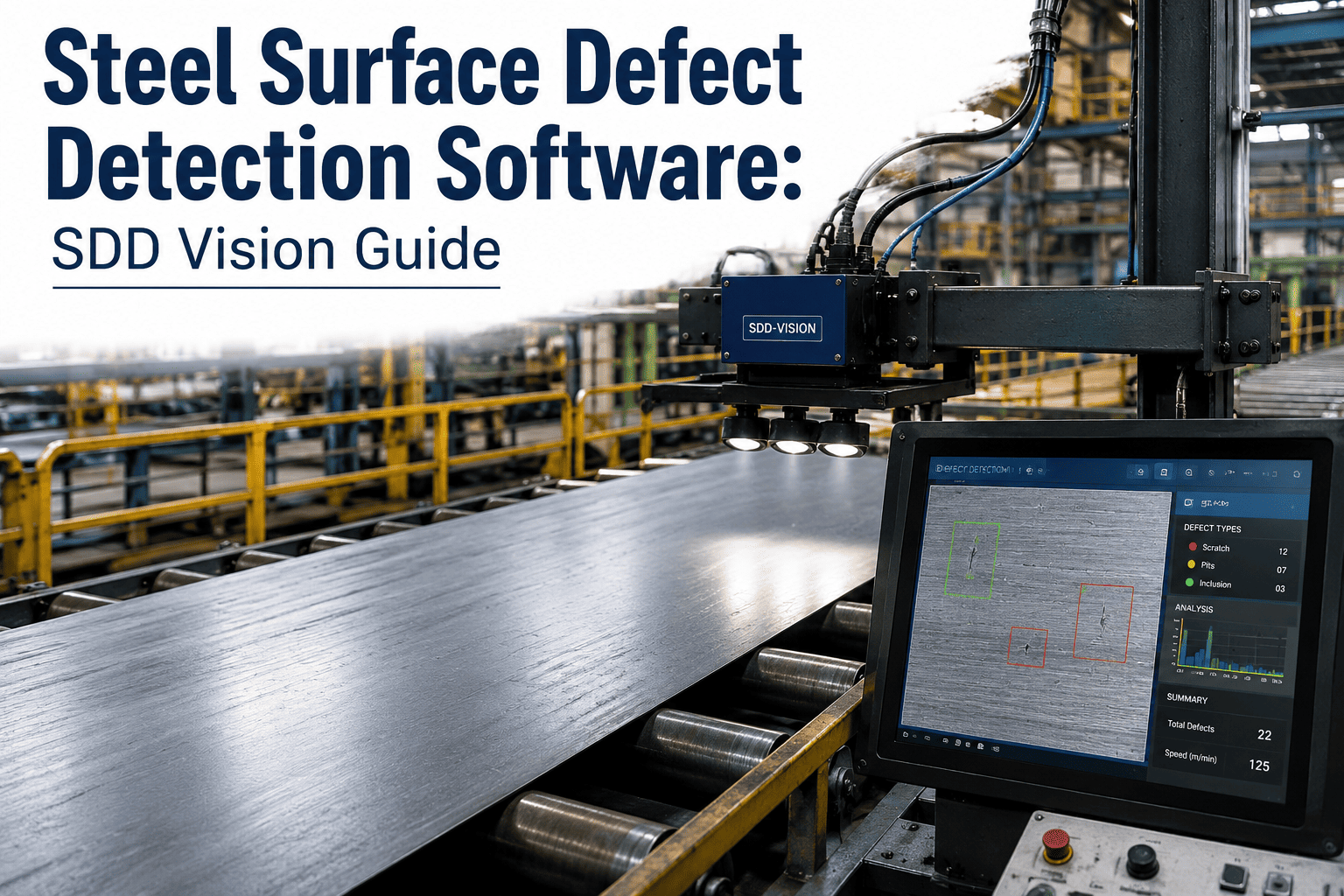
Inline imaging flags scratches, scale, and edge defects as they occur, tagging the exact coil position for downstream review
Lab-Cycle Detection vs. Live Process Alerting
Most quality control programs in steel plants are still built around periodic lab sampling — accurate, but slow relative to how fast a line runs. Live alerting doesn't replace the lab; it closes the gap between when a drift starts and when someone with the authority to adjust the line actually finds out.
Every minute an excursion runs undetected is more material heading toward the scrap pile.
OxMaint's live alerting watches gauge, coating, chemistry, and surface parameters against your tolerance bands and notifies the right operator the moment a drift starts — not after the coil is already off-spec.
How Live Alert Triage Actually Works
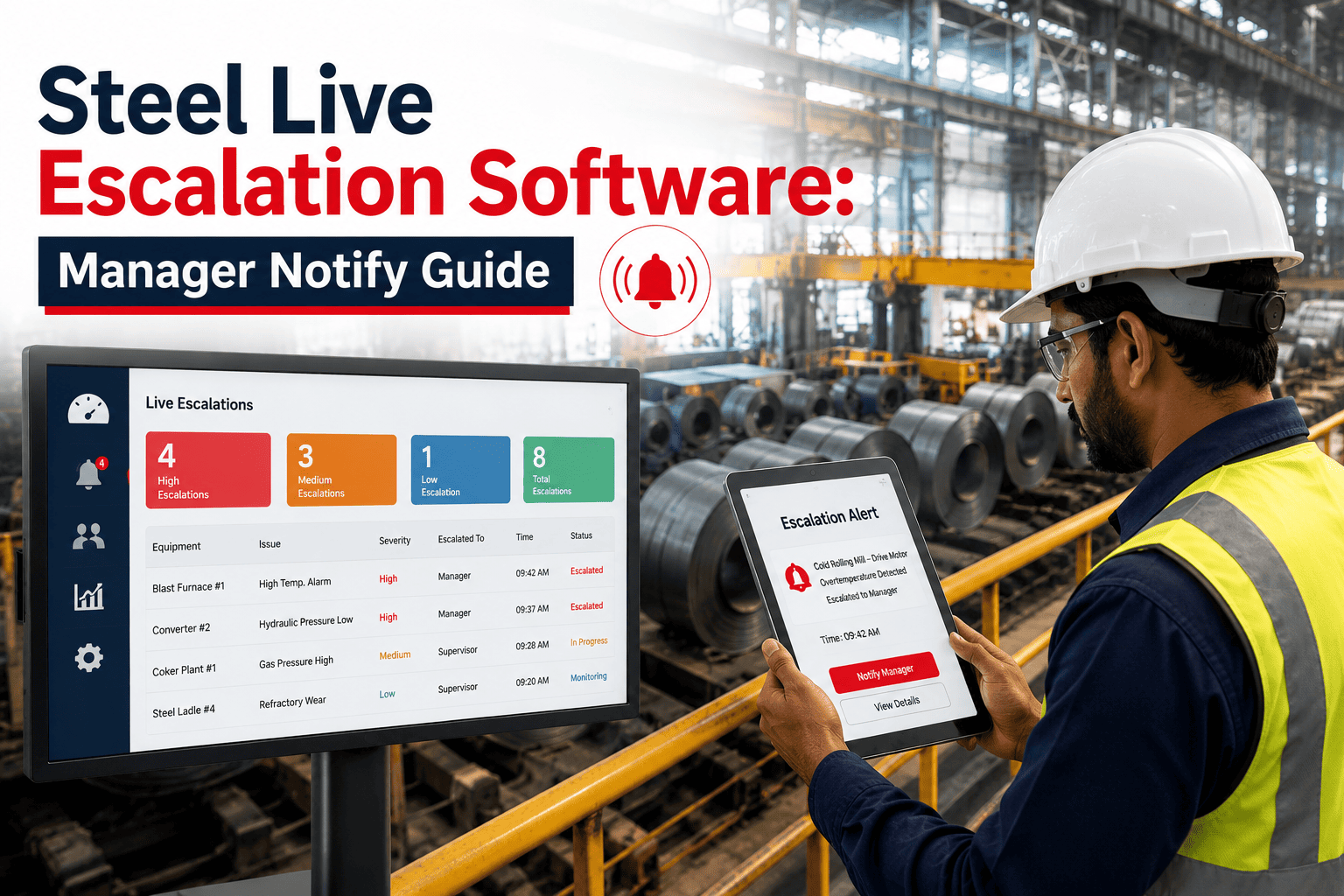
Detecting the drift is only half the job — the alert has to reach someone who can act on it, with enough context to make the right call in seconds. OxMaint's triage layer scores each excursion by severity, material affected, and downstream impact before it ever reaches an operator's screen.
Severity Scoring
Not Every Drift Is Urgent
Minor variance within acceptable trend gets logged silently; anything trending toward final spec violation is escalated immediately with context
Coil-Level Tagging
Exact Material Identification
Every alert is tagged to the precise coil position or heat number, so downstream teams know exactly what material needs a hold or review
Operator-First Routing
Alerts Reach the Line, Not Just a Report
Notifications go to the operator console and shift supervisor directly, skipping the delay of a batch quality report reaching the floor
Fewer Full-Coil Holds
Catching drift early narrows quality holds to the affected meters of strip instead of an entire coil or production run
Faster Root-Cause Reviews
Continuous trend data makes it far easier to trace an excursion back to a roll change, tension setting, or chemistry batch
Stronger Customer Claims Position
Documented live monitoring and rapid response strengthens quality records when disputing or reviewing customer claims
Continuous Tolerance Tuning
Alert thresholds get refined over time as the system learns which drifts on which lines actually lead to out-of-spec material
We used to find out about a coating weight excursion when the lab result came back, which meant the whole coil was already made. With live alerting we catch the drift inside the first minute and adjust the line before it ever leaves acceptable tolerance. Our coating-related scrap dropped by more than a third in the first two quarters.
— Quality Manager, Galvanizing Line, Indiana, USA
Frequently Asked Questions
What's the difference between a quality excursion and an out-of-spec result?
An excursion is a parameter drifting outside its control limit while still inside final spec — an early warning. An out-of-spec result means the material has already failed the requirement.
Does live alerting replace our lab testing process?
No, it works alongside it. Lab testing confirms final quality; live alerting shortens the time between a drift starting and someone being able to respond to it.
Which steel processes benefit most from live excursion alerts?
Cold rolling gauge control, galvanizing coating weight, ladle chemistry, and surface inspection on finishing lines see the fastest measurable scrap reduction.
Can alert thresholds be set differently for each product grade?
Yes. Tolerance bands can be configured per grade, gauge, and coating specification, since acceptable drift varies significantly across product lines.
How quickly can live alerting be set up on an existing line?
Most lines with existing sensors are live within a few weeks. You can
book a demo to see the setup process for your specific equipment.
Stop Finding Out About Excursions After the Coil Is Made
Live detection turns a lab-cycle delay into a same-minute correction, keeping material in spec instead of heading to the scrap yard. See how OxMaint's alerting fits your process parameters and control limits.