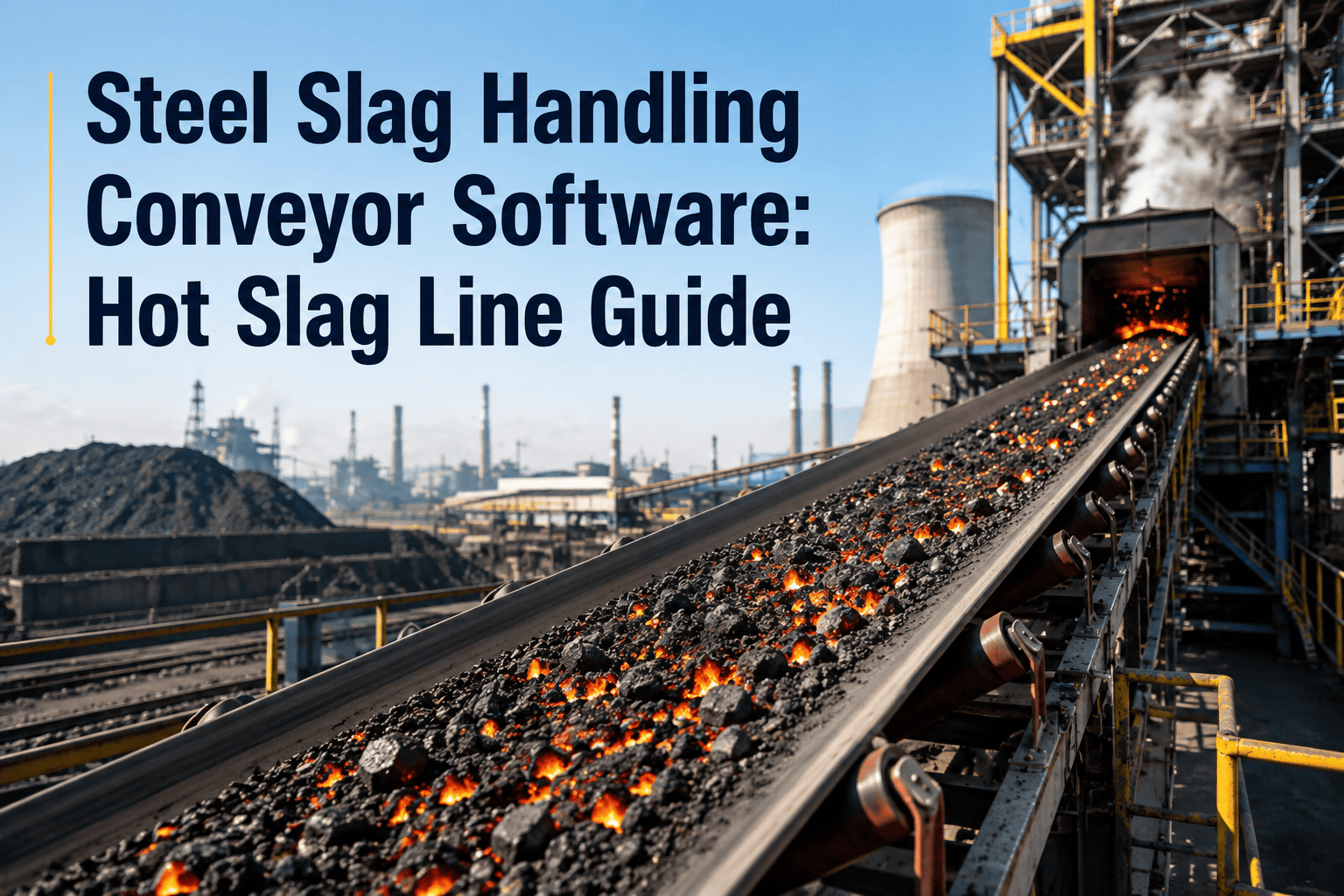
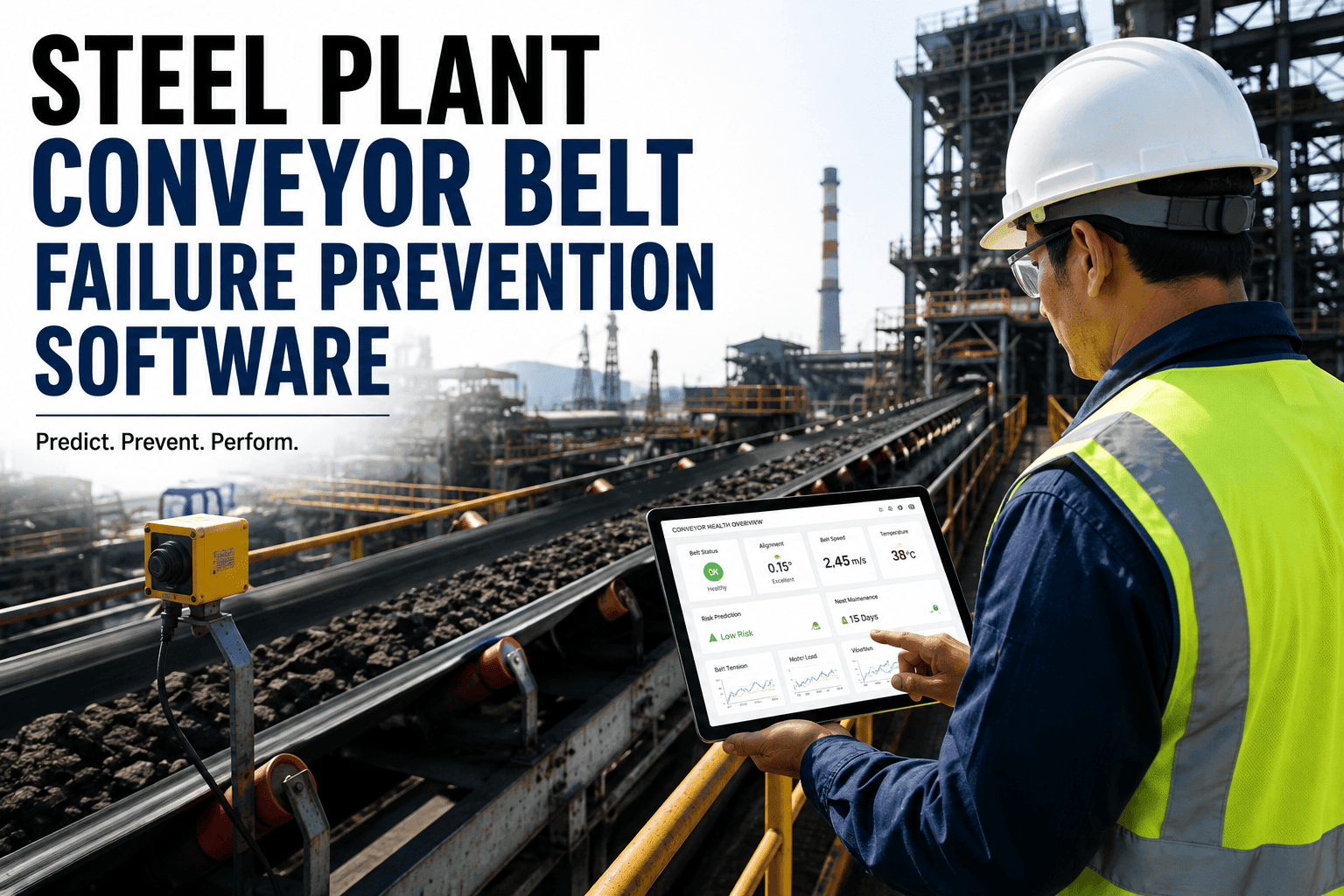
Every integrated mill runs two production lines at once — the steel line everyone plans around, and the slag line nobody budgets for until it stops moving. Molten slag leaves the BOF or EAF at 1,400–1,500°C, rides a pot car to the yard, gets water-granulated or air-cooled, crushed, screened, and finally loaded onto belts headed for cement plants or road-base stockpiles. Each handoff — pot car to runner, granulation pit to dewatering conveyor, crusher to screen, screen to load-out belt — is a place where heat, abrasion, or corrosive moisture quietly eats away at steel until a belt splits or a pot car wheel seizes mid-shift. Most mills track slag tonnage in their ERP and nothing else, so the first sign of trouble is usually a stopped line and a crew standing around a smoking idler. OxMaint gives slag handling teams a single view of pot car condition, conveyor belt wear, and granulation plant health before any of it turns into a shutdown.
Stop Losing Shifts to Slag Line Failures
Condition monitoring and PM scheduling built around pot cars, granulation conveyors, and slag crushing lines. Mills report 30–40% fewer unplanned slag line stoppages within two quarters.
6–14 months
Typical belt cover life on granulated slag conveyors before abrasion and corrosion force replacement.
$180K–$420K
Average cost of an unplanned slag conveyor failure, including production backup, crane recovery, and expedited belt replacement.
4–8 hours
Average slag yard backup time when a single pot car or granulation conveyor goes down without warning.
The Slag Handling Chain — Five Zones Where Conveyors Fail
Slag handling is not one system, it is five very different environments strung together, and each one destroys equipment in its own way. A pot car wheel bearing fails from a different root cause than a granulation conveyor idler, and treating the whole chain as "material handling" is why most mills only find out something is wrong after it stops. Here are the five zones, ranked by how often they cause slag line downtime.
Slag Pot Car & Rail Transport
30–36% of slag line stoppages
Pot cars haul 15–30 tonne loads of molten slag from the furnace to the dumping yard, often several times an hour. Wheel flats, axle bearing overheating, and rail misalignment build up slowly and then fail without warning, stranding a loaded pot mid-transit. Radiant heat from the pot itself accelerates bearing grease breakdown compared to any other rolling equipment in the plant. Tracking bearing temperature trends and wheel wear cycles catches degradation weeks before a car has to be pulled from service mid-heat.
Hot Slag Runner & Launder Conveyors
22–28% of slag line stoppages
Runners and short launder conveyors carry slag while it is still glowing, sitting within metres of radiant heat that conventional belting cannot survive for long. Heat-resistant covers degrade faster than gauges suggest, and a single scorched section can force an emergency shutdown of the pour itself. Shell and frame temperature monitoring around these short runs gives early warning of cover breakdown before it becomes a line-stopping burn-through.
Water Granulation Plant & Dewatering Conveyors
18–24% of slag line stoppages
Granulation quenches molten slag into sand-like GGBS feedstock, and the dewatering conveyors that lift it out of the pit run permanently wet, hot, and loaded with fine abrasive grit. This combination corrodes idler shells and seizes bearings faster than any dry-material conveyor in the plant. Idler seizure here is a known fire risk when a stalled roller grinds against a moving belt under load. Vibration and moisture-exposure tracking on these conveyors typically flags a failing idler 10–15 days before it locks up.
Crushing, Screening & Air-Cooled Slag Belts
10–16% of slag line stoppages
Air-cooled slag is hard, sharp-edged, and abrasive enough to strip belt covers and chew through chute liners far faster than iron ore or coke. Impact loading at crusher discharge points is the single biggest driver of premature belt splicing failure on this run. Tracking cover thickness loss and splice condition against tonnage processed lets teams plan re-cover work before a rip takes the belt down mid-shift.
Slag-to-Cement & Aggregate Load-Out Belts
8–14% of slag line stoppages
The final run to rail cars or trucks looks like a low-risk finished-product belt, but inconsistent GGBS moisture content causes buildup on pulleys and drift that misaligns the belt over weeks. Left unmanaged, tracking drift leads to edge damage and unplanned stops right at the point mills are trying to hit shipment deadlines. Pulley lagging wear and tracking-drift trends are the two leading indicators worth watching here.
Slag Handling CMMS — OxMaint
One Dashboard for Pot Cars, Runners, Granulation & Load-Out
Instead of five separate maintenance logs for five different slag zones, OxMaint gives crews one place to log inspections, track wear trends, and schedule work before a stoppage forces the decision for them.
Slag Equipment by Zone — Temperature, Wear Rate & What to Monitor
Each zone in the slag chain runs at a different temperature and wears through equipment at a different rate, so a single maintenance checklist rarely fits all five. The table below breaks down what typically drives failure at each stage and which readings are worth tracking to catch it early.
Six Steps to a Reliable Slag Handling Maintenance Programme
Mills that get slag handling under control follow a similar sequence, moving from paper logs to condition-based scheduling in a matter of months rather than years. Here is the path that consistently works.
Step 1
Map the Chain, Not Just the Belts
List every pot car, runner, granulation conveyor, crusher line, and load-out belt as a distinct asset with its own duty cycle. Most mills discover during this step that several conveyors were never on a maintenance schedule at all.
Step 2
Set Inspection Baselines by Zone
Hot runners need daily visual checks; load-out belts might only need weekly. Matching inspection frequency to actual wear rate, instead of one plant-wide interval, is what makes a programme sustainable for crews.
Step 3
Add Condition Sensors Where Failures Are Costliest
Bearing temperature on pot cars and vibration on granulation idlers give the earliest warning for the least sensor spend. Start where failures are most expensive, not everywhere at once.
Step 4
Move Repairs to Planned Windows
Once wear trends are visible, belt re-covering and wheel replacement can be scheduled around production, not squeezed in during a breakdown that stops the whole yard.
Step 5
Track Cost Per Zone, Not Just Total Spend
Separating pot car costs from granulation costs from load-out costs shows which zone is draining the budget, so capital gets directed to the highest-return fix first.
Step 6
Review and Recalibrate Every Quarter
Slag chemistry, tonnage, and even seasonal moisture change wear rates over time. A quarterly review keeps inspection intervals and sensor thresholds matched to how the plant is actually running today.
What Unplanned Slag Line Failures Actually Cost
The gap between a planned belt change and an emergency one is rarely just the part price — it is the crane time, the backed-up pots, and the overtime crew called in to fix it fast. The comparison below shows three realistic scenarios from mills running a slag handling CMMS.
Planned Belt Re-Cover
Scheduled from wear trend data
Materials (standard lead time)
$28,000
Labour (day-shift crew)
$14,000
Downtime (6–8 hour planned window)
$22,000
Total planned cost
$64,000
Emergency Belt Failure
Rip detected too late
Materials (expedited)
$46,000
Labour (overtime, callout)
$31,000
Downtime (18–24 hour recovery)
$110,000
Yard backup & pot rerouting
$38,000
Total emergency cost
$225,000
Pot Car Bearing Catch
Caught 3 weeks early
Bearing & wheel replacement
$9,500
Downtime (car pulled between heats)
$4,000
Avoided cost if seized mid-transit
$95,000+
Net saved by early catch
$81,500
Our slag yard used to be the part of the plant nobody wanted to own. Pot cars would seize up mid-run, granulation idlers caught fire twice in one year, and every fix was a scramble. Once we started tracking bearing temperature and idler vibration in OxMaint, we could see problems building weeks out instead of finding out when something stopped moving. We have not had an unplanned pot car failure in over a year, and our granulation conveyor belt life went up by almost five months on average.
— Slag Yard Maintenance Lead, Integrated Steelmill
Choosing Slag Handling CMMS — What Actually Matters
Not every maintenance platform is built for equipment that runs hot, wet, and abrasive at the same time. These are the four things worth checking before committing to one for your slag line.
Handles Mixed-Environment Assets
Your slag chain spans radiant-heat runners, submerged granulation conveyors, and dry load-out belts in one system. The software needs separate asset profiles and thresholds for each, not one generic conveyor template applied everywhere.
Works From a Yard, Not Just a Desk
Slag yard crews are rarely at a computer. Mobile inspection logging that works in a hot, dusty outdoor environment matters more here than in almost any other part of the plant.
Tracks Cost by Zone
A platform that only reports total slag-handling spend hides which zone is actually driving cost. Zone-level reporting is what lets a maintenance manager justify budget for the right fix.
Sets Realistic Alert Thresholds
A system that alerts on every minor fluctuation trains crews to ignore it. Good slag handling software calibrates thresholds to each zone's normal operating range so alerts stay meaningful.
Frequently Asked Questions — Steel Slag Handling Conveyor Software
What makes slag conveyors different from other steel plant conveyors?
Slag equipment spans extreme heat near the furnace, constant moisture at the granulation plant, and heavy abrasion at the crusher, often within the same production line. A single maintenance approach rarely covers all three.
See how OxMaint separates these zones in one asset register.
How often should slag pot car bearings be inspected?
Most mills run visual checks daily and temperature trend monitoring continuously, since bearing failure on a loaded pot car can strand molten slag mid-transit. Weekly deep inspections catch wear that daily checks miss.
Why do granulation conveyor idlers fail so often?
Continuous exposure to hot water and fine abrasive grit corrodes idler shells and washes lubrication out of bearings far faster than dry-material conveyors elsewhere in the plant. Vibration monitoring typically gives 10–15 days of warning before seizure.
Can existing slag handling equipment be retrofitted with monitoring?
Yes. Temperature and vibration sensors can be added to existing pot cars, runners, and conveyors without replacing the equipment itself. Most mills start with the two or three highest-failure zones and expand from there.
How fast can a slag handling CMMS pay for itself?
Preventing a single emergency belt failure or pot car seizure typically covers the annual software cost several times over. Most mills see measurable downtime reduction within the first two quarters.
Book a demo to see ROI modelled against your own tonnage.
Slag Handling CMMS — OxMaint
Keep Molten Slag Moving. Keep Crews Out of Emergency Mode.
30–40%
fewer unplanned slag line stoppages
10–15 days
average early warning on idler failure
$80K+
saved per avoided emergency failure