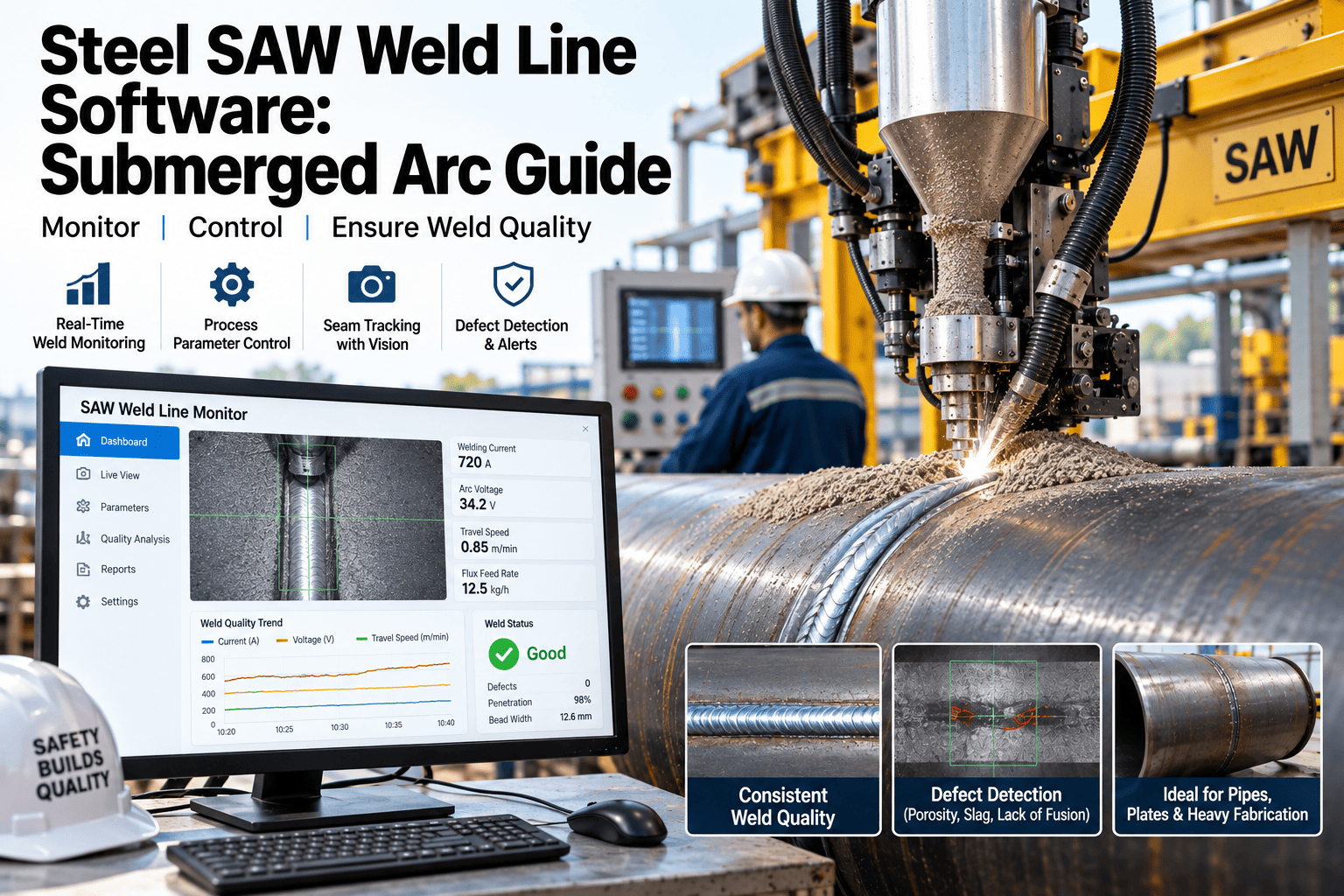
Submerged arc welding runs some of the highest-deposition, highest-consequence joints in a steel plant — longitudinal seams on LSAW line pipe, girth welds on large-diameter pipe, and structural plate seams where a single root pass defect can void an entire joint. Because the arc is buried under a blanket of granular flux, operators can't see the weld pool directly, which makes parameter discipline and flux handling the two things that decide whether a SAW line ships good pipe or reworks it. This guide covers how steel plants manage SAW parameter control, flux delivery, and root pass QC through a connected maintenance and quality system.
You can't see the SAW weld pool — so your parameters have to be right the first time
Voltage drift, contaminated flux, and root pass misalignment on a submerged arc line don't show up until the flux is chipped away. OxMaint tracks parameter compliance, flux inventory, and root pass QC against every joint so drift gets caught before the seam is buried under weld metal.
How flux moves through a SAW weld line — and where defects enter
Flux quality is the single biggest variable in SAW weld integrity that operators can't visually verify mid-weld. Tracking the flux delivery chain end to end is how plants catch contamination before it reaches the arc, and it's the step most paper-based programs skip because no single station owns the full loop.
Fresh flux storage
Bulk flux is held in sealed hoppers or drying ovens above 150°F to prevent moisture pickup, which is the leading cause of SAW porosity and hydrogen cracking.
Recovery and reclaim
Unfused flux is vacuum-recovered and screened to remove fused slag particles and fines before being blended back with fresh flux at a controlled ratio.
Feed hopper delivery
Flux flows from the feed hopper ahead of the wire to blanket the arc. Inconsistent flow rate here causes arc visibility flashes and porosity from shallow coverage.
Post-weld reclaim
Unmelted flux is vacuumed off the completed seam and returned to the recovery loop, closing the cycle for the next pass.
SAW parameters that determine root pass integrity
Unlike open-arc processes, a SAW operator is tuning blind. These are the parameters that matter most for root pass quality on pipe and structural seams, and most reject investigations start by pulling the parameter log for exactly these five values.
| Parameter | Typical range | Defect risk if out of range |
|---|---|---|
| Arc voltage | 28–36V depending on wire diameter | High voltage causes wide, shallow beads and undercut; low voltage causes narrow, high-crown beads with poor tie-in |
| Welding current | 400–1000A for multi-wire systems | Low current gives inadequate penetration; high current causes burn-through on thin root faces |
| Travel speed | 12–24 in/min | Excess speed causes incomplete fusion; slow speed causes excessive heat input and grain coarsening |
| Wire stick-out | 1–1.5 inches | Excessive stick-out reduces penetration and increases spatter and porosity risk |
| Flux depth | 1–2 inches over the arc | Shallow flux causes arc flare and porosity; excess flux causes rough bead surface and slag entrapment |
Single-wire vs. multi-wire SAW systems: what changes on the QC side
Large-diameter pipe mills and heavy structural fabricators increasingly run tandem or multi-wire SAW heads to raise deposition rate. The tradeoff is that parameter monitoring and root cause tracing both get more complex, since a defect could originate from any one of several wires running in the same joint.
Single-wire SAW
Simpler to monitor and diagnose since there is only one arc, one voltage reading, and one current reading per pass. Deposition rate is lower, which extends cycle time on thick-section joints.
Tandem SAW (two wires)
A lead and trail wire share the same weld pool, roughly doubling deposition rate. Parameter monitoring needs to track both arcs independently, since a defect can trace to either wire's settings.
Multi-wire SAW (three or more)
Used on the highest-throughput LSAW and pipe mill lines. Root cause tracing requires per-wire parameter logging, since a single defective wire feeder can produce a defect indistinguishable from the others on visual inspection alone.
Root pass quality control checkpoints for large-diameter pipe and LSAW seams
The root pass on a SAW line pipe or LSAW seam sets the geometry for every fill pass after it. These checks belong at every root pass, not sampled occasionally, because a root defect that gets buried under fill passes is far more expensive to find and repair later.
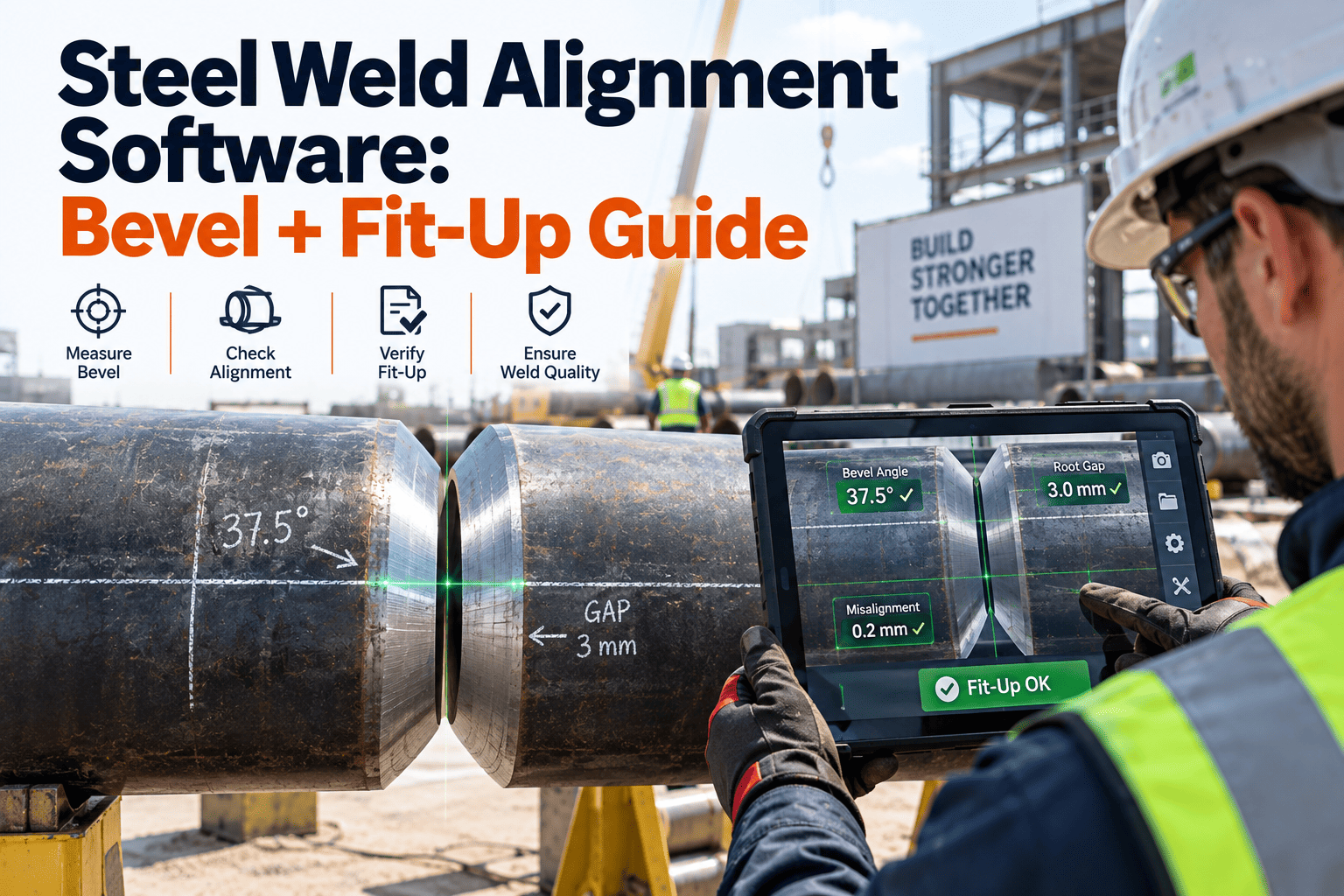
- Verify edge preparation bevel angle and root gap against the qualified WPS
- Confirm tack weld spacing and root alignment before automated welding starts
- Check backing bar or internal clamp fit-up for consistent root support
- Monitor arc voltage and current display against the setpoint throughout the pass
- Visually inspect the root bead for undercut, concavity, or burn-through immediately after completion
Common SAW defects and what they reveal about process drift
Because the arc runs hidden under flux, most SAW operators diagnose process health from the finished bead surface and inspection results rather than direct observation. Each defect type points back to a fairly specific process variable, which makes defect classification a useful shortcut to root cause.
| Defect | Visual signature | Most likely process cause |
|---|---|---|
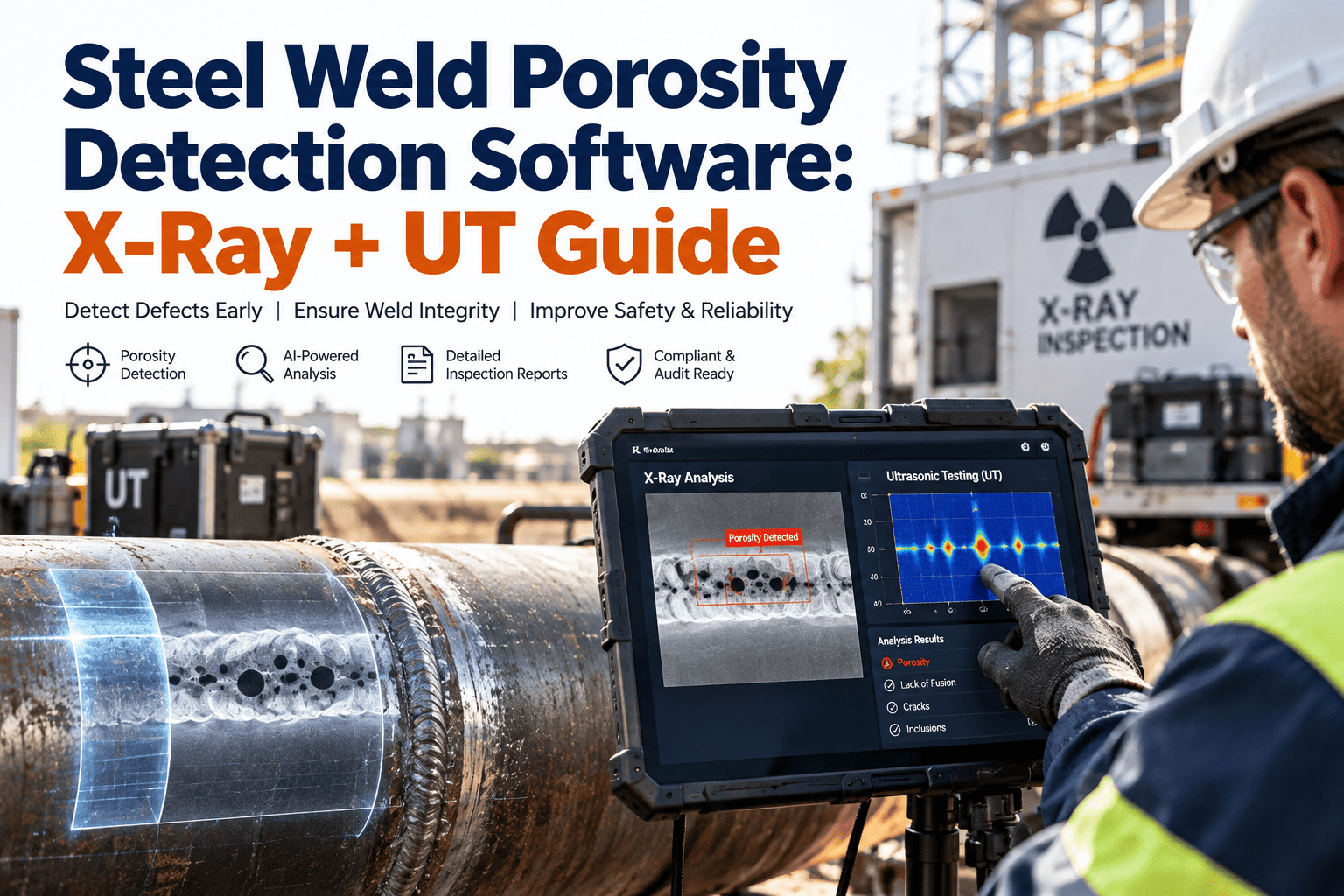
| Porosity | Scattered pinholes on the bead surface after slag removal | Moisture in flux or contaminated joint surface |
| Slag inclusion | Dark linear or rounded inclusion visible on radiograph | Incomplete slag removal between passes or excessive flux depth |
| Undercut | Groove along the toe of the weld bead | Excessive voltage or travel speed relative to current |
| Incomplete fusion | Lack of bond between weld metal and base metal or prior pass | Insufficient heat input or poor joint preparation |
| Excessive reinforcement | Bead crown height above specification | Low travel speed or excessive wire feed relative to travel |
Why catching SAW defects at the root pass costs less than catching them at final inspection
A defect caught immediately after the root pass costs a fraction of what the same defect costs once it's buried under several fill and cap passes. The cost curve on SAW rework is steep specifically because each additional pass adds grinding, re-preheat, and re-inspection time on top of the original repair.
This cost curve is the practical argument for root pass inspection discipline over relying solely on final volumetric testing. A visual check that takes an operator thirty seconds after the root pass can prevent a repair that, caught at final RT, requires gouging out multiple passes, re-preheating the joint, and re-running the full inspection sequence a second time.
Rolling out digital SAW weld line tracking: a phased approach
Most plants move from paper travelers and manual parameter logs to a digital system in three phases rather than a single cutover. Trying to convert every head and every data feed at once tends to stall adoption, since operators are still learning a new interface while the line keeps running production.
Digitize the weld traveler
Replace the paper joint traveler with a digital record tied to each seam ID, capturing WPS revision, welder ID, and flux lot at the start of the pass.
Connect parameter monitoring
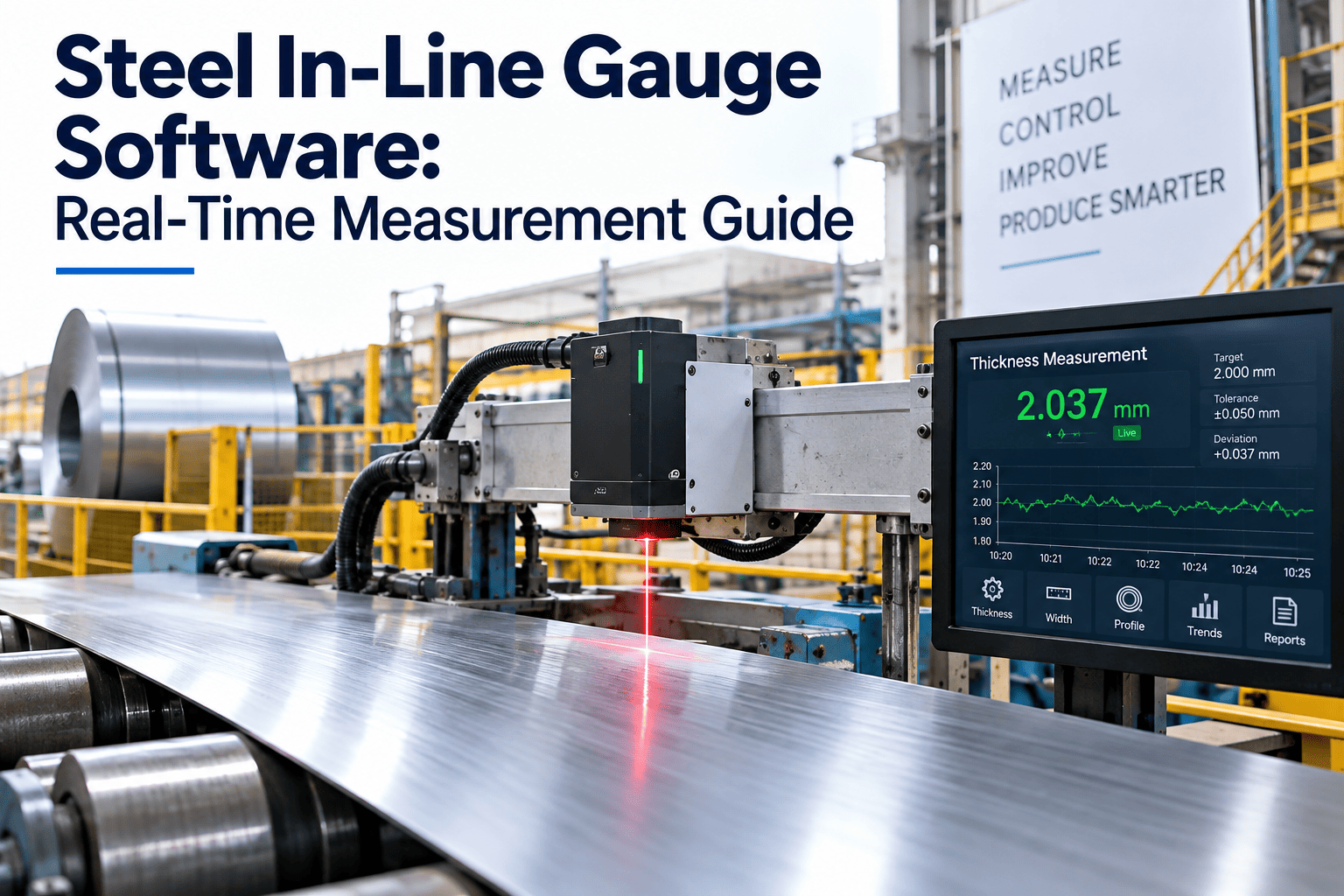
Feed voltage, current, and travel speed data from the welding head controller into the same seam record so out-of-range events are flagged automatically.
Link inspection and corrective action
Attach RT, UT, or visual inspection results to the same seam record and auto-generate corrective work orders when reject patterns emerge by head, flux lot, or shift.
Common mistakes that undermine SAW parameter discipline
Plants running SAW lines for years sometimes still struggle with inconsistent quality, and the cause is rarely the welding heads themselves. It's usually a gap in how parameter and flux data gets captured and connected to the seam record.
- Parameter setpoints stored in the welding head controller only, with no automated flag when actual readings drift from the qualified WPS during a pass
- Flux reclaim ratios tracked informally by feel rather than logged, making it difficult to correlate a porosity spike with an over-reclaimed batch
- Welding head PM scheduled on a fixed calendar interval regardless of actual seam footage run, missing wear-driven contact tip failures between services
- Root pass visual inspection treated as optional on runs the operator considers routine, rather than a mandatory checkpoint on every joint
- Multi-wire systems logging only a single combined current reading instead of per-wire data, making it impossible to isolate which wire produced a defect
See your SAW weld line's parameter and flux data in one traveler
Book a walkthrough of how OxMaint tracks parameter compliance, flux lot traceability, and root pass QC across every seam on your line.
How OxMaint supports SAW weld line discipline
OxMaint gives SAW lines a single digital record per seam that ties together consumable inventory, parameter compliance, and inspection results.
Flux lot and moisture tracking
Track fresh flux receipt, oven dwell time, and reclaim ratios against every seam so a moisture-related porosity trend traces back to a specific lot instead of triggering a blanket line stoppage.
Equipment PM for welding heads
Schedule preventive maintenance on contact tips, wire drive rolls, and flux recovery vacuum systems based on cast-length or run-hour triggers instead of a fixed calendar that ignores actual duty cycle.
Digital seam travelers
Replace paper travelers with a digital record capturing WPS revision, operator ID, parameter compliance, and inspection sign-off per seam.
Reject pattern reporting
Dashboard reject rates by welding head, flux lot, and shift to catch systemic drift before it produces a batch of rework.
Steel SAW weld line software: frequently asked questions
What is submerged arc welding used for in steel plants?
SAW is used for high-deposition, long-run joints such as longitudinal seams on LSAW line pipe, girth welds on large-diameter pipe, and structural plate seams where consistent penetration matters more than travel speed. It's rarely used on thin sheet or short, intricate joints.
Why does flux moisture cause weld defects?
Moisture absorbed by flux releases hydrogen into the weld pool during welding, which causes porosity and can contribute to hydrogen-induced cracking in the heat-affected zone. Storing flux in heated hoppers above the dew point prevents this pickup before it reaches the arc.
How do you track SAW parameter compliance across a line?
Feed voltage, current, and travel speed data from the welding head controller into a digital seam record so deviations from the qualified WPS are flagged automatically instead of relying on manual spot checks.
What causes root pass defects on SAW pipe seams?
Root pass defects usually trace to edge preparation errors, misaligned tack welds, or inconsistent backing support — not the welding parameters themselves. Fit-up verification before the arc starts is the highest-leverage check a QC program can run.
Can flux be reused after a SAW pass?
Yes, unmelted flux is reclaimed and blended back with fresh flux at a controlled ratio. Tracking that ratio matters because over-reclaimed flux accumulates fines that affect bead surface quality. Start Free Trial to see flux lot tracking configured for your line.
Bring parameter discipline to every seam your SAW line runs
OxMaint connects flux inventory, parameter compliance, and inspection sign-off into one digital traveler — so root pass quality is verified before flux buries the evidence.