A steel plant can hold millions in spare parts and still be unable to find the one bearing, servo valve, or gearbox seal it needs at three in the morning. At the same time, shelves fill with items nobody has used in years. Both problems come from the same cause: stock levels set by habit rather than by failure history, lead time, and criticality. Disciplined min-max planning in a maintenance system such as Oxmaint replaces guesswork with levels you can explain and defend.
Steel Spare Parts Optimisation Software: Min-Max Guide
Set minimum and maximum levels for steel plant spares using failure history, supplier lead time, and asset criticality, so critical parts are available and idle stock stops growing.
Why Steel Plants Stock Out and Overstock at the Same Time
The paradox is common in heavy industry. Cautious engineers keep extra copies of everything they have ever needed, while genuinely critical items sit at zero because nobody calculated the real risk.
Stockout pattern
- Critical spare has a long import lead time
- Consumption history is incomplete or scattered
- Reorder triggered after the part is already used up
- Emergency purchase, premium freight, extended outage
Overstock pattern
- Spares bought for equipment that was later replaced
- Duplicate part numbers under different descriptions
- Bulk orders made to secure a discount
- Working capital tied up in dead stock
Min-max discipline addresses both sides. It protects what matters and releases money from what does not.
The Min-Max Formulas Behind Steel Spare Optimisation
Min-max planning needs only a few inputs for each part. The calculation is simple, but it only works when the inputs come from real records.
Worked Example With Assumed Numbers
The example below uses assumed values to show the method. It compares a fast-moving consumable with a slow-moving critical spare, which need different rules.
| Item | Hydraulic filter element (consumable) | Servo valve (critical, slow-moving) |
|---|---|---|
| Average usage | 20 per month | 1 per year |
| Maximum usage | 30 per month | 2 per year |
| Average lead time | 0.5 month | 5 months |
| Maximum lead time | 1 month | 8 months |
| Safety stock | 30 x 1 minus 20 x 0.5 = 20 | Formula gives under 1; override applies |
| Reorder point (minimum) | 20 x 0.5 + 20 = 30 | 1 unit, set by criticality |
| Order quantity | 40 (supplier pack) | 1 |
| Maximum level | 30 + 40 = 70 | 1 |
Classify Before You Calculate
One formula does not suit every part. Classify spares first, then apply a stocking rule that matches the risk and the consumption pattern.
Stocking Policy Matrix
Steel Spare Families and How to Plan Them
Steel plants hold very different families of spares. Treating them all the same wastes money or risks long outages.
| Spare family | Typical examples | Planning approach |
|---|---|---|
| Rolling mill rotables | Work roll chocks, gearbox assemblies, spindles | Pool of repairable units tracked by serial number, with repair turnaround planned |
| Hydraulic and lubrication | Servo valves, pumps, seals, filter elements | Criticality override for valves, min-max for filters and seals |
| Electrical and drives | Drive cards, contactors, transformers, motors | Insurance spares for obsolete or long-lead items, with obsolescence review |
| Caster consumables | Segment bearings, nozzles, mould components | Usage-based min-max linked to campaign schedules |
| Furnace and ladle | Electrodes, refractory items, tapping components | Plan from production schedule and wear rates |
| Cranes and handling | Wire ropes, brake parts, limit switches | Min-max with statutory inspection requirements built in |
| General stores | Fasteners, lubricants, PPE, hoses | Lean min-max with larger pack sizes |
Set Levels From Real Failure History
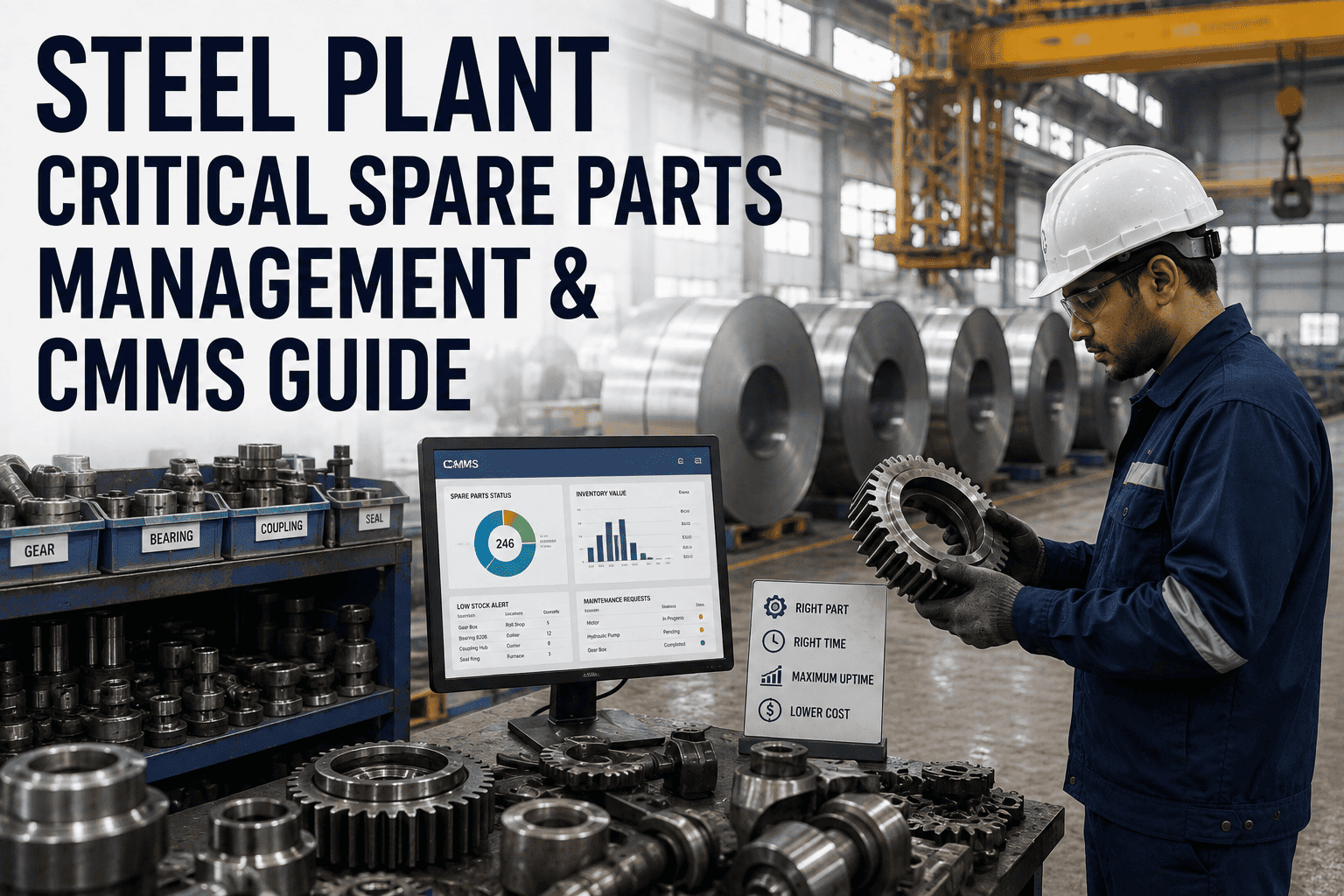
Oxmaint connects parts consumption, work orders, and asset history, so min-max levels come from what your plant actually uses and needs.
Data You Need Before Setting Levels
Software cannot fix missing inputs. Gather these records first, and flag any gap so you do not hide it behind a confident-looking number.
- Consumption history. Issues against work orders for at least twelve to twenty-four months, by part number.
- Lead time by supplier. Actual delivery times, not the quoted ones, including customs and inspection time.
- Asset links. Which assets use each part, so criticality and shared usage are visible.
- Failure history. Frequency and cause of failures that consumed the part.
- Repair options. Whether the part can be repaired, refurbished, or substituted, and how long that takes.
- Unit cost and holding cost. Purchase price, storage cost, and obsolescence exposure.
The Min-Max Review Cycle
Levels are not set once. Demand, suppliers, and equipment change, so build a regular review into the maintenance calendar.
Collect
Classify
Calculate
Approve
Monitor
Rotables, Reservations, and Shutdown Kitting
Several steel spare issues cannot be solved by reorder points alone. They need process rules that connect stores to planning.
Repairable and rotable parts
Work order reservations
Shutdown kitting
Dead Stock, Duplicates, and Obsolescence
Optimisation includes reducing what you hold. Review slow and non-moving items on a fixed schedule.
Before cleanup
- Same bearing stored under three part numbers
- Spares for decommissioned equipment
- No owner for slow-moving items
- Stock count disagrees with the system
After cleanup
- One part number with cross-references
- Items linked to active assets only
- Named owner and review date per item
- Cycle counts keep records accurate
KPIs for Steel Spare Parts Performance
Measure both sides of the balance. A single measure, such as inventory value, can be improved at the expense of availability.
| KPI | What it shows | Healthy direction |
|---|---|---|
| Stockout rate on critical parts | How often a needed part was not available | Falling toward zero |
| Service level | Share of requests filled from stock | Rising for critical items |
| Inventory turnover | How quickly stock is consumed | Rising for non-critical items |
| Dead stock share | Value of items with no recent movement | Falling over time |
| Emergency purchases | Orders placed with expedited delivery | Falling |
| Repair delay due to parts | Hours waiting for parts during repairs | Falling |
Steel-Specific Challenges That Break Simple Min-Max Rules
Generic inventory rules assume steady demand and short supply chains. Steel plants face conditions that need extra judgement on top of the formulas.
Long and uncertain lead times
Campaign-driven demand
Obsolete electronics
Common Min-Max Mistakes and How to Avoid Them
Most min-max programs fail for ordinary reasons. Check your plant against this list before blaming the method.
A Practical Implementation Plan
Start with the parts that carry the most risk, prove the method, and then widen it. A phased plan avoids a long cleanup before anyone sees a benefit.
- Weeks 1 to 3. Clean the part catalogue for critical assets, merge duplicates, and link parts to assets and bills of materials.
- Weeks 4 to 6. Classify parts by value, demand pattern, and criticality, and agree the stocking rules in the policy matrix.
- Weeks 7 to 9. Calculate minimum and maximum levels for the top-risk parts and load them with low-stock alerts.
- Weeks 10 to 12. Track stockouts and emergency purchases, review exceptions with purchasing, and adjust levels.
- Quarter two onward. Extend to general stores, add rotable tracking, and begin the regular review cycle.
Supplier Lead Time Reliability and Who Approves Changes
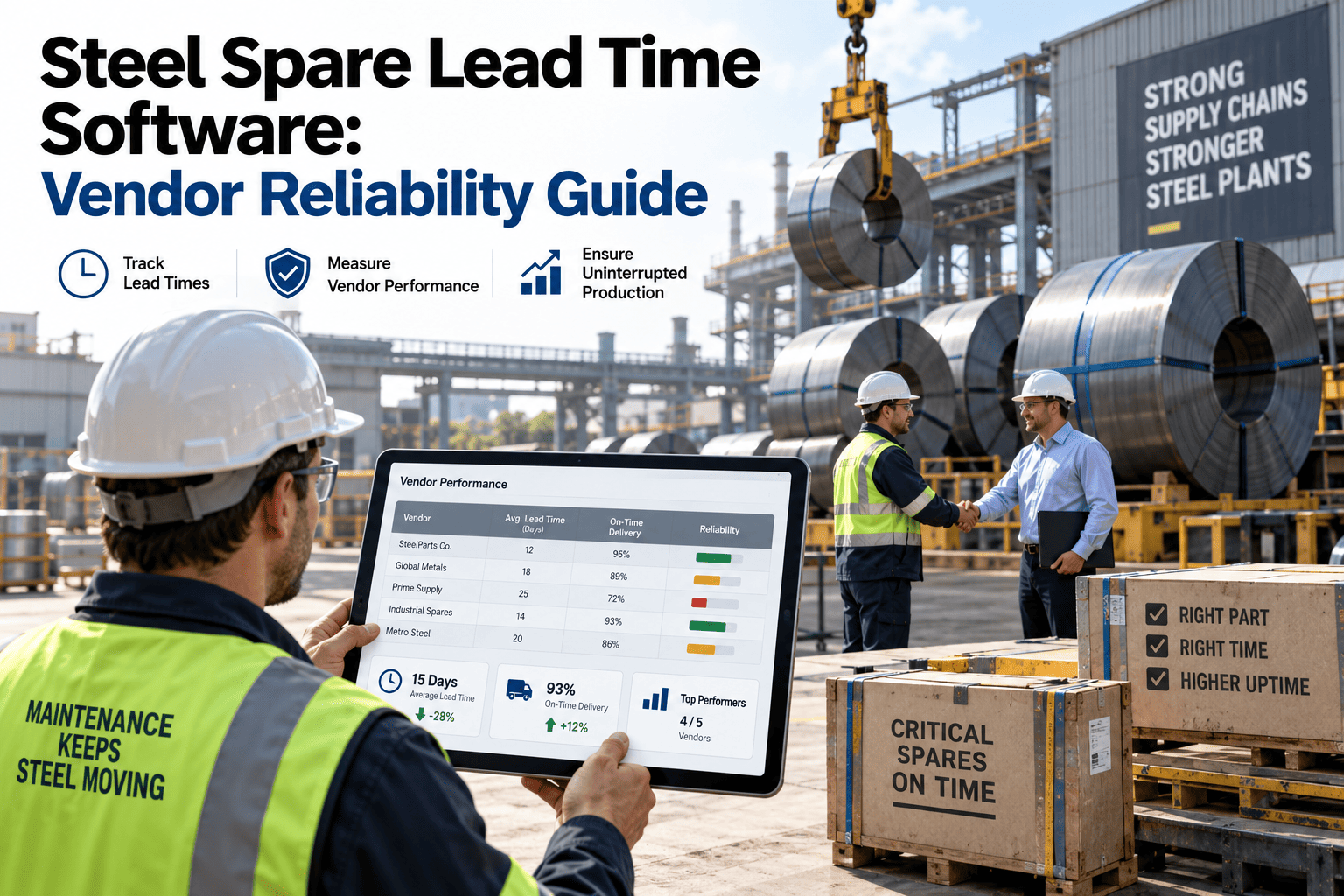
A reorder point is only as good as the lead time behind it. Track each supplier's real performance and agree who can change a level.
| Control point | What to record | Who decides |
|---|---|---|
| Quoted versus actual delivery | Order date, promised date, and receipt date per purchase order | Purchasing reviews supplier trends |
| Critical spare levels | Reason for the minimum, linked asset, and failure consequence | Reliability engineer and maintenance manager |
| Level reduction | Usage evidence and the effect on availability risk | Maintenance and stores jointly |
| Disposal of dead stock | Last movement date, asset status, and book value | Plant management with finance |
| Alternate supplier or substitute | Part number cross-reference and approval notes | Engineering |
- Use the longest realistic lead time for critical parts, not the supplier quotation.
- Review supplier delivery performance every quarter and adjust safety stock where delays repeat.
- Document every override so the next reviewer knows why a level exists.
How Oxmaint Supports Spare Parts Optimisation
Oxmaint maintenance management software keeps parts, assets, and work orders in one connected record, which is where min-max decisions need to start.
Steel Spare Parts Min-Max Questions Answered
How much history do I need to set min-max levels?
Should critical spares follow the same formula?
How often should levels be reviewed?
How do I handle repairable spares?
Can a CMMS reduce emergency purchases?
Stock What Protects Production and Release the Rest
Set min-max levels from failure history, lead time, and criticality, and keep them current through every work order. Oxmaint helps steel teams build that discipline.