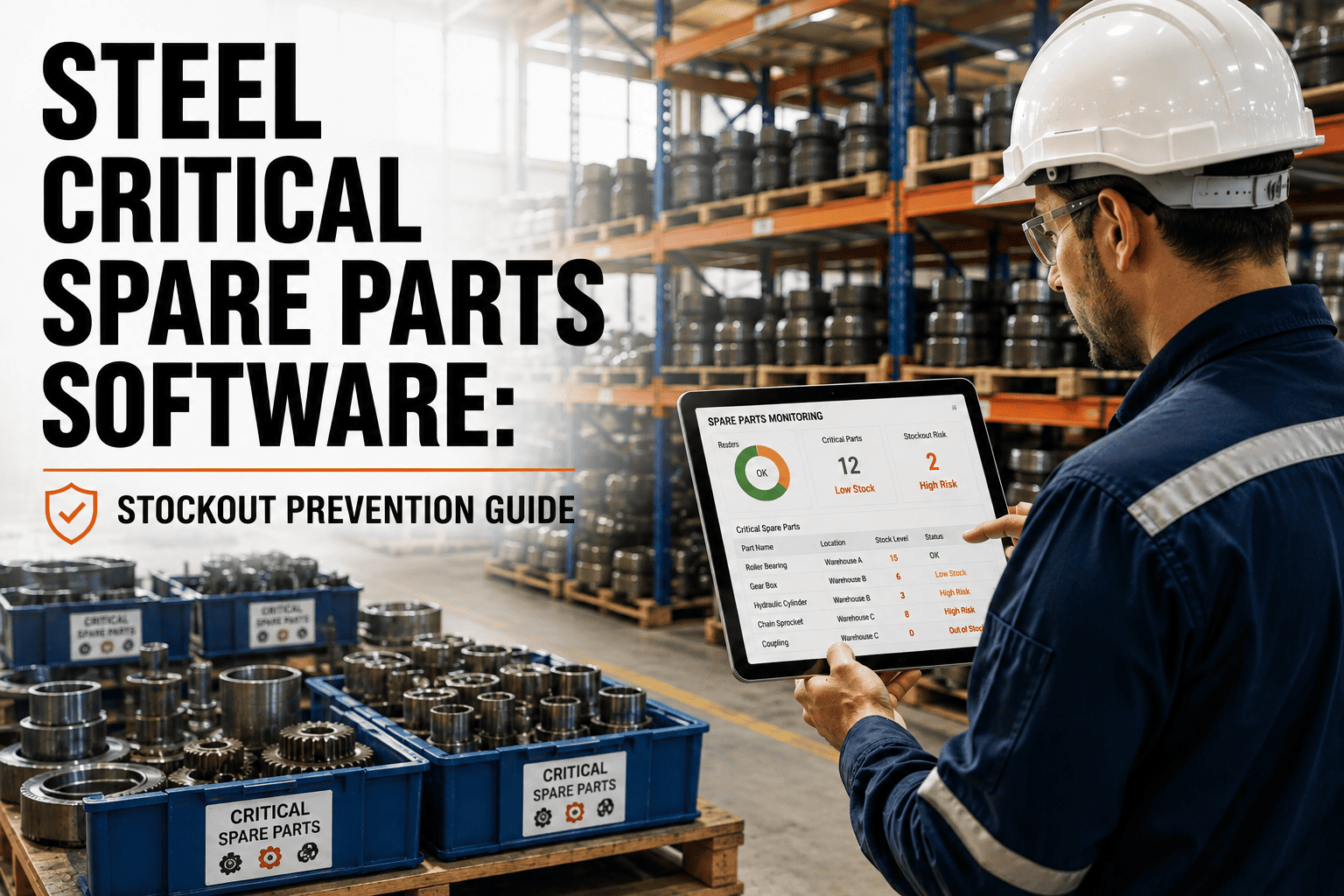
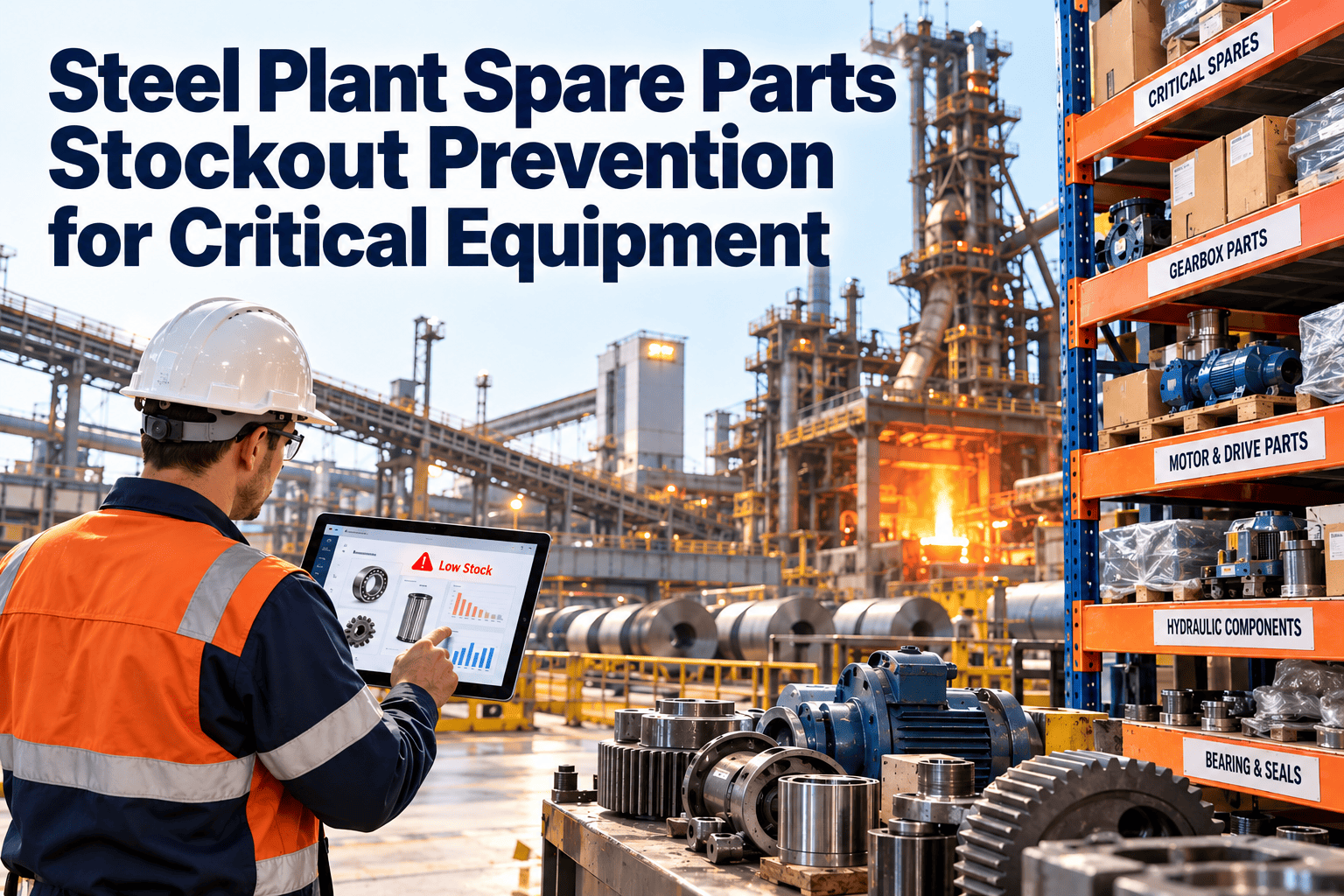
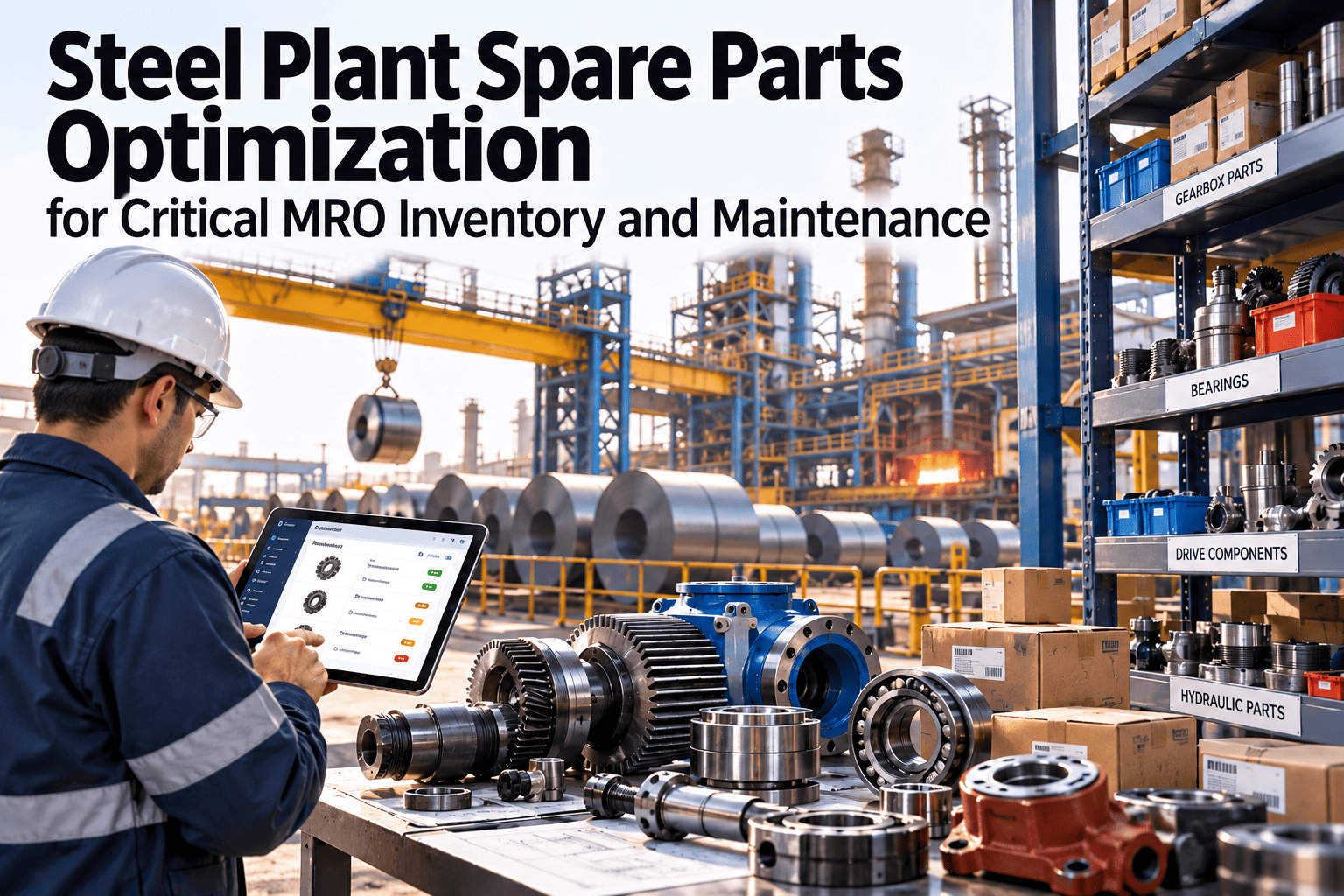
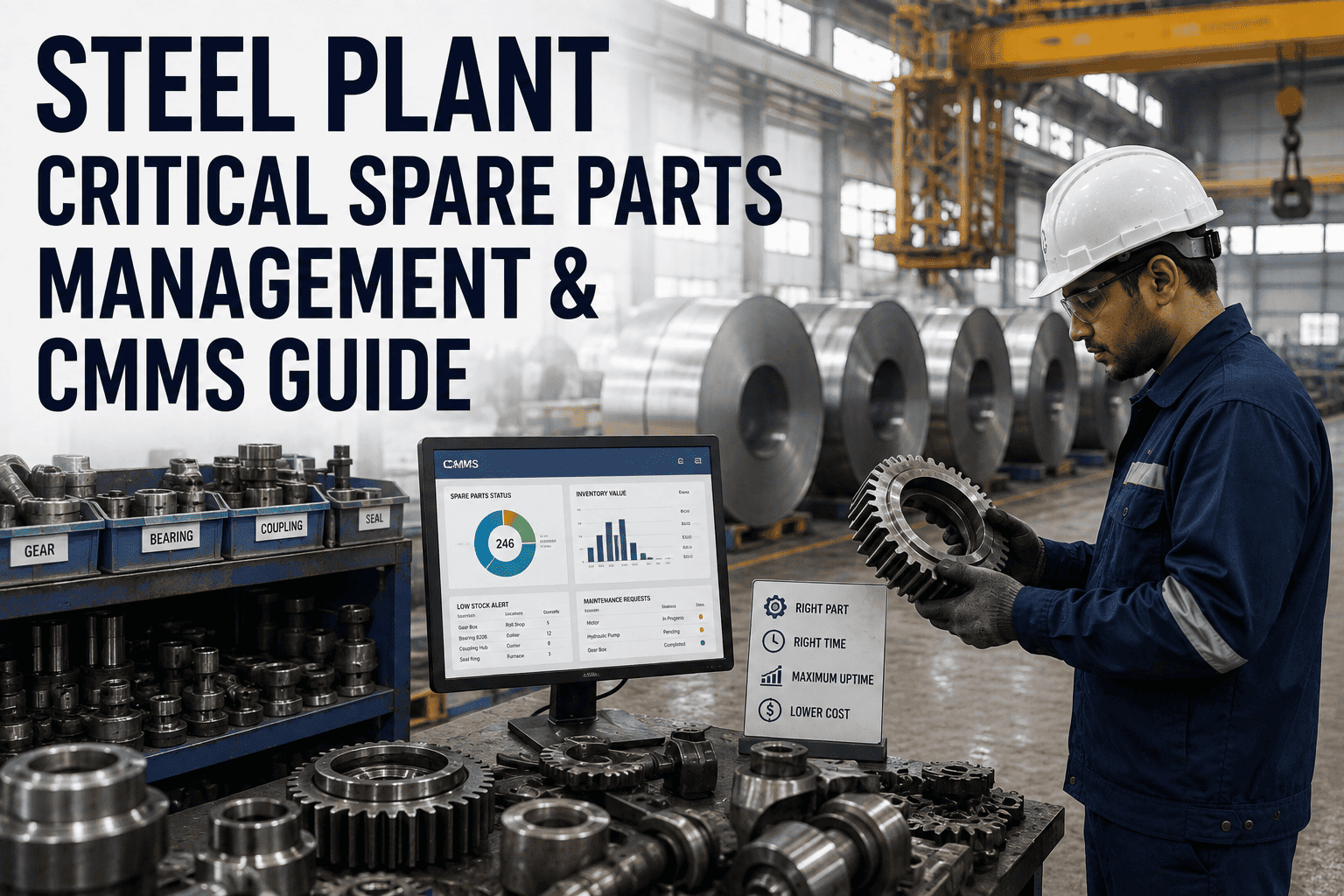
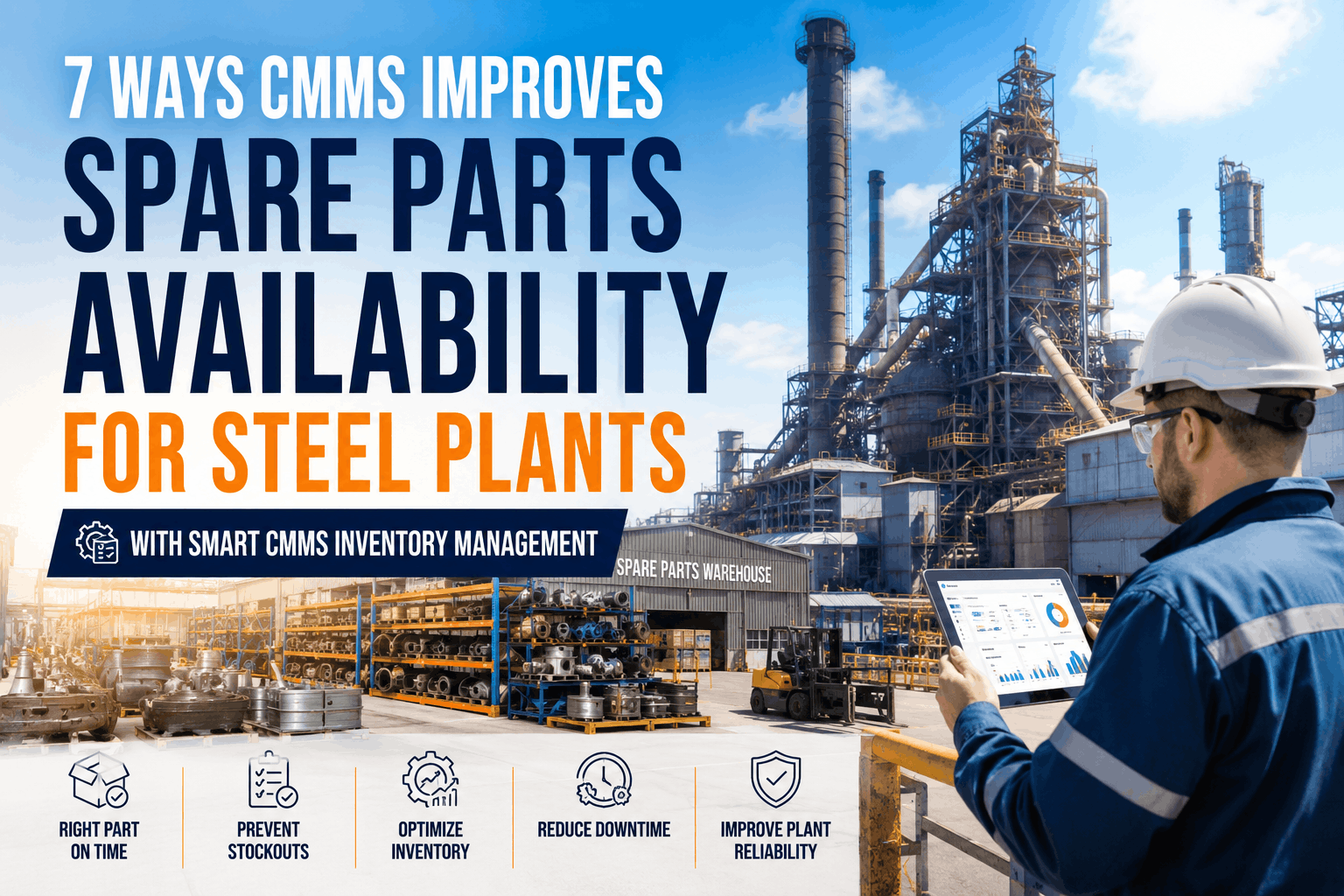
A steel plant does not stop because of a cheap part. It stops because a mill drive gearbox, a caster segment bearing, or a furnace transformer bushing was not on the shelf when it failed, and the replacement had a fourteen-week lead time from a single overseas supplier. Most stores carry thousands of line items, yet the handful that actually control uptime are rarely tagged, tiered, or reordered any differently from the bolts and gaskets around them. Criticality tiering, lead-time tracking, and reorder-point discipline are what separate a stores room from a reliability program. Start a free OxMaint trial to tier your first critical spares list, or book a 30-minute demo to see the stockout risk dashboard.
Critical Spares · Steel Plants
Steel Critical Spare Parts Software
Tier every spare by criticality, track real supplier lead time, and set reorder points that reflect actual failure risk — not a stores clerk's best guess.
60–70%
of unplanned steel plant downtime traces back to a part that was not in stock when it failed
8–16 wks
typical lead time for specialty gearbox, roll, and transformer components from OEM suppliers
1 in 5
critical spares in a typical stores audit are found miscoded as non-critical or unranked
Why Stockouts Happen
The Stockout Is Rarely a Stores Problem — It Is a Tiering Problem
Stockouts on genuinely critical parts almost never happen because a stores team was careless. They happen because the criticality tier, lead time, and reorder point for that part were never set correctly in the first place — or were set once and never revisited as suppliers and equipment changed.
Criticality set once, never revisited
A part tiered as low-criticality five years ago may now sit behind a bottleneck asset after a line reconfiguration, but its stock policy never gets updated to match.
Lead time tracked from memory, not from actuals
Reorder points are often set from a supplier's quoted lead time years ago, while actual delivery performance has quietly stretched due to global supply constraints.
Single-source dependency hidden in the parts master
Many "in stock" spares are single-sourced from one OEM with no qualified alternate, a risk that never shows up until the part is needed urgently.
Reorder point set as a flat number, not a risk calculation
A reorder point that ignores lead time variability and failure frequency together will either tie up working capital or leave the plant exposed — often both, on different parts.
Criticality Tiering
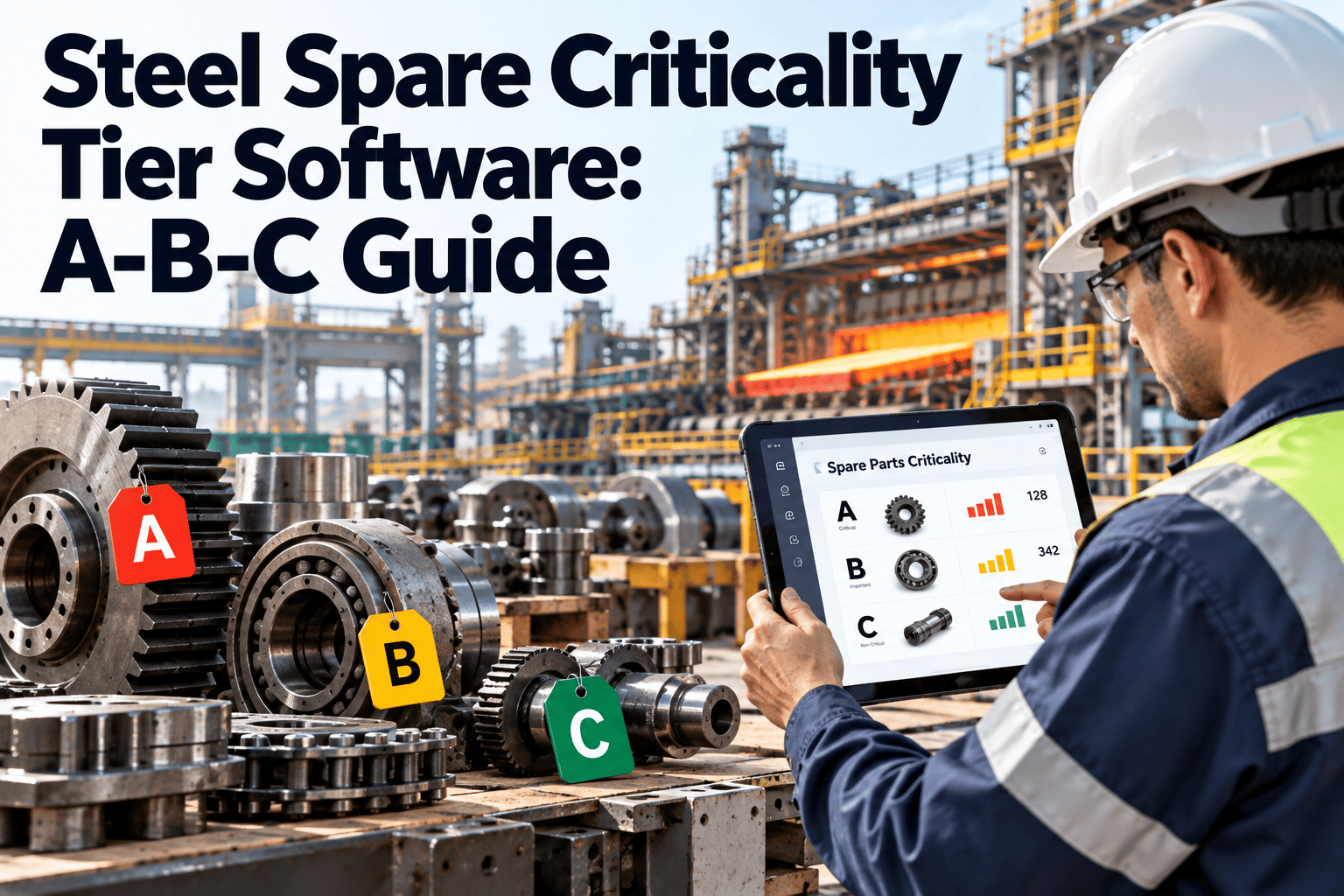
A Four-Tier Model for Steel Plant Spares
Not every spare deserves the same stock policy. OxMaint applies a tiering model based on failure impact and lead time, then sets reorder logic per tier automatically.
Tier 1 — Line Stopper
Single point of failure on a bottleneck asset with a long lead time. Held in stock at all times with a supplier backup identified.
Tier 2 — High Impact
Failure causes a partial line slowdown or a short stoppage. Stocked with a reorder point calculated from actual lead-time variance.
Tier 3 — Moderate Impact
Failure is manageable with a short-term workaround. Reordered on a standard min-max policy reviewed quarterly.
Tier 4 — Low Impact
Commodity or easily substituted parts. Ordered on demand or bulk-purchased for cost efficiency, not held against risk.
Reorder Logic by Tier
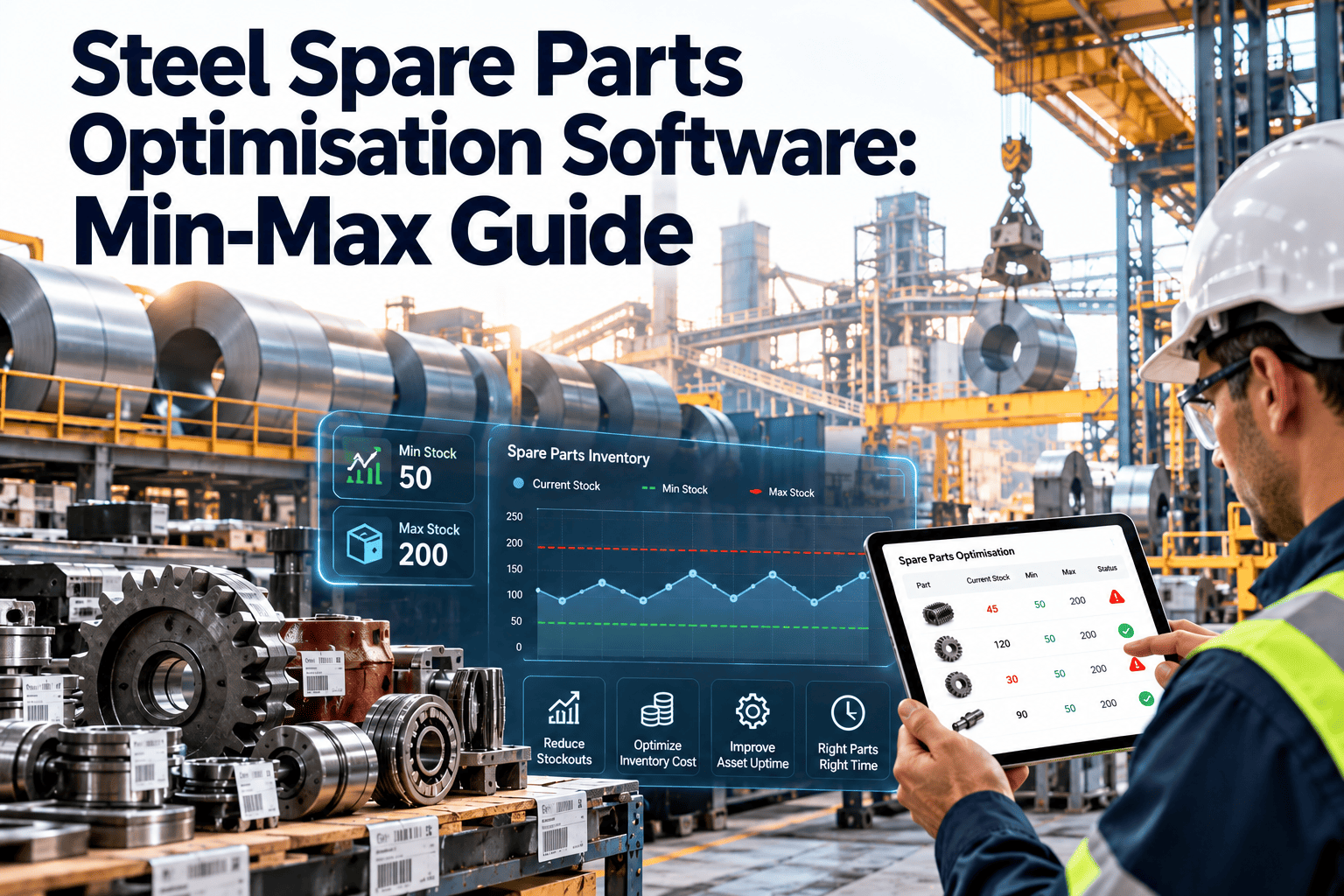
How Reorder Points Should Differ Across Tiers
| Tier |
Stock Policy |
Lead Time Buffer |
Review Cycle |
Alternate Supplier |
| Tier 1 |
Always in stock |
150% of lead time |
Monthly |
Required |
| Tier 2 |
Min-max, risk-weighted |
120% of lead time |
Quarterly |
Preferred |
| Tier 3 |
Standard min-max |
100% of lead time |
Quarterly |
Optional |
| Tier 4 |
On-demand or bulk |
Not buffered |
Annual |
Not required |
OxMaint Spares Intelligence
Stop Guessing Which Spares Are Critical. Start Ranking Them by Actual Risk.
OxMaint scores every spare against the asset it protects, its failure history, and its real supplier lead time — then flags reorder points that no longer match current risk before a stockout forces the issue.
Platform Capabilities
What OxMaint Tracks for Every Critical Spare
Asset-Linked Criticality
Every spare is tied to the specific asset and failure mode it protects, so criticality reflects current equipment configuration, not a static label.
Live Lead-Time Tracking
Actual delivery performance per supplier is logged on every purchase order and rolled into a running lead-time average, replacing the quoted figure on the parts master.
Dynamic Reorder Points
Reorder points recalculate automatically as lead time, failure frequency, or criticality tier changes, instead of sitting fixed until someone remembers to update them.
Single-Source Risk Flags
Parts with no qualified alternate supplier are flagged on the stores dashboard so sourcing teams can prioritize qualifying a backup before it becomes urgent.
Stockout Risk Dashboard
A single view ranks every Tier 1 and Tier 2 spare by current stockout risk, combining stock level, lead time, and failure trend into one score.
Work Order Integration
Spares consumption ties directly to the work order that used them, so usage history and remaining stock stay accurate without a manual stores reconciliation.
FAQ
Frequently Asked Questions
How does OxMaint decide which spares are Tier 1 critical?
Tiering combines the asset's bottleneck status, the part's supplier lead time, and its failure history, rather than relying on a single manual criticality flag.
Start free to run tiering on your parts list.
Can lead times be updated automatically from purchase order history?
Yes. Every completed purchase order logs actual delivery time against the quoted lead time, and the reorder point recalculates once enough orders establish a reliable average.
Does OxMaint flag single-source spares with no backup supplier?
Single-source Tier 1 and Tier 2 parts are flagged directly on the stockout risk dashboard, prompting sourcing teams to qualify an alternate.
Book a demo to see the flagging logic.
How many spare part records can one OxMaint instance manage?
There is no line-item limit. Steel plants with tens of thousands of SKUs run the full stores catalog in one instance with tier-level filtering.
Can criticality tiers be re-evaluated after a line reconfiguration?
Tiers are linked to the asset, so when an asset's role or bottleneck status changes, its spares can be re-tiered without rebuilding the parts list from scratch.
Start a free trial to re-tier a line.
OxMaint — Critical Spares Management
The Right Spare, at the Right Tier, Before the Line Ever Needs It.
OxMaint replaces static parts lists with a tiered, lead-time-aware spares program that flags stockout risk before it becomes downtime — built for the scale and supplier complexity of steel plant stores.