The Autonomous Bottling Line: Achieving 100% Defect Detection with AI-Powered Quality Inspection
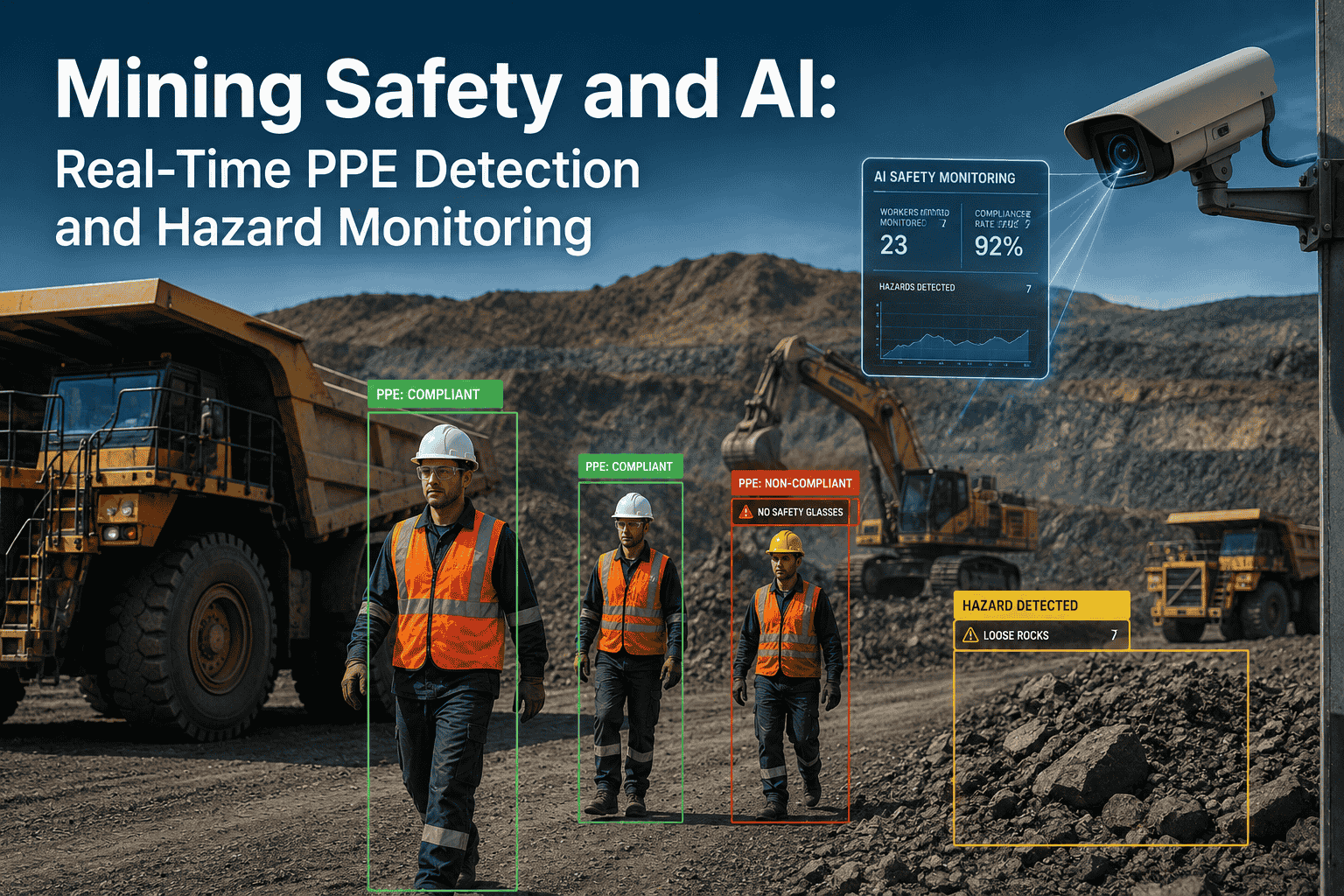
A bottling line running at 1,200 bottles per minute gives each bottle exactly 50 milliseconds of inspection time. A human inspector watching the line catches about 80% of defects on a good shift — and less after the 3,000th bottle. An underfilled bottle is a customer complaint. A cap that is not seated properly is a leaking bottle in the distribution center. A label with the wrong allergen declaration is a recall. A glass fragment inside a bottle of juice is a lawsuit. AI vision systems inspect every single bottle at full line speed — detecting defects down to 0.1mm at 99%+ accuracy, 72,000 caps per hour, with zero fatigue and zero coffee breaks. The technology is not emerging. It is the production standard for every bottling operation that competes at scale in 2026. Sign up free to see AI inspection running against your bottle type.
6-POINT INSPECTION · 99%+ ACCURACY · FULL LINE SPEED
1,200 Bottles per Minute. 50 Milliseconds per Bottle. Every Defect Caught. Every Time.
AI vision cameras at six inspection points along the bottling line — empty container, fill level, cap seal, label, foreign particle, and final package — inspect every bottle at production speed. Edge AI processes each image in under 30ms and triggers the reject actuator while the bottle is still under the camera. No cloud round-trip. No batched analysis. No human fatigue. The same sensors, cameras, and reject mechanisms you already have — plus an intelligence layer that never blinks.
Six Inspection Points · What AI Catches at Each Station
The bottle moves through six inspection stations in under 3 seconds. At each one, a camera captures and an AI model evaluates — all processed on the edge before the bottle passes the reject point. Miss any single station and the defect escapes to the customer. Sign up free to see the six-point inspection mapped to your line.
01EMPTY CONTAINER<20ms
Cracks, chips, dimensional deviation, residual contamination, scuff marks, sidewall deformation. Container verified safe to fill before any product touches it.
IF MISSED Cracked bottle fills, leaks on line, causes jam. Contaminated container puts foreign material into product. Both shut the line down.
02FILL LEVEL<25ms
Fill height verified to ±1mm accuracy. Underfill and overfill detected. Works on transparent, translucent, and opaque containers using backlight, sidelight, or X-ray depending on product type.
IF MISSED Underfill = regulatory fine + consumer complaint. Overfill = product giveaway at $0.02-$0.08 per unit × 500K units/day = $10K-$40K/day waste.
03CAP & SEAL INTEGRITY<30ms
Cap presence, seating angle, tamper-evidence ring, torque indicator, and closure completeness. 1,200 caps per minute sustained. Detects cocked caps, missing caps, broken rings, and incomplete seals.
IF MISSED Leaking bottles in distribution. Spoiled product. Contamination entry. Customer returns. One leaking case damages 5 cases stacked above it.
04LABEL VERIFICATION<30ms
Label presence, position, orientation, print quality, OCR legibility, barcode/QR scanability, and allergen declaration accuracy — even on 360° curved surfaces at full line speed.
IF MISSED Wrong allergen declaration = life-threatening. Wrong barcode = retail rejection. Missing label = unsellable unit. Any of these = recall.
05FOREIGN PARTICLE<35ms
Glass fragments, metal shavings, plastic flakes, fiber strands, and sediment inside the filled bottle. Detected via backlit imaging or X-ray. Particles down to 0.3mm in transparent liquids, 0.5mm in opaque.
IF MISSED Glass in a bottle of juice = consumer injury = lawsuit + recall + FDA enforcement action. The single highest-consequence defect on any beverage line.
06FINAL PACKAGE CHECK<25ms
Date code presence and legibility, lot number OCR, case count completeness, shrink-wrap integrity, and pallet pattern verification before the case leaves the plant.
IF MISSED Incomplete case = retail rejection. Missing date code = non-compliant shipment. Wrong lot = traceability gap if recall is ever needed.
99%+
Detection accuracy across all 6 stations
<30ms
Avg capture-to-reject across all stations
0.1mm
Minimum detectable defect size
24/7
Zero fatigue · zero shift change · zero blinks
The six stations run simultaneously on two Jetson edge boxes — one for stations 1-3 (pre-fill, fill, cap) and one for stations 4-6 (label, particle, package). The RTX Quality Brain at the control room aggregates reject data, traces root causes across stations, and generates the shift quality report automatically. Book a free demo to see all six stations inspecting your bottle type in real time.
"Our human inspectors were catching 82% of cap-seal defects. The 18% that escaped cost us $640K in customer returns last year — leaking bottles that damaged entire pallets in the distribution center."
THE PROBLEM
Juice bottler running 3 lines at 800 bottles per minute each. Two human inspectors per line watching for cap-seal defects on a backlit station. Shift detection rate: 82% at hour 1, declining to ~70% by hour 6. Defects that escaped: cocked caps, broken tamper-evidence rings, and incomplete seals. 18% escape rate × 2.3M bottles/week = ~414K uninspected leaks per year. Of those, 1.8% actually leaked in transit. Customer returns + destroyed pallets + replacement shipments = $640K/year.
HOW AI INSPECTION SOLVES IT
Camera Edge (Jetson)
GigE Vision camera positioned at the cap station captures top-down and 45° angled images of every cap at 800/min. Jetson runs the seal-integrity model in under 30ms per bottle — pass/fail verdict returned before the bottle passes the reject actuator.
Quality Brain (RTX)
Aggregates reject data across all 3 lines. Detects that cap rejects on Line 2 spiked from 3/hr to 14/hr — traces to capper head #3 torque drift. Root-cause alert sent to maintenance before the reject rate escalates further.
Result
Defect escape rate dropped from 18% to 0.3%. Human inspectors redeployed from cap-watching to upstream quality roles. Maintenance catches capper drift within 47 minutes instead of discovering it in customer returns 3 weeks later.
THE RESULT
Escape rate 18% → 0.3%. Customer returns from cap defects: $640K → $11K. $629K/yr saved. 6 inspectors redeployed to higher-value QC roles.
SCENARIO 02
"A glass fragment from a broken bottle on Line 1 contaminated 340 bottles before the line was stopped. The recall cost $1.2M. How does AI prevent this from ever happening again?"
THE PROBLEM
Glass-bottle beer line running at 600 BPM. A bottle shattered in the filler carousel. Glass fragments entered 340 subsequent bottles before the breakage was detected and the filler stopped. The contaminated bottles were already past the human inspection point. All 340 were packed, palletized, and shipped to 12 retail customers across 3 states. FDA notified. Voluntary recall issued. Direct cost: $1.2M (recall logistics + destroyed product + retail credits + legal + regulatory response). Indirect cost: one major grocery chain suspended purchasing for 90 days.
HOW AI INSPECTION SOLVES IT
Camera Edge (Jetson)
Backlit inspection station after the filler. Every filled bottle passes through a high-intensity LED backlight array. Jetson processes the silhouette image looking for particles, glass fragments, and opacity anomalies down to 0.3mm. Inference in under 35ms per bottle.
Quality Brain (RTX)
First contaminated bottle detected at bottle #3 post-breakage — not bottle #340. AI simultaneously detects the breakage event pattern (sudden spike in particle rejects + filler station correlation) and triggers an automatic line-stop signal to the PLC. Total contamination window: 3 bottles, not 340.
Containment
3 bottles rejected at the inspection station. Line stopped for 8-minute filler carousel cleanup. No contaminated product leaves the plant. No recall. No FDA notification. No retail suspension. 8-minute production loss instead of $1.2M recall.
THE RESULT
Contamination window: 340 bottles → 3 bottles. Line downtime: 8 minutes vs multi-day recall. $1.2M recall prevented. Zero contaminated product shipped.
Depends on your current setup. If you already have GigE Vision or Camera Link cameras at inspection stations, the Jetson Camera Edge box connects directly and runs AI models on the existing feed. If your current cameras are analog or below 720p, targeted upgrades are needed at the specific stations — typically 2-6 cameras for a 6-point deployment. The cameras themselves are standard industrial vision cameras (Basler, FLIR, Allied Vision, Hikvision industrial) — not proprietary hardware. Most deployments reuse 60-70% of existing camera infrastructure.
Can AI handle SKU changeovers without reprogramming?
Yes. The AI models are trained on multiple bottle shapes, sizes, colors, and label designs simultaneously. When the line switches from 500ml PET to 1L glass, the model adapts automatically — no recipe change, no parameter adjustment, no downtime for reconfiguration. New SKUs are added to the training set during the DGX model-training cycle and deployed to the Jetson edge boxes as a versioned update. Changeover time for the AI: zero. It is already looking at the new bottle by the time the filler finishes purging.
What about false positives rejecting good product?
False-positive rate is the metric that determines operator trust. The RTX Quality Brain applies confidence thresholds (alerts fire only above 95% model confidence) and temporal filtering (single-frame anomalies do not trigger rejects). After the 4-week site-tuning period, false-positive rates typically drop below 0.5% — meaning less than 1 in 200 rejected bottles was actually good. That compares favorably to human inspectors, whose false-positive rate on marginal defects averages 8-12%.
Does the system trace defects back to root cause?
Yes — and this is where the RTX Quality Brain adds value beyond simple pass/fail inspection. When cap-seal rejects spike on one line, the AI correlates the reject pattern against filler station, capper head, and bottle batch to identify the root cause (e.g., capper head #3 torque drift, specific bottle batch with dimensional variance, filler nozzle drip). Root-cause alerts go to the maintenance team before the reject rate escalates. The system finds the disease, not just the symptom.
How fast can we deploy?
Six to eight weeks for a single-line deployment covering all 6 inspection points. Weeks 1-2 — line survey, camera positions confirmed, lighting evaluated, reject actuator integration scoped. Weeks 3-4 — Jetson edge boxes installed at the line, cameras connected, baseline images captured for model tuning. Weeks 5-6 — AI models loaded, inspection running in parallel with existing QC (shadow mode), false-positive rate tuned below 0.5%. Weeks 7-8 — full production mode, reject actuators connected, human inspectors redeployed. Expansion to additional lines: 2-3 weeks per line.
Bottling Edition · 6-Point Inspection · 6-Week Pilot
Every Bottle Inspected. Every Defect Caught. Every Shift. No Blinks.
Book a 30-minute call with our quality-inspection deployment engineers. Walk through your line speeds, your bottle types, and your highest-cost defect categories. See AI vision inspecting your product at production speed. Perpetual license, source code included, $0/mo.