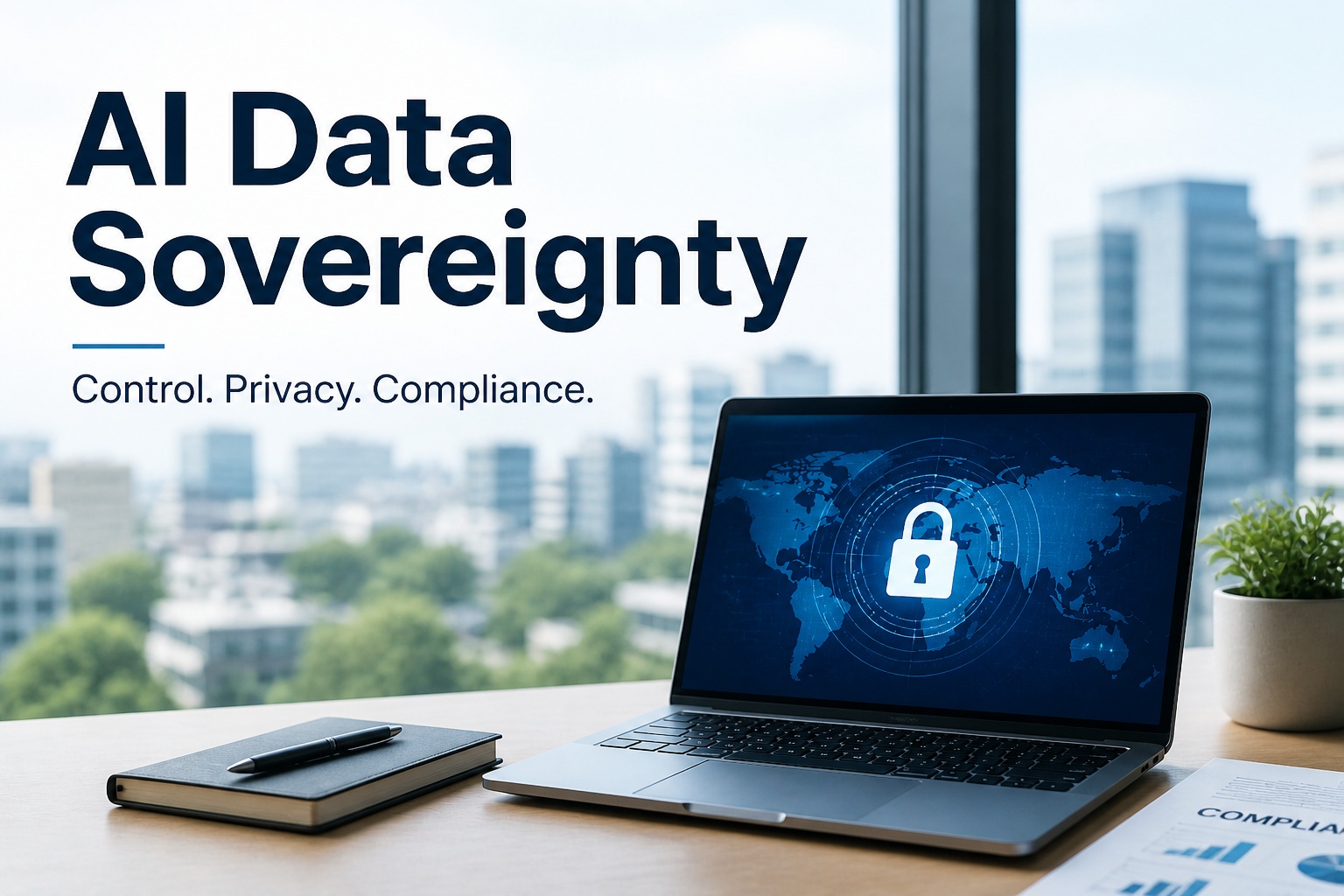
AI Data Sovereignty: Compliance Guide for Regulated Industries
By Riley Quinn on May 1, 2026
Your plant's AI system just flagged a bearing anomaly. The alert fired. The model ran inference. But here's what most manufacturers never ask: where did that sensor data go before you saw the result? If the answer is "a cloud vendor's server in another country," you may already be non-compliant with GDPR, DORA, or your industry's data residency requirements — and you won't know until an auditor asks. AI data sovereignty isn't a future concern for regulated manufacturers, financial operations, and healthcare facilities. It is an active compliance obligation right now, with penalties reaching 7% of global annual revenue for violations of the EU AI Act alone. See how OxMaint keeps your operational data sovereign while running AI-driven maintenance — start free.
MAY 12, 2026 5:30 pm est, orlando
Upcoming Oxmaint AI Live Webinar — Map Your AI Compliance Architecture Live
Join our team in Orlando to audit your current AI data flows against GDPR, HIPAA, DORA, and EU AI Act requirements. Walk in with your sensor architecture; walk out with a compliance-first deployment plan built for your industry.
Enforcement Update: The EU AI Act reached full application on August 2, 2026, covering high-risk AI systems in manufacturing, finance, and healthcare. As of early 2026, 75% of the world's population operates under some form of modern privacy regulation. Non-compliance penalties reach up to 7% of global annual turnover — higher than GDPR.
The Four Regulations Every Regulated Industry AI Team Must Know
Data minimization, purpose limitation, transparency in automated decisions, lawful basis for processing personal data in training or inference.
Up to €20M or 4% of global turnover
On-prem or EU-hosted AI required for personal data processing
HIPAA
United States — Healthcare
Health Insurance Portability & Accountability Act
AI Obligation
PHI used in AI training or inference requires signed Business Associate Agreements (BAAs), encryption, access controls, and full audit trails. No unapproved tools with patient data.
Up to $1.9M per violation category annually
PHI must never leave your HIPAA-controlled environment via unvetted AI APIs
DORA
EU — Financial Sector (live Jan 2025)
Digital Operational Resilience Act
AI Obligation
Financial entities must demonstrate independent operational capability without vendor dependency. ICT outsourcing — including cloud AI — must include full audit rights and sovereign data controls.
Regulatory suspension + remediation orders
Cloud SLAs alone do not satisfy DORA — you must prove independent resilience
EU AI Act
EU + Extraterritorial (Aug 2026)
EU Artificial Intelligence Act
AI Obligation
High-risk AI systems must document risk assessments, maintain activity logs showing training data lineage, and enable human oversight. Critical infrastructure AI is classified as high-risk.
Up to €35M or 7% of global annual turnover
Requires full data lineage from sensor → training → inference — impossible with black-box cloud
Where Your Industry Sits on the Sovereignty Risk Spectrum
Not all regulated industries face the same level of data sovereignty exposure. The risk level depends on what type of data your AI processes, who audits you, and how fast enforcement moves in your sector. Here's where each major regulated industry stands in 2026.
AI Data Sovereignty Risk by Industry — 2026
Risk score based on regulatory density, penalty severity, and enforcement activity
Healthcare
Critical
HIPAA + GDPR + AI Act. PHI in AI training is an immediate violation without BAA.
Financial Services
Critical
DORA (live Jan 2025) requires sovereign audit rights. EU banks actively repatriating cloud workloads.
Defense & Government
Air-Gapped
No external cloud by definition. FedRAMP, ITAR, and classified data mandates require on-prem only.
Pharma & Life Sciences
High
FDA 21 CFR Part 11 + GxP data integrity + GDPR. AI in quality control requires validated, auditable systems.
Manufacturing (General)
Medium-High
EU Data Act (Sept 2025) covers industrial IoT and operational telemetry. OT data sovereignty obligations are expanding.
Food & Beverage Mfg
Moderate
Lower regulatory density. FSMA and GFSI compliance matters but AI data sovereignty is not yet heavily enforced.
CriticalAir-Gapped OnlyHighMedium-HighModerate
The Five Points Where AI Breaks Data Sovereignty — And How to Fix Each
Five failure points from sensor to alert — and the compliant fix for each
01
Failure PointSensor Data Transmission
Violation
Raw operational data transmitted to cloud vendor servers outside your jurisdiction. Personal or process data crosses a border before any sovereignty control is applied.
Compliant Fix
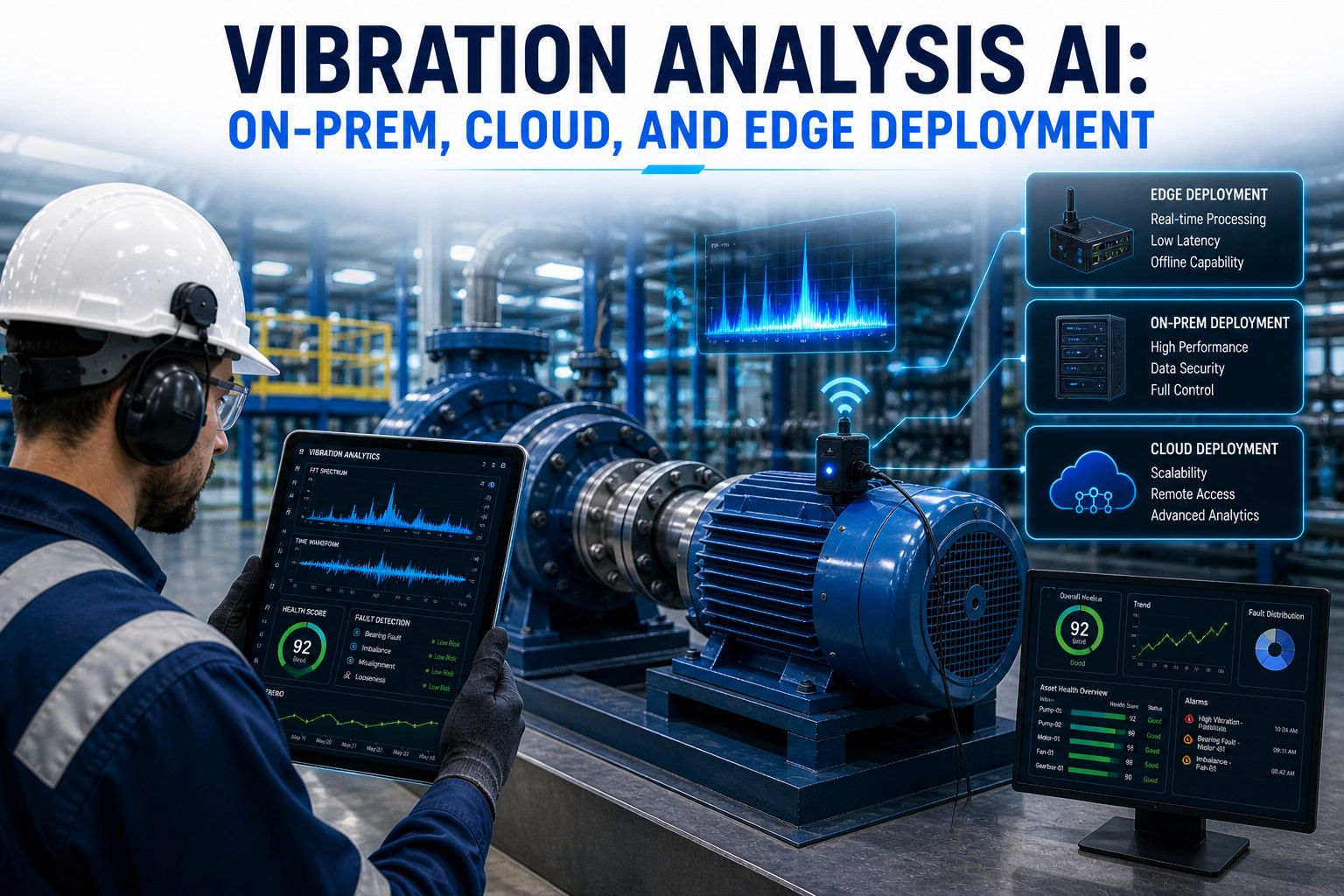
Edge processing: run inference locally at the sensor gateway. Only anonymized anomaly scores — not raw data — leave the plant. All personal/operational data stays on-site.
02
Failure PointModel Training Data
Violation
Historical plant data — including operator records, process variables, and maintenance logs — uploaded to a vendor's cloud for model training. Training happens on foreign infrastructure.
Compliant Fix
On-prem model training using your historian data on a local compute node. Vendor provides the training framework; your data never leaves your facility. Federated learning also acceptable.
03
Failure PointInference API Calls
Violation
Each real-time inference call sends current sensor readings as a payload to a cloud API. Under GDPR and DORA, this constitutes data processing outside your jurisdiction if no contractual protections exist.
Compliant Fix
Run the inference model locally on an edge node or on-prem server. If cloud inference is required, use token masking — replace sensitive values with structured tokens before transmission.
04
Failure PointAlert & Dashboard Storage
Violation
Alert history, anomaly logs, and maintenance records stored in a vendor's cloud database outside your jurisdiction. Audit trail data may not be producible in a regulatorily acceptable format.
Compliant Fix
Store alert history and maintenance logs in your on-prem CMMS with immutable audit trails. WORM-compliant logging satisfies HIPAA, DORA, and EU AI Act documentation requirements simultaneously.
05
Failure PointVendor Contractual Control
Violation
Standard SaaS terms of service do not provide the audit rights, incident notification timelines, or concentration risk disclosure that DORA and HIPAA require from ICT service providers.
Compliant Fix
Require a Data Processing Agreement (GDPR), Business Associate Agreement (HIPAA), or ICT contract with full audit rights (DORA) before any vendor touches your operational data.
Is Your Current AI Maintenance Setup Compliant?
OxMaint is built for regulated manufacturers — on-prem deployment, immutable audit logs, CMMS-integrated work orders, and zero raw data leaving your facility. Our team will audit your current data flow in 30 minutes.
Before you connect any AI monitoring system to operational assets in a regulated environment, every item on this checklist must be answered. See how OxMaint checks every box on this list — free account, no credit card. This is the same list your compliance team, auditor, or CISO will use when reviewing your AI infrastructure.
AI Data Sovereignty Pre-Deployment Checklist
For regulated manufacturers, financial operations, and healthcare facilities
Data Residency
Confirmed the physical location of all servers where sensor data is processed and stored
GDPR · DORA · EU AI Act
Verified data does not cross jurisdictional borders without an approved transfer mechanism (SCCs, Adequacy Decision)
GDPR
Industrial IoT and operational telemetry data mapped under EU Data Act portability requirements
EU Data Act
Vendor Contracts
Data Processing Agreement (DPA) signed with every AI vendor that touches personal or operational data
GDPR
Business Associate Agreement (BAA) in place for any AI vendor processing PHI
HIPAA
ICT third-party contract includes full audit rights, incident notification timelines, and concentration risk disclosure
DORA
AI Model Governance
AI risk classification completed — confirmed whether system qualifies as "high-risk" under EU AI Act
EU AI Act
Complete data lineage documented: source sensor → training dataset → model version → production inference
EU AI Act · GDPR
Human oversight mechanism in place — operators can override or intervene in any automated AI decision
EU AI Act
Audit & Resilience
Immutable audit logs maintained for all AI inference events, alert triggers, and maintenance actions
HIPAA · DORA · EU AI Act
Independent operational capability demonstrated — AI maintenance functions survive a cloud vendor outage
DORA
Encryption at rest and in transit confirmed for all AI data flows — key management stays under your control
HIPAA · GDPR
Expert Perspective: Why AI Compliance Fails at the Architecture Layer
The pattern I see repeatedly in regulated manufacturing environments is this: a plant deploys a cloud AI monitoring solution, ticks the "vendor is SOC 2 certified" checkbox, and assumes compliance is handled. It isn't. SOC 2 tells you the vendor's infrastructure is secure. It tells you nothing about data residency, data lineage, or your ability to demonstrate independent operational capability to a DORA auditor. HIPAA, GDPR, and DORA don't ask whether your vendor is secure — they ask whether you are in control. A cloud SLA is not a compliance instrument. And for manufacturers in the EU, the EU Data Act now extends these obligations to industrial telemetry and IoT sensor output — not just personal data. The organizations getting this right in 2026 are the ones that designed data sovereignty into their architecture before choosing a vendor, not after.
SOC 2 ≠ Data Sovereignty
Vendor certifications confirm their security practices. They do not confirm your data's physical location, your audit rights, or your ability to demonstrate independent resilience — what DORA actually requires.
EU Data Act Changed the Game for OT
Since September 2025, the EU Data Act covers industrial sensor output, manufacturing telemetry, and IoT data — not just personal data. Manufacturers with connected assets in Europe face new data portability and residency obligations they may not know about.
CMMS Integration Is a Compliance Requirement
Immutable work order records, maintenance action logs, and technician activity trails aren't just operational — they're the audit evidence that DORA, HIPAA, and EU AI Act inspectors will request. Disconnected alerting systems leave a compliance gap.
2026 Compliance Landscape: The Numbers That Matter
75%
Of the world's population operates under some form of modern privacy regulation as of early 2026
Gartner 2026 Estimate
7%
Maximum penalty under EU AI Act — of global annual revenue, higher than GDPR's 4% cap
EU AI Act Aug 2026
$9.77M
Average cost of a healthcare data breach in 2024 — highest of any industry for the 14th consecutive year
IBM Security Report
78%
Of companies used AI in at least one business function in 2024, up from 55% the year prior — exposing far more data
Stanford AI Index 2024
Deploy AI Maintenance That Keeps Your Data Sovereign
OxMaint gives regulated manufacturers the AI monitoring and maintenance platform that stays inside your fence line — on-prem deployment, immutable audit trails, automatic CMMS work orders, and zero raw data sent to third-party cloud servers.
Conclusion: Sovereignty Is an Architecture Decision, Not a Policy
The biggest mistake regulated manufacturers make in 2026 is treating AI data sovereignty as a legal checkbox rather than a design constraint. By the time your legal team reviews the vendor contract, your sensor data has already crossed a border, been used in model inference, and been stored in a cloud database your auditor can't fully inspect. The compliant path starts at architecture — on-prem inference, immutable audit logs, full data lineage from sensor to work order, and vendor contracts that give you genuine audit rights, not just SLA percentages. The EU AI Act, DORA, GDPR, and HIPAA all converge on one requirement: you must be in control of your AI data, not just informed about it. Talk to OxMaint's team about deploying compliant AI maintenance in your regulated facility. Every alert your AI generates is a data event. Every inference is a processing action. In a regulated environment, every one of those needs to be auditable, localized, and under your control — not your vendor's. Start your OxMaint free trial and see what sovereign AI maintenance looks like in practice.
Frequently Asked Questions
What is AI data sovereignty and why does it matter for manufacturing?
AI data sovereignty means your organization maintains legal and physical control over the data processed by AI systems — including where it's stored, who can access it, and under which jurisdiction's laws it operates. For manufacturers, this matters because industrial AI systems continuously process operational telemetry, sensor data, and maintenance records. Under GDPR (if you operate in or serve the EU), the EU Data Act (covering industrial IoT data since September 2025), and emerging national data localization laws, allowing that data to flow to an uncontrolled cloud vendor may constitute a compliance violation — even if the data isn't personally identifiable. In regulated industries like pharma, food, and defense supply chains, the stakes are higher still.
How does DORA affect AI systems used in manufacturing or operations?
DORA (the Digital Operational Resilience Act) took effect in January 2025 and applies directly to financial entities and their critical ICT providers — which includes AI and analytics platforms used in financial operations or by companies in the financial supply chain. DORA requires that regulated entities can demonstrate independent operational capability without relying on a single vendor, maintain full audit rights over ICT outsourcing arrangements, and show that sensitive data and critical processes remain under jurisdictional control. For an AI maintenance system, this means you can't rely on a cloud SLA to prove DORA compliance — you must demonstrate that your AI maintenance functions survive a vendor outage, that you have full audit log access, and that your contracts give you the oversight rights DORA mandates.
Does HIPAA apply to AI monitoring systems in healthcare facilities?
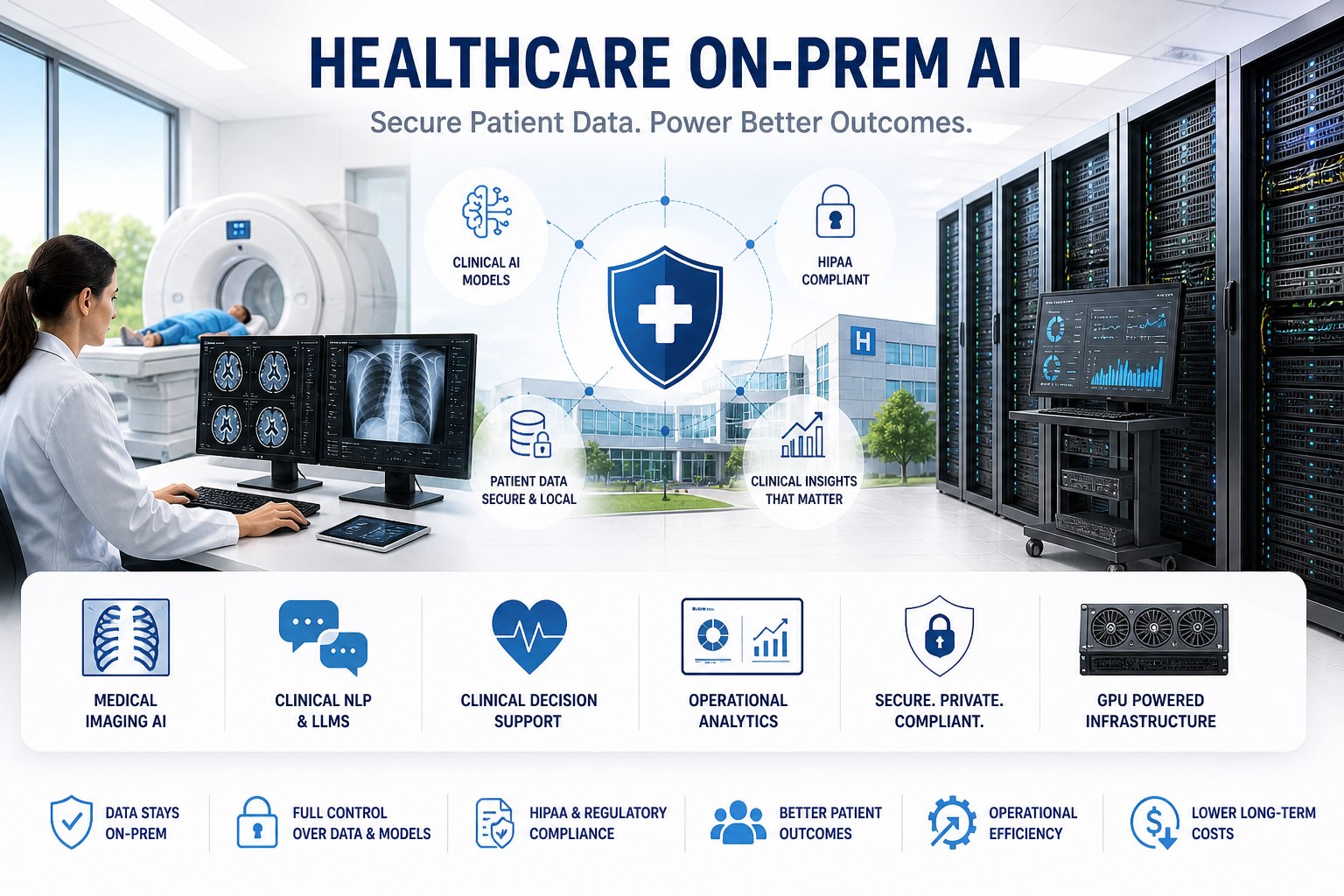
Yes — if the AI system processes, stores, or transmits Protected Health Information (PHI). This includes not just patient data but also any operational data that could be linked to patient care activities in a healthcare facility. An AI predictive maintenance system monitoring equipment in a hospital must be deployed through a HIPAA-compliant architecture: the vendor must sign a Business Associate Agreement (BAA), data must be encrypted at rest and in transit, access controls and audit trails must be maintained, and PHI must never pass through an unapproved third-party AI tool or API. A common failure mode is using a public cloud AI API for equipment diagnostics without a BAA in place — this creates direct HIPAA exposure regardless of whether the system was intended to handle PHI.
What does "high-risk AI" mean under the EU AI Act for industrial systems?
The EU AI Act classifies AI systems as high-risk when they're used in critical infrastructure management — which explicitly includes energy, water, transport, and manufacturing. AI systems used in predictive maintenance of critical industrial assets may fall into this classification depending on the safety implications of the equipment being monitored. High-risk AI systems must comply with a set of strict obligations: complete risk assessments documented before deployment, activity logs showing exactly what data was used for training and inference, technical documentation maintained throughout the system's lifecycle, and human oversight mechanisms that allow operators to intervene or override AI decisions. Non-compliance penalties reach up to €35 million or 7% of global annual turnover — the highest penalty tier in the regulation.
Can a cloud-based AI maintenance platform ever be compliant in a regulated industry?
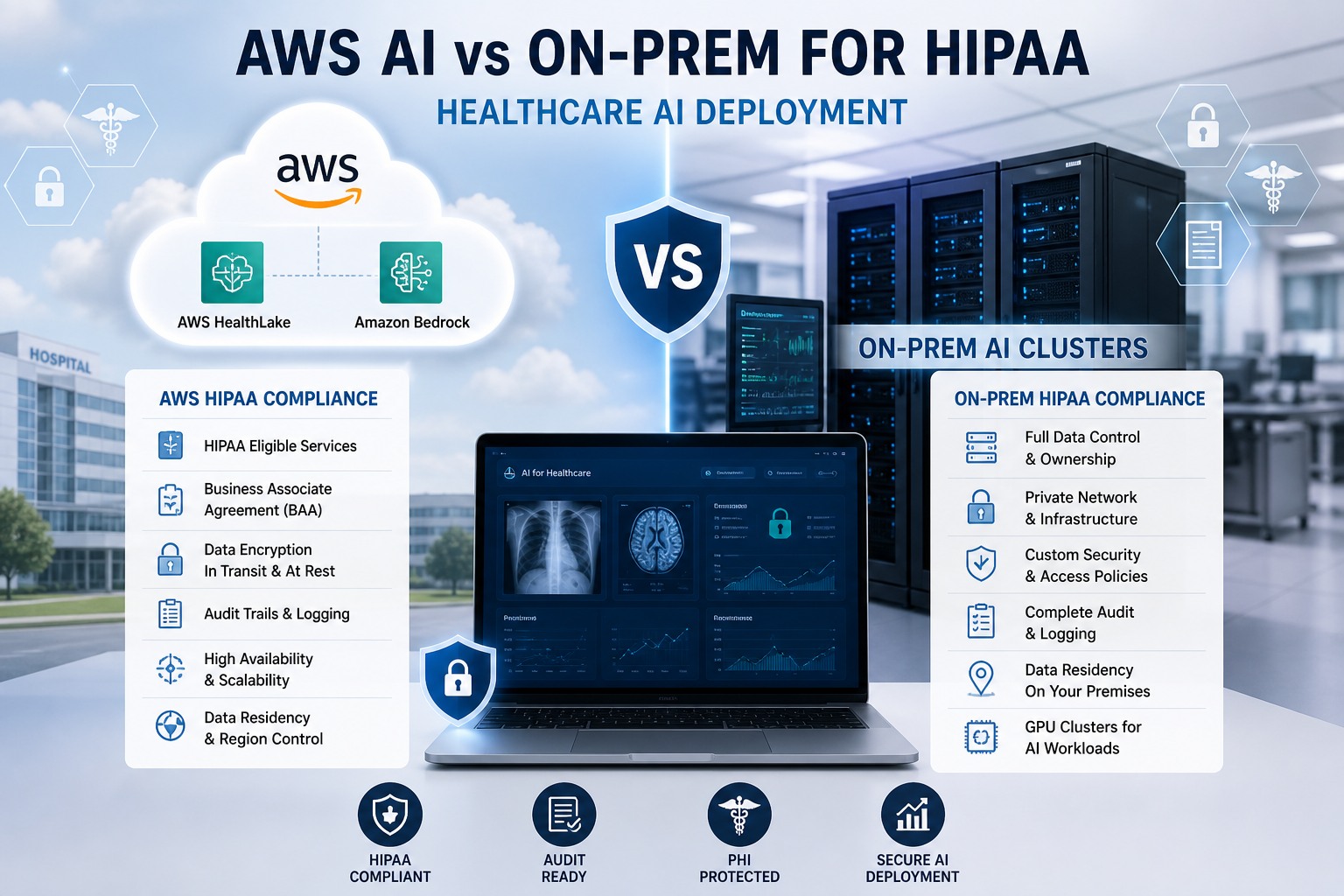
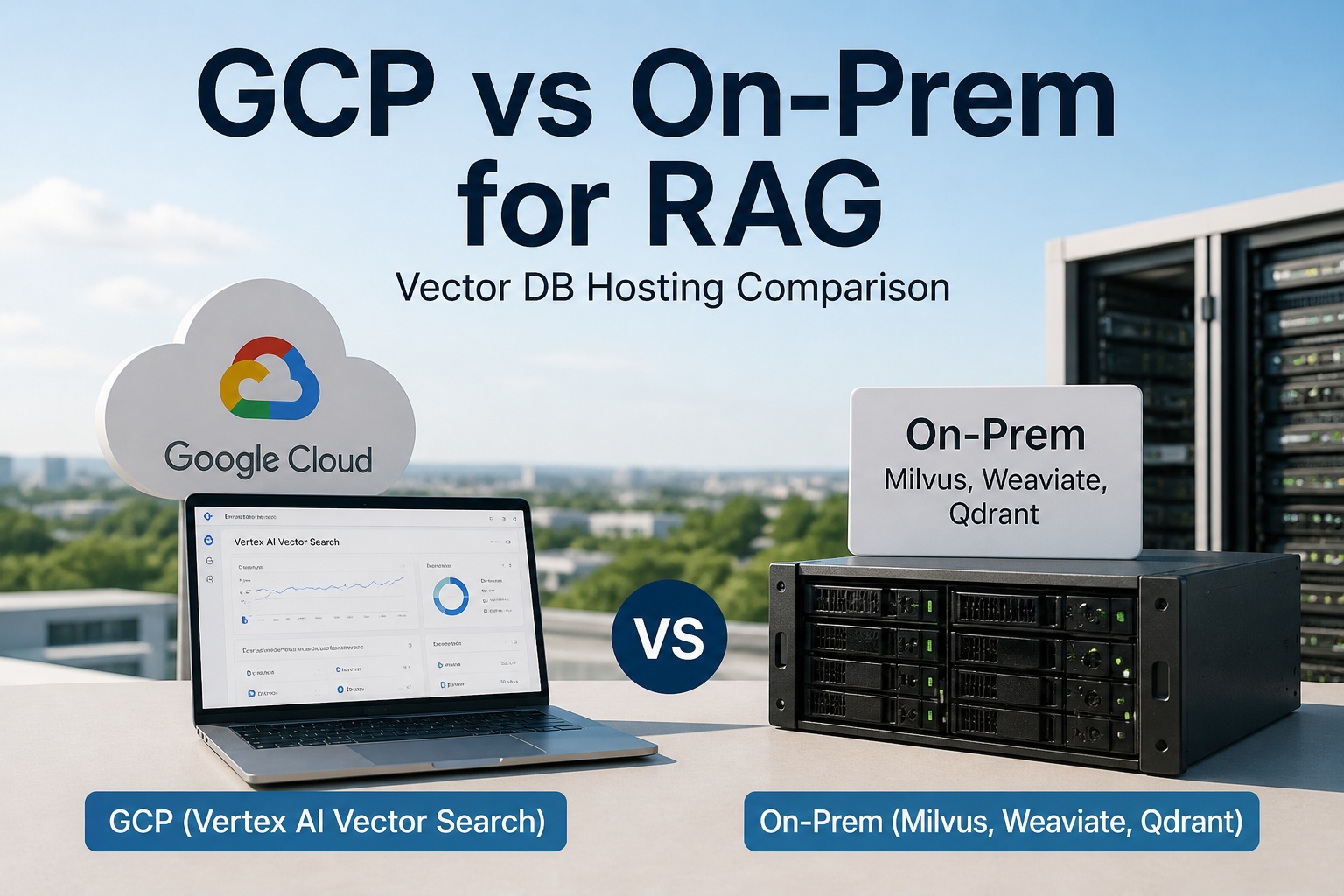
Yes — but only with the right contractual and architectural safeguards in place. A cloud AI maintenance platform can be compliant if: the vendor has signed appropriate agreements (DPA for GDPR, BAA for HIPAA, ICT contract with audit rights for DORA); data is processed only in approved jurisdictions with legally adequate transfer mechanisms; the vendor provides complete data lineage and allows audit access; and your organization can demonstrate independent operational capability if the vendor becomes unavailable. In practice, most standard SaaS contracts do not satisfy these requirements out of the box. The safer path for highly regulated industries — defense, pharma, healthcare — is on-premises or private cloud deployment where all data remains under direct organizational control. A hybrid approach that routes sensitive AI inference locally while using cloud for less sensitive analytics is often the optimal compliance architecture.