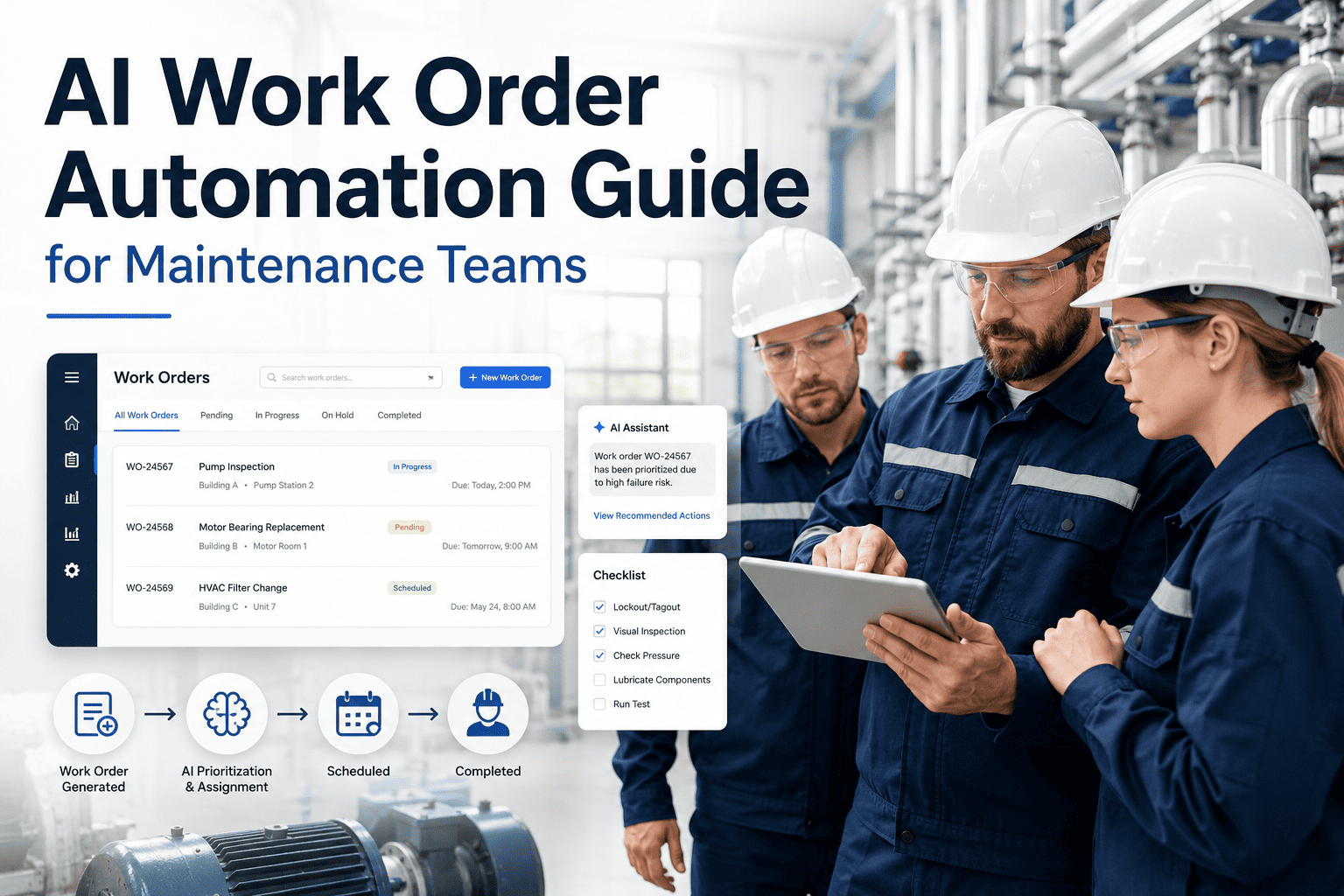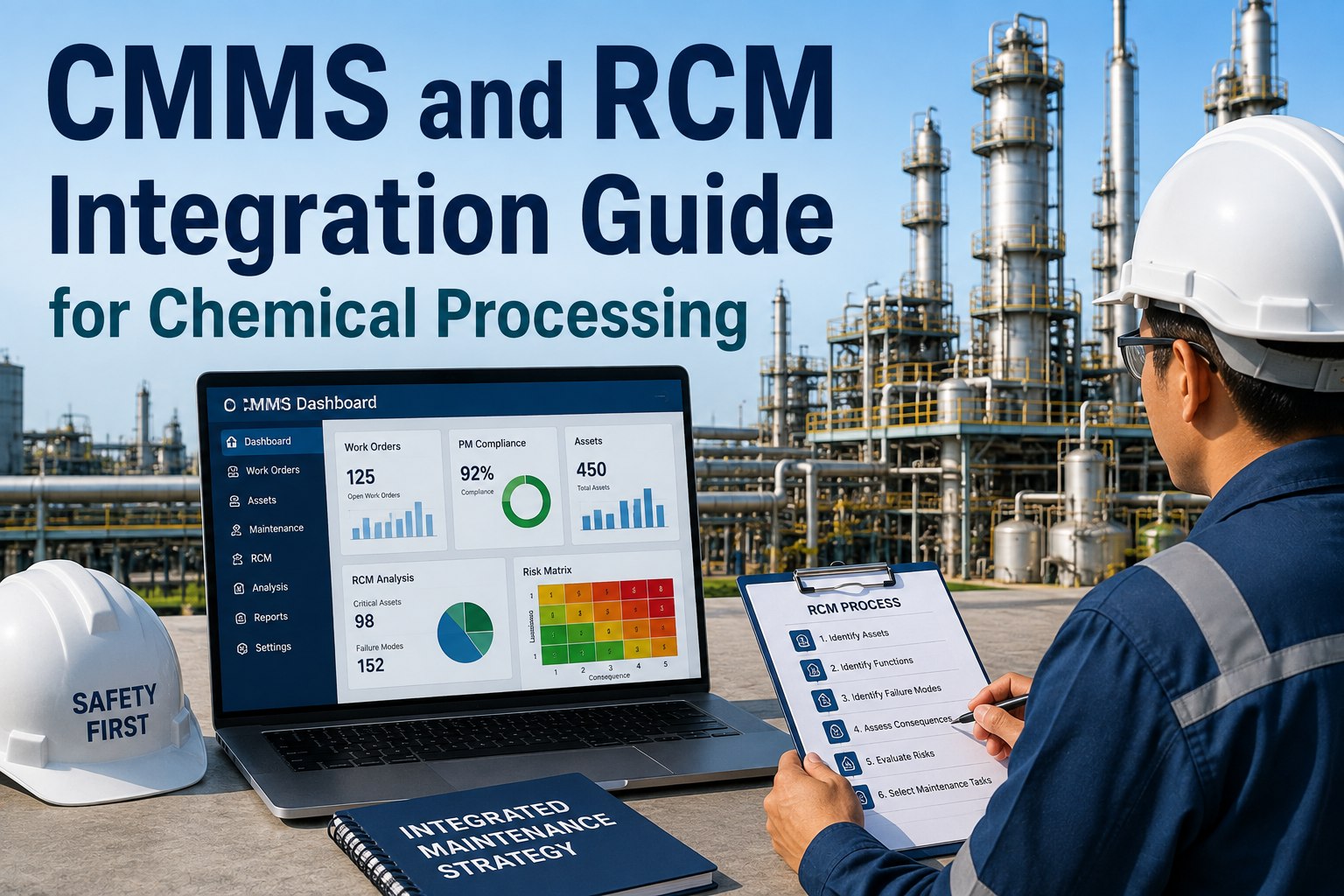
Integrating a CMMS with Reliability-Centered Maintenance (RCM) principles is how modern chemical processing plants shift from reactive firefighting to engineered-out failure modes. For teams managing volatile, high-pressure assets, chemical processing reliability depends on linking every identified failure mode directly to a structured, automated maintenance task. OxMaint's AI-powered CMMS and EAM platform provides the asset hierarchies, failure-mode libraries, and condition-based triggers required to operationalize RCM at scale. Launch your RCM pilot in weeks when you Start Free Trial, or schedule a personalized walkthrough to see the platform on your specific plant hierarchy.
CMMS and RCM Integration Guide
Are your critical assets running to failure — or engineered for reliability?
Reliability-Centered Maintenance is the proven methodology that separates chemical plants that react to costly breakdowns from those that design downtime out of the system entirely. Deploying RCM requires a CMMS built to link failure modes to automated work orders, runtime triggers, and measurable KPIs.
Chemical Processing Reliability
What is CMMS and RCM integration for chemical processing?
Integrating CMMS and RCM for chemical processing means mapping your plant's asset hierarchy directly to its operational risk profile, then automating the specific maintenance strategy dictated by that risk. When a chemical plant integrates its maintenance system with RCM methodologies, every work order generated is tied to a documented failure mode, a criticality score, and a measurable KPI. Instead of blanket preventive maintenance that wastes labor on non-critical components, maintenance teams focus exclusively on tasks that prevent catastrophic failures, environmental releases, or unplanned shutdowns. OxMaint enables this by allowing reliability engineers to attach failure-mode libraries directly to asset records, ensuring that every completed work order feeds historical data back into the reliability analysis loop.
Plants executing RCM via a modern CMMS typically cut emergency work orders by half within the first year of deployment.
The chemical processing industry loses tens of billions annually to unplanned outages, equipment damage, and lost production yield.
Optimizing maintenance strategies through RCM eliminates unnecessary time-based PMs and redirects labor to high-value inspections.
RCM Implementation Steps
How to set up RCM in a chemical processing CMMS
Deploying RCM within your chemical processing maintenance software requires a disciplined approach. A typical pilot program on 10-20 critical assets takes 4 to 8 weeks. Follow this month-by-month timeline to transition from spreadsheet-based tracking to a fully automated maintenance system that engineers out failure.
Asset Hierarchy & Criticality Ranking
Map your plant's pumps, heat exchangers, reactors, and compressors into OxMaint's parent-child asset hierarchy. Apply a criticality matrix (safety, environmental, operational, economic) to identify the top 10% of assets that pose the highest risk.
FMEA & Failure Mode Libraries
Conduct a Failure Modes and Effects Analysis (FMEA) on the selected critical assets. Input these failure modes into OxMaint so that when a technician closes a work order, they must select from a predefined failure code, building your reliability database.
Strategy Assignment & Automation
For each failure mode, assign the optimal task: run-to-failure, time-based PM, condition monitoring, or redesign. Automate PM triggers in the CMMS based on runtime hours, calendar dates, or sensor thresholds via IoT integrations.
KPI Tracking & Program Scaling
Measure MTBF, MTTR, and planned-vs-unplanned maintenance ratios. Once the pilot proves ROI, scale the RCM framework to the remaining plant assets using OxMaint's bulk import and deployment tools.
Maintenance Strategy Selection
Choosing the right maintenance strategy for each failure mode
Not every asset in a chemical plant needs a weekly preventive maintenance check. RCM dictates that the maintenance strategy must match the failure mode characteristics. Use the comparison table below to map your FMEA results to the correct automated maintenance task in your CMMS.
| Failure Mode Characteristic | Recommended Strategy | CMMS Automation Trigger | Chemical Plant Example |
|---|---|---|---|
| Failure is hidden, no immediate operational impact | Failure-finding task (FFTT) | Calendar-based PM trigger | Standby fire water pump auto-start test |
| Wear pattern is age-related and predictable | Time-based preventive maintenance | Runtime hours or calendar trigger | Mechanical seal replacement on agitators |
| Failure is random but shows early warning signs | Condition-based monitoring (CBM) | IoT sensor threshold or inspection trigger | Vibration analysis on centrifugal compressors |
| High criticality, sudden failure is catastrophic | Predictive maintenance / Redesign | AI-driven anomaly detection trigger | Reactor cooling jacket flow rate monitoring |
| Low criticality, cheap to replace, no safety risk | Run-to-failure (RTF) | Reactive work order on breakdown | Standard HVAC exhaust fans in office areas |
How OxMaint Helps
CMMS best practices for chemical processing reliability
OxMaint is engineered specifically for maintenance and reliability teams moving beyond reactive maintenance. These core capabilities translate RCM theory into chemical processing work order automation that directly reduces unplanned downtime and lowers maintenance costs.
Asset Hierarchy & FMEA Linking
Build digital twins of your plant that mirror exact parent-child asset relationships. Link failure modes directly to components, ensuring every closed work order enriches your historical reliability data for ISO 55000 compliance.
Automated PM & Condition Triggers
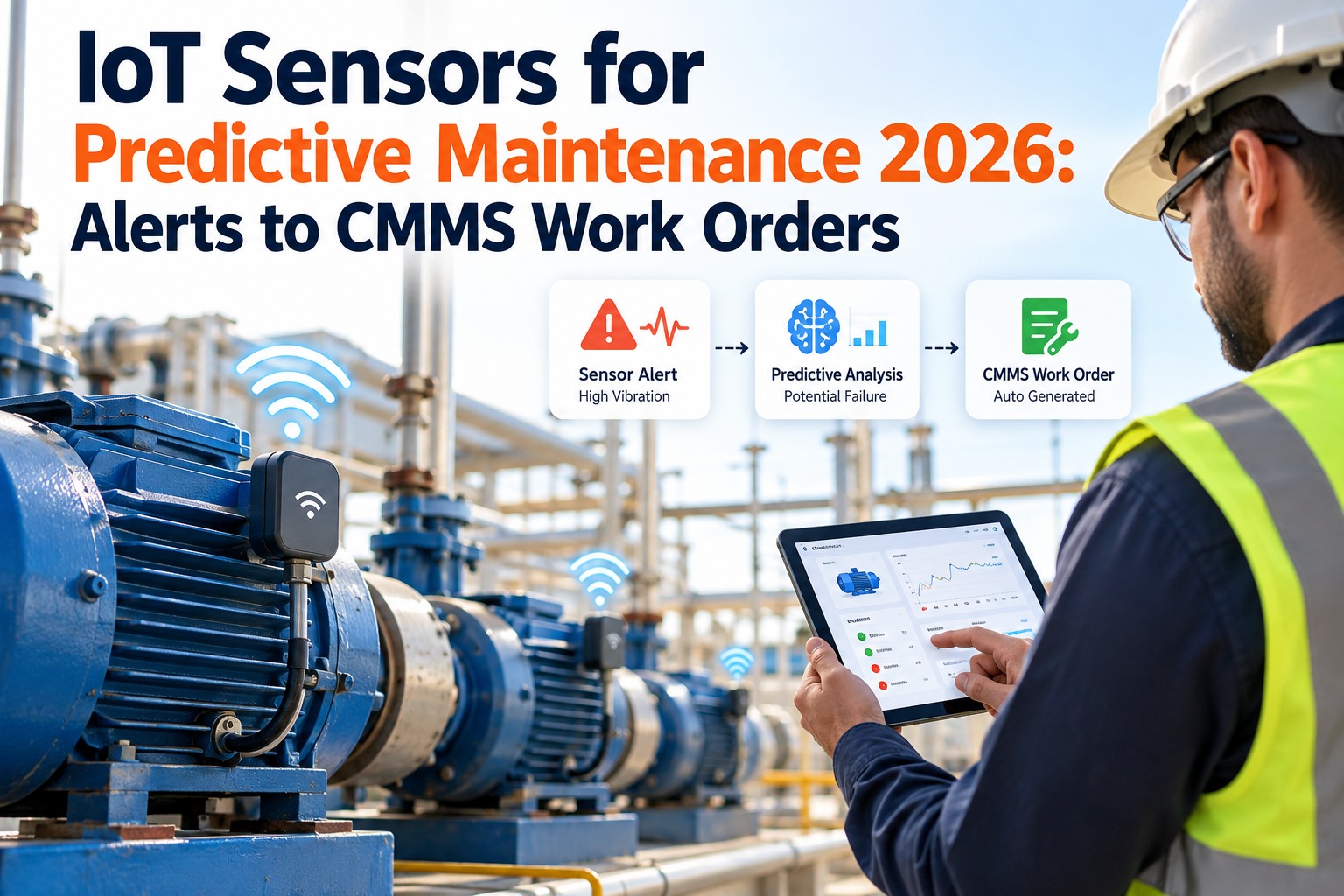
Eliminate paper work orders and sticky-note reminders. OxMaint automatically generates work orders based on runtime hours, calendar dates, or real-time IoT sensor data, ensuring condition-based maintenance tasks are never missed.
CMMS KPI Tracking & Analytics
Prove your RCM program is working with real-time dashboards tracking MTBF, MTTR, OEE, and Planned Maintenance Percentage (PMP). See exactly how your reliability investments are cutting downtime month over month.
Spare Parts & Inventory Optimization
Avoid stockouts on critical spares without over-ordering. OxMaint links bill of materials (BOM) directly to asset records, automatically reserving parts for PMs and flagging minimum reorder points based on your failure rate data.
Real-World Impact
Chemical processing CMMS deployment: A worked example
Consider a mid-sized specialty chemical plant with 180 critical assets spending $42,000 annually on reactive maintenance labor and rushed spare parts. After implementing a digital maintenance transformation using OxMaint, the plant loaded its asset hierarchy, conducted FMEA on its top 20 most critical pumps and reactors, and automated 65% of its PMs based on runtime and condition triggers.
By shifting from time-based PMs to condition-based monitoring, the plant eliminated unnecessary scheduled teardowns and redirected 120 labor hours per month to proactive reliability engineering.
Condition triggers caught bearing degradation early on two primary distillation feed pumps, preventing an estimated 16 hours of unplanned shutdown time and $85,000 in lost production yield.
See OxMaint on your assets — book a 30-min demo
Stop fighting fires with spreadsheets. Discover how chemical plants use OxMaint to automate work orders, track RCM KPIs, and link every failure mode to a specific maintenance task.
Frequently Asked Questions
CMMS and RCM for chemical processing: Your questions answered
What is the difference between CMMS and RCM in chemical processing?
A CMMS is a software platform that manages work orders, asset tracking, and inventory, while RCM is a methodology used to determine what maintenance tasks should be performed. Integrating CMMS and RCM for chemical processing means using the software to execute the specific strategies (like condition monitoring or run-to-failure) dictated by the RCM analysis. Start Free Trial to see how OxMaint bridges this gap.
How long does it take to deploy a CMMS for chemical processing?
A focused RCM pilot on 10 to 20 critical assets can be deployed in 4 to 8 weeks. This includes building the asset hierarchy, loading failure mode libraries, and setting up automated PM triggers. Full plant-wide CMMS deployment typically takes 3 to 6 months depending on data quality and asset volume.
Which KPIs should we track for chemical processing reliability?
The most critical CMMS KPIs for chemical processing include Mean Time Between Failures (MTBF), Mean Time to Repair (MTTR), Overall Equipment Effectiveness (OEE), and Planned Maintenance Percentage (PMP). Tracking these metrics proves your RCM program is effectively reducing unplanned downtime and lowering total maintenance costs.
Can a CMMS automate condition-based maintenance for chemical plants?
Yes, modern maintenance software like OxMaint integrates with IoT sensors and control systems to automate condition-based maintenance. When a sensor detects a threshold breach—such as high vibration on a centrifugal pump—the CMMS automatically generates a priority work order for inspection before a catastrophic failure occurs.
How does CMMS integration improve safety and compliance in chemical facilities?
Integrating a CMMS ensures that safety-critical inspections and pressure vessel certifications are never missed by automating reminders and locking out non-compliant assets. It also provides a digital audit trail required for OSHA, PSM, and ISO 55000 compliance, proving that maintenance was performed exactly as specified.
Ready to engineer downtime out of your chemical plant?
Launch your RCM program on a platform built for reliability. See how OxMaint's asset hierarchies, automated work orders, and failure-mode tracking can cut your unplanned downtime by up to 50%.
Free 14-day trial · No credit card