The moment a maintenance team connects an AI prediction engine to its CMMS, a new question appears that nobody assigned an owner to: who decides which AI-generated work order is allowed to fire automatically, which sensor feed is trusted enough to trigger one, and who is accountable when a bad prediction creates a bad work order. Without integration governance, every new data source becomes a new point of failure instead of a new source of insight. AI maintenance systems built on ungoverned integrations tend to drift — alerts get ignored, duplicate work orders pile up, and nobody can trace a decision back to the data that produced it. Start governing your AI-to-CMMS integrations in Oxmaint free and put an approval layer between every prediction and every work order it creates.
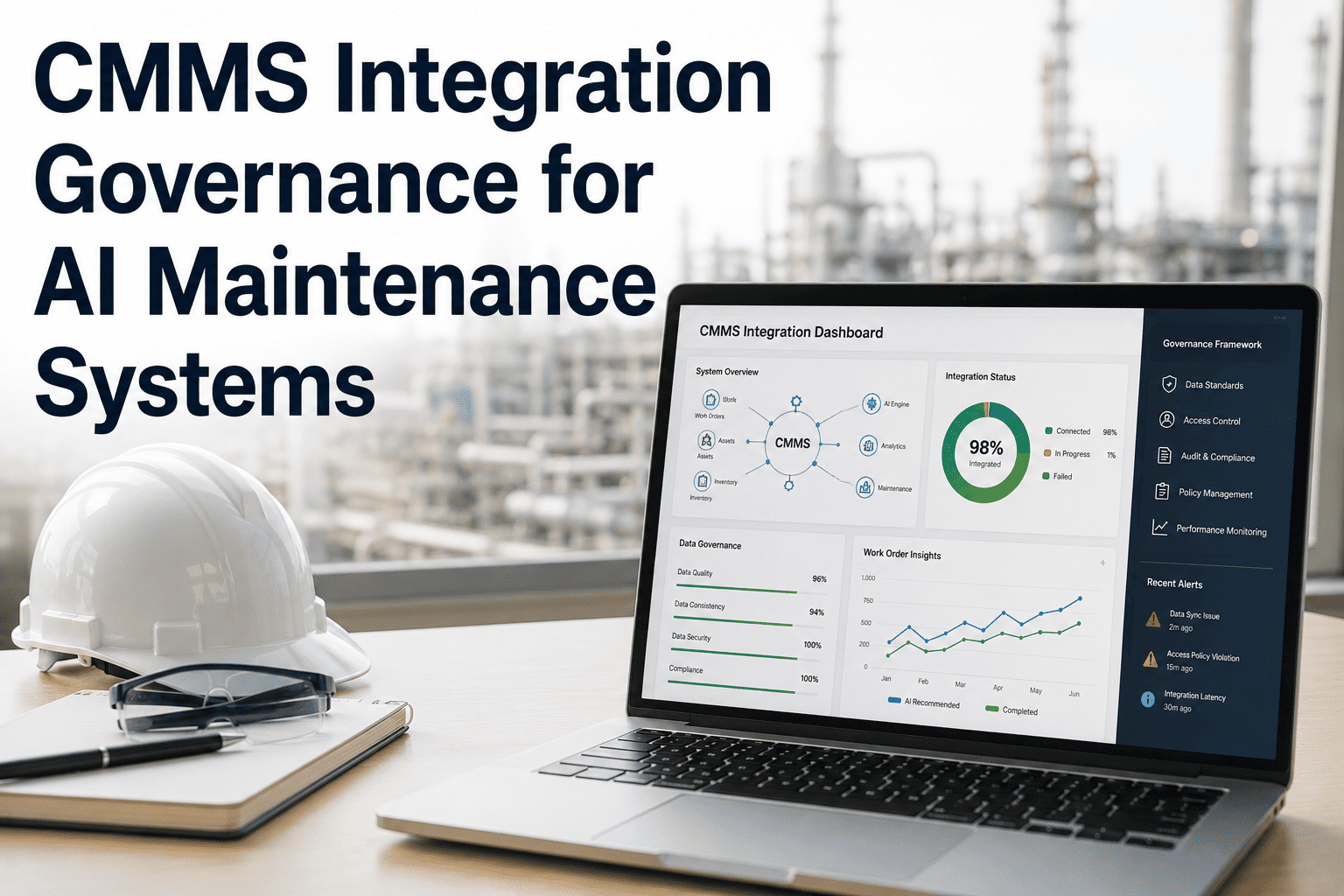
CMMS Integration Governance for AI Maintenance Systems
A framework for deciding which data sources can trigger work orders, who approves what, and how every AI-generated action stays traceable back to the evidence behind it.
61%
of failed AI maintenance pilots cite ungoverned data integration as the root cause
4–6
distinct systems typically feed a single AI maintenance recommendation
100%
of auto-created work orders should be traceable to a named approval rule
The Gap
What "No Governance" Actually Looks Like Day to Day
Anyone with API access can push a new data feed into the prediction model — with no record of when or why
Two systems disagree about an asset's status and both keep generating conflicting work orders
A sensor goes faulty and silently feeds bad data into the model for weeks before anyone notices
An auto-created work order can't be traced back to the alert, sensor, or rule that generated it
Architecture
The Four Layers a Governed AI-CMMS Integration Needs
Data Source Layer
Sensors, PLCs, oil lab feeds, and manual readings — each one registered with an owner and a data quality threshold before it can feed anything downstream.
Integration Layer
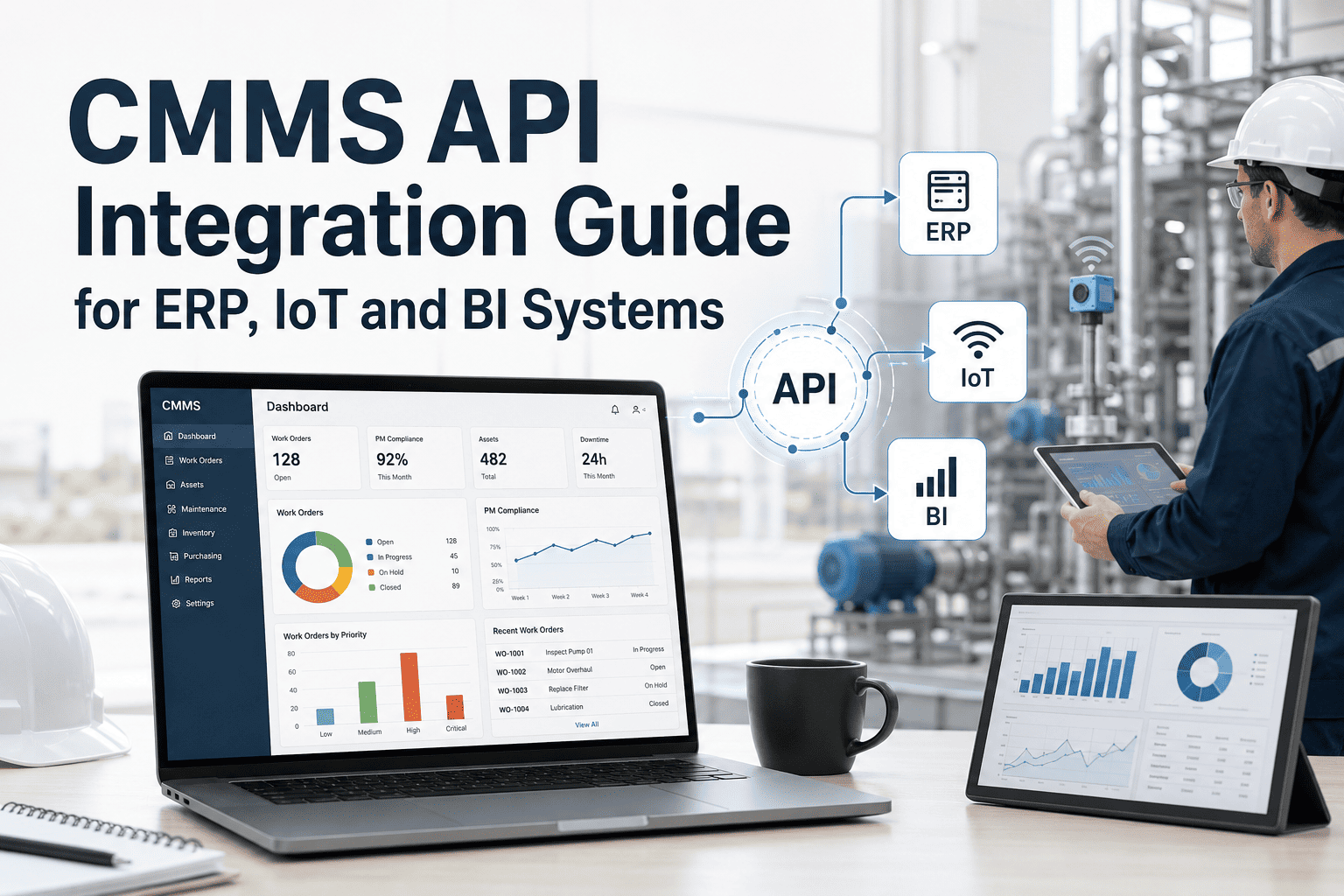
API gateway managing every connection via OPC-UA, Modbus, or REST — with rate limits, authentication, and a single audit log per source.
Governance Layer
Approval rules defining which prediction confidence levels can auto-generate a work order versus route to human review first.
CMMS Action Layer
Work orders, parts reservation, and scheduling — every action stamped with the rule and data source that triggered it.
Put an approval layer between every prediction and every work order
Oxmaint logs the source, confidence score, and approval rule behind every AI-generated action — so nothing fires without a traceable reason.
Comparison
Point-to-Point Integration vs a Governed API Gateway
| Governance Question | Point-to-Point Integration | Governed API Gateway |
|---|
| Who can add a new data source? | Anyone with credentials, no review | Requires a registered owner and quality check |
| What happens on conflicting data? | Each system acts independently | Conflict rules decide which source wins |
| Can a work order be traced to its trigger? | Rarely, without manual digging | Every action stamped with source and rule |
| What breaks when one system changes? | Every connected integration individually | Only the gateway mapping for that source |
Outcomes
What Governed Integration Changes in Practice
68%
Fewer duplicate or conflicting work orders
100%
Of auto-generated actions traceable to a named rule
3 wks
Typical time to map and register existing data sources
52%
Faster audit response when compliance asks "why did this fire"
Expert Review
The companies that scale AI maintenance successfully are rarely the ones with the most sophisticated models — they're the ones that decided early who owns each data source and what confidence threshold is required before a prediction is allowed to act. Governance is not a compliance checkbox here; it's the difference between an AI system maintenance teams trust and one they quietly start ignoring.
Reviewed by Oxmaint's Maintenance Reliability Advisory Team
FAQ
Frequently Asked Questions
Does integration governance slow down how fast AI alerts can act?
No — governance defines rules in advance, so high-confidence predictions still auto-generate work orders instantly. The rules simply route lower-confidence cases to a human reviewer instead of acting blindly.
What protocols does Oxmaint support for connecting data sources?
Oxmaint integrates via OPC-UA, Modbus, and REST API, alongside direct connections to existing EAM and SCADA systems.
Book a demo to map your current data sources against supported protocols.
Who should own the approval rules for auto-generated work orders?
Most plants assign rule ownership to a reliability engineer or maintenance planner, with sign-off from operations on any rule that can stop or restart equipment automatically.
Can we see why a specific work order was auto-generated?
Yes. Every auto-created work order in Oxmaint is stamped with the data source, confidence score, and approval rule that triggered it, fully visible from the work order record itself.
How long does it take to set up a governed integration from scratch?
Most sites complete data source registration and initial approval rules within three weeks, starting with the highest-value asset class first.
Start free to begin mapping your first source today.
Govern every connection before it becomes a work order
Oxmaint gives every AI-to-CMMS integration an owner, a confidence rule, and a traceable audit log — so growth in data sources never means a loss of control.