
CMMS return on investment represents one of the most critical decisions facing maintenance managers, with poorly implemented systems costing an average of $15,000 annually in lost productivity. Industry data reveals that 68% of organizations still rely on reactive maintenance approaches that create asset failures, missed maintenance schedules, and excessive repair costs. Strategic CMMS implementation can reduce maintenance costs by 75%, extend asset life by 45% and decrease downtime by 80% while ensuring operational excellence, and maximum asset utilization across all maintenance operations.
Modern maintenance operations depend on sophisticated asset management systems operating across complex environments, where even minor inefficiencies can escalate into complete operational disruptions that halt production progress and devastate operational budgets. CMMS ROI optimization cascades throughout organizations, affecting asset availability, maintenance efficiency, and total cost of ownership.
The Hidden Crisis: Maintenance Inefficiencies in Modern Operations
Contemporary maintenance operations face unprecedented challenges where manual processes and reactive approaches create systemic inefficiencies that compound across entire organizations. CMMS implementation inefficiencies cascade throughout facilities, affecting asset reliability, maintenance costs, and operational performance.
Preventive Maintenance Optimization
82% of maintenance failures show detectable patterns 4-6 weeks before breakdown, including performance degradation and component wear that costs $22,000+ when unaddressed through systematic CMMS tracking.
Asset Performance Monitoring
Asset performance indicators appear 5-8 weeks before major failures, with efficiency drops and reliability issues signaling problems that require $26,000+ for complete asset replacement.
Work Order Management
Work order inefficiencies manifest through delayed responses, resource misallocation, and scheduling conflicts that indicate systemic problems costing $10,000+ in productivity losses.
Inventory Management Integration
Inventory problems show early indicators through stockouts, overstock situations, and procurement delays before complete disruption requiring $18,000+ in emergency procurement.
Compliance and Reporting
Compliance inefficiencies create cascading regulatory risks, with audit findings potentially destroying operational credibility while costing $42,000+ in penalties and remediation.
Resource Optimization
Resource allocation inefficiencies compromise maintenance effectiveness and operational capability, with proper CMMS implementation preventing waste and extending resource productivity by 40%.
The Financial Impact of Inefficient Maintenance Management
Before implementing systematic Oxmaint CMMS solutions, maintenance operations experience significant inefficiencies that impact both operational performance and financial results:
- Emergency maintenance premiums consuming 65% of maintenance budgets while providing minimal preventive value
- Asset downtime averaging 30-35% of available hours due to unplanned failures and reactive maintenance cycles
- Maintenance cost unpredictability making budget planning difficult and causing production delays and penalties
- Secondary asset damage with 45% of major failures causing collateral damage to related systems
- Compliance violation risks from inadequate documentation that can result in $48,000+ regulatory exposures
Foundation Elements: Comprehensive CMMS ROI Framework
Professional Oxmaint CMMS systems provide the operational framework necessary for systematic maintenance management, incorporating asset data, maintenance schedules, and predictive analytics into unified management platforms that optimize maintenance effectiveness before problems become failures.
Core CMMS Components and Architecture
Effective CMMS ROI frameworks integrate multiple operational streams and management criteria to create comprehensive maintenance ecosystems that balance efficiency with operational practicality.
Asset Management Matrix
Comprehensive asset databases including performance tracking, maintenance history, lifecycle analysis, and cost optimization that enable precise condition assessment and strategic planning.
Maintenance Protocol Libraries
Detailed maintenance procedures, schedule parameters, task criteria, and response protocols for all maintenance activities from routine inspections to critical repair interventions.
Predictive Analytics Framework
Multi-variable analysis logic incorporating operating hours, environmental factors, load conditions, and historical patterns to optimize maintenance timing and resource allocation.
Resource Coordination Integration
Technician scheduling systems, parts inventory management, and maintenance planning coordination to ensure optimal resource utilization and cost-effective operations.
Advanced Digital Integration and Automation Capabilities
Smart CMMS and Predictive Analytics Integration
Modern Oxmaint CMMS solutions transcend manual maintenance management to incorporate real-time asset data, machine learning analytics, and automated scheduling systems that identify optimization opportunities months before traditional methods detect inefficiencies.
Condition-Based Maintenance
Real-time asset monitoring systems automatically track performance parameters, identify deviation patterns, and generate maintenance schedules when optimization thresholds are reached.
Automated Work Order Generation
System-generated work orders with complete task information, priority classifications, and resource requirements that eliminate scheduling delays and optimize technician productivity.
Predictive Failure Prevention
Advanced algorithms that analyze asset behavior patterns to predict maintenance needs 6-12 weeks before occurrence, enabling planned interventions and cost optimization.
Integrated Cost Management
Machine learning systems analyze maintenance patterns and cost history to optimize maintenance timing and budget allocation for maximum ROI effectiveness.
Implementation Methodology and Best Practices
Phased Deployment Strategy for CMMS ROI Optimization
Successful Oxmaint implementation requires systematic deployment approaches that minimize operational disruption while maximizing ROI potential and operational effectiveness across diverse asset portfolios and operational environments.
Phase 1: ROI Assessment
Current maintenance cost evaluation, efficiency analysis, ROI opportunity mapping, and system customization based on specific asset types and operational requirements.
Phase 2: System Configuration
Custom CMMS setup, asset database creation, maintenance schedule optimization, and integration planning with existing operational and financial systems.
Phase 3: Pilot Deployment
Limited implementation with critical assets, team training, ROI validation, and process refinement to optimize system effectiveness and user adoption.
Phase 4: Full Implementation
Facility-wide deployment, comprehensive training programs, change management support, and ongoing optimization based on ROI performance and operational feedback.
Change Management and User Adoption Strategies
CMMS implementation success depends heavily on user adoption and cultural transformation, requiring comprehensive training programs and incentive structures that encourage systematic maintenance practices and ROI focus.
Team Training Program Development
Role-specific training for maintenance technicians, supervisors, and managers covering CMMS operation, maintenance optimization, and ROI tracking procedures.
Performance Incentive Alignment
KPI structures and reward programs that recognize maintenance efficiency, cost optimization, and successful asset management achievements.
Communication and Feedback Systems
Regular communication channels for CMMS updates, ROI improvements, and user feedback integration to ensure continuous optimization and engagement.
Champion Network Development
Identification and development of CMMS champions who support system adoption and provide peer-to-peer training and technical support.
Analytics and Performance Monitoring Capabilities
Advanced CMMS Analytics and ROI Tracking
Oxmaint CMMS analytics transform raw maintenance data into actionable insights that enable continuous improvement, cost optimization, and predictive planning across asset portfolios and operational environments.
Real-Time ROI Dashboards
Executive and operational dashboards providing immediate visibility into maintenance costs, asset performance, and ROI trends across all operational segments.
Predictive Cost Analysis
Advanced analytics identifying cost optimization patterns, maintenance effectiveness trends, and improvement opportunities based on historical and real-time operational data.
Investment Recovery Analytics
Comprehensive analysis covering cost savings, productivity improvements, and asset optimization that quantify CMMS value and ROI measurement accuracy.
Performance Benchmarking Systems
Automated performance tracking ensuring maintenance activities meet efficiency targets, cost objectives, and operational standards with continuous improvement reporting.
ROI and Operational Excellence Outcomes
Quantifiable Financial Benefits and Cost Optimization
Systematic Oxmaint CMMS implementation delivers measurable financial returns through multiple value streams that extend beyond direct maintenance cost savings to encompass operational efficiency, asset longevity, and productivity improvement benefits.
Operational Efficiency and Competitive Advantages
Comprehensive Oxmaint CMMS implementation creates operational advantages that enhance competitive positioning through improved asset reliability, predictable maintenance costs, and enhanced operational delivery capabilities.
- Improved operational schedule reliability with predictable asset availability and minimal maintenance-related disruptions
- Enhanced asset utilization averaging 95%+ availability compared to 70% with reactive maintenance approaches
- Reduced operational insurance costs through documented maintenance programs and improved safety records
- Increased asset values with comprehensive maintenance documentation and proven reliability history
- Better cash flow predictability through planned maintenance budgets and eliminated emergency expense spikes
Compliance and Regulatory Alignment
Regulatory compliance requirements make systematic CMMS implementation essential for modern operations, with safety standards, environmental regulations, and audit requirements demanding documented maintenance programs and systematic risk management approaches.
Safety Standard Compliance
Occupational safety regulations requiring systematic maintenance documentation and hazard prevention, with CMMS systems ensuring compliance and reducing violation risks that can cost $30,000+ per incident.
Environmental Regulation Adherence
Environmental compliance maintenance and sustainability standards demanding proper asset monitoring to ensure regulatory adherence and environmental responsibility.
Audit and Risk Management
Audit requirements for systematic documentation and risk identification programs, with CMMS systems reducing audit findings and compliance exposures significantly.
Asset Warranty Protection
Manufacturer warranty requirements for proper maintenance documentation, with systematic CMMS protecting warranty coverage and reducing replacement costs substantially.
Future Outlook and Innovation Roadmap
The CMMS landscape continues evolving with emerging technologies that promise enhanced ROI optimization, automated maintenance management, and predictive analytics integration that will further improve operational efficiency and cost effectiveness.
Artificial Intelligence Integration
Advanced AI algorithms providing enhanced maintenance optimization, cost prediction accuracy, and automated resource allocation based on complex operational data analysis.
IoT Asset Integration
Internet of Things technologies enabling continuous asset health monitoring and instant optimization opportunities across distributed operational environments.
Augmented Reality Maintenance
AR-enabled maintenance tools providing technicians with real-time asset information, procedure guidance, and expert system support for complex maintenance tasks.
Blockchain Maintenance Records
Immutable maintenance documentation and asset history providing enhanced warranty protection, compliance verification, and asset value preservation.
Frequently Asked Questions
Ready to maximize your maintenance ROI with comprehensive CMMS solutions?
Getting Started Book a Demo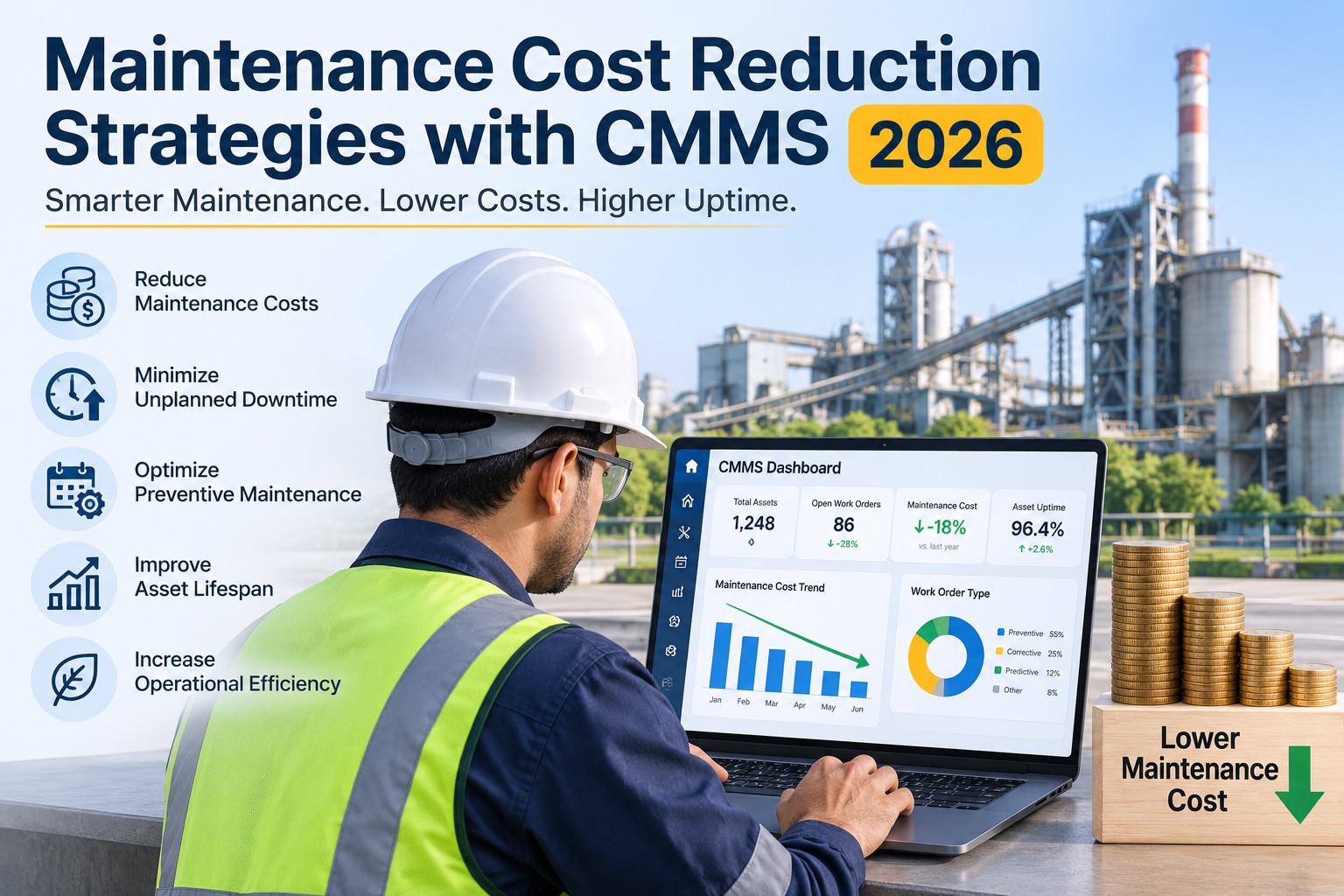


.jpeg)