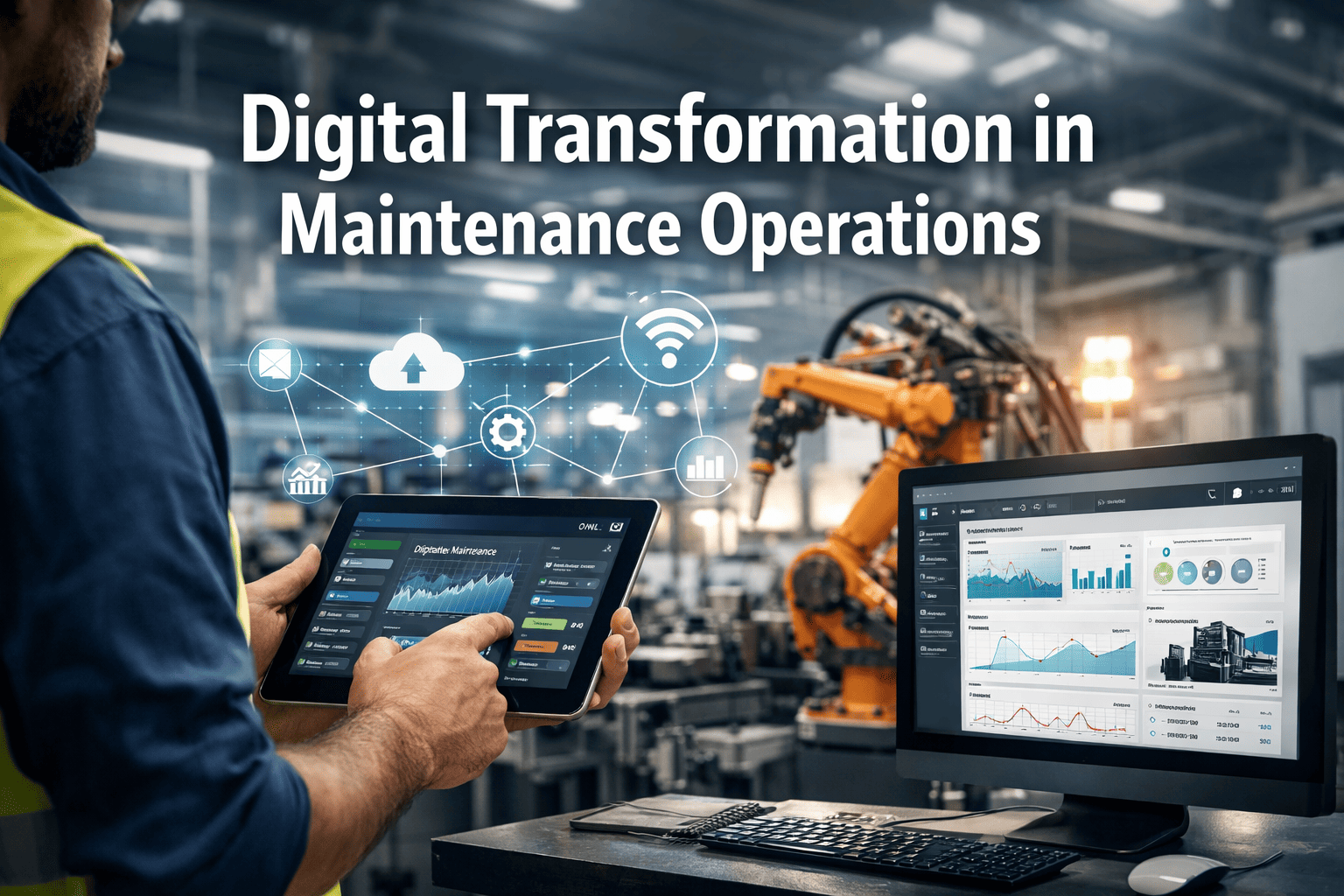
In 2016, just 24% of maintenance organizations used mobile CMMS solutions. By 2024, that number exceeded 60%—and 62% of organizations now report using a computerized maintenance management system, up from 49% the previous year. The digital transformation in maintenance isn't coming; it's already here, and organizations still relying on paper work orders, spreadsheet tracking, and filing cabinets are falling dangerously behind. The maintenance management software market is projected to grow from $1.29 billion in 2024 to $2.41 billion by 2030, driven by a fundamental shift in how industrial operations approach asset reliability. Research shows that 88% of facilities with fully implemented CMMS report significant cost savings ranging from tens of thousands to millions of dollars annually. Meanwhile, facilities stuck in reactive, paper-based operations experience 800 hours of unplanned downtime per year on average, at costs reaching $17,000 per incident—or up to $3 million per hour in critical industries. Sign up for Oxmaint to begin your transformation from paper-based chaos to intelligent, connected maintenance operations.
Digital Transformation
From Paper to Smart Operations
The evolution from clipboards and filing cabinets to mobile CMMS, IoT sensors, AI-powered analytics, and connected operations—transforming maintenance from a cost center to a strategic advantage
62%
Organizations Now Using CMMS
88%
Report Significant Cost Savings
40-60%
Reduction in Unplanned Downtime
3-6 mo
Time to Measurable ROI
The Maintenance Evolution Timeline
Maintenance management has evolved through distinct eras, each building on the previous. Understanding where your organization sits on this continuum—and what capabilities exist at higher maturity levels—is the first step toward strategic transformation. Most industrial facilities still operate somewhere between stages 2 and 3, missing the significant efficiency gains that digital and smart operations deliver.
Era 1
Paper-Based
1960s-1990s
Handwritten work orders, filing cabinets, tribal knowledge, reactive repairs, zero data visibility
Era 2
Spreadsheet Tracking
1990s-2010s
Excel maintenance logs, shared drives, version control chaos, siloed data, basic scheduling
Era 3
Desktop CMMS
2000s-2015
Centralized database, work order automation, PM scheduling, asset registers, basic reporting
Era 4
Mobile & Cloud CMMS
2015-Present
Anywhere access, real-time updates, QR/barcode scanning, photo documentation, cloud scalability
Era 5
Smart Operations
2020-Future
IoT sensors, AI prediction, digital twins, automated work orders, condition-based maintenance
The Hidden Costs of Paper-Based Maintenance
Paper-based and spreadsheet-driven maintenance operations create costs that rarely appear as line items in the budget—yet collectively erode profitability every day. Technicians waste hours searching for asset histories, managers drown in administrative overhead, and critical equipment failures go unpredicted because the data needed to see them coming was never captured or connected. Book a demo to see how digital workflows eliminate these hidden drains.
!
Lost Wrench Time
Without digital access, technicians spend hours searching for work order details, asset histories, and part locations instead of performing repairs. CMMS users spend 80% more time on actual maintenance versus paperwork.
!
Invisible Equipment Health
Paper logs can't detect patterns across thousands of data points. Subtle signs of bearing wear, motor degradation, or seal failure go unnoticed until catastrophic breakdown—costing 3-4x more than planned repairs.
!
Compliance Nightmares
Auditors request maintenance records and your team scrambles through filing cabinets. Missing signatures, incomplete logs, and undocumented inspections create regulatory risk and potential violations.
!
Inventory Chaos
Manual tracking leads to stockouts during critical repairs and overstocking of rarely-used parts. Strategic parts management through CMMS reduces inventory carrying costs 20-30% while improving availability.
!
Knowledge Evaporation
When experienced technicians retire, decades of troubleshooting knowledge walks out the door. Without digital capture, organizations constantly relearn lessons that should have been institutionalized.
!
Reactive Treadmill
58% of facilities spend less than half their time on scheduled maintenance. Without data-driven prioritization, teams stay trapped in firefighting mode, unable to shift toward prevention.
Five Pillars of Maintenance Digital Transformation
Successful digital transformation isn't about buying software—it's about transforming interconnected operational pillars that collectively eliminate the inefficiencies paper-based systems create. Each pillar addresses a specific dimension of maintenance operations, and the combined effect delivers exponential value beyond any single capability. Sign up now to begin building your transformation foundation.
01
Digital Work Orders
Replace paper task cards and filing cabinets with searchable, permission-controlled electronic workflows. Every request, assignment, completion, and signature lives in a single digital thread—accessible anywhere, audit-ready always.
Impact: Eliminates transcription errors, enables instant audit retrieval, reduces administrative overhead 60%
02
Mobile-First Access
Technicians receive assignments in the field, view maintenance history at the equipment, capture photos and notes in real-time, and close work orders without returning to an office. The "always connected" capability transforms productivity.
Impact: 20% labor productivity increase, 30% faster response times, zero double-entry
03
Preventive Automation
Automate recurring inspections and servicing on calendar, meter, or condition-based triggers. The system schedules work, assigns technicians, and ensures nothing falls through the cracks—shifting operations from reactive to proactive.
Impact: 12-18% cost reduction shifting from reactive to preventive, 40-60% downtime reduction
04
Asset Intelligence
Catalog every piece of equipment with complete history, warranties, manuals, parts lists, and lifetime costs. Track performance trends over time to identify which assets to maintain, overhaul, or replace—backed by data, not intuition.
Impact: 20-40% extended equipment life, optimal repair-vs-replace decisions, accurate capital planning
05
Connected Analytics
Transform maintenance data into strategic intelligence. Real-time dashboards, automated reports, KPI tracking, and integration with IoT sensors enable condition-based monitoring and AI-driven failure prediction.
Impact: Up to 90% failure prediction accuracy (AI-driven), data-backed budget justification
Ready to Leave Paper Behind?
Join the 62% of organizations that have already digitized maintenance operations. Most facilities see measurable ROI within 3-6 months of implementation.
ROI of Digital Maintenance Transformation
The business case for digital transformation is no longer theoretical. Industry research confirms measurable returns across multiple dimensions of maintenance operations—from direct cost savings to strategic improvements in asset reliability and workforce productivity. Organizations that have substantially implemented CMMS consistently outperform those still relying on manual processes. Book a consultation to calculate your facility's specific transformation ROI.
15-25%
Labor Cost Reduction
Through optimized scheduling, mobile work orders, and elimination of administrative tasks
20-30%
Inventory Cost Savings
Via automated reorder points, usage tracking, and elimination of stockouts and excess
40-60%
Downtime Reduction
Through predictive and preventive maintenance scheduling versus reactive repairs
20-40%
Extended Asset Life
Proper maintenance tracking and execution compared to reactive-only approaches
50%
Equipment Downtime Cut (IoT)
McKinsey data on IoT-enabled maintenance solutions with condition monitoring
3:1 to 5:1
Return on Investment
Industry benchmarks within 24-36 months with 12-18 month payback periods
Implementation Roadmap
Digital transformation doesn't happen overnight—but it doesn't need to take years either. A phased approach enables continuous value realization throughout implementation, with early wins building organizational confidence and funding subsequent phases. Most organizations begin seeing measurable improvements within 3-6 months, especially if previously relying on spreadsheets or paper-based methods. Schedule a consultation to plan your transformation roadmap.
Phase 1
Foundation
Weeks 1-4
Asset register creation, user setup, work order templates, mobile app deployment, PM schedule import
Phase 2
Adoption
Weeks 5-12
Team training, workflow refinement, paper phase-out, inventory integration, compliance tracking activation
Phase 3
Optimization
Months 3-6
KPI dashboards, PM effectiveness tuning, spare parts automation, reporting standardization, baseline measurement
Phase 4
Intelligence
Months 6-12
IoT sensor integration, condition monitoring, predictive analytics pilots, AI-assisted decision support, digital twin exploration
Transform Your Maintenance Operations
From paper chaos to smart operations—Oxmaint provides the platform, implementation support, and ongoing partnership to make digital transformation successful.
Frequently Asked Questions
How long does it take to transition from paper-based maintenance to CMMS?
Most organizations can deploy foundational CMMS capabilities within 4-6 weeks, including asset registration, work order management, and mobile access for technicians. Full optimization with preventive maintenance automation, inventory integration, and advanced reporting typically takes 3-6 months. Organizations previously relying on spreadsheets or paper-based recording methods often begin seeing measurable ROI within 3-6 months of implementation as administrative overhead drops and preventive maintenance compliance improves.
What ROI can we expect from CMMS implementation?
Industry research indicates CMMS users achieve cost savings between 20-50% across various maintenance management areas, though results vary by organization maturity and implementation depth. Specific documented benefits include: 15-25% labor cost reduction through optimized scheduling, 20-30% inventory cost savings through automated tracking, 40-60% reduction in unplanned downtime through preventive maintenance, and 20-40% extended equipment life. Most implementations achieve 3:1 to 5:1 return on investment within 24-36 months, with payback periods of 12-18 months.
What is the difference between basic CMMS and smart maintenance operations?
Basic CMMS digitizes work order management, asset tracking, and preventive maintenance scheduling—eliminating paper and spreadsheet inefficiencies. Smart maintenance operations add IoT sensor integration for real-time equipment monitoring, AI-powered analytics for failure prediction, digital twins for simulation and optimization, and automated condition-based maintenance triggers. While basic CMMS delivers significant value through workflow digitization, smart operations enable predictive capabilities that can achieve up to 90% failure prediction accuracy and 50% further downtime reduction.
How do we convince leadership to invest in maintenance digitization?
Build a business case around documented inefficiencies and industry benchmarks. Calculate current costs: emergency repair frequency, downtime hours and cost per incident, technician time spent on administrative tasks, inventory carrying costs and stockouts, and compliance audit preparation time. Then apply conservative improvement percentages from industry data (25-35% overall maintenance cost reduction is achievable). The CMMS market is growing at 11.1% annually because organizations are demonstrating clear returns—88% of facilities with substantially implemented CMMS report significant cost savings.
What are the biggest challenges in maintenance digital transformation?
The most common challenges are: user adoption (technicians accustomed to paper resist change), data migration (transferring existing asset and maintenance records accurately), process standardization (defining consistent workflows across teams), and organizational commitment (maintaining momentum beyond initial deployment). Successful implementations address these through phased rollouts that demonstrate quick wins, comprehensive training programs, dedicated implementation support, and executive sponsorship that reinforces the strategic importance of transformation.
Do we need to replace existing systems to implement CMMS?
Modern cloud-based CMMS platforms are designed to integrate with existing infrastructure rather than replace it. API-first architectures connect with ERP systems, accounting software, IoT sensors, parts databases, and other business systems. This enables seamless data flow between maintenance operations and enterprise systems without requiring wholesale system replacement. Integration capabilities are essential for enabling connected workflows—without them, teams face manual data entry that increases errors and delays response times.
How does mobile CMMS improve technician productivity?
Mobile CMMS eliminates the back-and-forth between field and office that wastes technician time. With mobile access, technicians receive assignments instantly on their device, view complete asset history and maintenance procedures at the equipment location, capture photos and notes documenting their work in real-time, close work orders and update parts usage immediately, and scan QR codes or barcodes for instant asset information. Research shows technicians with mobile CMMS spend 80% more time on actual maintenance versus paperwork, and smart manufacturing initiatives including mobile tools increase labor productivity up to 20%.