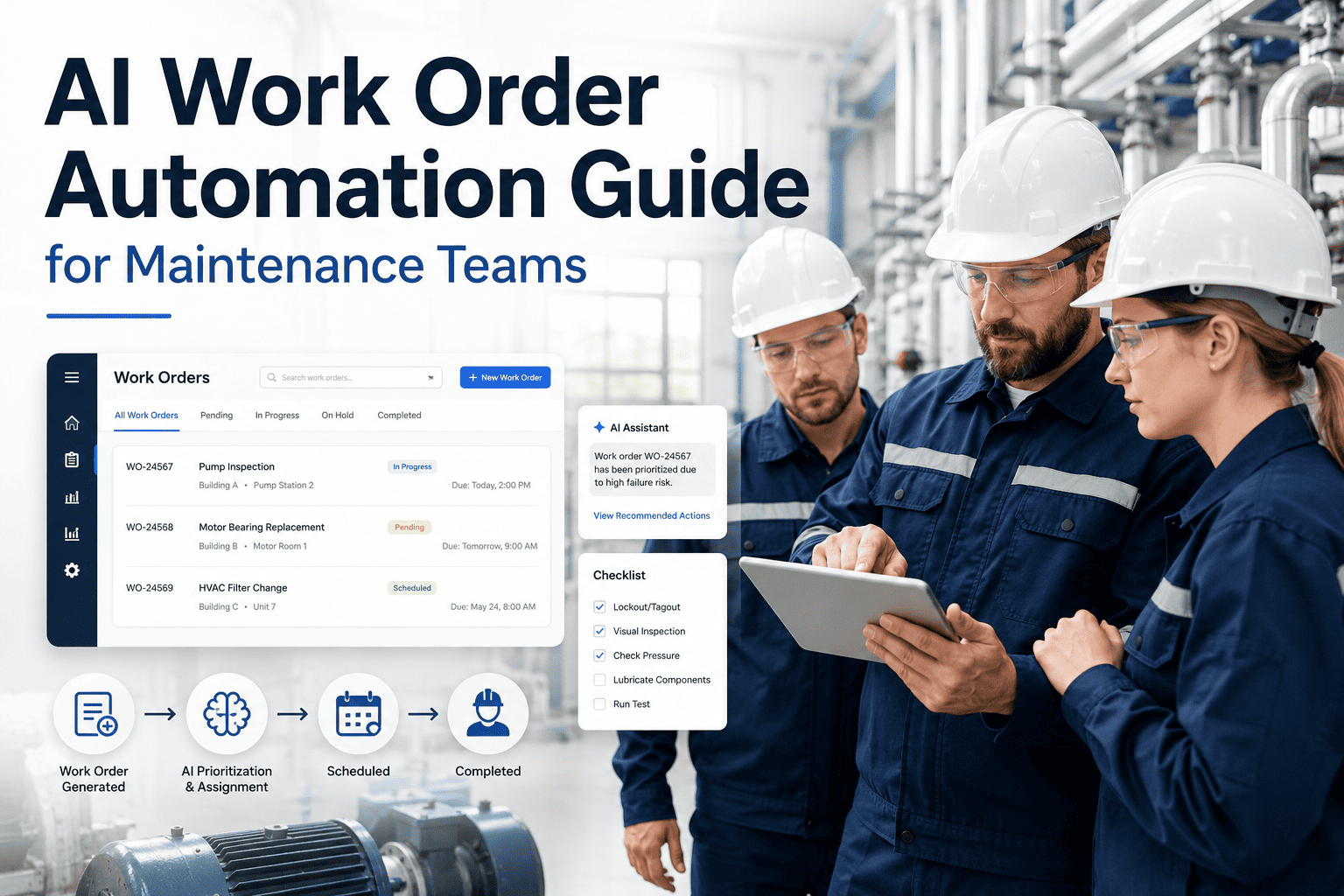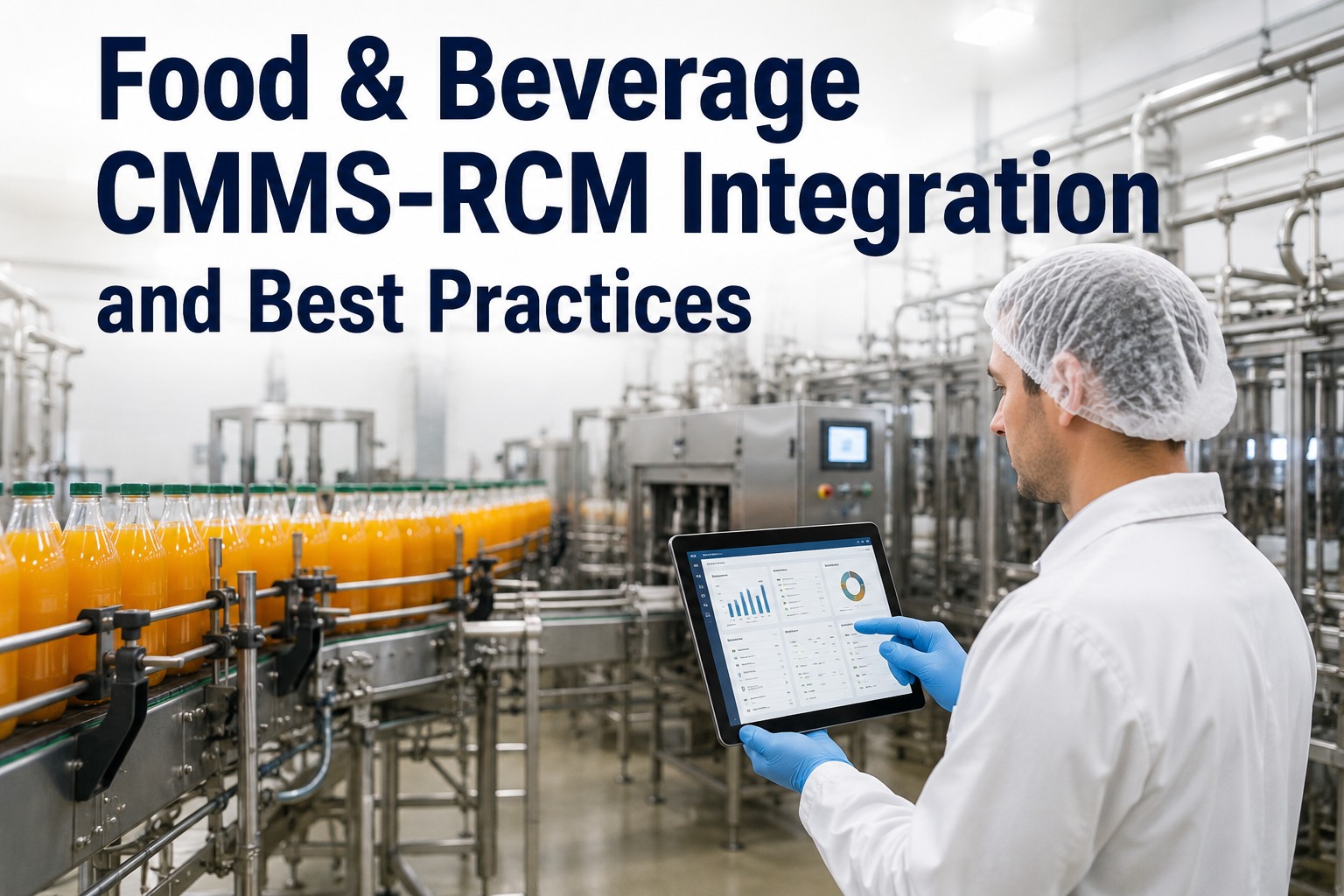
Integrating CMMS with Reliability-Centered Maintenance (RCM) for food & beverage operations is the critical difference between a plant that constantly reacts to breakdowns and one that systematically engineers them out. By linking every identified failure mode to a specific, triggered work order, maintenance teams can significantly reduce unplanned downtime, extend asset life, and ensure strict regulatory compliance. OxMaint's food and beverage maintenance software is purpose-built for this integration, translating RCM principles into automated, daily action. See how quickly you can transform your reliability program when you Start Free Trial today.
Are You Engineering Out Failure, or Just Reacting to It?
Food and beverage plants lose up to 20% of productive capacity to unplanned downtime. A structured CMMS-RCM integration shifts your team from firefighting to precision maintenance. Discover how linking failure modes to automated work orders transforms your maintenance system.
The 7 Core Questions of RCM for Food & Beverage Assets
Reliability-Centered Maintenance asks seven fundamental questions to determine the optimal maintenance strategy for each critical asset. In a food and beverage CMMS deployment, answering these establishes the baseline for your entire predictive and preventive maintenance program.
Choosing the Right Maintenance Strategy for F&B Failure Modes
Not every asset deserves a predictive maintenance sensor. A core best practice in RCM for food and beverage is matching the strategy to the specific failure mode and its consequence. Over-maintaining drains budgets; under-maintaining risks catastrophic downtime and product spoilage.
| Strategy | Best Application in F&B | Failure Pattern | CMMS Action |
|---|---|---|---|
| Run-to-Failure (RTF) | Non-critical assets like general lighting, secondary pumps, or duplicate motors where redundancy exists. | Random or age-related, low impact. | Trigger automated emergency work order upon failure notification. |
| Time-Based PM | Assets with clear wear-out patterns (e.g., conveyor belts, hydraulic seals, pasteurizer gaskets). | Age-related, increasing failure probability. | Schedule recurring food and beverage work order automation based on calendar days or production cycles. |
| Condition Monitoring (PdM) | Highly critical, high-speed assets (e.g., centrifuges, large refrigeration compressors, mixers). | Random failures with early warning signs (vibration, heat). | Trigger PM work orders automatically when sensor thresholds are crossed via IoT integration. |
| Redesign / Modification | Assets experiencing recurring failures where PM is not technically feasible or cost-effective. | Design flaws or improper application. | Track capital projects and modify the asset hierarchy upon completion. |
A 180-asset commercial bakery spending $42K annually on reactive motor replacements integrated RCM within their CMMS. By identifying that 60% of conveyor motor failures were due to bearing lubrication breakdown (a time-based failure mode), they shifted those assets to automated 90-day PM triggers. The result: a 34% drop in emergency work orders and $18K saved in replacement parts and lost production in the first year.
How to Launch a Food & Beverage CMMS-RCM Pilot in 90 Days
A successful food and beverage CMMS deployment does not happen overnight. Scaling an RCM program requires a structured pilot to prove ROI before rolling it out plant-wide. Follow this 3-month timeline to establish your digital maintenance foundation.
Identify your top 20 critical assets (e.g., fillers, extruders, HVAC). Build a precise asset hierarchy in OxMaint that mirrors your physical plant. Upload existing OEM manuals and map current PM schedules into the system.
Conduct a Failure Mode and Effects Analysis (FMEA) on the pilot assets. Map each critical failure mode to a specific task within the CMMS. Set up food and beverage work order automation to trigger PMs based on runtime hours or calendar dates.
Execute the new PMs via mobile work orders. Begin tracking CMMS KPIs: MTBF (Mean Time Between Failures), MTTR (Mean Time To Repair), and PM Compliance. Adjust task frequencies based on actual asset condition and technician feedback.
How OxMaint Powers Food & Beverage Reliability
OxMaint's AI-powered maintenance management software translates RCM theory into daily execution. From failure-mode libraries to automated KPI tracking, our platform ensures your reliability program actively cuts downtime and lowers total maintenance costs.
Asset Hierarchies That Mirror Your Plant
Map complex F&B production lines from the facility level down to individual components and sub-assemblies. Attach criticality rankings and failure modes directly to specific assets to ensure precise, actionable maintenance.
Automated Work Order Triggers
Eliminate paper and manual scheduling. Generate PMs automatically based on calendar time, runtime hours, or condition-monitoring sensor data. Ensure the right task happens exactly when it needs to, without manual intervention.
CMMS KPI Tracking & Analytics
Prove the value of your RCM program with real-time dashboards. Track OEE, MTBF, MTTR, and PM compliance automatically. Demonstrate concrete downtime reduction to stakeholders and identify areas for continuous improvement.
Audit-Ready Compliance Logs
Simplify FDA, USDA, and SQF audits. Every work order, part replacement, and calibration is digitally logged with timestamps and e-signatures, ensuring complete traceability for food safety and regulatory standards.
Ready to Engineer Out Breakdowns?
See how OxMaint links every failure mode to an automated task. Book a personalized demo to view the platform on your own assets.
CMMS & RCM for Food & Beverage: Common Questions
What is CMMS-RCM integration in food and beverage maintenance?
CMMS-RCM integration is the process of embedding Reliability-Centered Maintenance logic into a Computerized Maintenance Management System. Instead of just scheduling generic preventive tasks, the CMMS links specific equipment failure modes to targeted maintenance strategies—whether that is condition monitoring, time-based PMs, or run-to-failure—ensuring maintenance is both technically feasible and worth doing. You can see this in action by booking a demo at Calendly.
How does CMMS improve food safety and compliance?
A food and beverage maintenance system improves compliance by automating and digitally logging all PMs, calibrations, and corrective actions. This ensures that critical tasks like allergen changeovers, CIP cleaning, and temperature checks are never missed, providing an immutable audit trail for FDA, USDA, and SQF inspections.
What KPIs should we track for F&B reliability?
The most critical CMMS KPIs for food and beverage reliability include MTBF (Mean Time Between Failures) to measure asset longevity, MTTR (Mean Time To Repair) to track responsiveness, PM Compliance to ensure scheduled tasks are completed, and OEE (Overall Equipment Effectiveness) to tie maintenance performance directly to production output and availability.
How long does it take to deploy a CMMS for a food plant?
A focused pilot deployment on critical assets can be completed in 30 to 90 days. This includes setting up the asset hierarchy, migrating existing PM data, and training technicians. Full plant-wide rollout typically follows over the next 3 to 6 months as more assets and departments are brought into the system.
Can OxMaint integrate with existing plant sensors?
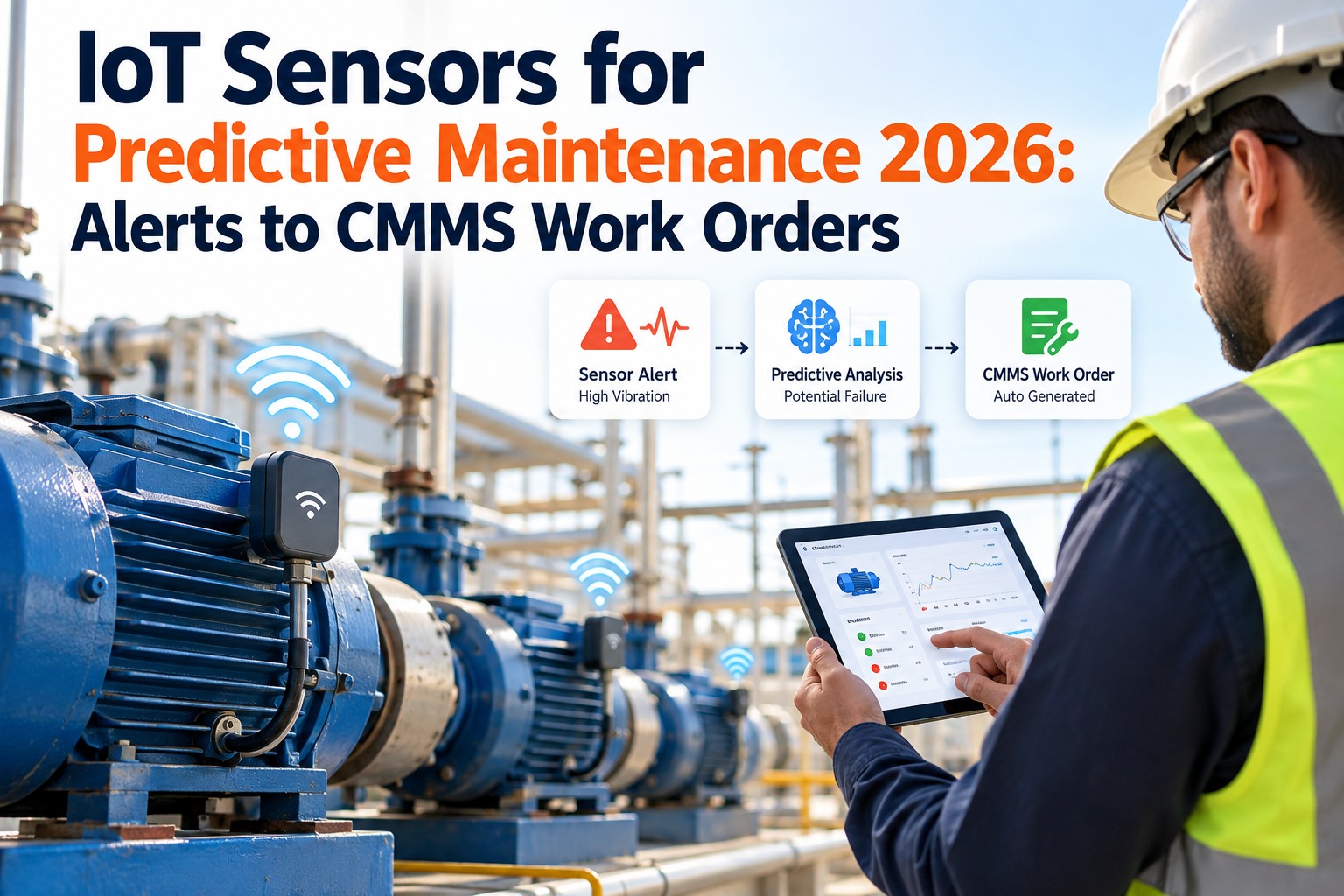
Yes. OxMaint supports integration with IoT sensors and existing SCADA systems to enable predictive maintenance. When a sensor detects a threshold breach—such as abnormal vibration on a centrifuge—the system automatically generates a condition-based work order for technicians to inspect and resolve the issue before a failure occurs.
Transform Your Plant's Reliability Today
Join leading food and beverage manufacturers using OxMaint to cut unplanned downtime by up to 50%. Start your free trial or book a demo to build your RCM-powered maintenance system.
Free 14-day trial · No credit card