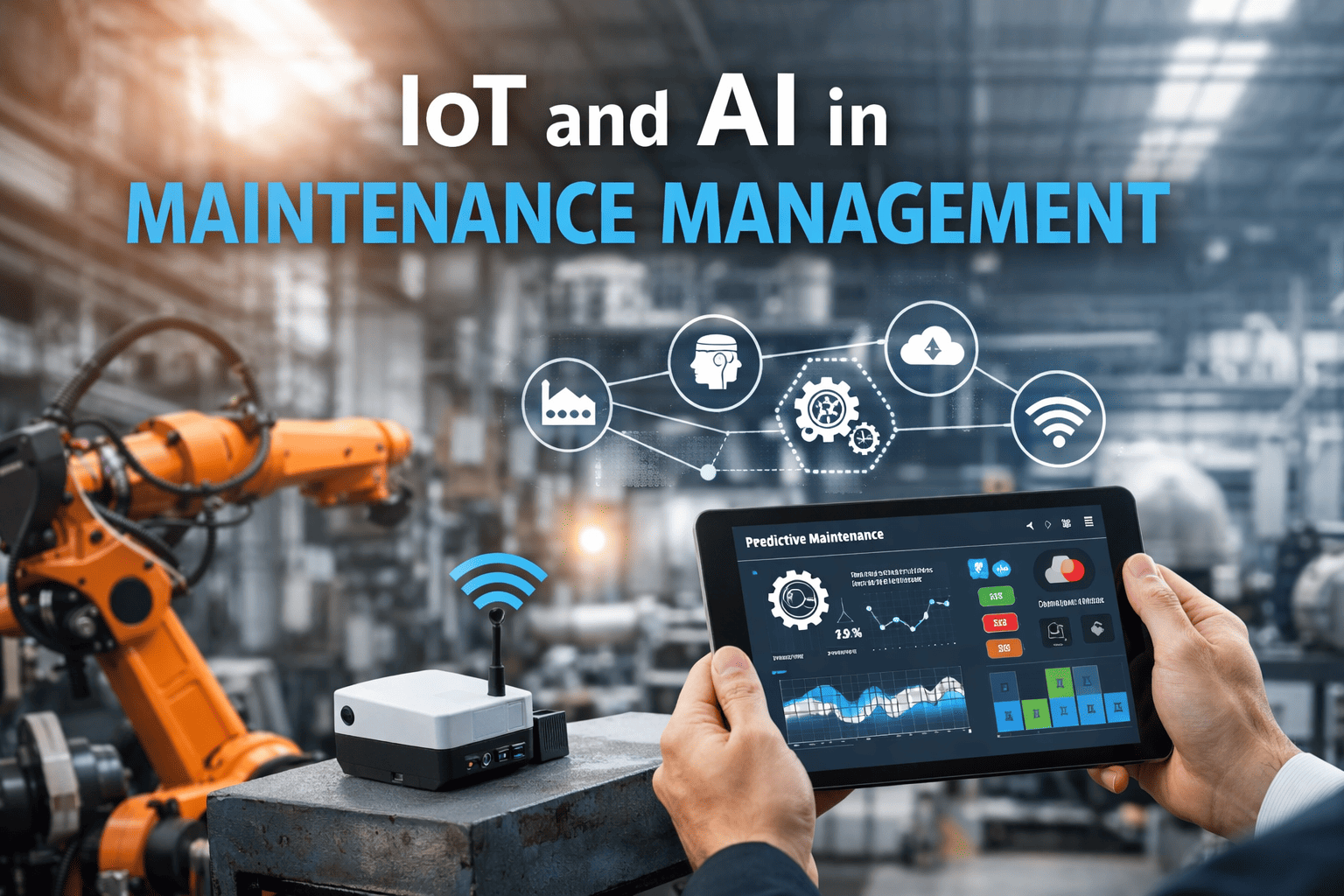
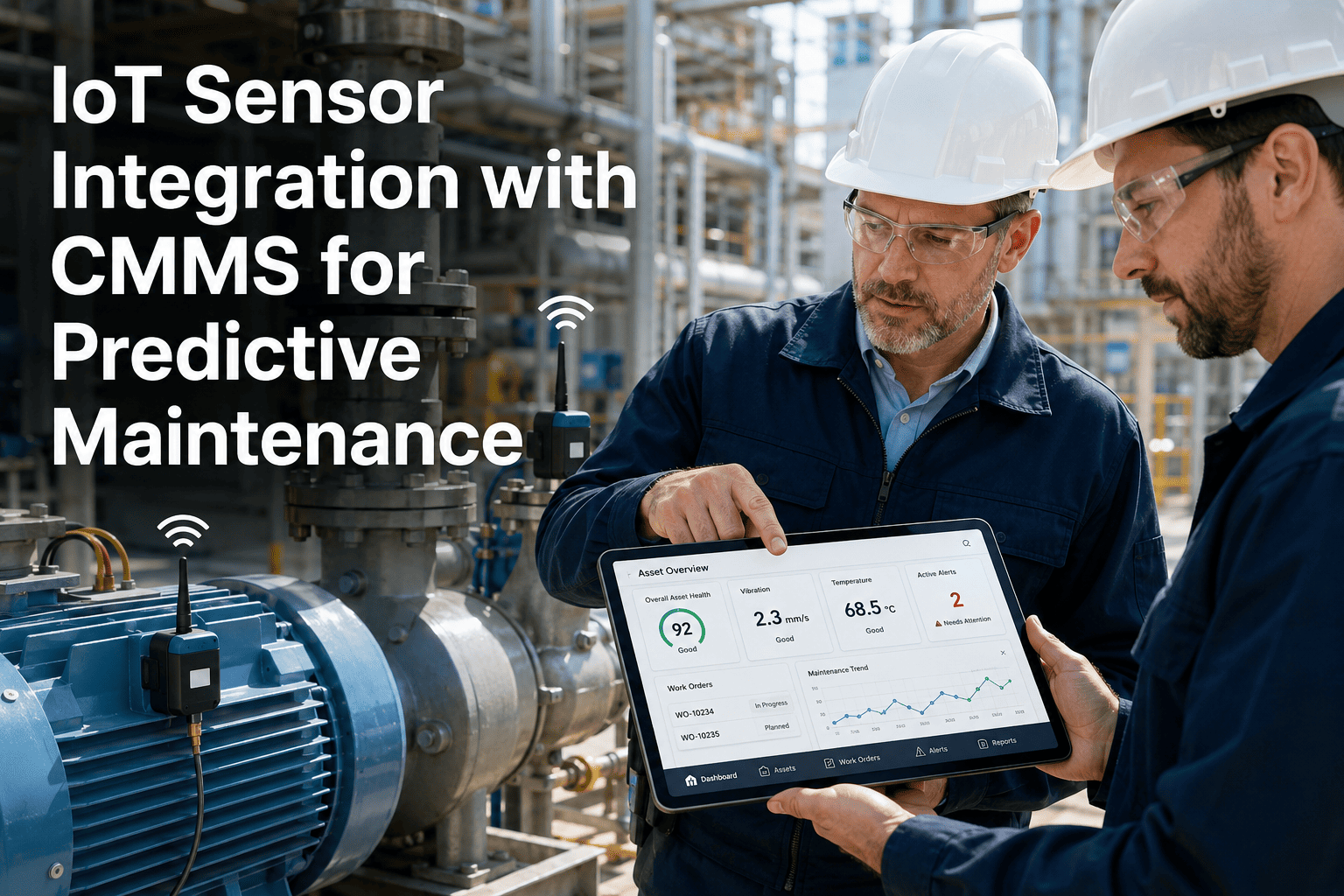
Every industrial facility has equipment that can tell you it is about to fail — the bearing vibration increasing by 2mm/s, the motor drawing 8% more current than baseline, the thermal signature creeping up on a conveyor drive. The problem is that without IoT sensors feeding data into an AI-connected CMMS, those signals go unheard until the breakdown happens. Oxmaint's IoT integration closes that gap, turning continuous sensor data into automatic work orders, real-time health scores, and AI-driven failure predictions — all without manual intervention.
IoT and AI in Maintenance Management
Real-time sensor data, machine learning anomaly detection, and automated work order generation have converged into a single connected maintenance model. Facilities using this approach cut unplanned downtime by 50%, reduce maintenance costs by 25%, and typically recover their platform investment within 3–6 months.
The Four Sensor Types Powering Industrial IoT Maintenance
Each sensor type captures a different dimension of asset health. Together, they give AI models the continuous multi-channel data stream needed to detect degradation weeks before it becomes a breakdown.
Thermal Imaging
Identifies overheating bearings, refractory failures, steam leaks, and electrical hotspots without physical contact. Thermal anomalies are visible weeks before physical symptoms appear.
Vibration Analysis
Captures bearing wear signatures, imbalance, misalignment, and looseness in rotating equipment. Vibration spectral analysis identifies the specific failure mode, not just that something is wrong.
Acoustic / Ultrasonic
Reveals compressed air leaks, bearing wear, and abnormal friction patterns at ultrasonic frequencies that human hearing and standard vibration sensors cannot detect, especially in high-noise environments.
Current and Power
Motor current draw is a direct indicator of mechanical load and winding condition. Increasing current at constant load signals developing faults without requiring access to the equipment interior.
How IoT Data Becomes a Maintenance Action in Oxmaint
Sensor data is only valuable if it reaches the right people and triggers the right response — fast. Here is how Oxmaint closes the loop from detection to verified remediation in minutes, not hours.
Sensor Detects Anomaly
A thermal spike, vibration shift, or current deviation is recorded at the asset — 38°C above baseline on a conveyor bearing, or vibration amplitude 40% above normal on a pump impeller. The sensor timestamps and tags the reading with asset ID and location.
Continuous 24/7 monitoring — no human round requiredData Pushed to Oxmaint via API
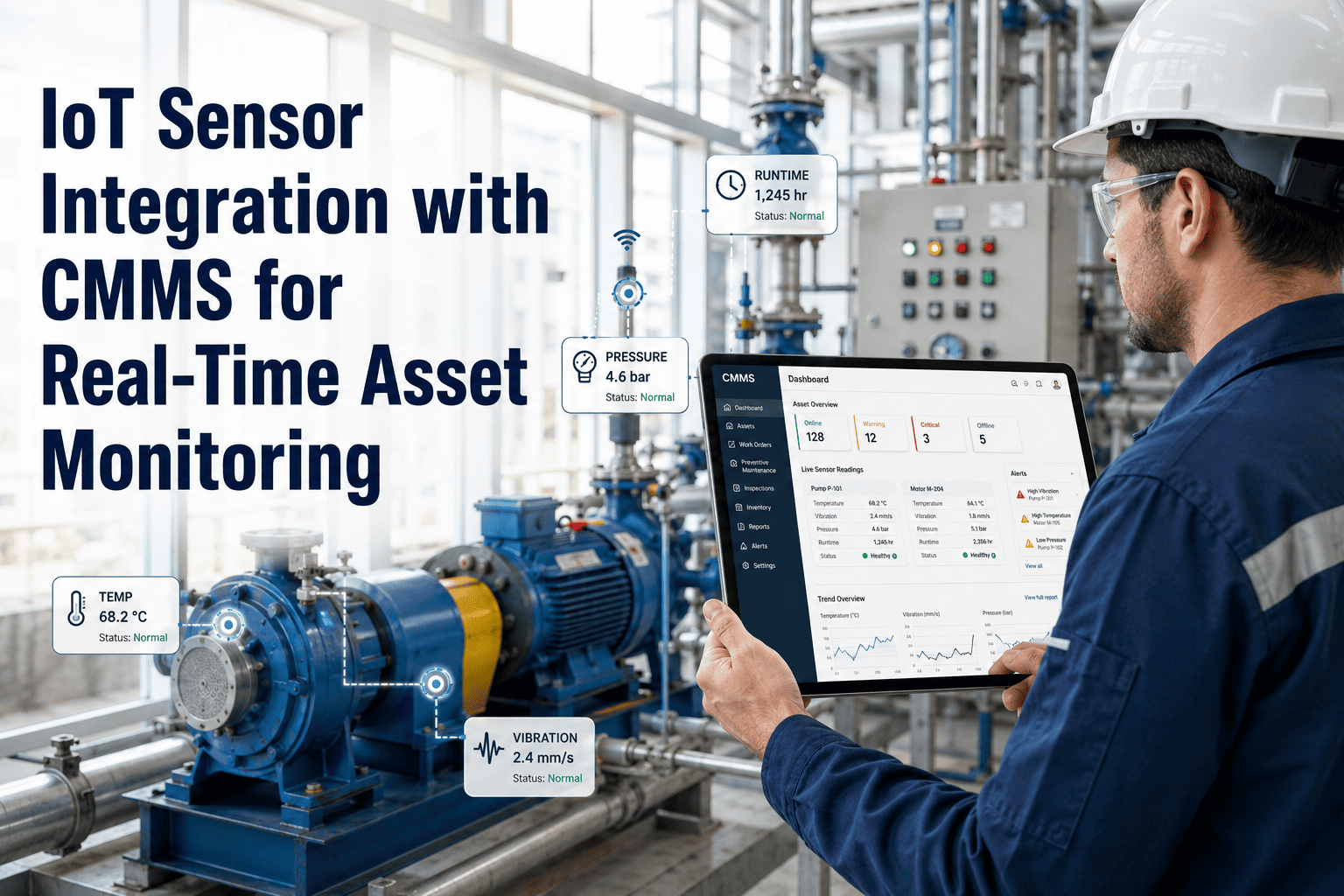
Sensor readings, thermal images, acoustic signatures, and location data are transmitted to Oxmaint in real time via OPC-UA, MQTT, REST API, or direct database connection. All major industrial IoT protocols are supported with no manual data entry. Connect your sensors to Oxmaint now.
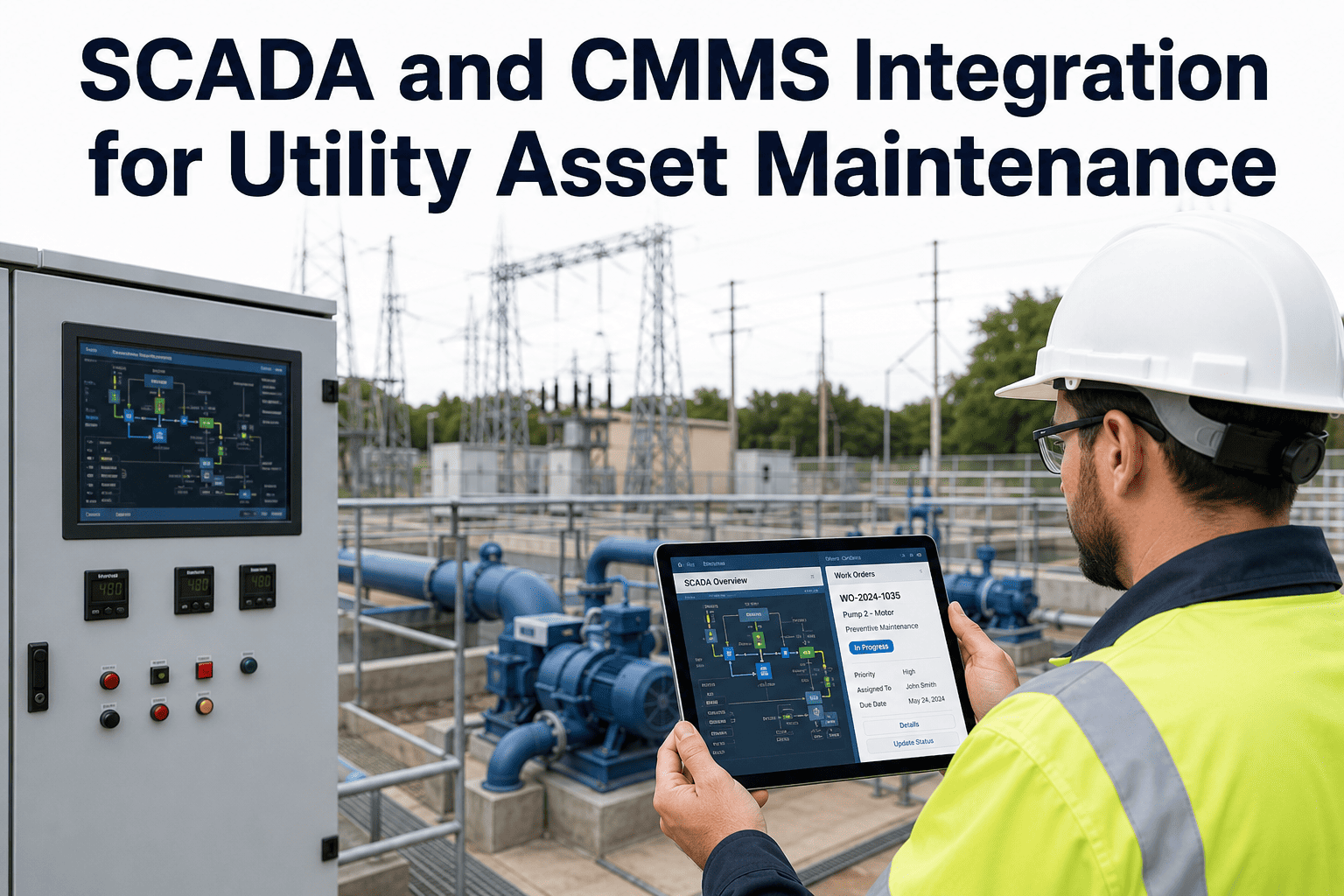
OPC-UA, MQTT, REST API, and SCADA connections supportedAI Classifies the Anomaly
Oxmaint's machine learning model compares the reading against the asset's established baseline and historical failure patterns. The AI classifies the failure mode, assigns a severity score, and determines urgency — distinguishing between early-stage wear (schedule next window) and rapid degradation (dispatch immediately).
Failure mode classification, not just alert thresholdsWork Order Auto-Generated and Routed
A prioritised work order is created automatically with sensor evidence attached — thermal image, vibration spectrum, current trend — and routed to the correct technician based on skills, shift, and asset location. Emergency repairs cost 3–5× more than planned work; this step is what eliminates that gap.
Average response time drops from 4+ hours to under 15 minutesRemediation Verified by Sensor Confirmation
After the repair, sensor readings confirm the asset has returned to baseline. The work order is closed with before-and-after evidence, creating a permanent audit trail and adding a new data point to the AI model for even better future predictions. Book a demo to see this loop live.
Closed-loop audit trail satisfying OSHA and ISO 45001 requirementsYear-One Savings From Sensor-Driven Maintenance
A steel manufacturer deploying vibration sensors on critical rotating assets and connecting alerts to automated work orders in Oxmaint saved $1.5 million in year one — entirely from avoided emergency repairs. No new machinery, no production disruption. Just sensors, AI, and automated response replacing reactive scramble.
Most Oxmaint customers report full platform payback within 3–6 months. Start your free account and begin capturing those savings immediately.
Maintenance Without IoT-AI vs With Oxmaint IoT Integration
Without IoT-AI Integration
With Oxmaint IoT-AI Integration
Connect Your Assets to Oxmaint IoT
Sensor ingestion, AI anomaly detection, and automated work orders — deployable in days with any major industrial IoT protocol.
IoT-AI Adoption and Cost Impact by Industry
Adoption rates and the achievable cost reduction vary by sector depending on asset criticality, downtime cost, and sensor accessibility.
| Industry | Primary Sensor Type | AI Adoption | Downtime Cost | Cost Reduction |
|---|---|---|---|---|
| Automotive | Vibration + current | Leading | $22K/min | 25–35% |
| Steel & Metals | Thermal + vibration | High | $8K–15K/hr | 25–40% |
| Food & Beverage | Thermal + pressure | Growing | $4K–10K/hr | 20–30% |
| Energy & Utilities | Acoustic + current | High | Variable | 20–32% |
| Pharmaceuticals | Thermal + vibration | Growing | $3K–8K/hr | 15–25% |
| Electronics | Current + vibration | Early | $2K–6K/hr | 18–28% |
| Data compiled from Deloitte, McKinsey, US DoE, and Oxmaint customer deployments. Cost reduction ranges from documented outcomes. | ||||
What Oxmaint's IoT Integration Delivers
Oxmaint is built to ingest any sensor data, apply AI models specific to your assets, and connect findings directly to your maintenance workflow — with no custom development required.
Multi-Protocol Sensor Ingestion
Oxmaint connects to vibration, thermal, acoustic, current, pressure, and flow sensors via OPC-UA, MQTT, REST API, Modbus, and direct historian database connections. New sensor types are added through configuration, not custom code. Connect your sensors free.
Asset-Specific AI Baseline Models
Oxmaint's AI builds a unique degradation baseline for each individual asset — not a generic industry threshold. Over 4–8 weeks of data collection, the model learns what normal looks like for that specific pump, motor, or conveyor in your specific operating conditions.
Real-Time Asset Health Dashboard
Asset health scores, sensor trend charts, anomaly history, and MTBF analytics update continuously in Oxmaint's dashboard. Maintenance managers see the full condition picture across every connected asset without manual data aggregation. Book a demo to see live dashboard data.
Automated Compliance and EHS Logging
Every sensor reading, anomaly detection, work order creation, and repair verification is automatically logged with timestamps, GPS tags, and severity scores. The documentation satisfies OSHA general industry standards and ISO 45001 occupational health requirements without manual record compilation.
What Connects to Oxmaint's IoT Platform
"The biggest myth in manufacturing is that you need massive capital investment to cut costs significantly. Most of your waste is invisible — hidden in reactive maintenance, excess inventory, and manual processes. A good CMMS with IoT integration makes it visible, and once you can see it, you can eliminate it."
Frequently Asked Questions
Your Assets Are Already Sending Signals. Are You Listening?
Every undetected vibration shift, thermal anomaly, and current deviation is a failure warning your team is currently missing. Oxmaint's IoT integration turns that continuous sensor data into real-time health scores, AI predictions, and automated work orders — starting today.

.png)
