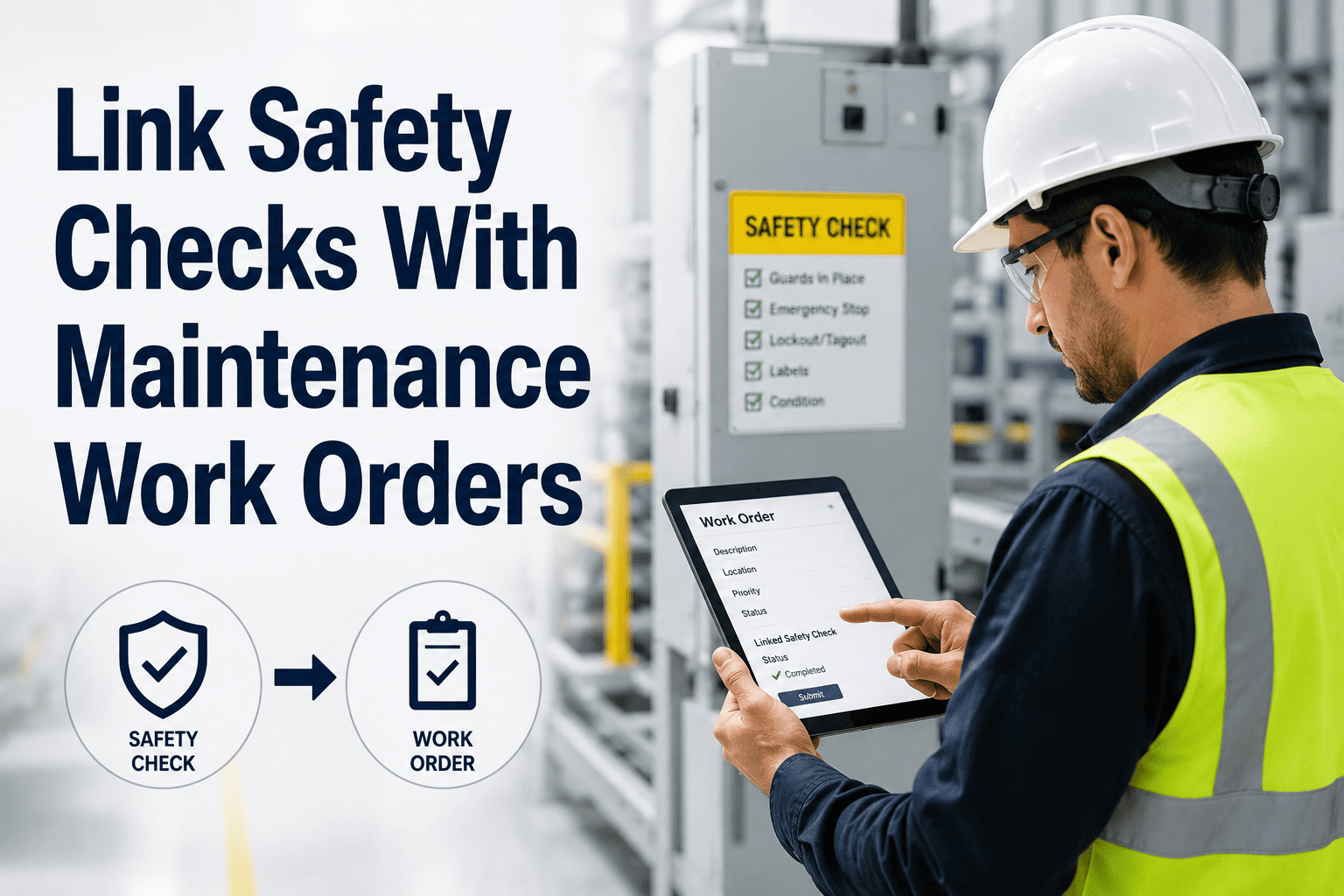
OSHA conducted 34,696 federal inspections in fiscal year 2024 — a level not seen since 2016 — and maximum penalties for willful or repeat violations reached $165,514 per violation effective January 15, 2025. The hazards that generate those violations almost never appear without warning. They appear on safety inspection checklists, in near-miss reports, in routine walkthrough observations, and in maintenance deficiency notes filed by technicians who noticed something wrong while doing something else. The problem is not that facilities fail to find hazards — it is that finding a hazard and correcting it are two separate workflows managed by two separate teams in two separate systems. The EHS team logs the finding. The maintenance team never sees it, or sees it days later in an email, or receives a verbal request that never gets formally assigned, tracked, or closed. A hazard that is found but not corrected — through a documented work order with an assigned owner, a completion deadline, and a closure record — is a hazard that compounds until it generates an incident. OxMaint's safety and compliance module closes the gap between EHS inspection findings and maintenance corrective action — automatically converting every identified hazard into a structured, assigned, escalation-tracked work order before the inspector has left the area.
Safety inspection finds a hazard. Maintenance corrects it. Simple in theory — and broken in practice at most facilities because the two workflows live in separate systems, separate teams, and separate accountability structures. This guide covers exactly how to close that gap.
The gap between safety inspection and maintenance correction is not a people problem — it is a systems problem. These five failure modes account for the majority of hazards that are found but not corrected.
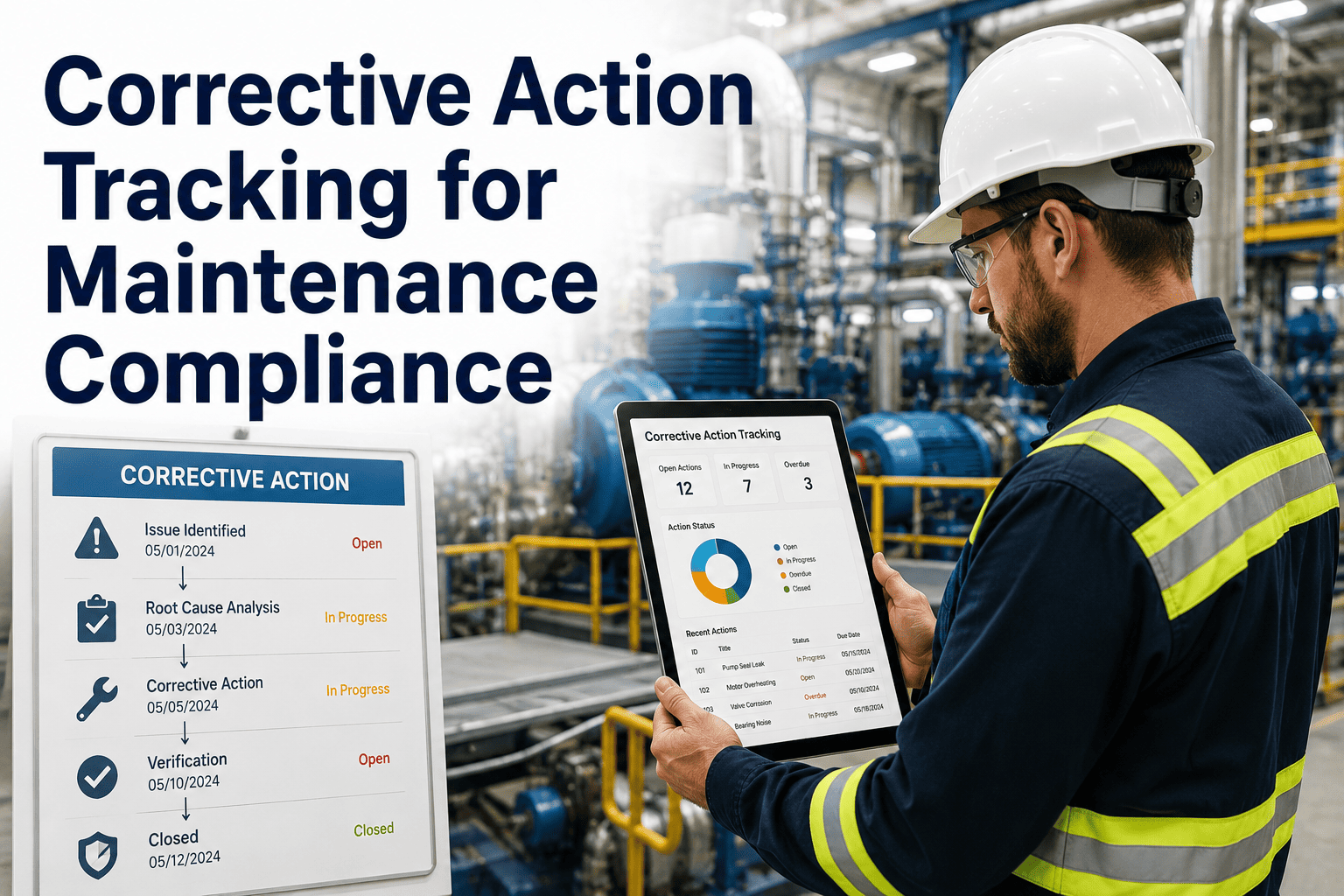
A properly integrated safety-to-maintenance workflow has six stages — each with a specific action, a responsible party, and a documented output. In OxMaint, these stages happen automatically from the moment the inspector records a finding on the mobile app.
Not every safety finding requires the same urgency. The classification matrix below maps finding severity to work order priority, SLA, interim protective measure requirements, and notification level. This is the decision framework OxMaint applies automatically based on the severity rating recorded at inspection.
| Severity | Description | WO Priority | SLA | Interim Measure | OxMaint Notification Level |
|---|---|---|---|---|---|
| Critical | Imminent risk of serious injury or fatality — unguarded energy source, structural failure risk, toxic exposure, active electrical hazard | P1 | 4 hours | Area isolation, lock-out/tag-out, or equipment shutdown required before work order can be created | Technician + supervisor + EHS manager + site director — simultaneous |
| High | Significant injury risk — slip/trip/fall hazard, fire code violation, missing or deficient life safety equipment, pressure system defect | P2 | 24 hours | Warning signage or physical barricade required until corrected — documented in work order as pre-completion requirement | Technician + maintenance supervisor + EHS manager |
| Moderate | Injury risk with mitigating factors — PPE deficiency, minor electrical code violation, partially blocked egress, housekeeping hazard | P3 | 5 business days | Interim mitigation documented in finding record — PPE requirement posted, partial barricade, etc. | Technician + maintenance supervisor |
| Low | Minimal near-term risk — maintenance deficiency with potential to escalate, documentation gap, equipment condition requiring monitoring | P4 | 30 days | None required — monitor and schedule within planning cycle | Technician assigned via work queue — no immediate notification |
The question OSHA compliance officers ask during an inspection is not "do you have a safety inspection programme?" — almost every facility does. The question is "show me the last three times your safety inspection programme found a hazard and tell me what happened next." When the answer requires printing reports from one system and work orders from another and trying to manually connect them, the compliance officer has already formed an opinion about the quality of the programme. When the answer is producing a single linked record — inspection finding, work order, completion photo, verification sign-off, and closure date — in 30 seconds from a phone, the compliance officer has formed a different opinion. The technical difference between those two scenarios is not the quality of the hazard identification programme. It is whether the organisation has integrated its safety inspection workflow with its maintenance corrective action workflow. Every facility I have assessed that consistently defends OSHA inspections without citations has that integration. Every facility that accumulates repeat citations does not.
What types of safety checks does OxMaint support for generating linked work orders?
OxMaint supports any inspection type that can generate a corrective finding — routine safety walkthroughs, fire extinguisher and life safety equipment checks, LOTO verification, pre-use equipment inspections, environmental compliance checks, ergonomic assessments, and contractor safety audits. Each inspection template is configured with finding severity levels, and any finding rated above the configured threshold automatically generates a work order. For inspections where the entire checklist must pass before work proceeds (e.g. confined space entry pre-checks), OxMaint can block the "clear to proceed" status until all safety items are resolved and verified. Start your free trial to configure safety inspection templates for your site's inspection types.
How does OxMaint handle safety findings that require an interim protective measure before the corrective work order is completed?
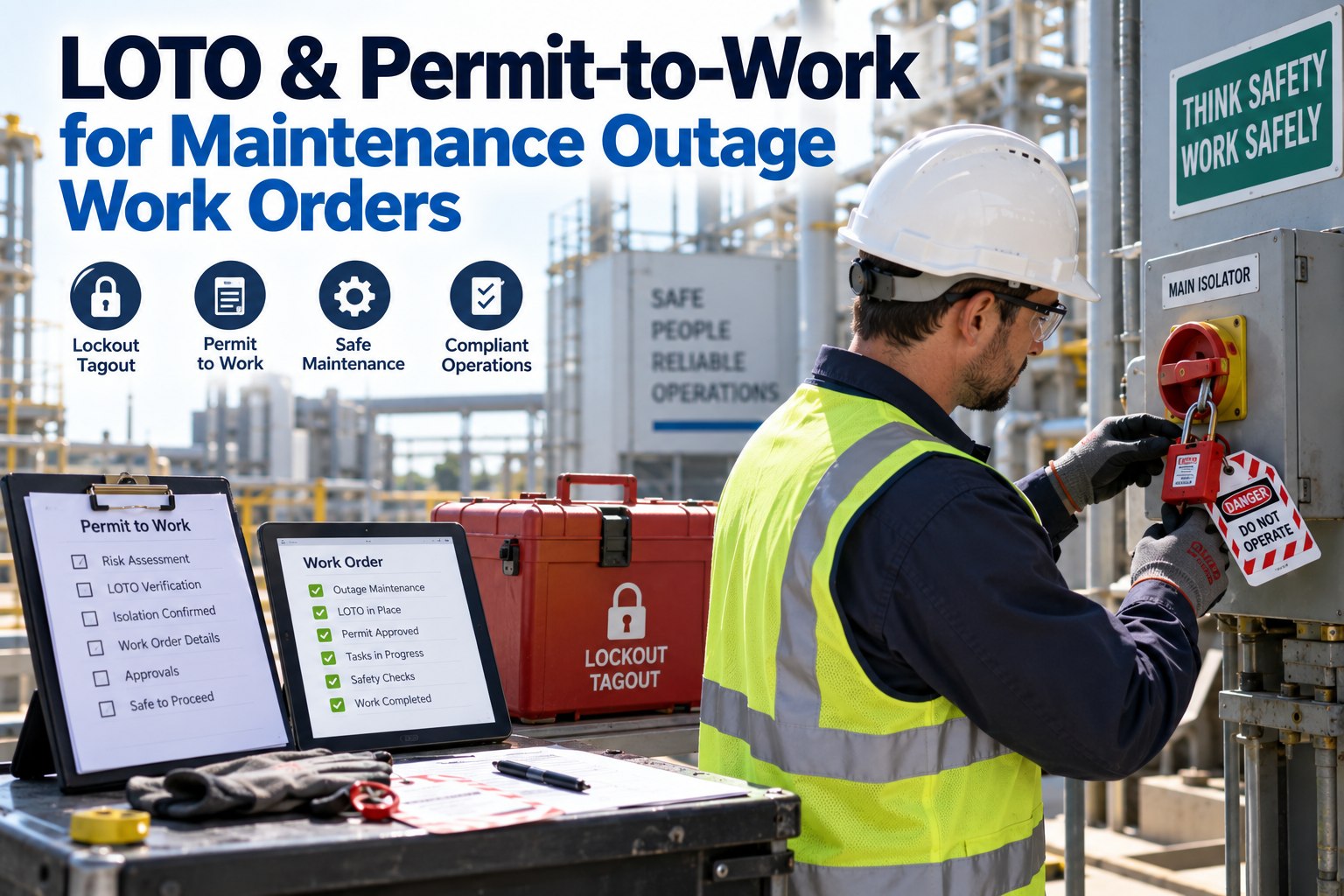
For Critical and High severity findings, OxMaint requires documented interim protective measure confirmation before the work order enters the active queue — the inspector confirms that area isolation, barricading, signage, or LOTO is in place, with a photo attached, before the finding is fully recorded. The work order is created in a "Pending Interim Measure" status and does not enter the maintenance queue until the interim confirmation is submitted. This creates a documented record that the hazard was physically controlled while awaiting permanent correction — evidence that is critical in demonstrating due diligence if an incident occurs during the corrective action period. Book a demo to see the interim measure confirmation workflow configured for your site's hazard categories.
Can OxMaint generate the corrective action reports required for OSHA 300-series recordkeeping and ISO 45001 audits?
Yes. OxMaint generates the corrective action summary report that supports both OSHA recordkeeping obligations and ISO 45001 audit requirements: all safety findings in the reporting period sorted by severity, the corresponding corrective work order for each finding, closure status and date, SLA compliance rate, escalation events, and verified closure confirmations. For ISO 45001, the report also includes the hazard identification methodology, risk assessment classification, and the verification step that confirms effectiveness. The 2024 OSHA final rule expanded electronic submission requirements for high-hazard establishments with 100+ employees — OxMaint exports the 300-series data in the OSHA-required electronic format. Start your free trial to configure the compliance reporting format for your regulatory obligations.
How does the verified closure step in OxMaint prevent OSHA repeat violations?
OSHA repeat violations are classified when the same hazard condition recurs within five years of a prior citation. Verified closure is the mechanism that demonstrates a hazard was genuinely corrected — not just marked "done" in a work order system. In OxMaint, verified closure requires an independent reviewer (the EHS manager or designated safety officer, not the technician who performed the work) to confirm, with photo evidence, that the corrected condition meets the applicable standard. This creates a two-person accountability chain for every safety work order closure. If the same hazard type recurs later, OxMaint's historical record shows that the prior corrective action was verified as effective — establishing that the recurrence is a new incident, not evidence that the first correction was inadequate. Book a demo to configure the verified closure workflow for your safety classification system.
OxMaint converts every safety inspection finding into a linked, assigned, SLA-tracked, escalation-managed, verified-closure corrective work order — so no hazard your team identifies is ever undocumented, unassigned, or unresolved when OSHA, an auditor, or a plaintiff's attorney asks what happened to it.