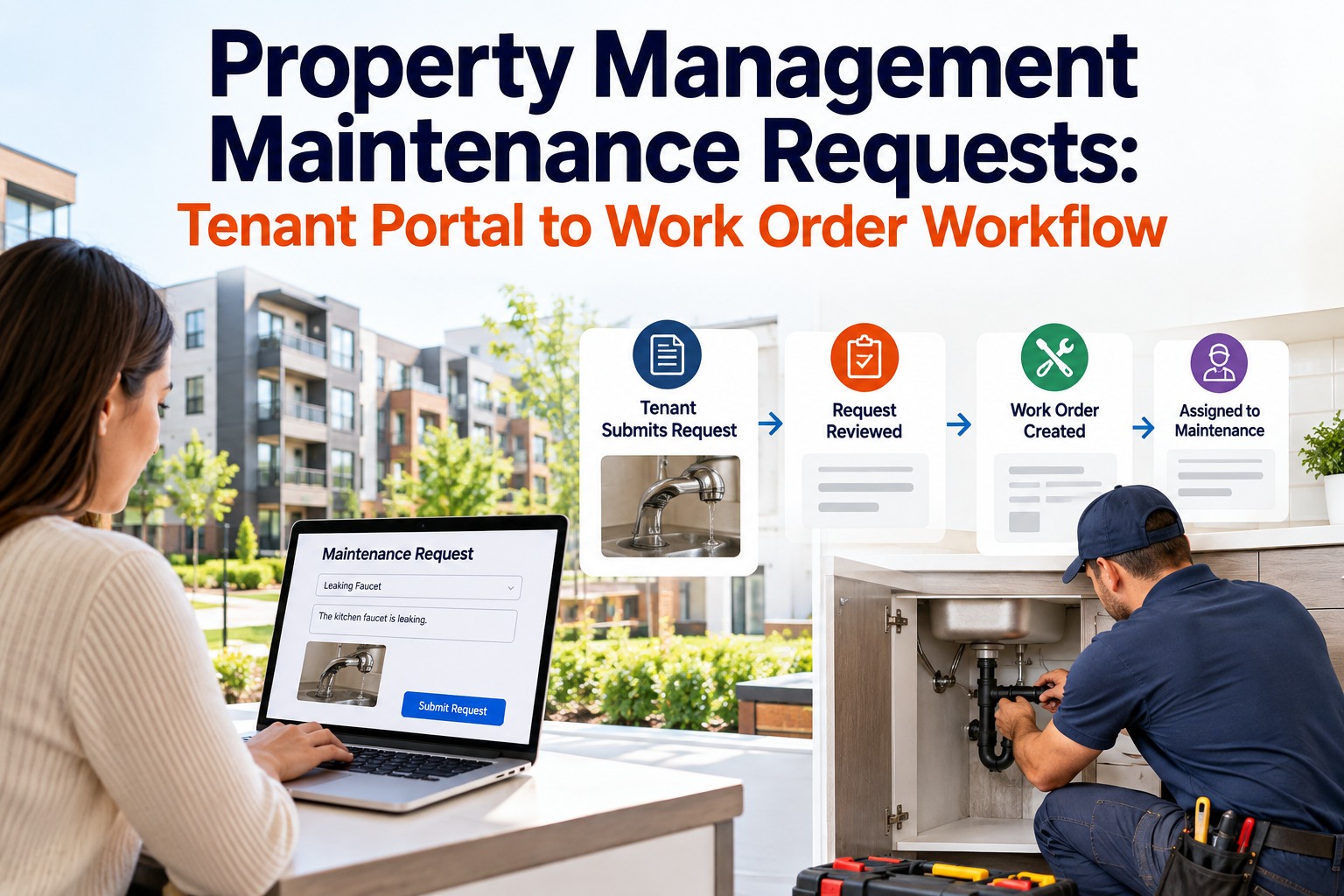
A maintenance request that arrives as "something is broken in building 3" wastes an average of 47 minutes of technician time before any repair begins — 12 minutes identifying the asset, 15 minutes locating the right room, 8 minutes calling back the requester for details, and 12 minutes returning for the correct parts. According to a 2024 FacilitiesNet report, 61% of first-visit fix failures in facility maintenance are caused by incomplete information at the point of request, not by technician skill gaps or parts shortages. The intake form is the single most undervalued tool in maintenance operations: a well-designed form with the right fields eliminates rework, cuts response time by 38%, and gives maintenance managers the data they need to identify recurring issues, allocate labor, and justify budget. Yet most teams still use free-text email, verbal hallway requests, or sticky notes on the maintenance office door — intake methods that capture almost none of the information needed for efficient dispatch. Oxmaint replaces unstructured intake chaos with configurable request forms that capture asset ID, location, photos, urgency level, requester contact, and routing rules automatically — so the technician arrives with everything they need on the first trip. If your team wastes the first hour of every work order gathering information that should have been captured at intake, start a free trial or book a demo to see how structured intake forms transform your request-to-resolution cycle.
Maintenance Request Intake Forms: Fields Every Team Should Capture
The quality of your work order starts at the request. Build intake forms that capture asset, location, urgency, photos, and routing data — so technicians arrive prepared, not guessing.
Your Intake Form Is Either Your Best Tool or Your Biggest Bottleneck
Every missing field on your maintenance request form creates a downstream delay — a phone call, a wasted trip, a misrouted work order. Oxmaint's configurable request forms ensure that every submission captures what the technician needs before they leave the shop. No more "what building?" callbacks, no more wrong-parts trips, no more requests that sit unassigned because nobody knows who should handle them. Want to see how configurable intake forms work for your facility type? Start a free trial or book a demo to build your first form in under 15 minutes.
What Is a Maintenance Request Intake Form?
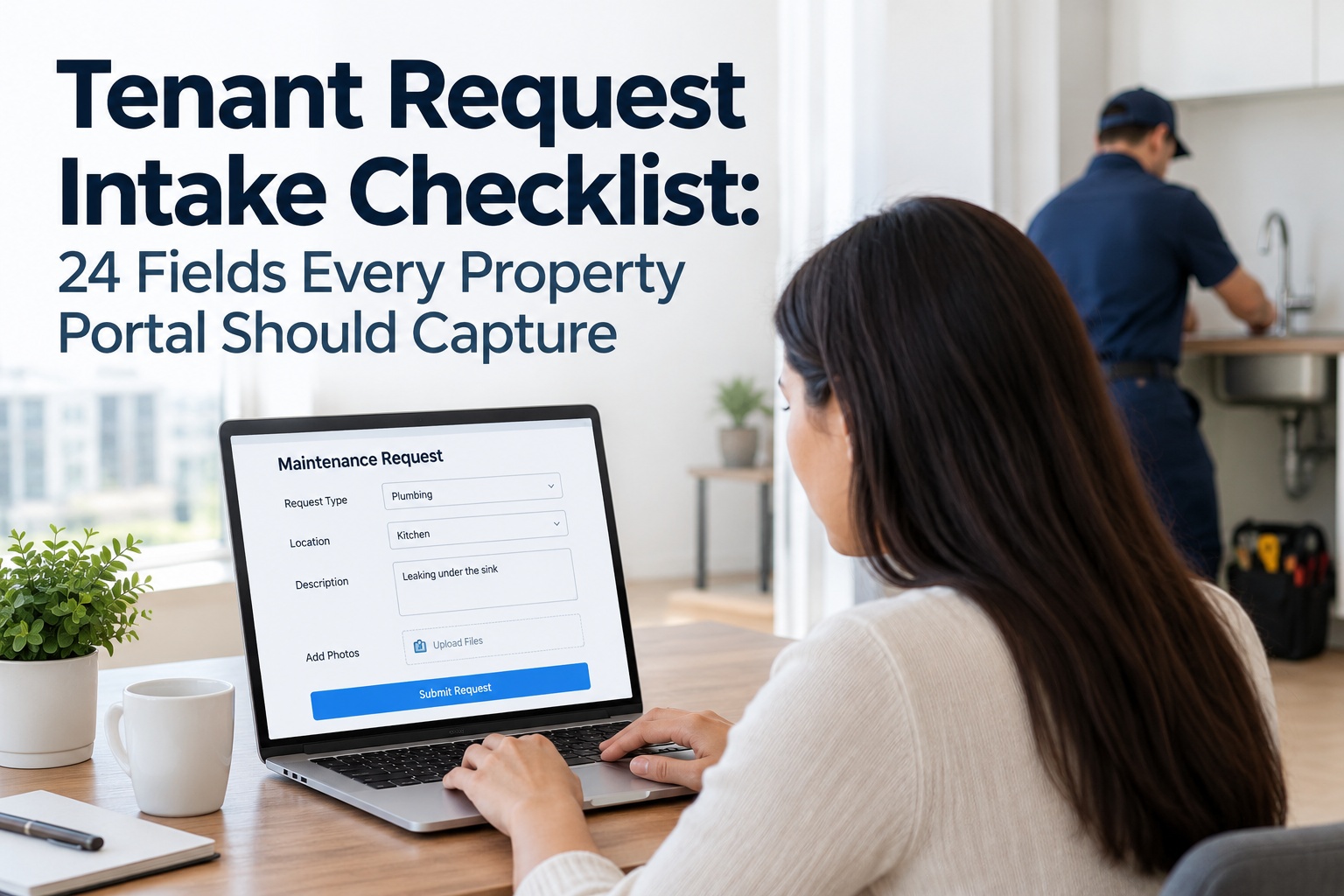
A maintenance request intake form is a standardized data capture template that collects all information required to create, prioritize, route, and complete a work order — at the moment the request is submitted, not after multiple follow-up communications. Unlike free-text emails or verbal requests, a structured intake form enforces mandatory fields that prevent the information gaps responsible for 61% of first-visit failures. The form serves three audiences simultaneously: the requester (who needs to communicate the problem clearly), the dispatcher (who needs to assign the right technician and priority), and the technician (who needs asset identity, location, failure description, and access instructions before they arrive on site). In Oxmaint, intake forms are fully configurable by facility type, building, and request category — a HVAC request captures different fields than a plumbing request, and a request from a tenant-occupied floor captures different access details than a request from a mechanical room.
The Eight Fields Every Maintenance Request Form Must Capture
Research from the International Facility Management Association (IFMA) shows that intake forms with fewer than 6 structured fields produce work orders with a 44% callback rate. These eight fields represent the minimum viable dataset for a dispatchable work order — each one eliminates a specific type of downstream delay.
Which specific piece of equipment has the problem? Not "the AC unit" — the specific AHU-3 on the 4th floor mechanical room. Oxmaint's QR code scanning lets requesters identify the exact asset by scanning the tag — no asset number memorization, no guessing, no misidentification. Teams using asset-linked intake forms reduce misrouted work orders by 52%.
Building, floor, room number, and location within the room. "Conference room B, north wall, near the window" is dispatchable. "Somewhere on the 3rd floor" is not. Oxmaint's location hierarchy — Property, Building, Floor, Room, Zone — auto-populates from asset records when QR codes are scanned, eliminating 15+ minutes of location identification per work order.
What is happening, when did it start, and has it happened before? Structured dropdown categories (leaking, not operating, unusual noise, temperature issue, safety concern) guide the requester toward useful descriptions instead of vague complaints. The category selection also auto-routes the request to the correct trade — plumbing, electrical, HVAC, general — without dispatcher intervention.
A single photo increases first-time fix rate by 2.3x according to ServiceChannel data. The technician sees the actual condition before arriving — is the leak a drip or a stream? Is the crack cosmetic or structural? Is the panel accessible or behind furniture? Oxmaint's mobile-first intake form makes photo attachment a one-tap action from any smartphone.
Is this a safety emergency, an operational disruption, a comfort issue, or a cosmetic concern? Requester-selected urgency provides the initial triage input — which the dispatcher can adjust based on asset criticality and operational context. Forms without urgency fields treat every request as equal priority, guaranteeing that critical issues wait behind trivial ones.
Name, phone, email, and preferred contact method. When the technician needs clarification or access coordination, they reach the requester on the first attempt — not after three unanswered emails. Oxmaint auto-populates requester details for logged-in users, eliminating manual entry and ensuring contact accuracy on every submission.
Is the area locked? Is a key card required? Are there restricted hours? Does the requester need to be present? No-access delays waste an average of 34 minutes per failed visit according to JLL research — and 22% of all facility maintenance visits result in no-access rework. A single access instruction field eliminates the most common reason for wasted technician trips.
When can the technician access the space? A classroom teacher who submits a request at 7 AM cannot have a technician arrive during a test at 10 AM. A tenant in a commercial office needs work done outside business hours. Capturing preferred windows at intake prevents the scheduling ping-pong that adds 1-3 days to average resolution time on non-emergency requests.
Six Problems Caused by Unstructured Maintenance Requests
When requesters describe equipment by appearance instead of ID — "the big gray box in the hallway" — technicians bring wrong parts, diagnose wrong systems, and waste 20+ minutes identifying what the requester actually meant. 31% of work order rework traces back to asset misidentification at intake.
A request for "Room 204" in a multi-building campus with identical room numbering sends technicians to the wrong building 18% of the time. Without building, floor, and zone data captured at intake, the dispatcher becomes a detective instead of a coordinator.
"The ceiling is leaking" does not tell the technician whether to bring a bucket or a wet vacuum, a patch kit or a plumber. Without a photo, the technician either over-prepares (wasting time gathering unnecessary tools) or under-prepares (requiring a return trip for the right equipment).
Without requester-indicated urgency, every request enters the queue at the same level. A broken toilet in the only restroom on a floor sits behind a squeaky door hinge because both arrived as undifferentiated emails. The result: critical issues wait while trivial requests consume technician time.
The technician arrives, needs access, calls the requester — no answer. Emails the requester — no response until tomorrow. 22% of first visits fail because the requester cannot be reached for access or clarification. Capturing preferred contact method and backup contact at intake cuts unreachable-requester delays by 64%.
Free-text requests require manual reading and trade assignment by a dispatcher. Structured category dropdowns auto-route: "Plumbing - Leak" goes to the plumbing team, "Electrical - Outlet" goes to the electrician, "HVAC - Temperature" goes to the HVAC tech. Auto-routing reduces dispatch time from 25 minutes to under 3 minutes per request.
How Oxmaint Transforms Request Intake into Dispatchable Work Orders
Oxmaint's configurable intake forms turn every request into a complete, routable work order before the dispatcher even opens their queue. The form adapts to the request category, auto-populates asset and location data from QR scans, enforces mandatory fields, and routes the completed request to the correct trade team with priority scoring applied. Teams using Oxmaint intake forms report 38% faster response times and 52% fewer misrouted work orders. See it in action — start a free trial or book a demo to build your first intake form today.
HVAC requests capture temperature readings and zone numbers. Plumbing requests capture leak location and severity. Electrical requests capture circuit panel number. Each category shows only the fields relevant to that trade — keeping the form short for requesters while capturing everything technicians need.
Requesters scan the QR code on the equipment or room door — Oxmaint auto-fills asset ID, asset type, location hierarchy, last service date, and assigned trade. Zero manual data entry means zero misidentification, zero wrong-building dispatches, and zero "which unit are you talking about?" callbacks.
The mobile-first intake form prompts photo or video attachment as part of the submission flow. Technicians see the actual condition before leaving the shop — pre-selecting the right tools, right parts, and right approach for a first-visit fix. Photo-equipped requests achieve 2.3x higher first-time fix rates.
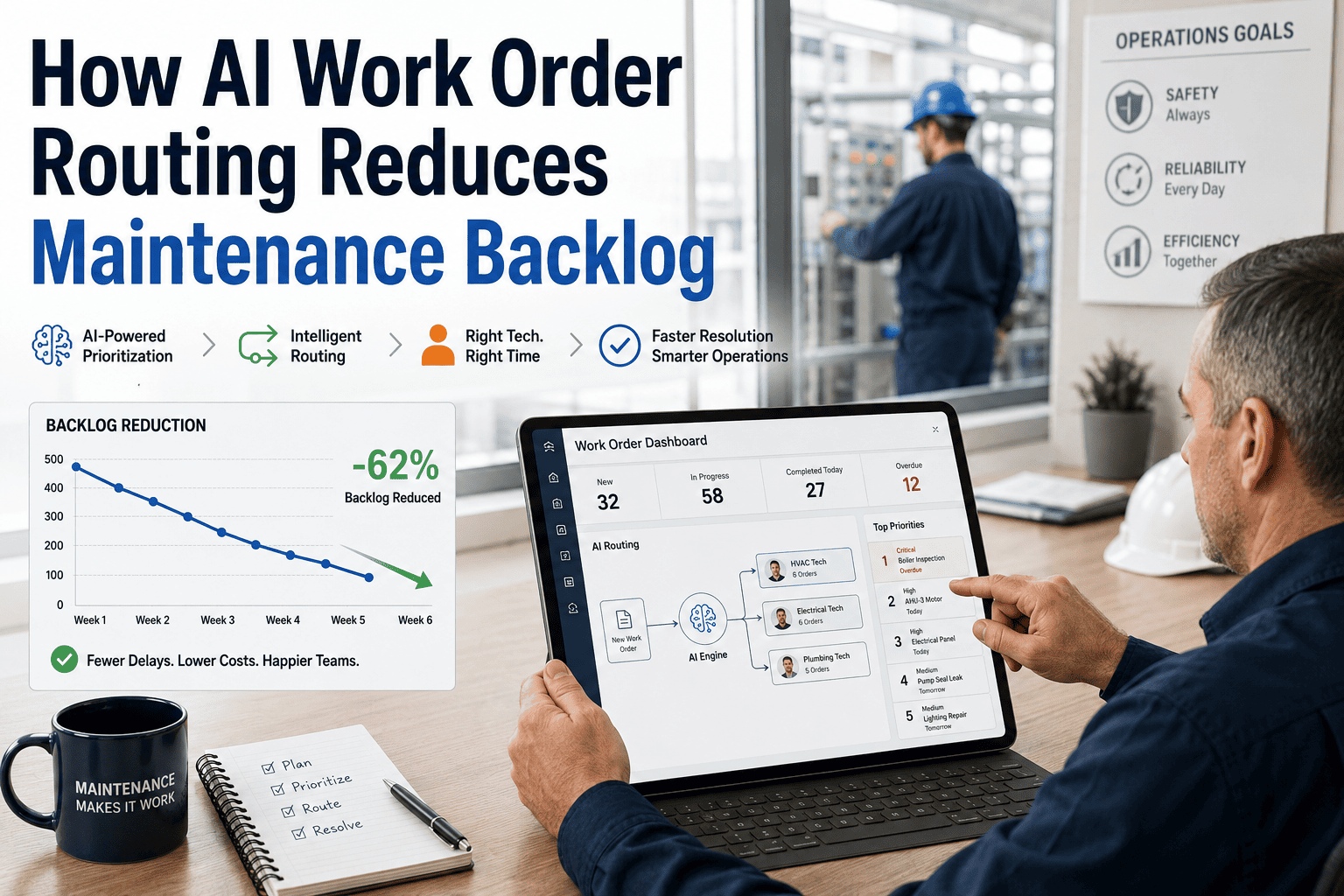
Category selection triggers automatic routing rules: plumbing requests to the plumbing queue, electrical to electrical, HVAC to HVAC. Multi-site operations route by building and zone. The dispatcher reviews pre-sorted, pre-prioritized queues instead of reading raw emails and guessing assignments.
Requesters see real-time status updates — received, assigned, in progress, parts ordered, completed. This eliminates the 5-8 follow-up calls per day that maintenance coordinators currently handle. Requester satisfaction scores increase 42% when status visibility is provided through the portal.
Every intake form submission becomes a data point. When the same asset generates 4 requests in 6 months, Oxmaint flags it for PM review. When a building generates 3x the plumbing requests of similar buildings, it signals a systemic issue. Intake data drives preventive strategy — not just reactive dispatch.
Unstructured Requests vs. Oxmaint Intake Forms
Measured Impact of Structured Intake Forms
Structured data at intake eliminates the information gathering phase that delays every unstructured work order
Category-based auto-routing sends every request to the correct trade team without manual dispatcher intervention
Complete intake data with photos gives technicians the information needed to arrive prepared with correct tools and parts
Real-time status visibility through the requester portal eliminates follow-up calls and builds trust in the maintenance team
Frequently Asked Questions
How many fields should an intake form have before requesters abandon it?+
Can non-technical staff submit accurate maintenance requests?+
How do intake forms handle emergency vs. routine requests?+
Can intake forms be embedded on a company intranet or tenant portal?+
Build Intake Forms That Make Every First Visit the Last Visit
Every work order that requires a callback, a return trip, or a dispatcher clarification is a failure of intake — not a failure of the technician. Oxmaint's structured intake forms capture everything needed for a first-time fix before the technician leaves the shop. No implementation project. First form live in under 15 minutes.