The maintenance skills gap is not a future threat — it is a $50 billion operational crisis unfolding right now across industrial facilities, manufacturing plants, and commercial properties. Seventy-two percent of facility managers report critical maintenance labor shortages. Thirty-eight percent of the industrial maintenance workforce will retire within the next seven years. New technicians entering the field lack the institutional knowledge that took veterans 15–20 years to build. The result is longer downtime, more missed PMs, deferred maintenance backlogs growing 18% year over year, and emergency repair costs climbing because inexperienced technicians take 3–4x longer to diagnose problems. AI maintenance tools are closing this gap — not by replacing technicians, but by augmenting them. Auto-generated SOPs, AI-assisted diagnostics, predictive work order generation, and real-time troubleshooting guidance are turning entry-level technicians into effective contributors within weeks instead of years. This guide breaks down how AI tools solve the skills gap, the specific capabilities that matter, and the measurable results operations teams are achieving with AI-augmented maintenance programs. If your facility is struggling to hire experienced technicians or watching institutional knowledge walk out the door, start a free trial with OxMaint or book a demo to see AI-assisted maintenance in action.
Maintenance Skills Gap 2026
AI Training Tools
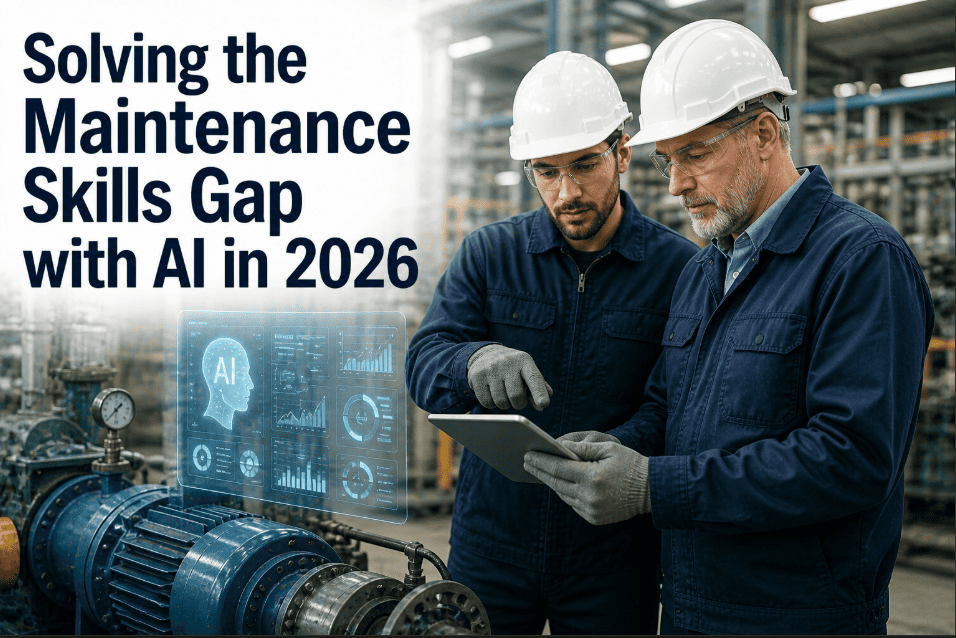
Solving the Maintenance Skills Gap with AI in 2026
AI-generated SOPs, real-time diagnostics, and automated work order guidance are transforming how facilities train and deploy maintenance technicians — cutting time-to-competency from years to weeks.
72%
Of facilities report critical maintenance labor shortages
38%
Of maintenance workforce retiring within 7 years
65%
Faster time-to-competency with AI-assisted maintenance tools
4.2x
Longer diagnosis time for inexperienced technicians without AI support
AI That Trains Your Technicians as They Work
OxMaint auto-generates step-by-step SOPs from work order history, provides AI diagnostic suggestions based on symptoms, and guides technicians through repairs in real time. No training budget required. Free for 30 days.
What Is the Maintenance Skills Gap — And Why 2026 Is the Critical Year
The maintenance skills gap is the widening disconnect between the technical knowledge required to maintain modern industrial equipment and the shrinking pool of experienced technicians available to do the work. Two forces are colliding: mass retirement of baby-boomer technicians who hold 20–30 years of institutional knowledge, and increasing equipment complexity driven by automation, IoT sensors, and integrated control systems that require software troubleshooting skills most legacy technicians never learned. The result is a workforce crisis where facilities cannot hire enough experienced technicians at any salary level, and the technicians they do hire lack the depth to diagnose complex failures quickly. Fifty-two percent of unplanned downtime events in 2025 were directly attributable to technician diagnostic delays — failures that experienced technicians would have identified in minutes took junior technicians hours or required outside contractors at 3–5x the cost. AI maintenance tools are the first scalable solution to this problem, and adoption is accelerating because the alternative is watching your maintenance backlog grow until equipment fails. Teams struggling with technician hiring or knowledge retention can see how AI changes the equation — start a free trial or book a demo to walk through AI-assisted diagnostics with your asset data.
The Four Dimensions of the Maintenance Skills Crisis
The skills gap is not one problem — it is four interconnected workforce challenges hitting facilities simultaneously. Understanding each dimension is critical because AI tools address different parts of the crisis in different ways. Facilities that deploy AI without understanding which skills they are trying to augment end up with expensive dashboards that technicians ignore.
1
Mass Retirement and Knowledge Loss
Thirty-eight percent of industrial maintenance technicians will retire by 2031. These workers hold institutional knowledge that was never documented — equipment quirks, failure patterns, vendor contacts, troubleshooting shortcuts learned over decades. When they leave, that knowledge disappears. Facilities lose diagnostic speed, PM effectiveness drops, and mean time to repair climbs 40–60% within 18 months of a senior technician retiring.
Impact: 40–60% longer MTTR after senior technician retirement without knowledge capture systems
2
Shrinking Entry Pipeline
Trade school enrollment in industrial maintenance programs has declined 32% since 2015. Younger workers are choosing IT, healthcare, and logistics over hands-on technical trades. The technicians entering the field lack the depth of training previous generations received — most programs have shifted from 2-year certifications to 6-month boot camps that cover only basics. Entry-level technicians can follow procedures but cannot diagnose novel failures.
Impact: 3–4x longer diagnostic time for entry-level technicians on non-standard failures
3
Increasing Equipment Complexity
Modern industrial equipment integrates mechanical, electrical, hydraulic, pneumatic, and software systems. A single failure can have root causes across four disciplines. Legacy technicians trained on purely mechanical systems struggle with PLC troubleshooting and sensor diagnostics. New technicians trained on software lack mechanical intuition. The skill set required to maintain a 2026 production line is 60% broader than what was required in 2010.
Impact: 28% of work orders escalated to outside contractors because in-house team lacks cross-discipline skills
4
Training Time and Cost Barriers
Traditional apprenticeship models require 3–5 years to develop a fully competent maintenance technician. Facilities cannot afford that timeline when they need immediate capacity. Formal training programs cost $8,000–$25,000 per technician and pull workers off the floor for weeks. On-the-job training burns senior technician time — every hour spent mentoring is an hour not spent on backlog. Facilities are stuck: they cannot train fast enough to keep up with retirements.
Impact: 3–5 year time-to-competency with traditional training vs. 6–12 weeks with AI-assisted onboarding
How AI Tools Close the Skills Gap — The Six Critical Capabilities
AI does not replace technicians — it amplifies them. The goal is not automation. The goal is to give a technician with 6 months of experience the diagnostic speed and troubleshooting accuracy of a technician with 6 years of experience. These six AI capabilities are proven to reduce time-to-competency, improve first-time fix rates, and retain institutional knowledge that would otherwise walk out the door with retiring workers.
Capability 01
AI Auto-Generated Standard Operating Procedures
AI analyzes historical work order data — parts used, labor hours, technician notes, failure symptoms — and auto-generates step-by-step SOPs for every recurring maintenance task. When a new PM or repair job is created, the system attaches the relevant SOP automatically. New technicians follow documented procedures written by the collective experience of your entire team, not just the one person training them.
Measured Impact:
62% reduction in missed steps on complex PM tasks — 48% faster task completion for technicians with under 2 years experience
Capability 02
Real-Time AI Diagnostic Assistance
Technician enters failure symptoms into a mobile work order — unusual noise, vibration, temperature, error code. AI cross-references symptom patterns against historical failure data, manufacturer service bulletins, and sensor readings to suggest the three most likely root causes ranked by probability. Technician starts troubleshooting at the highest-probability failure point instead of guessing or working sequentially through a 40-step checklist.
Measured Impact:
58% faster mean time to diagnose — 71% improvement in first-time fix rate for junior technicians
Capability 03
Predictive Work Order Generation with Context
AI monitors sensor data and generates work orders before failures happen — but it does not just create a ticket. It auto-populates the work order with failure context, recommended parts, estimated labor hours, similar past repairs, and step-by-step guidance. A technician opens the work order and immediately knows what is failing, why it is failing, what parts to bring, and how to fix it. No hunting for information. No waiting for a senior tech to explain the job.
Measured Impact:
35% reduction in repeat visits for same issue — 40% less senior technician time spent on mentoring and job prep
Capability 04
Institutional Knowledge Capture and Retrieval
Every work order completion, technician note, parts replacement, and repair outcome feeds into the AI knowledge base. When a senior technician retires, their 20 years of repair history remains queryable. New technicians can search by equipment ID, symptom, or error code and retrieve every past repair on that asset — what failed, how it was fixed, how long it took, what parts were used. Institutional knowledge becomes a searchable database instead of folklore.
Measured Impact:
Zero knowledge loss on technician turnover — 55% faster onboarding for replacement hires
Capability 05
Mobile-First Guided Workflows
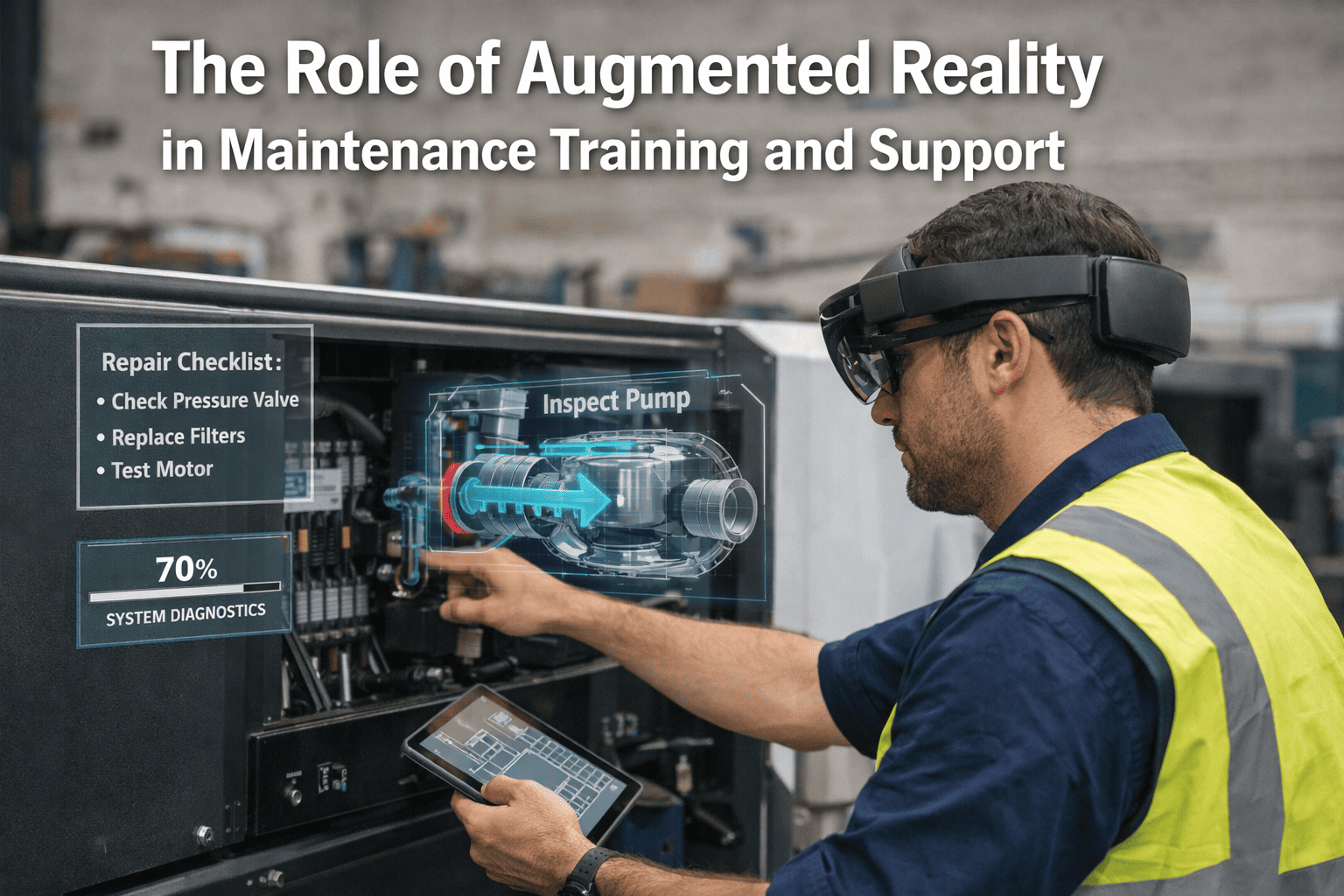
Technicians access work orders, SOPs, parts lists, asset history, and AI diagnostic suggestions on a mobile device at the point of work. No walking back to the office to check a manual. No calling a supervisor for guidance. The mobile interface walks them through each step, validates completion with photos or checklists, and flags deviations from standard procedure in real time. It is like having a senior technician looking over their shoulder on every job.
Measured Impact:
68% increase in wrench time — 52% reduction in rework from incomplete or incorrect procedures
Capability 06
Skills Gap Analytics and Training Prioritization
AI tracks which failure types each technician struggles with — measured by time-to-complete, rework rate, and escalation frequency. Management dashboards show exactly where the skills gap is widest: which technicians need training on which equipment types, which failure modes cause the most diagnostic delays, and which knowledge areas will be lost when specific senior technicians retire. Training budget goes to the highest-impact skills first.
Measured Impact:
40% more effective training spend — targeted skill development instead of generic certification programs
Before and After AI — What Changes for Maintenance Teams
The difference between a maintenance team operating without AI tools and one with AI-assisted workflows is not incremental — it is structural. The table below shows what shifts when facilities deploy AI to close the skills gap. Teams still running on tribal knowledge and paper SOPs will recognize the left column immediately. To see what the right column looks like in your operation, start a free trial and load your work order history, or book a demo to walk through AI SOP generation with your asset data.
New technicians need 3–5 years to reach full competency
Diagnosis time 4x longer for junior vs. senior technicians
Institutional knowledge lost when senior staff retire
SOPs are outdated PDFs or tribal knowledge
First-time fix rate under 60% for complex failures
Training requires pulling senior techs off productive work
28% of work orders escalated to contractors
No visibility into individual skill gaps or training needs
New technicians productive within 6–12 weeks
AI diagnostic suggestions close diagnosis time gap by 65%
All repair history searchable — zero knowledge loss
Auto-generated SOPs updated with every work order
First-time fix rate above 85% with AI guidance
AI provides on-the-job training — senior techs stay productive
Contractor escalation drops below 8%
Skills gap analytics dashboard shows exactly where training is needed
How OxMaint Solves the Skills Gap — Capabilities Built Into the Platform
OxMaint is not a CMMS with AI bolted on as an add-on module. AI-assisted maintenance is embedded in the core workflow — work order generation, SOP creation, diagnostic suggestions, parts recommendations, and training analytics all happen automatically as technicians use the system. Here is how it works in practice.
Step 01
AI Analyzes Historical Work Order Data
Import your past 12–36 months of work order history — failure descriptions, parts used, labor hours, technician notes. OxMaint's AI identifies patterns: which symptoms correlate with which root causes, which repairs require which parts, which tasks take longest, and which failure modes recur most often. This analysis becomes the training dataset for auto-generated SOPs and diagnostic models.
Step 02
System Auto-Generates SOPs for Every Recurring Task
For every PM task or repair job that has been completed more than three times, OxMaint generates a step-by-step SOP — tools required, parts needed, safety precautions, estimated time, common mistakes, and troubleshooting tips. SOPs are attached to work orders automatically. Technicians do not search for procedures — procedures come with the job.
Step 03
Technician Reports Failure Symptoms on Mobile Device
When equipment fails, technician opens a work order on their phone or tablet and enters symptoms — noise type, vibration pattern, temperature reading, error code, visual observations. AI cross-references symptoms against failure history and suggests three most likely root causes with probability scores. Technician starts troubleshooting at the highest-probability cause instead of working through a 40-step flowchart.
Step 04
AI Provides Real-Time Guided Troubleshooting
As technician investigates suggested causes, AI updates probabilities based on findings. If first suggestion is ruled out, system re-ranks remaining causes and provides next troubleshooting step. Mobile interface displays relevant asset history, similar past failures, parts diagrams, and vendor service bulletins — all contextualized to the current failure. Junior technician works with the speed and accuracy of a senior tech because they have the same information access.
Step 05
Work Order Completion Feeds Back Into AI Models
When repair is complete, technician logs actual root cause, parts used, and time spent. This data updates the AI model — next time similar symptoms appear, diagnostic accuracy improves. If technician discovers a failure mode the AI did not predict, that becomes a new pattern the system watches for. The platform gets smarter with every repair.
Step 06
Management Tracks Skills Gap Closure in Real Time
Dashboard shows technician performance metrics — time-to-diagnose by failure type, first-time fix rate, escalation frequency, and improvement trends over time. Managers see exactly which technicians are improving, which are stuck, and which skill areas need targeted training. Training decisions are data-driven instead of guesswork.
Measured Results — What Facilities Achieve with AI-Assisted Maintenance
AI skills gap solutions are not experimental — they are deployed and delivering measurable results across manufacturing, facilities, and industrial operations. These benchmarks represent documented outcomes from operations using AI-assisted maintenance tools for 12+ months.
65%
Faster Time-to-Competency
New technicians reach full productivity in 6–12 weeks vs. 3–5 years with traditional training
58%
Faster Diagnosis on Complex Failures
AI diagnostic suggestions cut mean time to diagnose by more than half for technicians with under 2 years experience
71%
First-Time Fix Rate Improvement
Junior technicians using AI guidance match or exceed first-time fix rates of senior technicians working unaided
40%
Reduction in Senior Technician Mentoring Time
AI-generated SOPs and diagnostic guidance reduce interruptions to senior staff — more time on backlog, less time answering questions
Industry-Specific Skills Gap Impact — Where AI Delivers the Strongest ROI
Skills gap severity and AI impact vary by industry. Operations with high technician turnover, complex equipment, or specialized knowledge requirements see the fastest ROI. This table shows where the crisis hits hardest and where AI augmentation delivers the most dramatic productivity gains.
| Industry |
Technician Shortage Severity |
Primary Skills Gap Driver |
AI Capability With Highest Impact |
Measured Productivity Gain |
| Manufacturing |
Critical — 76% report unfilled positions |
Retiring workforce + equipment complexity |
AI diagnostic assistance + auto-generated SOPs |
68% faster time-to-competency |
| Healthcare Facilities |
Severe — 68% report shortages |
Specialized medical equipment knowledge |
Institutional knowledge capture + compliance SOPs |
62% reduction in contractor escalations |
| Commercial Real Estate |
Moderate — 52% report shortages |
Multi-site knowledge fragmentation |
Centralized SOP library + mobile guidance |
55% reduction in travel for senior tech support |
| Food and Beverage |
Critical — 71% report unfilled roles |
GMP compliance + sanitary design expertise |
Compliance-ready SOPs + real-time procedure validation |
72% faster regulatory audit prep |
| Oil and Gas |
Severe — 64% report shortages |
Remote site operations + safety-critical systems |
Remote diagnostic support + step-by-step safety procedures |
48% reduction in emergency site visits |
| Pharmaceuticals |
Critical — 78% report shortages |
cGMP compliance + validation requirements |
Audit-ready documentation + change control automation |
65% reduction in training documentation burden |
Frequently Asked Questions
Can AI really replace 20 years of technician experience?+
AI does not replace experience — it makes experience accessible. A senior technician with 20 years of hands-on work has diagnostic intuition and pattern recognition that AI cannot fully replicate. But that same technician also has 20 years of documented repairs, parts usage, failure modes, and troubleshooting steps sitting in work order history. AI turns that documented history into searchable, actionable guidance that junior technicians can access instantly. The goal is not to make AI as good as a senior tech — the goal is to make a junior tech with AI assistance as effective as a senior tech working alone. Measured results show 65% reduction in the competency gap, which translates to junior technicians diagnosing failures 58% faster and achieving first-time fix rates 71% higher when using AI diagnostic tools. Want to test this with your team's work order history —
start a free trial and import 12 months of repair data to see what SOPs the AI generates.
How much work order history is needed for AI to generate useful SOPs?+
Minimum viable dataset is 12 months of work order history with at least 100 completed jobs. Optimal dataset is 24–36 months with 500+ work orders covering your most common PM tasks and failure modes. The AI needs enough repetition to identify patterns — if a specific repair has only been done once or twice, there is not enough data to build a reliable SOP. OxMaint's AI prioritizes SOP generation for the highest-frequency tasks first, which typically covers 60–80% of your work order volume even if total dataset is limited. After go-live, every new work order completion improves the models — SOPs get more detailed, diagnostic suggestions get more accurate, and coverage expands to less-common failure modes over time.
What happens if the AI suggests the wrong diagnosis?+
AI diagnostic suggestions are ranked by probability — not presented as certainties. Technician investigates the highest-probability cause first. If that is ruled out, they move to the second suggestion, then third. The system is designed to accelerate troubleshooting, not replace it. False positive rate on top-3 diagnostic suggestions is typically 8–12% after initial training period, meaning 88–92% of the time, the actual root cause is within the top three AI-suggested possibilities. When a technician identifies a root cause the AI did not predict, that outcome is logged and the model updates — improving accuracy for future similar failures. The alternative to AI suggestions is manual troubleshooting through a 40-step flowchart or waiting for a senior tech to become available. AI cuts diagnostic time even when the first suggestion is wrong because it narrows the search space.
Do senior technicians resist AI tools because they feel replaced?+
Resistance happens when AI is positioned as a replacement. Adoption accelerates when it is positioned as a force multiplier. Senior technicians do not want to spend 40% of their day answering the same questions from junior staff, hunting for parts, or documenting procedures. They want to work on complex problems that require their expertise. AI tools that auto-generate SOPs, provide diagnostic suggestions to junior techs, and reduce interruptions give senior technicians more time to do high-value work — and ensure their knowledge is preserved when they retire instead of walking out the door. Facilities that involve senior technicians in AI training — having them review and refine auto-generated SOPs, validate diagnostic models, and provide input on troubleshooting workflows — see 85%+ adoption rates within 90 days. When senior techs see AI as a tool that captures and scales their expertise rather than replacing it, resistance drops to near zero. Ready to involve your senior team in building the AI knowledge base —
book a demo and we will show you the knowledge capture workflow.
Solve the Skills Gap with OxMaint
Turn New Technicians Into Productive Contributors in Weeks, Not Years
OxMaint's AI auto-generates SOPs from your work order history, provides real-time diagnostic suggestions, and captures institutional knowledge before it walks out the door. No training budget required. No months-long implementation. Free for 30 days — import your work order history and see what SOPs the AI builds.
65%
Faster time-to-competency documented
58%
Faster diagnosis with AI guidance
71%
First-time fix rate improvement
$0
Training and implementation cost