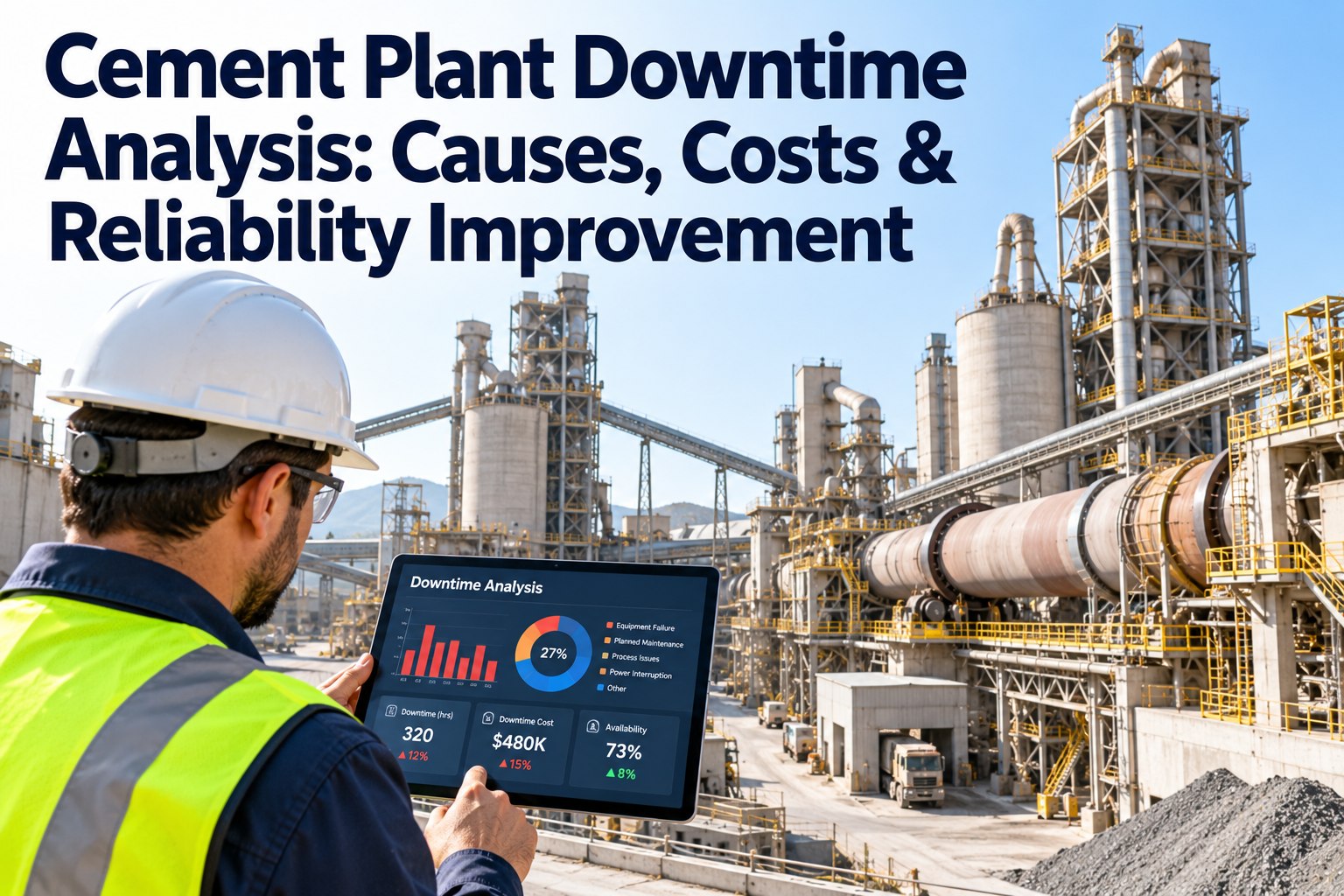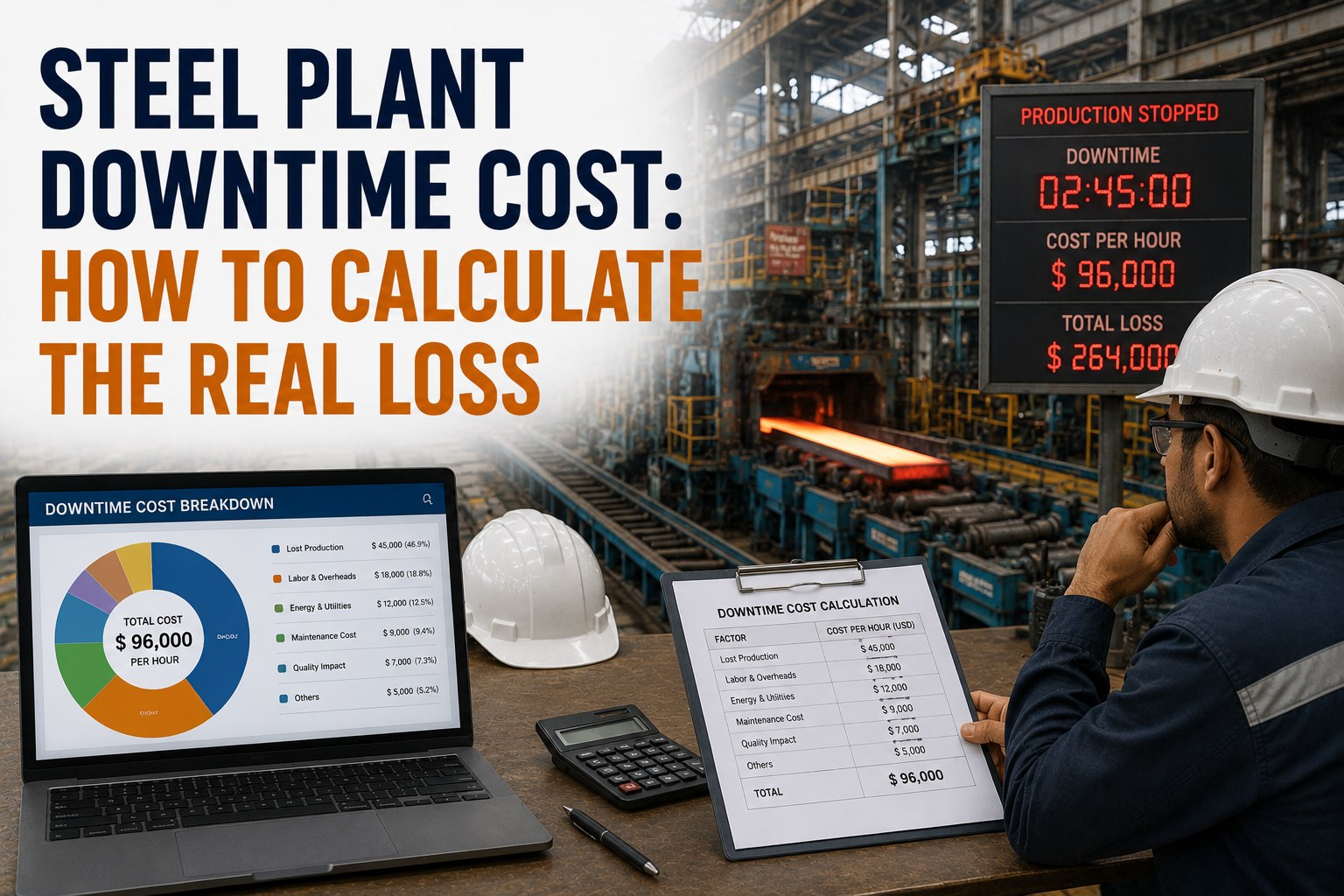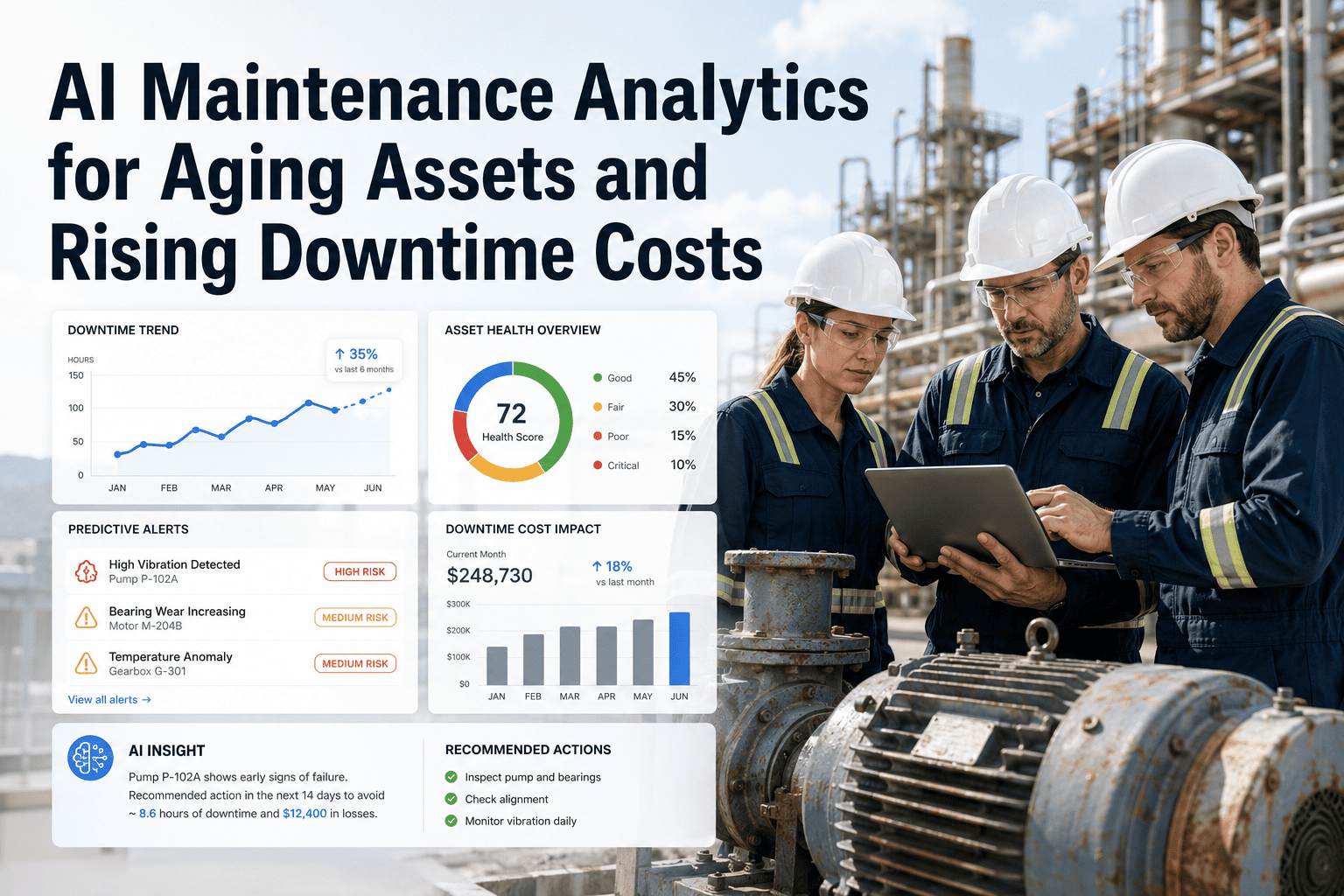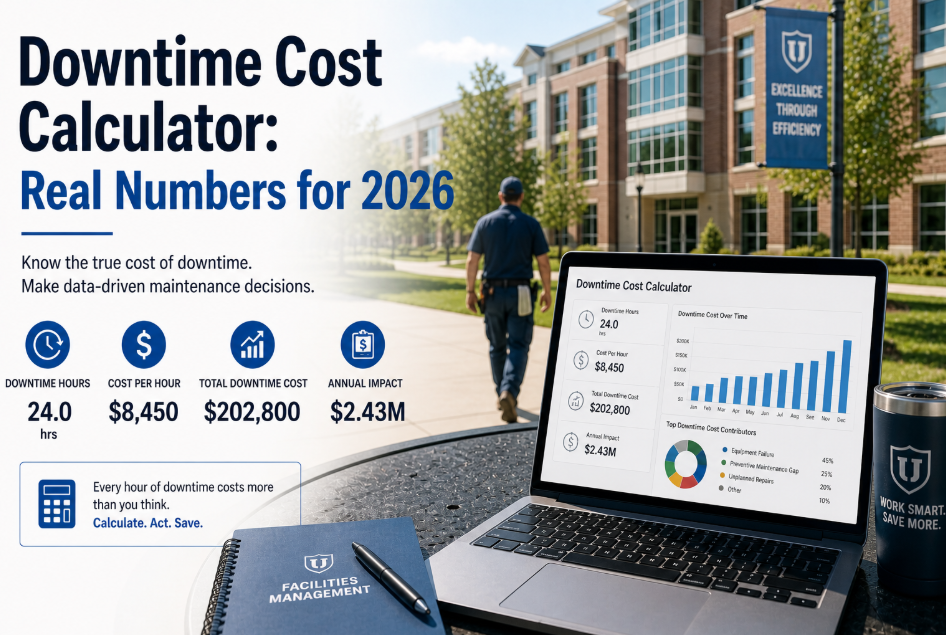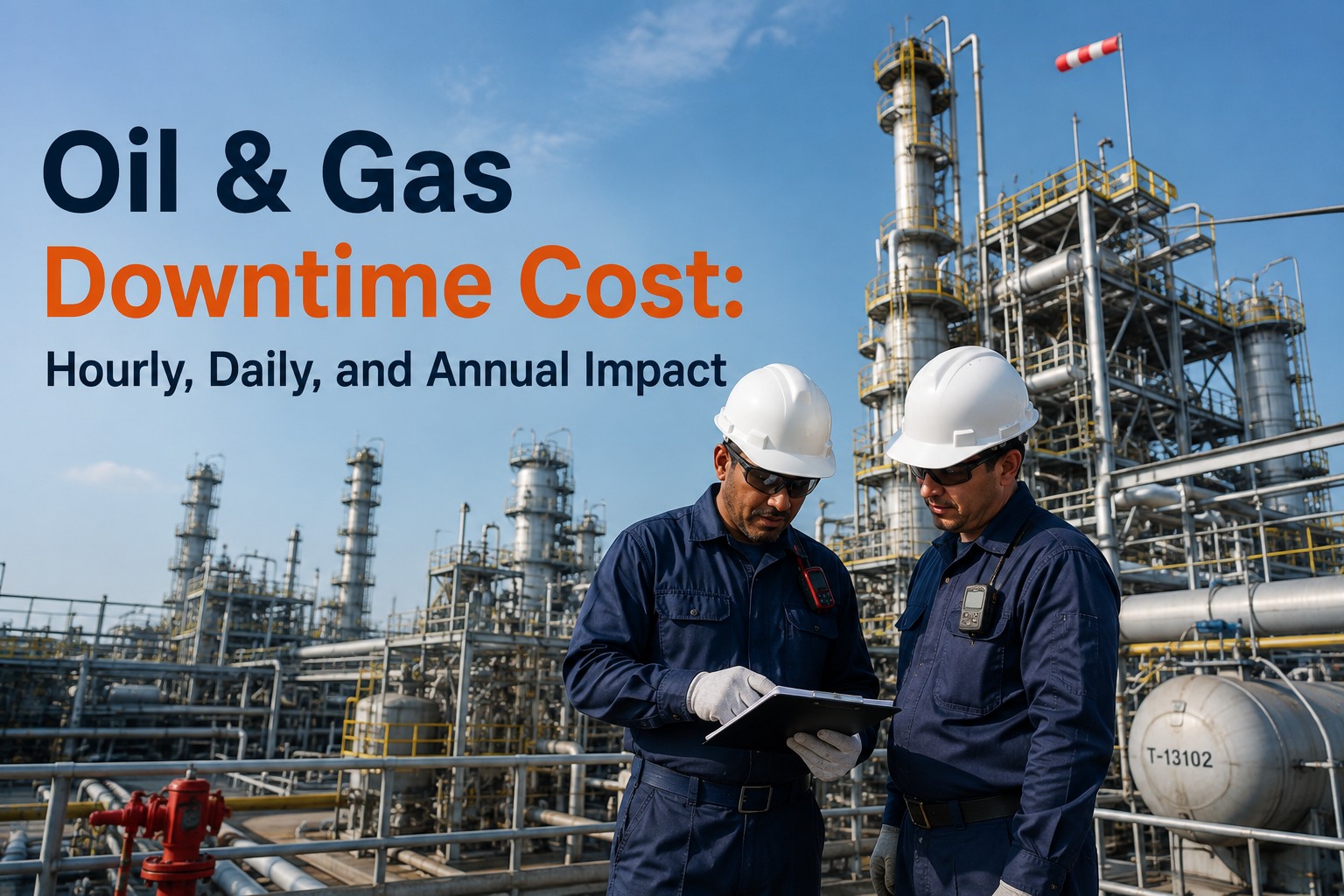
Unplanned downtime is the single most expensive line item on an Oil & Gas P&L that nobody tracks precisely enough. The cost of downtime in oil & gas operations typically ranges from $50,000 to $500,000 per hour, depending on the facility's throughput and the criticality of the failed asset. When a compressor trips, a subsea valve fails, or a refinery unit goes offline unexpectedly, the cascading production loss cost, emergency maintenance overtime, and safety risks compound by the minute. This guide breaks down the hourly, daily, and annual impact of equipment failures, explores how Reliability-Centered Maintenance (RCM) benchmarks stack up, and shows how modern CMMS platforms like OxMaint help plants cut unplanned outage costs and prove maintenance ROI.
Every hour of unplanned downtime drains your revenue. How much is it costing you?
Top-tier Oil & Gas facilities lose between $50K and $500K per hour during unplanned outages. Calculate your exposure, benchmark against industry standards, and discover how AI-driven maintenance stops revenue loss before it starts.
What is the hourly, daily, and annual cost of downtime in Oil & Gas?
Oil and gas downtime per hour varies drastically by facility type. Offshore platforms and complex refineries sit at the top of the cost curve, while midstream compression stations carry a lower—but still painful—hourly rate. Below is a breakdown of the oil and gas equipment failure cost across different facility classes.
| Facility Type | Hourly Cost | Daily Production Loss Cost | Estimated Annual Impact |
|---|---|---|---|
| Offshore Production Platform | $100K – $300K | $2.4M – $7.2M | $15M – $50M |
| Downstream Refinery Unit | $150K – $500K | $3.6M – $12M | $20M – $80M |
| LNG Liquefaction Train | $200K – $400K | $4.8M – $9.6M | $25M – $60M |
| Midstream Compressor Station | $50K – $100K | $1.2M – $2.4M | $5M – $15M |
How to calculate your Oil & Gas production loss cost
To build a downtime reduction program, you must first establish a baseline. Most plants underestimate their true cost because they only track lost throughput, ignoring secondary costs like emergency logistics, safety incident risks, and regulatory fines.
Multiply this by the total unplanned outage hours per year to see your true exposure.
A 30% reduction in MTTR saves this single station $1.68M annually.
Oil & Gas downtime benchmarks and RCM targets
Reliability-Centered Maintenance (RCM) in oil & gas shifts teams from reactive firefighting to predictive optimization. World-class facilities maintain an OEE above 90%, while average plants hover around 70–75%. Where does your facility sit on the reliability curve?
Unplanned downtime is not just a maintenance problem; it is a direct hit to your plant's throughput, safety record, and profitability. If you cannot measure MTTR and MTBF in real-time, you are flying blind on your most expensive metric.
Stop losing $50,000+ an hour to unplanned outages.
See how OxMaint's AI-powered CMMS helps Oil & Gas plants cut downtime by up to 30% in the first year. Get a personalized walkthrough on your actual assets.
Oil & Gas downtime reduction ROI and payback period
Investing in a modern CMMS and RCM strategy yields one of the fastest paybacks in the energy sector. By moving from reactive to predictive maintenance, the ROI typically clears 300% within the first 12 months of implementation.
| Maintenance Strategy | Avg. Annual Downtime (Hours) | Est. Annual Loss (Midstream) | Software Investment | Net First-Year ROI |
|---|---|---|---|---|
| Reactive (Run-to-Failure) | 120 - 200 hrs | $6M – $10M | $0 | Negative |
| Preventive (Calendar-Based) | 70 - 100 hrs | $3.5M – $5M | $25K | 150% |
| Predictive (AI-Driven OxMaint) | 20 - 40 hrs | $1M – $2M | $45K | 320%+ |
How OxMaint cuts Oil & Gas unplanned outage costs
OxMaint's AI-powered CMMS and EAM platform directly attacks the root causes of downtime. From slow work order response to missing spare parts, our platform gives maintenance and reliability teams the tools to predict failures, streamline workflows, and prove maintenance ROI to plant managers.
Real-Time MTTR & MTBF Dashboards
Eliminate blind spots with live reliability analytics. Track Mean Time To Repair and Mean Time Between Failures across every critical asset to identify bad actors and reduce oil and gas equipment failure cost by up to 40%.
Mobile Work Order Execution
Give field technicians a mobile app to receive, update, and close work orders instantly. Eliminating paper delays cuts your MTTR by up to 25%, keeping critical assets online longer.
Predictive Maintenance Triggers
AI models analyze vibration and temperature data to predict failures weeks before they happen. Shift from unplanned outages to scheduled interventions and cut emergency maintenance costs in half.
Spare-Parts Inventory Integration
Stop the wait-for-parts problem. OxMaint links BOMs directly to work orders, ensuring critical spares are always stocked and reducing asset idle time by up to 15%.
A 3-step timeline to reduce Oil & Gas downtime this quarter
Building a downtime reduction program requires clear baselines, weekly targets, and the visibility your plant manager needs. Follow this playbook to transition from reactive firefighting to measurable reliability.
Establish your true downtime baseline
Import all critical assets into OxMaint, log 12 months of historical failure data, and calculate your current hourly production loss cost. Identify the top 20% of assets causing 80% of your unplanned outages.
Deploy mobile CMMS and PM schedules
Roll out the OxMaint mobile app to technicians, digitize all paper work orders, and automate preventive maintenance triggers based on OEM run-time hours. Eliminate the paper delay that inflates MTTR.
Activate AI predictive analytics
Connect condition-monitoring sensors to OxMaint. Let AI flag early-stage failure patterns, automatically generate predictive work orders, and hold weekly reliability reviews using live MTTR/MTBF dashboards.
Common questions about Oil & Gas downtime cost and RCM
How much does unplanned downtime cost per hour in the Oil & Gas industry?
The oil and gas downtime per hour cost ranges from $50,000 for midstream compressor stations to over $500,000 for complex downstream refineries and offshore platforms. The exact figure depends on your facility's daily throughput, the criticality of the failed asset, and current commodity prices. Use an oil and gas downtime calculator to multiply your hourly production value by your average unplanned outage hours.
What is the main cause of equipment failure in Oil & Gas operations?
The primary causes of oil and gas equipment failure cost are insufficient preventive maintenance, aging infrastructure, and slow work-order response times. When critical spares are not stocked or technicians are delayed by paper-based workflows, minor degradations escalate into catastrophic failures. Implementing a CMMS like OxMaint eliminates these bottlenecks. Start Free Trial to digitize your workflows today.
How does Reliability-Centered Maintenance (RCM) reduce downtime in Oil & Gas?
RCM in oil & gas shifts the maintenance strategy from reactive to predictive by analyzing failure modes and their impacts on specific assets. By scheduling condition-based interventions before failures occur, RCM extends asset lifespan, improves MTBF, and systematically drives down the oil and gas unplanned outage cost over a multi-year period.
How fast can a CMMS reduce our plant's downtime?
Most Oil & Gas facilities see a measurable reduction in Mean Time To Repair (MTTR) within the first 30 to 60 days of implementing OxMaint, simply by digitizing work orders and mobilizing technicians. Significant reductions in overall downtime frequency—driven by predictive maintenance analytics—typically materialize within 3 to 6 months. Book a Demo to see the exact roadmap for your plant.
What is the ROI of switching from reactive maintenance to predictive maintenance?
The oil and gas downtime reduction ROI is among the highest in industrial operations. Switching from reactive to predictive maintenance typically yields a 300% to 500% ROI in the first year. By preventing just one major compressor or pump failure, the OxMaint platform pays for itself, while reducing emergency labor costs and maximizing throughput.
Prove maintenance is driving throughput, not just fixing things.
Join the Oil & Gas reliability teams using OxMaint to predict failures, cut MTTR, and protect their revenue. See the platform live on your assets in a 30-minute customized demo.
Free 14-day trial · No credit card required